


Learning how to improve client satisfaction is crucial. Over seventy percent of clients say they will leave a business after just one bad experience. For solopreneurs, every project is an opportunity to build loyalty or risk losing hard-earned clients. Understanding the client journey from first conversation to final deliverable helps you spot hidden problems, improve your interactions, and set yourself apart as a trusted partner. Discover how simple tweaks and careful listening can transform client satisfaction into lasting business growth.
Table of Contents
- Step 1: Assess Current Client Experience
- Step 2: Personalize Communication and Interactions
- Step 3: Streamline Processes With Ai Automation
- Step 4: Gather and Act On Client Feedback
- Step 5: Monitor Results and Refine Approach
Quick Summary
| Key Point | Explanation |
|---|---|
| 1. Collect client feedback continuously | Use various methods like surveys and calls to gather insights on client perceptions regularly. |
| 2. Personalize client interactions | Adapt your communication style to fit individual client preferences for a more meaningful connection. |
| 3. Automate administrative tasks with AI | Implement AI tools for tasks like scheduling and invoicing to improve efficiency without losing the personal touch. |
| 4. Turn feedback into actionable changes | Actively utilize client feedback to inform service enhancements and show that client input drives improvement. |
| 5. Monitor performance and make adjustments | Establish key performance indicators and review them regularly to identify areas for growth and refinement. |
Step 1: Assess Current Client Experience
Before learning how to improve client satisfaction, you need a clear understanding of your current client experience. This means gathering honest feedback and analyzing how clients perceive your services from initial contact through project completion.
Start by collecting comprehensive client insights through multiple channels. According to research from Ulster University, sole proprietors can enhance service delivery by strategically assessing client engagement strategies. Create a systematic approach to gathering feedback through methods like:
- Short post project surveys
- One on one feedback calls
- Email questionnaires
- Anonymous review platforms
The goal is uncovering genuine perceptions about your work quality, communication style, and overall client experience. Pay special attention to patterns in feedback. Are multiple clients mentioning similar concerns? Do you see recurring themes about response times or project deliverables? These insights will become your roadmap for improvement.
Research from PMC suggests that personal agency and social connections significantly impact client satisfaction. This means your interpersonal skills and proactive communication matter as much as the technical quality of your work. Listen actively, show genuine interest, and demonstrate that you value client perspectives.
Remember that assessing client experience is an ongoing process. Set calendar reminders to review feedback quarterly and track your progress in addressing client concerns. By consistently evaluating and adapting, you create a dynamic client experience that grows and improves with your business.
Step 2: Personalize Communication and Interactions
Personalizing client communication goes beyond generic interactions. Your goal is to create meaningful connections that make each client feel uniquely understood and valued. By tailoring your approach, you transform transactional relationships into genuine partnerships.
Research from PMC highlights the significance of interpersonal communication strategies that humanize interactions. This means moving beyond scripted responses and developing authentic engagement techniques. Start by creating detailed client profiles that capture not just professional details but personal preferences and communication styles.
According to Frontiers in Education, personalized experiences are about understanding individual needs. For solopreneurs, this translates to adaptive communication. Some clients prefer detailed email updates. Others might want concise text messages. Some appreciate weekly check ins. Others prefer monthly comprehensive reports.
Track and document these preferences meticulously. Use a simple client management system or spreadsheet to note communication preferences, response times that work best, and individual project nuances. This approach demonstrates that you see them as individuals, not just another project.

Learn to read between the lines during initial consultations. Pay attention to communication cues. Does a client use formal language? They might appreciate structured updates. Are they more casual? A conversational tone could work better. Flexibility is your greatest asset in creating personalized client experiences.
Carefully craft templates that can be easily customized. These should feel personal, not mechanical. Your communication should reflect genuine interest and understanding. By consistently showing that you listen and adapt, you build trust that goes far beyond the immediate project scope.
Step 3: Streamline Processes with AI Automation
AI automation represents a powerful strategy for solopreneurs to enhance client satisfaction while reducing administrative overhead. Your goal is to leverage intelligent tools that handle repetitive tasks and create smoother client interactions without losing the personal touch.
Research from LSE Etheses highlights how social algorithms can transform service personalization. For solopreneurs, this means identifying specific workflow areas where AI can add meaningful efficiency. Consider automating processes like:
- Initial client onboarding
- Scheduling and appointment management
- Invoice generation and tracking
- Follow up communications
- Project status updates
The Open University research suggests that strategic network optimization through AI can significantly improve interaction management. This means selecting automation tools that learn and adapt to your specific business needs rather than using generic solutions.
When implementing AI automation, maintain a human centered approach. The technology should enhance your interactions, not replace them. Choose tools that offer customization and integrate seamlessly with your existing communication channels. Look for platforms that provide intelligent scheduling, automated yet personalized email responses, and smart task management.
Prioritize AI solutions that offer transparent insights into client interactions. Track metrics like response times, communication frequency, and client feedback. This data will help you continuously refine your automated processes, ensuring they remain effective and client friendly.
Remember that successful AI automation is about working smarter, not harder. The right tools will free up your time to focus on high value tasks like strategic client relationship building and creative problem solving. Start small, experiment continuously, and always keep your clients experience at the forefront of your automation strategy.
Step 4: Gather and Act on Client Feedback
Collecting and implementing client feedback is the cornerstone of continuous improvement for solopreneurs. Your objective is to create a systematic approach that transforms client insights into actionable strategies for enhancing your services.
Research from Greenwich Academic Literature Archive emphasizes the critical importance of robust feedback mechanisms. Start by designing multiple channels for gathering client perspectives. These can include:
- Post project surveys
- Direct email feedback requests
- Short phone or video call check ins
- Anonymous feedback forms
- Social media sentiment tracking
According to PMC Research, collaborative experiences are significantly enhanced when feedback is not just collected but actively utilized. This means creating a transparent process where clients see their input driving meaningful changes in your service delivery.
Design your feedback collection with specific goals in mind. Instead of generic questions, craft inquiries that provide actionable insights. Ask about specific aspects of your service like communication quality, project outcomes, responsiveness, and overall experience. Use a mix of quantitative ratings and open ended questions to capture nuanced perspectives.
Implement a structured review process where you systematically analyze feedback at regular intervals. Look for recurring themes, identify potential improvement areas, and develop concrete action plans. More importantly, communicate back to your clients about the changes you are making based on their input. This demonstrates that you genuinely value their perspective.
Remember that feedback is a continuous dialogue, not a one time transaction. The most successful solopreneurs view client insights as a precious resource for growth. By creating a culture of open communication and continuous improvement, you transform client feedback into a powerful tool for building long term trust and satisfaction.
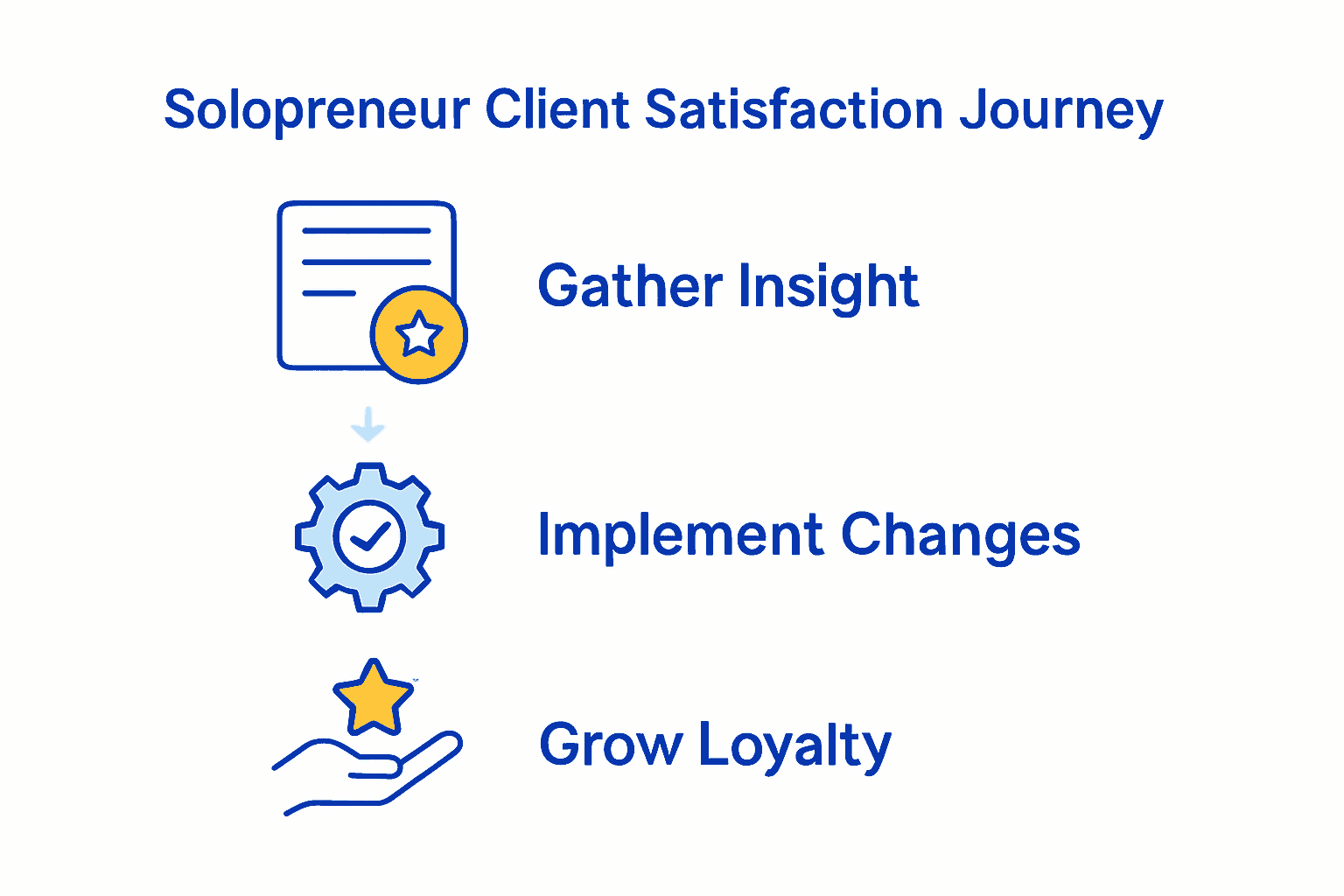
Step 5: Monitor Results and Refine Approach
Successful solopreneurs understand that client satisfaction is an ongoing journey of continuous improvement. Your goal is to develop a systematic approach for tracking performance metrics, identifying growth opportunities, and making strategic adjustments to your service delivery.
Research from Cambridge Resolve highlights the critical importance of monitoring self presentation and strategy effectiveness. This means creating a robust tracking system that goes beyond surface level metrics and delves into meaningful performance indicators.
Start by establishing key performance indicators that directly reflect client satisfaction. These might include:
- Client retention rates
- Repeat business percentage
- Average project completion time
- Client referral numbers
- Positive feedback frequency
- Net promoter scores
According to Open University, developing a personal brand requires constant refinement and alignment with client expectations. This means scheduling regular review sessions where you critically analyze your performance data and identify potential areas of improvement.
Implement a quarterly review process where you conduct a comprehensive analysis of your client interaction metrics. Look for patterns in feedback, assess the effectiveness of your communication strategies, and be prepared to make bold adjustments. Do not become attached to existing processes if the data suggests a need for change.
Be transparent about your commitment to improvement. Share with clients how their feedback has influenced your service evolution. This builds trust and demonstrates your dedication to delivering exceptional value. Remember that monitoring and refining is not about achieving perfection but about showing consistent growth and responsiveness to client needs.
Boost Your Client Satisfaction with Smart Automation and Personalized Insights
Solopreneurs often struggle with delivering personalized communication while managing time-consuming tasks like scheduling, invoicing, and follow-ups. The article highlights the need to assess client experience, personalize interactions, and use AI tools strategically to streamline your workflow. If you want to overcome these challenges and consistently improve client satisfaction without sacrificing your creativity or energy, it is time to explore intelligent automation designed just for you.
Fluum is an AI-powered platform built for solopreneurs and freelancers who want to enhance client communication and optimize daily operations seamlessly. With its AI co-founder, Fluum learns from your unique business goals and behavior, helping you personalize client outreach, automate appointment management, and track performance metrics that matter. Imagine freeing up hours every week to focus on building meaningful client relationships while Fluum handles routine tasks efficiently.
Ready to transform how you manage your clients and scale your business? Discover how Fluum’s tailored AI solutions can help you deliver exceptional client experiences today. Visit Fluum Pricing to get started and see how effortless solopreneurship can become. Don’t wait to empower your business with smart automation and actionable insights that grow with you.
Frequently Asked Questions
How can I assess the current client experience for my solopreneur business?
Start by collecting honest feedback from clients using multiple channels, such as surveys or one-on-one calls. Aim to gather insights within a few weeks to identify common themes or concerns regarding your services.
What are some effective ways to personalize client communication?
To personalize communication, create detailed client profiles that include their preferences and communication styles. Implement this practice immediately and adapt your messages accordingly to make each interaction feel tailored and genuine.
How can I use AI automation to enhance client satisfaction?
Leverage AI automation to streamline repetitive tasks like client onboarding and appointment management. Start by selecting two to three areas for automation in the next month to improve operational efficiency while maintaining a personal touch in your communications.
What steps should I take to gather and act on client feedback?
Design a structured approach to collect client feedback through various channels, such as post-project surveys and direct emails. Set a timeline to review this feedback quarterly and develop a clear action plan based on what clients express to enhance their experience.
How can I monitor client satisfaction and adjust my strategies?
Establish key performance indicators (KPIs) such as client retention rates and positive feedback frequency to monitor your success. Review these metrics every three months and be open to making necessary adjustments based on your findings to continually improve client satisfaction.
What are the benefits of regularly reviewing client feedback?
Regularly reviewing client feedback helps identify patterns and areas for improvement, fostering a culture of continuous communication. Start this practice immediately, and share with clients how their insights influence your services to enhance trust and satisfaction.
Recommended
- 7 Work Life Balance Tips Every Solopreneur Should Know
- Improve Client Retention: Proven Steps For Solopreneurs
- Digital Marketing Fundamentals For Solopreneur Success
- 7 Essential Sales Team Training Topics for Growth – Ahead of Sales
- 7 métricas para medir la satisfacción del cliente
- Fluum | Effective Stress Management Techniques for Busy Professionals
- Fluum | How to Onboard Clients Effectively for Lasting Success
- Fluum | Master Managing Multiple Projects for Success
- Fluum | Build Your Brand with a Branding Builder in 2025
- Fluum | 7 Customer Retention Examples to Boost Your Business