


Setting business goals is so important. Nearly 60 percent of solopreneurs cite unclear goals as their biggest hurdle when building a business. With every decision resting on your shoulders, setting clear intentions becomes more than just a planning step—it shapes your entire path to success. Learning how to define your motivation, map out measurable objectives, and track real progress offers solopreneurs the clarity and confidence needed to grow a resilient, thriving venture.
Table of Contents
- Step 1: Identify Your Core Business Motivation
- Step 2: Define Clear and Measurable Business Objectives
- Step 3: Break Down Objectives Into Actionable Milestones
- Step 4: Align Goals With Your AI-Powered Workflows
- Step 5: Track Progress And Adjust For Better Results
Quick Summary
| Key Point | Explanation |
|---|---|
| 1. Identify your core business motivation | Understand why you are starting your business to guide decisions. |
| 2. Define clear and measurable business objectives | Set specific, measurable goals using the SMART criteria for better tracking. |
| 3. Break down objectives into actionable milestones | Create specific, time-bound steps to help achieve broader goals effectively. |
| 4. Align goals with AI-powered workflows | Integrate automation tools to enhance efficiency and support your business objectives. |
| 5. Track progress and adjust for better results | Regularly review your performance and adapt strategies based on what works best. |
Step 1: Identify your core business motivation
Before setting business goals you need to understand your core business motivation as it is the foundational step for solopreneurs aiming to build a successful and sustainable venture. According to research from arxiv.org, the Multidimensional Crowdworker Motivation Scale provides a comprehensive framework for assessing the intrinsic and extrinsic factors driving entrepreneurial pursuits.
To identify your core business motivation, start by conducting an honest self assessment. Ask yourself critical questions: What problem am I passionate about solving? What unique skills or experiences do I bring to the marketplace? What personal or professional goals will this business help me achieve? Your motivation might stem from financial independence, creative expression, solving a specific market challenge, or creating more flexibility in your work life.
Research from arxiv.org highlights the importance of aligning your entrepreneurial intentions with your readiness to start a venture. This means your core motivation should be more than a passing interest. It needs to be a driving force powerful enough to sustain you through challenges. Consider creating a motivation statement that captures your core purpose a concise declaration of why you are starting this business and what you hope to accomplish.
As you progress through this goal setting journey, remember that your core motivation will serve as your north star guiding strategic decisions and helping you stay focused during challenging times. By clearly understanding and articulating your motivation, you set the stage for meaningful and purposeful business growth.
Step 2: Define clear and measurable business objectives
Defining clear and measurable business objectives transforms your core motivation into a strategic roadmap for success. According to Wikipedia, the SMART criteria framework provides solopreneurs with a powerful approach to setting objectives that are Specific, Measurable, Achievable, Relevant, and Time-bound.
To create effective business objectives, start by translating your core motivation into concrete goals. For instance, if your motivation is financial independence, a SMART objective might look like: “Increase monthly revenue from consulting services by 30% within the next six months by acquiring three new clients in my target market.” The key is breaking down broad aspirations into specific targets you can track and achieve. Each objective should answer fundamental questions: What exactly do you want to accomplish? How will you measure progress? What specific actions will help you reach this goal?
The OKR framework from Wikipedia offers additional guidance by pairing objectives with measurable key results. This means for every objective, you should develop 3-5 specific metrics that demonstrate progress.

A quick warning for solopreneurs: avoid setting too many objectives at once. Focus on 2-3 critical goals that will have the most significant impact on your business growth.
As you move forward, remember that your objectives are not set in stone. Successful solopreneurs regularly review and adjust their goals based on real world performance and changing market conditions. The next step in your journey will be developing a strategic action plan to turn these objectives into reality.
Step 3: Break down objectives into actionable milestones
Breaking down your business objectives into actionable milestones transforms abstract goals into a practical roadmap for success. According to Wikipedia, the OGSM framework provides solopreneurs with a structured approach to decomposing objectives into strategic and measurable steps.
Start by creating a detailed breakdown of each objective. For instance, if your objective is to increase monthly revenue by 30%, your milestones might include specific actions like developing a targeted marketing plan, updating your service offerings, reaching out to potential clients, and establishing a consistent follow-up system. Each milestone should be specific, time-bound, and directly connected to your overall objective. Think of milestones as the building blocks that will help you construct your business success. They should be granular enough to provide clear direction but flexible enough to adapt to unexpected challenges.
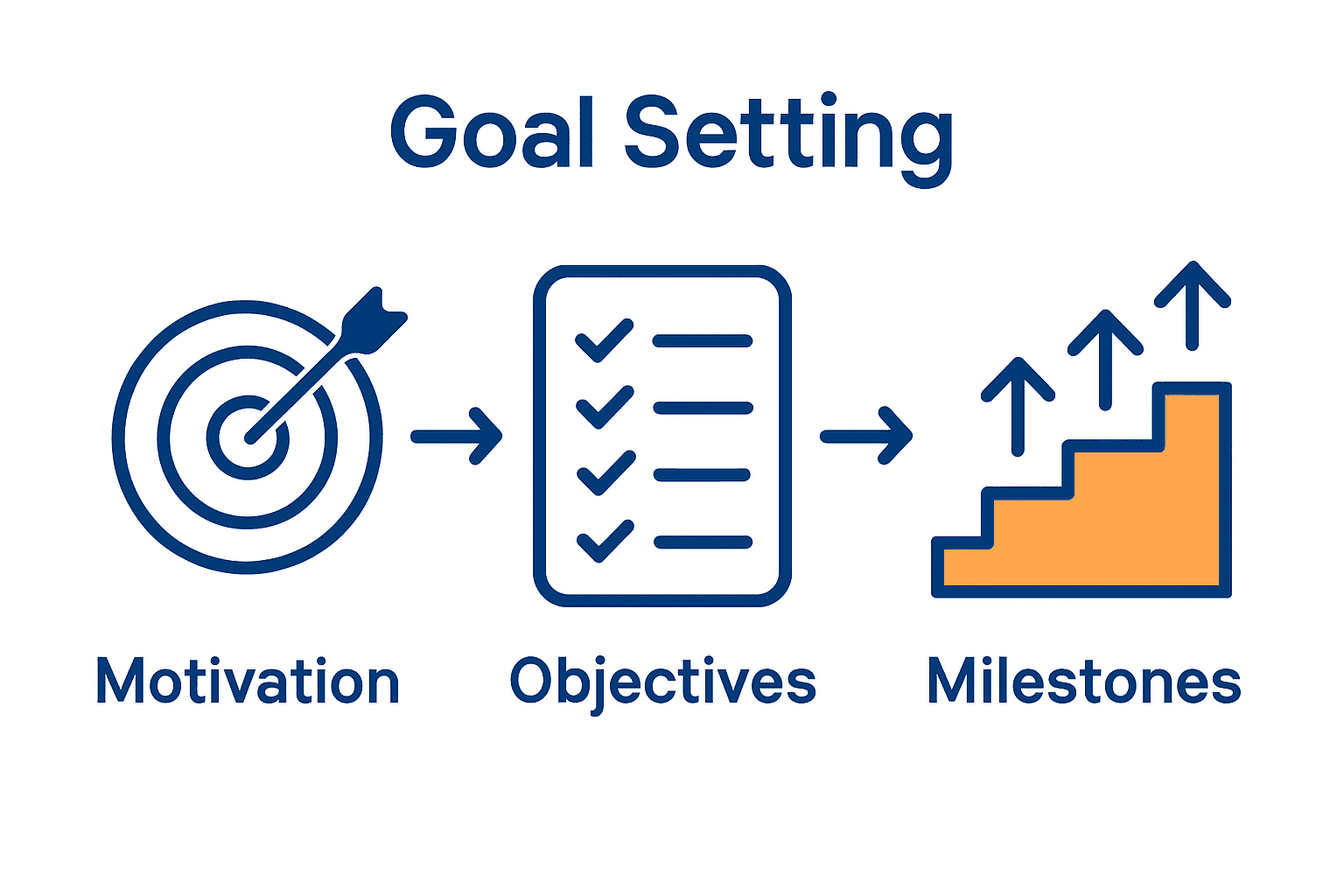
Wikipedia’s strategic alignment research emphasizes the importance of ensuring that each milestone aligns with your broader business strategy. This means every action you take should not only move you closer to your immediate goal but also support your long-term vision. A practical tip for solopreneurs is to create a visual timeline or spreadsheet that tracks these milestones. This approach helps you monitor progress, identify potential bottlenecks, and maintain motivation by celebrating small wins along the way.
As you move forward, remember that milestones are not rigid checkboxes but dynamic guides that can be adjusted as you learn and grow. Your next step will be to prioritize these milestones and create a realistic implementation strategy.
Step 4: Align goals with your AI-powered workflows
Aligning your business goals with AI-powered workflows transforms strategic planning from theoretical concepts into actionable automation. According to arxiv.org, the SYMBIOSIS methodology offers a sophisticated process for integrating business objectives with intelligent systems, enabling solopreneurs to create more efficient operational strategies.
To effectively align your goals with AI workflows, begin by mapping each business objective to specific automation opportunities. For example, if your goal is to increase client acquisition, you might leverage AI tools to automate lead generation, customer communication, and initial screening processes. Wikipedia’s BADIR framework suggests using data-driven insights to refine these workflows continuously. This means regularly analyzing the performance metrics of your AI-powered processes and adjusting them to match your evolving business objectives.
When integrating AI workflows, focus on tools that offer workflow automation capabilities that can adapt and learn from your specific business context. A critical tip is to start small start with one or two key processes and gradually expand your AI integration. This approach allows you to build confidence, understand the nuances of AI automation, and create a more sustainable transformation strategy.
Remember that AI workflows are not about replacing human creativity but enhancing it. Your next step will involve selecting the right AI tools that complement your unique business approach and help you work smarter, not just harder.
Step 5: Track progress and adjust for better results
Tracking progress and making strategic adjustments is the critical final stage of goal setting for solopreneurs. According to Wikipedia, the OKR framework provides a robust mechanism for monitoring and refining business objectives, ensuring continuous improvement and adaptability.
Establish a consistent tracking system that allows you to measure your progress against each milestone and objective. Wikipedia’s SMART criteria emphasizes the importance of setting measurable and time-bound goals that can be regularly evaluated. This might involve creating a monthly review process where you analyze key performance indicators, assess which strategies are working, and identify areas that require modification. Consider using spreadsheets, performance tracking tools, or dedicated goal management software to maintain a clear visual representation of your progress.
A practical approach is to schedule quarterly deep dive reviews where you not only examine your metrics but also reflect on the broader context of your business journey. Be prepared to pivot or adjust your strategies if certain approaches are not delivering the expected results. Some goals might need complete redesign while others might require minor tweaks. The key is maintaining flexibility and viewing these adjustments not as failures but as natural part of strategic evolution.
Remember that progress tracking is about learning and growing. Your final step will be to use these insights to continually refine your business strategy and set even more ambitious goals for the future.
Unlock Your Solopreneur Success with AI-Powered Goal Achievement
Setting clear business goals is crucial but staying on track and adapting can feel overwhelming when you are managing every aspect alone. This article highlights common challenges like breaking down objectives into actionable milestones and aligning those with efficient workflows. Fluum understands these pain points and offers an AI co-founder designed specifically for solopreneurs who want to work smarter not harder. With Fluum you can automate client outreach, manage communication, and track performance without losing focus on your core motivation and strategic objectives.
Leverage the cutting-edge AI-powered platform that learns from your unique business needs, continuously improving workflows to maximize impact. Imagine the relief as your AI co-founder handles daily operations while keeping your growth goals in sight. If you are ready to transform your business planning into seamless execution and consistent results, Fluum is your strategic partner.
Take the first step toward smarter solopreneurship and discover how Fluum can help you hit your milestones faster and with less stress.
Explore flexible plans tailored for solopreneurs at Fluum Pricing. Don’t wait to scale your business efficiently and effortlessly—start your AI-powered growth journey today.
Frequently Asked Questions
How do I identify my core business motivation as a solopreneur?
Understanding your core business motivation involves self-assessment. Ask yourself what problem you are passionate about solving and what unique skills you bring to the marketplace.
What are SMART objectives, and how do I create them?
SMART objectives are Specific, Measurable, Achievable, Relevant, and Time-bound goals. Start by translating your core motivation into a clear objective with specific metrics to measure progress, such as increasing revenue by a certain percentage within a set timeframe.
How can I break down my business objectives into actionable milestones?
To break down objectives, create specific, time-bound milestones that directly connect to your broader goals. For instance, if your goal is revenue growth, list tasks like creating a marketing plan or reaching out to new clients and set deadlines for each.
What steps should I take to align my business goals with AI workflows?
Align your business goals with AI workflows by mapping each objective to specific automation opportunities. Start small by implementing AI tools for a couple of key processes, such as automating lead generation or client communication.
How do I track my progress and make adjustments to my business goals?
Establish a consistent tracking system to monitor progress against your objectives and milestones. Schedule monthly reviews to analyze key performance indicators, and be ready to pivot your strategies based on the results you observe.
What should I do if my business goals need adjustment?
If your business goals require adjustment, reflect on your current strategies and identify whether they need minor tweaks or complete redesigns. Stay flexible and view these changes as opportunities for growth, rather than setbacks.
Recommended
- 7 Essential Business Goals Objectives For Solopreneurs
- Short Term Business Goals: Complete Expert Guide
- Complete Guide To Business Decision-Making Success
- Fluum | Effective Stress Management Techniques for Busy Professionals
- Fluum | How to Onboard Clients Effectively for Lasting Success
- Fluum | Master Managing Multiple Projects for Success
- Fluum | Build Your Brand with a Branding Builder in 2025
- Fluum | 7 Customer Retention Examples to Boost Your Business