

Balancing creativity and business is so important. More than 80 percent of american professionals say balancing creativity with clear business objectives leads to greater long-term success. Whether you run your own business or work independently, blending innovative thinking with practical goals has become central to standing out in crowded markets. This guide offers real-world ways to combine creative strengths with measurable business outcomes, giving you a clear path to smarter, more sustainable growth.
Table of Contents
- Defining Creativity Versus Business Objectives
- Types of Creative and Business Roles
- How Automation Supports Creative Work
- Managing Risks and Avoiding Burnout
- Practical Strategies for Harmonizing Both
Key Takeaways
| Point | Details |
|---|---|
| Creativity and Business Objectives are Complementary | Creativity enhances problem-solving and innovation while aligning with measurable business goals to achieve professional success. |
| Hybrid Roles are Emerging | Professionals are blending creative and business skills, requiring a balance between innovation and strategic management. |
| Automation Enhances Creative Work | Automation frees up time and resources, allowing creative professionals to focus on strategic, high-value tasks. |
| Strategic Risk Management is Essential | Establishing boundaries and systematic workflows helps prevent burnout and manage the uncertainties associated with creative work. |
Defining Creativity Versus Business Objectives
Balancing creativity and business objectives might seem like opposing forces, but they are actually complementary strategies that drive professional success. According to research from the Cambridge Handbook of Creativity, creativity in business is not about wild imagination disconnected from goals, but a structured approach to problem solving and innovation.
Creativity represents the ability to generate original, unique ideas that offer novel solutions. In a professional context, this means developing inventive approaches that address specific challenges or opportunities. Business objectives, by contrast, are the measurable, strategic targets an organization or professional wants to achieve. These might include increasing revenue, expanding market share, improving customer satisfaction, or developing new products.
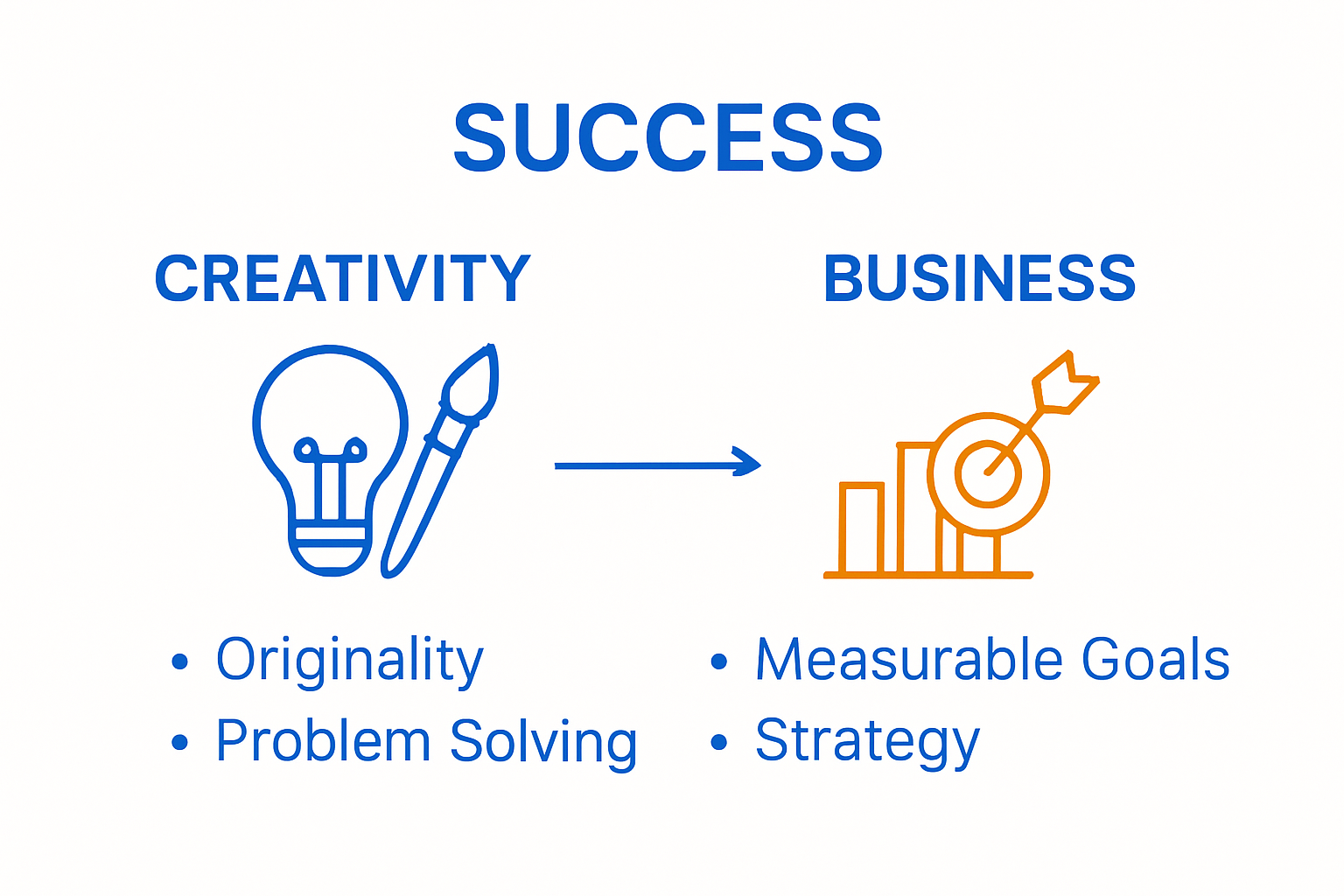
The intersection of creativity and business objectives is where true professional magic happens. As researchers note, creative processes can be strategically integrated with business goals to foster competitive advantage. This means transforming abstract creative thinking into concrete, actionable strategies. For solopreneurs and freelancers, this translates to developing innovative service offerings, unique marketing approaches, and distinctive personal branding that directly support financial and professional growth.
Successful professionals understand that creativity is not a distraction from business objectives, but a powerful tool for achieving them. By approaching creativity as a structured, goal-oriented process, independent professionals can differentiate themselves in competitive markets.
Business Objectives In A Business Plan: Complete Guide can provide additional insights into strategically aligning creative thinking with measurable professional outcomes.
Types of Creative and Business Roles
In today’s dynamic professional landscape, roles are increasingly blending creative and business responsibilities. According to research from arXiv, many modern professional roles require a sophisticated balance between creative thinking and strategic business management, challenging traditional job category boundaries.
Some key roles that exemplify this creative-business fusion include:
- Creative Directors: Responsible for overseeing artistic vision while managing budget and team performance
- Digital Product Managers: Blend technical understanding with creative problem solving
- Innovation Officers: Strategically drive organizational creativity and translate ideas into business value
A fascinating example of this evolving professional archetype is the Chief Idea Officer, as defined by Wikipedia. This executive role systematically drives creative thinking while establishing structured environments for front-end innovation. Their unique position bridges pure creativity with measurable business outcomes.
For independent professionals like solopreneurs and freelancers, understanding these hybrid roles is crucial. The ability to think creatively while maintaining clear business objectives can distinguish you in competitive markets. Understanding Finance Management For Creative Professionals offers deeper insights into managing the financial aspects of creative work effectively.
How Automation Supports Creative Work
Automation is transforming the creative landscape, enabling professionals to focus more on high-value strategic work. According to research from arXiv, business transformation initiatives are increasingly linking emerging technologies with creative occupations, fundamentally reshaping how professionals approach their work.
Key Ways Automation Supports Creative Work:
- Routine Task Elimination: Automates repetitive administrative tasks
- Time Optimization: Frees up mental energy for innovative thinking
- Precision and Consistency: Reduces manual errors in complex workflows
- Data-Driven Insights: Provides analytical support for creative decision making
Research from arXiv highlights how automation tools are changing perceptions of creativity in professional settings, particularly in fields like software engineering. These tools are not replacing creative professionals but empowering them to work more strategically and efficiently.
For solopreneurs and freelancers, automation represents a critical opportunity to streamline operations and elevate creative output. Understanding What Is Business Automation For Freelancers can provide deeper insights into implementing these transformative technologies effectively, allowing creative professionals to focus on what they do best: generating innovative solutions and delivering exceptional value to their clients.
Managing Risks and Avoiding Burnout
Creative professionals face unique challenges in managing personal and professional risks while maintaining innovative momentum. According to research from Academic Oxford University Press, specific corporate cultures can significantly enhance individual performance and mitigate burnout risks in creative environments.
Key Risk Management Strategies:
- Boundary Setting: Establish clear work-life separation
- Systematic Planning: Create structured workflow processes
Research from ScienceDirect explores innovative models for managing creativity-related risks, highlighting that successful professionals develop proactive approaches to emotional and professional challenges. Creative work inherently involves uncertainty, making strategic risk management crucial for sustainable success.
Independent professionals must develop resilience and adaptive strategies to prevent exhaustion. Practical approaches include diversifying income streams, maintaining flexible schedules, and regularly reassessing personal and professional goals. How To Handle Burnout As A Solopreneur Effectively can provide additional insights into recognizing and addressing potential burnout before it becomes a critical issue.
Practical Strategies for Harmonizing Both
Harmonizing creativity and business objectives requires intentional, strategic approaches that leverage the strengths of both domains. According to research from International Journal of Management and Applied Research, design thinking and co-creation methodologies offer powerful frameworks for integrating creative processes with concrete business goals.
Strategic Integration Techniques:
- Structured Creativity: Implement systematic innovation processes
- Measurable Creative Outcomes: Define clear metrics for creative work
- Iterative Feedback Loops: Continuously align creative output with business objectives
- Resource Allocation: Dedicate specific time and budget for innovative exploration
Research from arXiv introduces a complex systems perspective on innovation, highlighting how creative professionals can develop network-based approaches that simultaneously satisfy artistic vision and business requirements. This means creating flexible frameworks that allow for creative exploration while maintaining strategic focus.
For solopreneurs and independent professionals, the key is developing a personal workflow that treats creativity as a strategic asset. Understanding Finance Management For Creative Professionals can provide additional guidance on transforming creative insights into tangible business value, ensuring that innovative thinking directly contributes to professional growth and financial sustainability.
Unlock Your Creative Potential While Meeting Your Business Goals
Balancing creativity with business objectives is one of the biggest challenges for solopreneurs and freelancers. This article highlights how structured creativity, strategic planning, and risk management are essential to stay innovative without burnout. If you find yourself overwhelmed by routine tasks that steal time from your creative work or struggle to keep business goals aligned with your vision, you are not alone. Fluum’s AI-powered platform is built precisely to solve these pain points by acting as your AI co-founder who automates daily operations like client communication, scheduling, and sales outreach while providing personalized insights to help you grow smarter.

Take control of your business with tools designed to harmonize your creativity and objectives. Don’t let administrative overload limit your potential or speed. Visit Fluum Pricing now to discover how you can transform your workflow, increase efficiency, and focus on what you do best – creating. Elevate your freelance or solopreneur business with business automation tailored for freelancers and learn more about managing finances as a creative professional so you stay empowered every step of the way.
Frequently Asked Questions
How can creativity and business objectives work together?
Creativity and business objectives can complement each other by integrating innovative ideas into systematic strategies that support measurable goals, such as increasing revenue or enhancing customer satisfaction.
What roles combine creativity and business responsibilities?
Roles such as Creative Directors, Digital Product Managers, and Innovation Officers exemplify the fusion of creative thinking and business acumen, balancing artistic vision with strategic management.
How does automation enhance creative work in business?
Automation enhances creative work by eliminating repetitive tasks, optimizing time for innovative thinking, and providing data-driven insights that support creative decision-making.
What are some strategies for managing burnout as a creative professional?
To manage burnout, creative professionals can set boundaries, plan systematically, diversify income streams, and maintain flexibility in their schedules, allowing for regular reassessment of personal and professional goals.
Recommended
- Understanding Finance Management For Creative Professionals
- Complete Guide To Business Decision-Making Success
- How To Handle Burnout As A Solopreneur Effectively
- 7 Essential Business Goals Objectives For Solopreneurs
- How Toys Inspire Creativity: Complete Guide for Parents – Learning Bugs
- Role of Creativity in Corporate Events: Complete Guide – Uproduction
- Fluum | Effective Stress Management Techniques for Busy Professionals
- Fluum | How to Onboard Clients Effectively for Lasting Success
- Fluum | Master Managing Multiple Projects for Success
- Fluum | Build Your Brand with a Branding Builder in 2025
- Fluum | 7 Customer Retention Examples to Boost Your Business