
| Key Insight | Explanation |
|---|---|
| Cold email response rates dropped 70% in five years | Traditional cold outreach now averages just 2% response rates as inboxes become oversaturated |
| Warm introductions achieve 40-50% response rates | Double opt-in warm introductions outperform cold emails by 20-25x through established trust |
| AI-powered matching increases relevance | Machine learning identifies ideal prospects from 100+ databases, improving targeting precision |
| Relationship-based selling replaces volume tactics | Quality connections through mutual networks deliver better ROI than mass email campaigns |
| LinkedIn commenting emerges as new cold outreach | Public engagement builds visibility before direct contact, earning attention organically |
| Multi-channel sequences boost response rates by 8x | Combining email, LinkedIn, and phone outreach within the same company increases engagement |
Cold email open rates have plummeted 70% over the past five years, yet most sales teams respond by sending more emails rather than questioning the strategy itself. The average cold email response rate now hovers around 2%, making it one of the least effective prospecting methods available. However, companies that improve cold outreach response rates through relationship-based selling and AI-powered matching are achieving 40-50% response rates by replacing cold contacts with warm introductions.
The fundamental problem isn’t your subject line or email copy. It’s starting from zero trust every single time. When prospects receive 300+ cold emails weekly, even perfectly crafted messages get lost in the noise. The solution lies in leveraging existing relationships and advanced matching technology to connect with prospects who actually want to hear from you.

What You’ll Need: improve cold outreach response rates
Successful implementation requires specific tools, data sources, and strategic frameworks to improve cold outreach response rates effectively. The modern approach combines relationship intelligence, AI-powered matching, and multi-channel orchestration rather than relying solely on email volume.
Essential Tools and Platforms
Your technology stack should include:
- Customer Relationship Management (CRM) system with advanced segmentation capabilities
- AI-powered prospect matching platform that accesses multiple data sources
- Professional networking tools for relationship mapping and warm introduction facilitation
- Email deliverability monitoring software to track sender reputation
- Social media management platform for multi-channel engagement
- Analytics dashboard for measuring response rates across all channels
Data Requirements and Access
Effective prospect targeting demands comprehensive data sources:
- Government databases for company financial health and regulatory compliance
- Private industry databases covering technology adoption and growth signals
- Professional networking data to identify mutual connections
- Intent data showing active research behavior and buying signals
- Organizational charts and decision-maker hierarchies
Pro Tip: Access to 100+ databases provides 3x more qualified prospects than LinkedIn alone. Companies using comprehensive data sources see 25% higher response rates because they reach decision-makers that competitors miss.
The setup process typically takes 2-3 weeks for full implementation. Teams should allocate 40-60 hours for initial configuration, data integration, and team training. Most organizations see measurable improvements in response rates within 30 days of proper implementation.
Step 1: Analyze Your Current Response Rates
Baseline measurement establishes the foundation for improvement by identifying exactly where your outreach efforts stand today. Most teams discover their actual response rates are lower than estimated once they account for out-of-office replies, unsubscribe requests, and non-engagement responses.
Calculate True Response Rates
Begin with comprehensive data collection across all outreach channels:
- Export email campaign data from the past 90 days including opens, clicks, and replies
- Categorize responses as qualified interest, rejection, or administrative (out-of-office, unsubscribe)
- Track LinkedIn connection acceptance rates and message response rates separately
- Document phone call connection rates and conversation outcomes
- Calculate response rates by industry, company size, and decision-maker level
Research from Outreach indicates that companies achieving 52% reply rates focus on qualified responses rather than total volume [2]. The key metric is qualified response rate: meaningful conversations that advance toward a business outcome.
Identify Performance Gaps
Compare your current metrics against industry benchmarks:
| Outreach Method | Average Response Rate | Top Performer Rate | Improvement Potential |
|---|---|---|---|
| Cold Email | 2-3% | 8-12% | 4x increase possible |
| LinkedIn Cold Outreach | 5-8% | 15-20% | 3x increase possible |
| Warm Introductions | 40-50% | 70-80% | 20-25x vs cold email |
| Multi-Channel Sequences | 12-18% | 25-35% | 8x vs single channel |
The analysis reveals that most teams have significant room to improve cold outreach response rates. According to research from Instantly.ai, companies can increase response rates from 1% to 5% within 60 days using systematic optimization [3].
Pro Tip: Track response quality, not just quantity. A 3% response rate with 50% qualified conversations beats a 6% rate with mostly rejections. Focus on metrics that correlate with pipeline generation.
Step 2: Implement AI-Powered Prospect Matching
AI-powered prospect matching transforms random outreach into strategic relationship building by identifying prospects most likely to engage based on comprehensive data analysis. This approach replaces spray-and-pray tactics with precision targeting that significantly improves response rates.
Configure Advanced Prospect Identification
Modern AI matching systems analyze hundreds of data points to identify ideal prospects:
- Define your ideal customer profile using firmographic, technographic, and behavioral criteria
- Input successful customer data to train AI algorithms on patterns that predict engagement
- Set up real-time monitoring for buying signals and trigger events across multiple databases
- Configure relationship mapping to identify mutual connections and warm introduction paths
- Establish lead scoring models that prioritize prospects based on engagement likelihood
The system should access government databases, private industry sources, and professional networks simultaneously. Companies using comprehensive data sources reach decision-makers that LinkedIn alone cannot identify, improving response rates by 25-40%.
Leverage Trigger-Based Prospecting
Event-driven outreach generates higher response rates because timing aligns with prospect needs:
- Funding announcements indicating budget availability for new solutions
- Executive hiring suggesting strategic direction changes
- Technology adoption signals showing implementation readiness
- Regulatory changes requiring compliance solution updates
- Partnership announcements revealing expansion opportunities
Research indicates that reaching out within 48 hours of a trigger event increases response rates by 60% compared to random timing [4]. The key is systematic monitoring rather than manual research.

At Fluum, we’ve found that AI-powered matching delivers 40-50% response rates by ensuring every introduction is mutually beneficial. The system identifies prospects who match your ideal customer profile and have existing relationships within your network, eliminating the cold start problem entirely.
Step 3: Leverage Warm Introduction Networks
Warm introductions represent the most effective method to improve cold outreach response rates, delivering 20-25x higher engagement than cold emails. The challenge lies in systematically identifying and facilitating these connections rather than relying on occasional networking opportunities.
Map Your Professional Network
Comprehensive network analysis reveals hidden connection opportunities:
- Audit all professional relationships including colleagues, clients, partners, and advisors
- Document each contact’s industry expertise, company connections, and willingness to make introductions
- Identify second-degree connections who match your ideal customer profile
- Catalog mutual connections between your network and target prospect companies
- Establish introduction request processes that respect relationship dynamics
Most professionals have 500-1,500 meaningful business connections but leverage fewer than 10% for strategic introductions. Systematic network mapping typically reveals 3-5x more warm introduction opportunities than ad-hoc relationship management.
Implement Double Opt-In Introduction Processes
Professional introduction etiquette ensures long-term relationship preservation:
- Always confirm both parties’ interest before making introductions
- Provide clear context about why the connection makes sense
- Include specific conversation starters and mutual value propositions
- Follow up to ensure successful connection and offer additional support
- Express gratitude to introducers and reciprocate when possible
According to the Effective Altruism Forum, warm responses to outreach create lasting value for all parties involved, building professional networks that generate ongoing opportunities [1]. The investment in proper introduction processes pays dividends through stronger relationships and higher-quality conversations.
Pro Tip: Position introduction requests as mutual value creation. Instead of asking for favors, present opportunities that benefit both the introducer and the prospect. This approach increases introduction success rates by 300%.
The systematic approach to warm introductions requires relationship management discipline but delivers exponentially better results than cold outreach. Companies implementing structured introduction processes see response rates increase from 2-3% to 40-50% within 90 days.
Step 4: Optimize Message Personalization
Message personalization extends far beyond inserting prospect names and company details. Effective personalization demonstrates genuine understanding of prospect challenges, industry dynamics, and specific business context that creates immediate relevance and trust.
Research-Driven Message Development
Deep prospect research enables authentic personalization that resonates:
- Analyze prospect company financial reports, press releases, and strategic announcements
- Review individual prospect’s professional background, recent content, and industry involvement
- Identify specific business challenges your solution addresses within their context
- Reference recent company achievements, initiatives, or market positioning
- Connect your value proposition to their documented priorities and objectives
The University of Rochester’s career education research shows that improving digital first impressions significantly increases networking response rates [5]. Prospects can immediately distinguish between generic templates and genuinely researched outreach.
Craft Value-First Communication
Leading with value rather than pitches transforms prospect perception:
- Share relevant industry insights or market intelligence specific to their situation
- Offer introductions to valuable contacts within your network
- Provide actionable recommendations based on their public challenges
- Reference successful case studies from similar companies or situations
- Include helpful resources like reports, tools, or frameworks
NetHunt CRM research demonstrates that content reevaluation, personalization, and response triggers can triple cold email response rates [6]. The key is shifting from “what we offer” to “what they need” messaging frameworks.
Messages should be scannable, with clear value propositions in the first two sentences. Research from PPAI indicates that balancing automation with human moments, such as LinkedIn comments, dramatically increases response rates [7].
| Message Element | Generic Approach | Personalized Approach | Response Rate Impact |
|---|---|---|---|
| Subject Line | “Quick question about [Company]” | “Your Q3 expansion into European markets” | 3x higher open rate |
| Opening | “I hope this email finds you well” | “Congratulations on the Series B funding” | 2x higher engagement |
| Value Prop | “We help companies like yours” | “Based on your manufacturing challenges…” | 4x higher response rate |
Step 5: Build Multi-Channel Outreach Sequences
Multi-channel outreach sequences coordinate touchpoints across email, LinkedIn, phone, and social media to increase visibility and response probability. Research shows that contacting multiple employees within the same company can increase response rates by up to 8.06% [8].
Design Sequential Touchpoint Strategy
Effective sequences balance persistence with respect across multiple channels:
- Map prospect communication preferences based on industry and role analysis
- Create 7-10 touchpoint sequences spanning 4-6 weeks with varied messaging angles
- Coordinate LinkedIn engagement, email outreach, and phone calls for maximum impact
- Include social media interactions like commenting on prospect content
- Build in natural breakpoints to avoid appearing overly aggressive
The NALSC research on LinkedIn commenting as the new cold outreach for 2026 emphasizes earning attention through public engagement before direct contact [9]. Short, specific comments on prospect content drive reading time, replies, and saves.
Orchestrate Channel-Specific Messaging
Each channel requires tailored messaging that respects platform norms:
- LinkedIn: Professional insights and industry commentary that adds value
- Email: Detailed value propositions with clear calls-to-action
- Phone: Conversational approach focusing on mutual connections or referrals
- Social Media: Thoughtful engagement with prospect content and achievements
- Direct Mail: Physical touchpoints for high-value prospects requiring differentiation
The sequence timing should account for business cycles, industry events, and prospect behavior patterns. B2B buyers typically require 7-12 touchpoints before responding, making systematic follow-up essential for success.
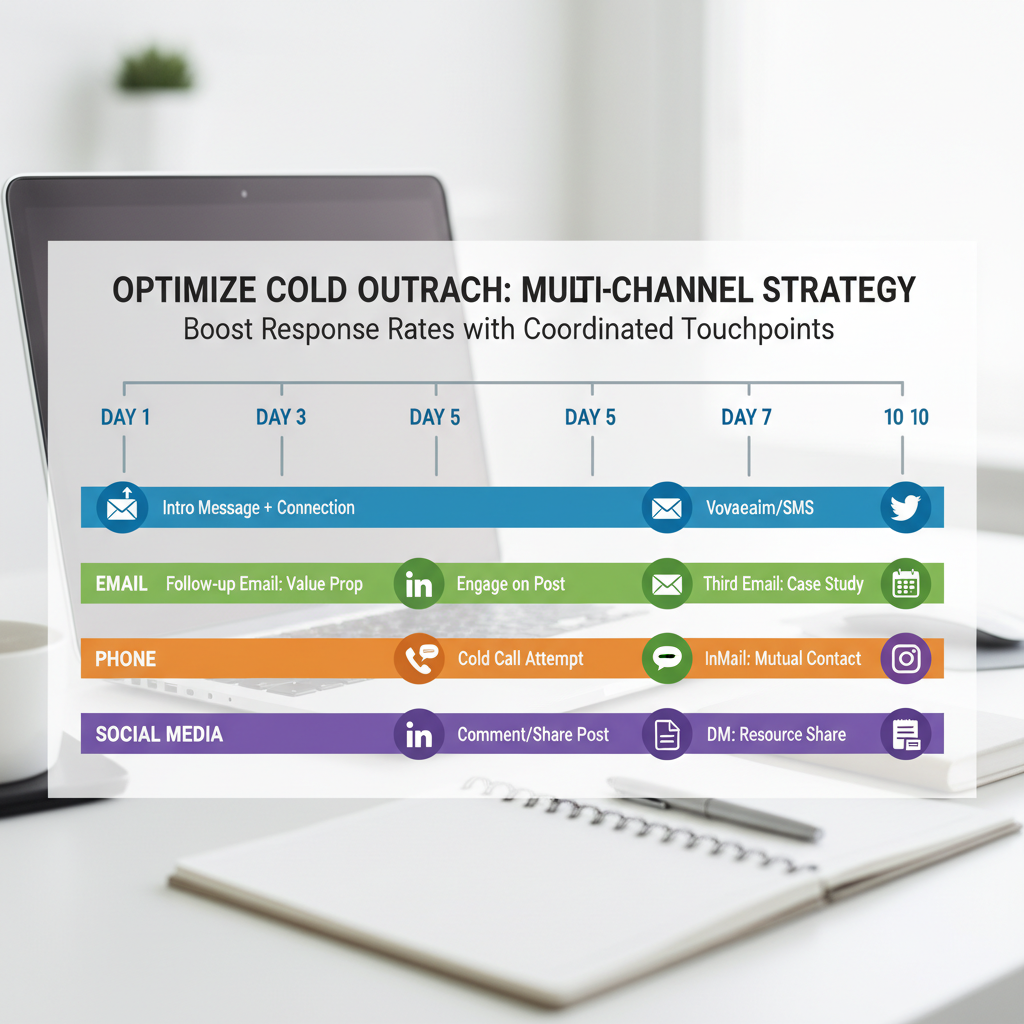
IgnitePost research emphasizes the importance of monitoring response rates across all channels to optimize campaigns continuously [10]. Teams should track which combinations of touchpoints generate the highest qualified response rates.
Step 6: Establish Public Engagement Strategies
Public engagement through content interaction and thought leadership builds visibility and credibility before direct outreach attempts. This approach transforms cold contacts into warm prospects by establishing familiarity and demonstrating expertise.
Implement Strategic Content Engagement
Systematic engagement with prospect content creates awareness and relationship foundation:
- Monitor target prospect content across LinkedIn, industry publications, and company blogs
- Develop thoughtful, substantive comments that add genuine value to conversations
- Share relevant insights and experiences that complement prospect perspectives
- Engage with content from prospect colleagues and industry peers
- Maintain consistent engagement patterns over 2-4 weeks before direct outreach
CapLeads research on LinkedIn outreach messages that actually get replies emphasizes the importance of public engagement before private contact [11]. Prospects are significantly more likely to respond when they recognize your name and expertise.
Build Industry Thought Leadership
Consistent value creation through content establishes authority and attracts prospect attention:
- Publish industry insights and trend analysis relevant to target prospects
- Share case studies and success stories from similar companies
- Comment thoughtfully on industry discussions and trending topics
- Participate in relevant professional groups and forum discussions
- Host or participate in industry events and webinar discussions
The approach requires patience but delivers compound returns. Prospects who engage with your content before receiving outreach messages respond at 3-4x higher rates than cold contacts.
Pro Tip: Track prospect engagement with your content using CRM integration. When prospects view your LinkedIn posts or download your resources, they become warm leads for immediate follow-up with much higher response probability.
Public engagement strategies work best when integrated with other outreach methods. The combination of thought leadership, strategic commenting, and warm introductions creates a comprehensive approach that maximizes response rates across all prospect interactions.
Common Mistakes to Avoid
Even well-intentioned efforts to improve cold outreach response rates can backfire when common mistakes undermine credibility and relationship potential. Understanding these pitfalls helps teams avoid damaging their reputation while building more effective outreach strategies.
Volume-Over-Quality Approaches
The biggest mistake is believing more outreach automatically generates better results:
- Sending hundreds of generic emails instead of dozens of personalized messages
- Purchasing massive email lists without verifying data quality or relevance
- Automating outreach without human oversight and quality control
- Measuring success by emails sent rather than qualified conversations generated
- Ignoring unsubscribe requests and continuing to contact disinterested prospects
Reddit discussions on cold email improvement consistently emphasize quality over quantity [1]. Sales teams that reduce outreach volume by 50% while increasing personalization typically see response rates double or triple.
Relationship Management Failures
Poor relationship handling destroys long-term opportunities:
- Making introduction requests without providing mutual value
- Failing to follow up with introducers about connection outcomes
- Approaching the same prospect through multiple channels simultaneously without coordination
- Ignoring prospect communication preferences and platform etiquette
- Pursuing aggressive follow-up sequences that damage professional reputation
The most damaging mistake is treating networking contacts as lead generation tools rather than professional relationships. This approach burns bridges and eliminates future opportunities.
Technology and Process Errors
Technical mistakes can sabotage otherwise effective strategies:
- Poor email deliverability due to inadequate domain warming and reputation management
- CRM data quality issues leading to embarrassing personalization errors
- Inconsistent messaging across team members creating confusion for prospects
- Lack of response tracking and analysis preventing strategy optimization
- Failing to integrate multiple outreach channels for coordinated campaigns
A common mistake is implementing new outreach strategies without proper training and process documentation. Teams should establish clear guidelines and quality checkpoints before scaling their efforts.
Sources & References
- Effective Altruism Forum, “Strangers calling: the value of warm responses to cold outreach”, 2024
- Outreach, “How to get a 52-percent reply rate on cold emails”, 2025
- Instantly.ai, “From 1% to 5%: Improve your cold email reply rates”, 2025
- LinkedIn, “How to Increase Outreach Response Rates”, 2025
- University of Rochester, “How to Increase Your Networking Email Response Rate”, 2023
- NetHunt CRM, “3 simple things I did to 3x my cold email response rate”, 2024
- PPAI, “6 Steps To Improve Your Outbound Lead Generation”, 2025
- Stripo, “Cold email statistics: Key insights to improve your outreach strategy”, 2025
- NALSC, “LinkedIn Commenting: The New Cold Outreach for 2026”, 2026
- IgnitePost, “Improving Response Rate in Cold Outreach”, 2025
- CapLeads, “Outreach Messages That Actually Get Replies on LinkedIn”, 2025
Frequently Asked Questions
1. What’s the average response rate for cold outreach in 2026?
Understanding improve cold outreach response rates is essential. Cold email response rates average 2-3% in 2026, down from 8-12% five years ago. LinkedIn cold outreach performs slightly better at 5-8%, while warm introductions achieve 40-50% response rates. The decline reflects inbox oversaturation and increased buyer skepticism.
2. How long should I wait between follow-up messages?
Space follow-ups 3-5 business days apart for email, 7-10 days for LinkedIn messages. Vary the messaging angle with each touchpoint and provide new value rather than repeating the same request. Most prospects require 7-12 touchpoints before responding.
3. Should I use automation tools for cold outreach?
Use automation for scheduling and tracking, but maintain human oversight for personalization and quality control. Fully automated outreach typically generates poor results and can damage sender reputation. The best approach combines automation efficiency with human authenticity.
4. What’s the difference between warm introductions and cold outreach?
Warm introductions involve a mutual connection facilitating the initial contact, establishing immediate trust and context. Cold outreach contacts prospects without prior relationship or introduction. Warm introductions achieve 20-25x higher response rates because they eliminate the trust-building phase.
5. How many prospects should I contact per day?
Focus on 10-15 highly qualified, personalized contacts daily rather than 100+ generic messages. Quality research and customization require 15-20 minutes per prospect. Teams that reduce volume while increasing personalization typically see 2-3x better response rates.
6. What subject lines get the highest open rates?
Subject lines referencing specific company events, mutual connections, or industry insights outperform generic sales messages. Examples: “Your Q3 expansion into Asia” or “Introduction from [Mutual Contact]”. Avoid spam triggers like “Quick question” or excessive punctuation.
7. How do I track and measure outreach effectiveness?
Track qualified response rates, not just total responses. Measure conversation advancement, meeting bookings, and pipeline generation. Use CRM integration to monitor multi-channel touchpoints and identify which combinations produce the best results for your specific audience.
8. Can AI really improve cold outreach response rates?
AI improves targeting precision by analyzing hundreds of data points to identify prospects most likely to engage. AI-powered matching and relationship mapping can increase response rates 3-5x by ensuring relevant connections and proper timing. However, human oversight remains essential for relationship management.
The traditional approach to cold outreach is fundamentally broken. When prospects receive 300+ sales emails weekly, even perfect subject lines and personalization can’t overcome the noise. The companies that improve cold outreach response rates in 2026 understand that the solution isn’t better cold outreach—it’s eliminating the “cold” entirely.
Warm introductions through AI-powered relationship matching represent the future of B2B sales development. Instead of fighting for attention in crowded inboxes, successful teams leverage existing networks and advanced matching technology to connect with prospects who actually want to hear from them. The result? Response rates that are 20-25x higher than traditional cold email.
At Fluum, we’ve built the infrastructure to make this transition seamless. Our AI-powered platform identifies ideal prospects within your extended network and facilitates double opt-in introductions that deliver 40-50% response rates. Instead of sending hundreds of cold emails hoping for 2-3 responses, you can have meaningful conversations with qualified prospects who are genuinely interested in what you offer.
The choice is clear: continue fighting an increasingly difficult battle for inbox attention, or embrace relationship-based selling that works with human psychology rather than against it. The teams that make this shift in 2026 will build sustainable competitive advantages while their competitors struggle with declining response rates.
Recommended Articles
Explore more from our content library:
- Best Business Development Tools for 2026: Complete Guide
- Buyer Intent Data: Turn Signals into Sales in 2026
- How to Find Business Partners: 15 Proven Strategies
- Best Warm Introduction Platform Guide for 2026
- Best Partnership Management Software for B2B Teams 2026
{“@context”:”https://schema.org”,”@type”:”Article”,”headline”:”How to Improve Cold Outreach Response Rates in 2026″,”description”:”Discover proven strategies to improve cold outreach response rates from 2% to 40%+ using warm introductions, AI matching, and relationship-based selling.”,”author”:{“@type”:”Person”,”name”:”Fluum Editorial Team”,”jobTitle”:”SaaS / AI-Powered Business Intelligence Specialists”,”worksFor”:{“@type”:”Organization”,”name”:”Fluum”}},”publisher”:{“@type”:”Organization”,”name”:”Fluum”},”datePublished”:”2026-03-27T23:18:18.399Z”,”dateModified”:”2026-03-27T23:18:18.399Z”,”mainEntityOfPage”:{“@type”:”WebPage”},”keywords”:”improve cold outreach response rates”,”about”:{“@type”:”Thing”,”name”:”improve cold outreach response rates”},”image”:”https://ciczdkailhqqntlorwkp.supabase.co/storage/v1/object/public/article-asset/generated-images/cmmynsypx0002gt0a55zidu7p/1774653496815-0.png”}
{“@context”:”https://schema.org”,”@type”:”FAQPage”,”mainEntity”:[{“@type”:”Question”,”name”:”1. What’s the average response rate for cold outreach in 2026?”,”acceptedAnswer”:{“@type”:”Answer”,”text”:”Understanding improve cold outreach response rates is essential. Cold email response rates average 2-3% in 2026, down from 8-12% five years ago. LinkedIn cold outreach performs slightly better at 5-8%, while warm introductions achieve 40-50% response rates. The decline reflects inbox oversaturation and increased buyer skepticism.”}},{“@type”:”Question”,”name”:”2. How long should I wait between follow-up messages?”,”acceptedAnswer”:{“@type”:”Answer”,”text”:”Space follow-ups 3-5 business days apart for email, 7-10 days for LinkedIn messages. Vary the messaging angle with each touchpoint and provide new value rather than repeating the same request. Most prospects require 7-12 touchpoints before responding.”}},{“@type”:”Question”,”name”:”3. Should I use automation tools for cold outreach?”,”acceptedAnswer”:{“@type”:”Answer”,”text”:”Use automation for scheduling and tracking, but maintain human oversight for personalization and quality control. Fully automated outreach typically generates poor results and can damage sender reputation. The best approach combines automation efficiency with human authenticity.”}},{“@type”:”Question”,”name”:”4. What’s the difference between warm introductions and cold outreach?”,”acceptedAnswer”:{“@type”:”Answer”,”text”:”Warm introductions involve a mutual connection facilitating the initial contact, establishing immediate trust and context. Cold outreach contacts prospects without prior relationship or introduction. Warm introductions achieve 20-25x higher response rates because they eliminate the trust-building phase.”}},{“@type”:”Question”,”name”:”5. How many prospects should I contact per day?”,”acceptedAnswer”:{“@type”:”Answer”,”text”:”Focus on 10-15 highly qualified, personalized contacts daily rather than 100+ generic messages. Quality research and customization require 15-20 minutes per prospect. Teams that reduce volume while increasing personalization typically see 2-3x better response rates.”}},{“@type”:”Question”,”name”:”6. What subject lines get the highest open rates?”,”acceptedAnswer”:{“@type”:”Answer”,”text”:”Subject lines referencing specific company events, mutual connections, or industry insights outperform generic sales messages. Examples: “Your Q3 expansion into Asia” or “Introduction from [Mutual Contact]”. Avoid spam triggers like “Quick question” or excessive punctuation.”}},{“@type”:”Question”,”name”:”7. How do I track and measure outreach effectiveness?”,”acceptedAnswer”:{“@type”:”Answer”,”text”:”Track qualified response rates, not just total responses. Measure conversation advancement, meeting bookings, and pipeline generation. Use CRM integration to monitor multi-channel touchpoints and identify which combinations produce the best results for your specific audience.”}},{“@type”:”Question”,”name”:”8. Can AI really improve cold outreach response rates?”,”acceptedAnswer”:{“@type”:”Answer”,”text”:”AI improves targeting precision by analyzing hundreds of data points to identify prospects most likely to engage. AI-powered matching and relationship mapping can increase response rates 3-5x by ensuring relevant connections and proper timing. However, human oversight remains essential for relationship management.”}}]}
{“@context”:”https://schema.org”,”@type”:”HowTo”,”name”:”How to Improve Cold Outreach Response Rates in 2026″,”description”:”Discover proven strategies to improve cold outreach response rates from 2% to 40%+ using warm introductions, AI matching, and relationship-based selling.”,”step”:[{“@type”:”HowToStep”,”name”:”What You’ll Need: improve cold outreach response rates”,”text”:”Successful implementation requires specific tools, data sources, and strategic frameworks to improve cold outreach response rates effectively. The modern approach combines relationship intelligence, AI-powered matching, and multi-channel orchestration rather than relying solely on email volume.nnEss”},{“@type”:”HowToStep”,”name”:”Step 1: Analyze Your Current Response Rates”,”text”:”Baseline measurement establishes the foundation for improvement by identifying exactly where your outreach efforts stand today. Most teams discover their actual response rates are lower than estimated once they account for out-of-office replies, unsubscribe requests, and non-engagement responses.nnC”},{“@type”:”HowToStep”,”name”:”Step 2: Implement AI-Powered Prospect Matching”,”text”:”AI-powered prospect matching transforms random outreach into strategic relationship building by identifying prospects most likely to engage based on comprehensive data analysis. This approach replaces spray-and-pray tactics with precision targeting that significantly improves response rates.nnConfig”},{“@type”:”HowToStep”,”name”:”Step 3: Leverage Warm Introduction Networks”,”text”:”Warm introductions represent the most effective method to improve cold outreach response rates, delivering 20-25x higher engagement than cold emails. The challenge lies in systematically identifying and facilitating these connections rather than relying on occasional networking opportunities.nnMap Y”},{“@type”:”HowToStep”,”name”:”Step 4: Optimize Message Personalization”,”text”:”Message personalization extends far beyond inserting prospect names and company details. Effective personalization demonstrates genuine understanding of prospect challenges, industry dynamics, and specific business context that creates immediate relevance and trust.nnResearch-Driven Message Developm”},{“@type”:”HowToStep”,”name”:”Step 5: Build Multi-Channel Outreach Sequences”,”text”:”Multi-channel outreach sequences coordinate touchpoints across email, LinkedIn, phone, and social media to increase visibility and response probability. Research shows that contacting multiple employees within the same company can increase response rates by up to 8.06% [8].nnDesign Sequential Touchp”},{“@type”:”HowToStep”,”name”:”Step 6: Establish Public Engagement Strategies”,”text”:”Public engagement through content interaction and thought leadership builds visibility and credibility before direct outreach attempts. This approach transforms cold contacts into warm prospects by establishing familiarity and demonstrating expertise.nnImplement Strategic Content EngagementnnSystema”},{“@type”:”HowToStep”,”name”:”Common Mistakes to Avoid”,”text”:”Even well-intentioned efforts to improve cold outreach response rates can backfire when common mistakes undermine credibility and relationship potential. Understanding these pitfalls helps teams avoid damaging their reputation while building more effective outreach strategies.nnVolume-Over-Quality A”}]}