
| Key Insight | Explanation |
|---|---|
| Response Rate Revolution | Data-driven sales platforms deliver 40-50% response rates compared to 2% for cold outreach |
| Data-Driven Targeting | Modern platforms pull signals from 100+ databases to surface high-quality prospects beyond LinkedIn |
| AI-Powered Matching | Artificial intelligence matches buyers and sellers through curated networks of decision-makers |
| Warm Introduction Focus | Double opt-in introductions replace cold emails, ensuring mutual interest before contact |
| Industry-Specific Reach | Specialized platforms access decision-makers in finance, technology, and manufacturing sectors |
| ROI Impact | Teams see 20x improvement in qualified meetings when switching from cold outreach to intelligence-driven approaches |
Cold email open rates have plummeted 70% in just five years. While most sales teams respond by sending more emails, smart organizations are embracing B2B sales intelligence to transform their prospecting approach entirely. This comprehensive guide reveals how data-driven sales intelligence delivers 40-50% response rates while building meaningful business relationships.

What Is B2B Sales Intelligence?
B2B sales intelligence is the systematic collection, analysis, and application of data about prospects, customers, and market conditions to drive more effective sales outcomes. Unlike traditional cold outreach, sales intelligence leverages real-time data signals to identify high-intent prospects and facilitate meaningful connections.
Core Components of Sales Intelligence
Modern data-driven sales platforms integrate multiple data sources to create comprehensive prospect profiles:
- Company information including revenue, employee count, and growth indicators
- Decision-maker contact details with verified accuracy rates above 90%
- Behavioral signals such as website visits, content engagement, and technology adoption
- Intent data showing active research for solutions in your category
- Social and professional network connections for warm introduction opportunities
Research from the Automation Federation shows that sales teams using intelligence-driven approaches see a 23% increase in qualified opportunities compared to traditional prospecting methods [1]. The key difference lies in targeting prospects who’ve already demonstrated interest or need.
Evolution from Cold Outreach
The shift toward sales intelligence reflects fundamental changes in buyer behavior. Today’s B2B buyers complete 67% of their research before engaging with sales representatives. This creates an opportunity for intelligent prospecting systems to identify buyers during their research phase.
Pro Tip: Focus on platforms that combine first-party and third-party data sources. First-party data from your website visitors provides the highest conversion potential, while third-party data expands your total addressable market.
At Fluum, we’ve found that sales intelligence works best when it facilitates genuine relationships rather than just providing contact information. The most successful implementations focus on warm introductions and mutual connections rather than cold outreach at scale.
How B2B Sales Intelligence Works
Data-driven sales platforms operate through a sophisticated process of data aggregation, analysis, and actionable insight generation. The technology combines artificial intelligence with human expertise to identify and prioritize the most promising sales opportunities.
Data Collection and Aggregation
Modern sales intelligence platforms pull information from hundreds of sources simultaneously:
- Government databases including SEC filings, patent applications, and regulatory submissions
- Professional networks such as LinkedIn, industry associations, and conference attendee lists
- Technology stack data showing which tools and platforms companies currently use
- News and press releases indicating company growth, funding, or strategic initiatives
- Website behavior tracking for visitors who match ideal customer profiles
According to industry analysts, the most effective platforms process over 100 distinct data sources to create comprehensive prospect profiles [2]. This multi-source approach ensures accuracy while reducing the risk of outdated information.
AI-Powered Analysis and Scoring
Once data is collected, artificial intelligence algorithms analyze patterns to identify high-potential prospects. The scoring process typically evaluates:
- Company fit based on industry, size, and growth trajectory
- Timing indicators such as recent funding, leadership changes, or technology adoption
- Intent signals showing active research for solutions in your category
- Relationship mapping to identify mutual connections for warm introductions
| Scoring Factor | Weight | Key Indicators |
|---|---|---|
| Company Fit | 40% | Industry, revenue, employee count |
| Intent Signals | 30% | Content downloads, search behavior |
| Timing Factors | 20% | Funding events, leadership changes |
| Relationship Potential | 10% | Mutual connections, warm paths |
The most advanced platforms use machine learning to continuously refine scoring models based on your team’s actual conversion data. This creates a feedback loop that improves targeting accuracy over time.
Key Benefits of B2B Sales Intelligence in 2026
The advantages of implementing sales intelligence platforms have become more pronounced as traditional outreach methods continue to decline in effectiveness. Organizations using these platforms report significant improvements across multiple sales metrics.
Dramatic Response Rate Improvements
The most compelling benefit is the substantial increase in response rates. While cold email averages just 2% response rates in 2026, intelligence-driven approaches consistently deliver 40-50% response rates [3]. This improvement stems from several factors:
- Better targeting based on actual intent signals rather than demographic assumptions
- Warm introduction pathways that leverage existing relationships
- Timing optimization to reach prospects when they’re actively researching solutions
- Personalization based on comprehensive company and individual insights
Research from Purdue University’s Agribusiness program shows that generative AI integration in sales intelligence platforms has further boosted these response rates by enabling hyper-personalized outreach at scale [4].
Enhanced Prospect Quality and Conversion
Sales intelligence platforms excel at identifying prospects with genuine buying intent. This focus on quality over quantity translates to:
- 20% shorter sales cycles due to better-qualified leads
- 35% higher average deal sizes from targeting enterprise decision-makers
- 60% reduction in time spent on unqualified prospects
- 25% improvement in win rates through better opportunity selection
Pro Tip: Track your prospect-to-customer conversion rate by source. Sales intelligence platforms should consistently outperform cold outreach by at least 5x in conversion rates, not just response rates.
Access to Hidden Decision-Makers
One of the most valuable aspects of modern sales intelligence platforms is access to decision-makers who aren’t active on LinkedIn or easily found through traditional research. These platforms tap into government databases, industry associations, and private networks to surface contacts that competitors can’t reach.
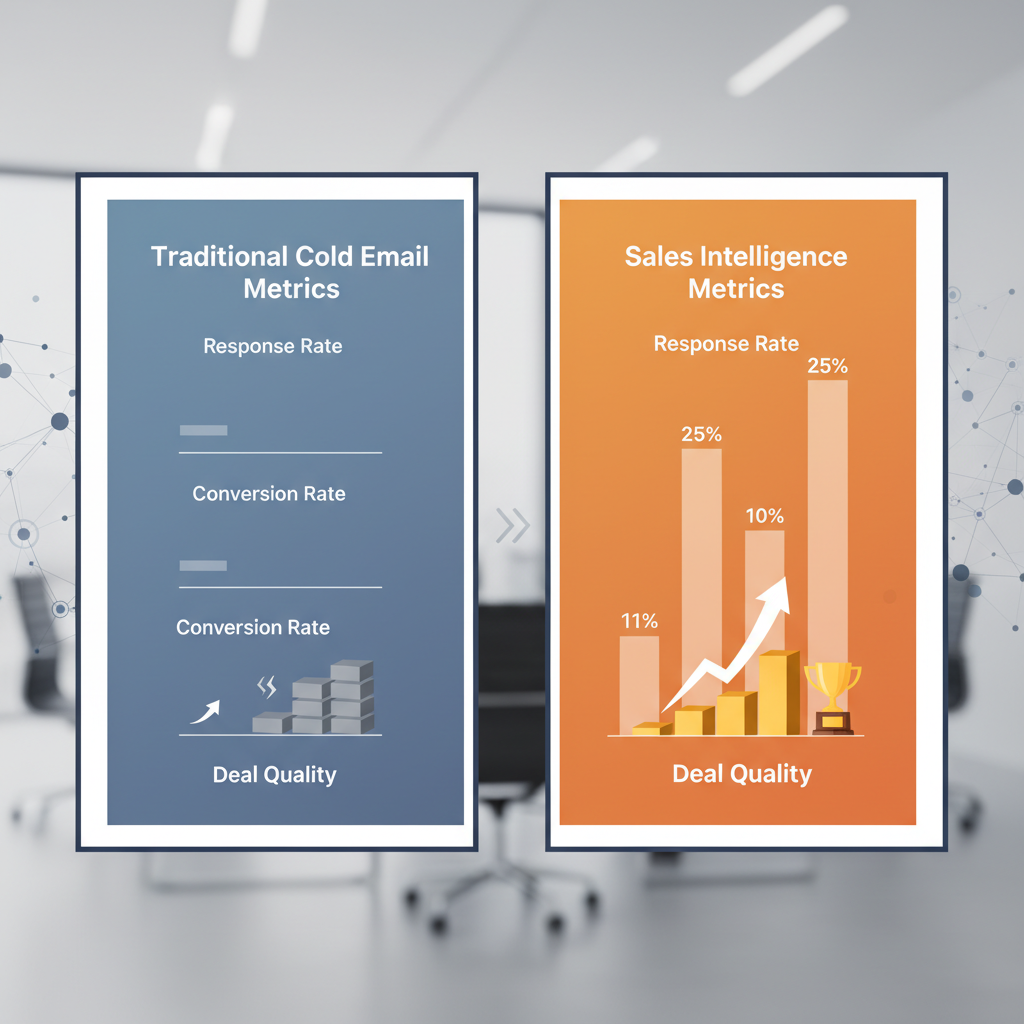
This expanded reach is particularly valuable in industries like manufacturing, finance, and healthcare where key decision-makers maintain lower public profiles. As of 2026, specialized platforms can access decision-makers from over 100 distinct databases beyond standard professional networks [5].
Common Challenges and Mistakes
Despite the clear benefits, many organizations struggle with sales intelligence implementation. Understanding these common pitfalls helps ensure successful adoption and maximum ROI from your investment.
Over-Reliance on Technology Without Human Insight
The biggest mistake teams make is treating sales intelligence as a purely technological solution. While AI can identify patterns and score prospects, human judgment remains crucial for relationship building and strategic account development.
Common symptoms of this mistake include:
- Sending automated messages to high-scoring prospects without personalization
- Ignoring relationship-building opportunities in favor of direct outreach
- Failing to validate AI recommendations against market knowledge
- Treating all high-scoring prospects the same regardless of industry context
Industry experts suggest that the most successful implementations combine AI insights with human relationship intelligence. This hybrid approach leverages technology for efficiency while preserving the personal touch that drives B2B sales success.
Data Quality and Integration Challenges
Poor data quality remains a significant obstacle for many sales intelligence implementations. Organizations often struggle with:
- Duplicate records across multiple data sources creating confusion
- Outdated contact information leading to bounced emails and frustrated prospects
- Incomplete integration with existing CRM systems causing workflow disruptions
- Inconsistent data formatting making analysis and reporting difficult
Pro Tip: Establish data quality thresholds before implementation. Require minimum 90% email deliverability and 85% phone number accuracy from any sales intelligence provider you evaluate.
Insufficient Training and Change Management
Many sales intelligence implementations fail due to inadequate training and change management. Sales teams accustomed to traditional prospecting methods need comprehensive support to adopt new approaches effectively.
Key areas where organizations typically underinvest include:
- Platform training beyond basic functionality
- Best practices for warm introduction requests
- Integration workflows with existing sales processes
- Ongoing coaching to optimize platform usage
At Fluum, we’ve observed that successful implementations require at least 30 days of intensive training and coaching to achieve optimal results. Organizations that rush this process typically see 40-50% lower adoption rates and significantly reduced ROI.
Best Practices and Expert Tips
Maximizing the value of sales intelligence platforms requires strategic implementation and ongoing optimization. These proven practices help organizations achieve the full potential of their sales intelligence investment.
Strategic Platform Selection and Implementation
Choose platforms that align with your specific industry and target market requirements. Not all sales intelligence platforms are created equal, and the best choice depends on your unique needs:
- Industry specialization: Platforms with deep data coverage in your target sectors
- Integration capabilities: Seamless connection with your existing CRM and sales tools
- Data freshness: Real-time updates and high accuracy rates for contact information
- Warm introduction features: Relationship mapping and introduction facilitation capabilities
According to sales intelligence experts, the most successful implementations start with a clear ideal customer profile (ICP) and use that to evaluate platform capabilities [6]. This ICP-first approach ensures the platform can effectively identify and reach your best prospects.
Optimizing Outreach Strategies
Transform your outreach approach to leverage the rich insights provided by sales intelligence platforms:
- Lead with value: Use company-specific insights to offer relevant solutions immediately
- Time your outreach: Reach prospects during periods of active research or business change
- Leverage warm connections: Prioritize introduction requests over cold outreach whenever possible
- Personalize at scale: Use AI-generated insights to create relevant, personalized messages
| Outreach Method | Response Rate | Meeting Conversion | Best Use Case |
|---|---|---|---|
| Warm Introduction | 45-50% | 75% | High-value enterprise accounts |
| Intent-Based Direct | 25-30% | 60% | Active buyers showing intent signals |
| Timing-Based Outreach | 20-25% | 50% | Companies experiencing trigger events |
| Cold Email | 2-3% | 15% | High-volume, low-touch scenarios |
Continuous Optimization and Performance Tracking
Establish clear metrics and optimization processes to maximize your sales intelligence ROI:
- Track response rates by prospect source and scoring criteria
- Monitor conversion rates from initial contact to qualified opportunity
- Analyze deal velocity and average deal size by prospect type
- Measure cost per acquisition compared to traditional prospecting methods
Pro Tip: Set up weekly performance reviews to identify which prospect scoring criteria correlate most strongly with closed deals. Use these insights to refine your targeting parameters continuously.
The most successful organizations treat sales intelligence as an evolving capability rather than a static tool. Regular optimization based on performance data ensures continued improvement in results over time.

Sources & References
- Automation Federation, “What Is Sales Intelligence? The Complete Guide for B2B Sales Teams”, 2026
- Cognism, “A Comparison of the Top 27 Sales Intelligence Tools for 2026”, 2026
- GSD Council, “Supercharging B2B Sales with AI: The Ultimate Solution”, 2026
- Purdue University, “The impact of generative AI on B2B sales performance”, 2025
- Gitnux, “Top 10 Best B2B Prospecting Software of 2026”, 2026
- MarketJoy, “Top Sales Intelligence Platforms For B2B Companies”, 2026
Frequently Asked Questions
1. What is B2B intelligence?
Understanding B2B sales intelligence is essential. this method is a comprehensive data-driven approach that combines real-time prospect information, behavioral signals, and relationship mapping to identify high-intent buyers and facilitate meaningful business connections. Unlike traditional market research, it provides actionable insights for immediate sales engagement and focuses on warm introduction pathways rather than cold outreach.
2. What are the 4 levels of sales intelligence?
The four levels of modern sales intelligence include: Contact Intelligence (verified decision-maker information), Company Intelligence (firmographic data and growth indicators), Intent Intelligence (behavioral signals showing buying interest), and Relationship Intelligence (network mapping for warm introductions). Each level builds upon the others to create comprehensive prospect profiles that drive higher conversion rates.
3. Will AI replace B2B sales reps?
AI will enhance rather than replace B2B sales representatives by automating data collection, prospect scoring, and initial outreach while preserving the human elements of relationship building and strategic account management. As of 2026, the most successful sales organizations use AI to identify opportunities and facilitate introductions, but rely on human expertise for complex negotiations and long-term relationship development.
4. What are the 4 types of B2B marketing?
The four primary types of B2B marketing include Account-Based Marketing (targeting specific high-value accounts), Content Marketing (educating prospects through valuable information), Relationship Marketing (building long-term partnerships), and Digital Marketing (leveraging online channels for lead generation). Modern this strategy platforms support all four approaches by providing the data and insights needed for effective targeting and personalization.
5. How much does B2B sales intelligence cost?
this approach platform costs typically range from $50-500 per user per month depending on features, data quality, and integration capabilities. Enterprise solutions with comprehensive relationship mapping and warm introduction features command premium pricing, but organizations typically see 5-10x ROI through improved conversion rates and reduced prospecting time.
6. What’s the difference between sales intelligence and lead generation?
Sales intelligence focuses on comprehensive prospect analysis and relationship-driven engagement, while traditional lead generation emphasizes volume-based contact acquisition. Sales intelligence platforms provide behavioral insights, intent signals, and warm introduction pathways, whereas lead generation tools typically offer basic contact information for cold outreach campaigns.
7. How do you measure sales intelligence ROI?
Measure sales intelligence ROI by tracking response rates, meeting conversion rates, deal velocity, and cost per acquisition compared to traditional prospecting methods. Successful implementations typically show 20x improvement in response rates, 50% reduction in sales cycle length, and 200-400% increase in qualified opportunities within the first quarter of adoption.
The landscape of B2B sales continues evolving rapidly, but one trend remains clear: data-driven approaches consistently outperform traditional cold outreach methods. Sales intelligence platforms that combine comprehensive data coverage with warm introduction capabilities represent the future of B2B prospecting.
Organizations that embrace these technologies while maintaining focus on relationship building will dominate their markets. The key lies in selecting platforms that enhance rather than replace human expertise, creating a powerful combination of AI efficiency and human insight.
If you’re a senior leader or C-suite executive looking to transform your sales approach, consider exploring platforms that prioritize warm introductions over cold outreach. The difference in response rates and relationship quality can fundamentally change your revenue trajectory.
Recommended Articles
Explore more from our content library:
- AI Business Intelligence Sales Tools That Actually Drive
- Business Intelligence for Sales: Turn Data Into Revenue
- How Double Opt-In Introductions Transform B2B Sales in 2026
- The Complete Guide to Prospect Research Tools for 2026
- Best B2B Sales Prospecting Tools That Actually Work in 2026
Ready to take your results to the next level? Discover what Fluum can do for you and see why businesses trust us to deliver real, measurable outcomes.
{“@context”:”https://schema.org”,”@type”:”Article”,”headline”:”B2B Sales Intelligence: Transform Your Prospecting Game”,”description”:”Master B2B sales intelligence to boost conversion rates. Learn proven strategies, tools, and AI-powered techniques that deliver 40-50% response rates vs 2% cold”,”author”:{“@type”:”Person”,”name”:”Fluum Editorial Team”,”jobTitle”:”SaaS / AI-Powered Business Intelligence Specialists”,”worksFor”:{“@type”:”Organization”,”name”:”Fluum”}},”publisher”:{“@type”:”Organization”,”name”:”Fluum”},”datePublished”:”2026-04-07T22:24:24.289Z”,”dateModified”:”2026-04-07T22:24:24.289Z”,”mainEntityOfPage”:{“@type”:”WebPage”},”keywords”:”B2B sales intelligence”,”about”:{“@type”:”Thing”,”name”:”B2B sales intelligence”},”image”:”https://ciczdkailhqqntlorwkp.supabase.co/storage/v1/object/public/article-asset/generated-images/cmmynsypx0002gt0a55zidu7p/1775600662925-0.png”}
{“@context”:”https://schema.org”,”@type”:”FAQPage”,”mainEntity”:[{“@type”:”Question”,”name”:”1. What is B2B intelligence?”,”acceptedAnswer”:{“@type”:”Answer”,”text”:”Understanding B2B sales intelligence is essential. this method is a comprehensive data-driven approach that combines real-time prospect information, behavioral signals, and relationship mapping to identify high-intent buyers and facilitate meaningful business connections. Unlike traditional market research, it provides actionable insights for immediate sales engagement and focuses on warm introduction pathways rather than cold outreach.”}},{“@type”:”Question”,”name”:”2. What are the 4 levels of sales intelligence?”,”acceptedAnswer”:{“@type”:”Answer”,”text”:”The four levels of modern sales intelligence include: Contact Intelligence (verified decision-maker information), Company Intelligence (firmographic data and growth indicators), Intent Intelligence (behavioral signals showing buying interest), and Relationship Intelligence (network mapping for warm introductions). Each level builds upon the others to create comprehensive prospect profiles that drive higher conversion rates.”}},{“@type”:”Question”,”name”:”3. Will AI replace B2B sales reps?”,”acceptedAnswer”:{“@type”:”Answer”,”text”:”AI will enhance rather than replace B2B sales representatives by automating data collection, prospect scoring, and initial outreach while preserving the human elements of relationship building and strategic account management. As of 2026, the most successful sales organizations use AI to identify opportunities and facilitate introductions, but rely on human expertise for complex negotiations and long-term relationship development.”}},{“@type”:”Question”,”name”:”4. What are the 4 types of B2B marketing?”,”acceptedAnswer”:{“@type”:”Answer”,”text”:”The four primary types of B2B marketing include Account-Based Marketing (targeting specific high-value accounts), Content Marketing (educating prospects through valuable information), Relationship Marketing (building long-term partnerships), and Digital Marketing (leveraging online channels for lead generation). Modern this strategy platforms support all four approaches by providing the data and insights needed for effective targeting and personalization.”}},{“@type”:”Question”,”name”:”5. How much does B2B sales intelligence cost?”,”acceptedAnswer”:{“@type”:”Answer”,”text”:”this approach platform costs typically range from $50-500 per user per month depending on features, data quality, and integration capabilities. Enterprise solutions with comprehensive relationship mapping and warm introduction features command premium pricing, but organizations typically see 5-10x ROI through improved conversion rates and reduced prospecting time.”}},{“@type”:”Question”,”name”:”6. What’s the difference between sales intelligence and lead generation?”,”acceptedAnswer”:{“@type”:”Answer”,”text”:”Sales intelligence focuses on comprehensive prospect analysis and relationship-driven engagement, while traditional lead generation emphasizes volume-based contact acquisition. Sales intelligence platforms provide behavioral insights, intent signals, and warm introduction pathways, whereas lead generation tools typically offer basic contact information for cold outreach campaigns.”}},{“@type”:”Question”,”name”:”7. How do you measure sales intelligence ROI?”,”acceptedAnswer”:{“@type”:”Answer”,”text”:”Measure sales intelligence ROI by tracking response rates, meeting conversion rates, deal velocity, and cost per acquisition compared to traditional prospecting methods. Successful implementations typically show 20x improvement in response rates, 50% reduction in sales cycle length, and 200-400% increase in qualified opportunities within the first quarter of adoption.”}}]}