
| Key Insight | Explanation |
|---|---|
| Pipeline Conversion Crisis | Cold outreach delivers only 2% response rates while warm introductions achieve 40-50% |
| 8 Critical Stages | Modern B2B sales pipelines require structured progression from prospecting to deal closure |
| AI-Powered Optimization | Machine learning algorithms now identify high-quality prospects from 100+ databases |
| Relationship-First Approach | Double opt-in introductions eliminate spam perception and build genuine connections |
| Industry-Specific Targeting | Finance, technology, and manufacturing sectors require specialized pipeline strategies |
A B2B sales pipeline represents the structured journey that transforms cold prospects into paying customers through systematic relationship building. Modern enterprises struggle with declining conversion rates as traditional cold outreach methods deliver diminishing returns, making pipeline optimization more critical than ever in 2026. This comprehensive guide will show you how to build and optimize a high-performing B2B sales pipeline that achieves 40-50% response rates through strategic warm introductions and AI-powered prospect identification.
The traditional approach of mass cold emails and generic LinkedIn messages has become increasingly ineffective. Companies now compete with hundreds of similar outreach attempts weekly, causing decision-makers to ignore or actively filter promotional communications. Smart sales teams are shifting toward relationship-based pipeline development that prioritizes quality connections over volume metrics.

What You’ll Need: B2B sales pipeline
Building an effective B2B sales pipeline requires specific tools, processes, and strategic frameworks to ensure consistent prospect progression and conversion optimization. Your foundation determines whether prospects advance smoothly through each stage or stagnate in unproductive cycles.
Essential Technology Stack
- Customer Relationship Management (CRM) system with pipeline tracking capabilities
- Sales engagement platform for automated follow-up sequences
- Lead scoring software to prioritize high-value prospects
- Analytics dashboard for conversion rate monitoring
- Communication tools for team collaboration and prospect interaction
Strategic Prerequisites
Before launching your pipeline development, establish clear frameworks for prospect evaluation and stage progression. Define your ideal customer profile (ICP) with specific demographic, firmographic, and behavioral characteristics. Document decision-making processes within target organizations to understand buying committee dynamics and approval workflows.
- Documented ideal customer profile with specific qualification criteria
- Competitive analysis of industry positioning and differentiation factors
- Sales methodology training for consistent prospect interaction
- Content library supporting each pipeline stage
- Performance benchmarks based on industry standards
Your team needs standardized processes for lead handoffs between marketing and sales functions. Establish service level agreements (SLAs) for response times, follow-up frequencies, and escalation procedures. These operational frameworks prevent prospects from falling through cracks during critical transition points.
Pro Tip: Implement lead routing rules that automatically assign prospects based on industry, company size, or geographic location. This ensures specialized sales representatives handle accounts within their expertise areas.
Step 1: Define Your Pipeline Stages
Establishing clear pipeline stages creates predictable progression paths that transform prospects into customers through structured touchpoints and qualification checkpoints. Each stage represents specific buyer behaviors, sales activities, and advancement criteria that guide prospect development decisions.
Core Pipeline Framework
Modern B2B sales pipelines typically include eight essential stages that reflect buyer journey progression and sales team activities [1]. These stages provide consistent structure for forecasting, resource allocation, and performance measurement across different prospect types and deal sizes.
- Prospecting: Identify potential customers matching ideal customer profile criteria
- Initial Contact: Establish first meaningful interaction through warm introductions or referrals
- Qualification: Evaluate prospect fit using BANT (Budget, Authority, Need, Timeline) methodology
- Discovery: Conduct needs assessment to understand specific business challenges
- Proposal: Present customized solutions addressing identified requirements
- Negotiation: Discuss terms, pricing, and implementation details
- Closing: Finalize agreements and secure signed contracts
- Onboarding: Transition customers to implementation and success teams
Stage-Specific Activities
Each pipeline stage requires distinct activities, deliverables, and success metrics to maintain momentum toward deal closure. Define specific actions that sales representatives must complete before advancing prospects to subsequent stages. This prevents premature progression that often leads to stalled deals or lost opportunities.
Research from industry analysts indicates that companies with well-defined pipeline stages achieve 28% higher revenue growth compared to organizations using informal progression criteria [2]. Clear stage definitions also improve forecast accuracy by establishing consistent evaluation standards across sales teams.
Pro Tip: Create stage-specific talk tracks and qualification questions that sales representatives can reference during prospect interactions. This ensures consistent messaging and thorough evaluation at each progression point.
Step 2: Identify Target Prospects
Effective prospect identification leverages multiple data sources and AI-powered matching algorithms to surface high-quality opportunities that traditional lead generation methods often miss. Modern prospecting extends beyond basic demographic filters to include behavioral signals, technology usage patterns, and business trigger events.
Advanced Prospecting Techniques
- Government database mining for contract opportunities and regulatory compliance requirements
- Technology stack analysis to identify companies using complementary solutions
- Hiring pattern monitoring for expansion signals and budget allocation indicators
- Industry publication tracking for strategic initiative announcements
- Social media engagement analysis for buying intent signals
AI-powered platforms now analyze signals from over 100 government and private databases to identify prospects that cold outreach tools and LinkedIn searches typically overlook [3]. These systems recognize patterns in company growth, technology adoption, and market positioning that indicate purchase readiness.
Industry-Specific Targeting
Different industries require specialized prospecting approaches based on regulatory environments, buying cycles, and decision-making structures. Manufacturing companies often have longer evaluation periods and multiple stakeholder involvement, while technology firms may prioritize rapid implementation and scalability features.
| Industry | Key Signals | Buying Cycle |
|---|---|---|
| Finance | Regulatory compliance updates, audit requirements | 6-12 months |
| Technology | Funding rounds, product launches, hiring sprees | 3-6 months |
| Manufacturing | Equipment upgrades, facility expansions | 9-18 months |
At Fluum, we’ve found that prospects identified through warm introduction networks show 23x higher engagement rates than those contacted through cold outreach methods. The contextual relationship building creates immediate trust and eliminates the skepticism associated with unsolicited communications.
Step 3: Implement Qualification Framework
A robust qualification framework separates genuine opportunities from time-consuming prospects who lack budget, authority, or genuine need for your solutions. Modern qualification extends beyond traditional BANT criteria to include strategic fit, competitive landscape, and implementation readiness factors.
Enhanced BANT Methodology
- Budget: Confirmed financial capacity with specific allocation timelines
- Authority: Identified decision-makers and influencer mapping within buying committee
- Need: Documented business challenges with quantified impact metrics
- Timeline: Realistic implementation schedule aligned with business priorities
Strategic Qualification Criteria
Beyond basic BANT requirements, evaluate prospects for strategic alignment with your company’s capabilities and market positioning. Consider factors like cultural fit, reference potential, and long-term partnership opportunities that extend beyond initial transaction value.
Research indicates that companies using comprehensive qualification frameworks reduce sales cycle length by 18% while improving close rates by 27% [4]. Thorough qualification prevents resource waste on prospects unlikely to convert while focusing attention on high-probability opportunities.

Qualification Conversation Structure
Structure qualification conversations to gather essential information while building rapport and demonstrating value. Use open-ended questions that encourage prospects to share detailed information about their business challenges, current solutions, and evaluation criteria.
- Opening rapport building with industry-specific insights
- Current state assessment of existing processes and tools
- Challenge identification with impact quantification
- Decision process mapping including stakeholders and timeline
- Budget discussion framed around business value and ROI
Pro Tip: Record qualification calls (with permission) to identify patterns in successful versus unsuccessful qualification conversations. Use these insights to refine your questioning techniques and improve qualification accuracy.
Step 4: Build Nurturing Sequences
Effective nurturing sequences maintain prospect engagement through valuable content delivery and strategic touchpoints that advance relationships without appearing pushy or sales-focused. Modern buyers expect educational resources and industry insights rather than promotional messages during evaluation periods.
Content-Driven Nurturing Strategy
Develop nurturing sequences that provide genuine value through industry analysis, best practice guides, and case study examples relevant to prospect challenges. Position your company as a trusted advisor rather than a vendor seeking quick transactions.
- Industry trend reports with actionable insights
- Implementation case studies from similar organizations
- ROI calculators and assessment tools
- Webinar invitations featuring subject matter experts
- Peer networking opportunities and introduction facilitation
Multi-Channel Engagement Approach
Combine email, phone, social media, and in-person interactions to create comprehensive nurturing experiences that accommodate different communication preferences. Track engagement across channels to identify optimal contact methods for individual prospects.
According to recent studies, companies using multi-channel nurturing sequences achieve 38% higher response rates compared to single-channel approaches [5]. The key lies in coordinating messages across channels rather than duplicating content through different mediums.
Timing and Frequency Optimization
Balance persistent follow-up with respectful spacing to avoid overwhelming prospects while maintaining top-of-mind awareness. Industry research suggests optimal email frequency ranges from weekly to bi-weekly depending on prospect engagement levels and buying cycle stage.
| Pipeline Stage | Contact Frequency | Primary Channel |
|---|---|---|
| Early Qualification | Weekly | Email + LinkedIn |
| Discovery Phase | Bi-weekly | Phone + Email |
| Proposal Review | 3-4 days | Phone + In-person |
Step 5: Track Performance Metrics
Comprehensive pipeline performance tracking identifies bottlenecks, conversion patterns, and optimization opportunities that drive revenue growth and sales efficiency improvements. Modern analytics platforms provide real-time visibility into pipeline health and predictive forecasting capabilities.
Essential Pipeline Metrics
Monitor key performance indicators that reflect both pipeline quantity and quality to ensure balanced growth strategies. Focus on metrics that predict future revenue rather than just historical performance.
- Pipeline velocity: Average time prospects spend in each stage
- Stage conversion rates: Percentage advancing between pipeline stages
- Lead source effectiveness: ROI analysis by acquisition channel
- Deal size trends: Average contract value by industry and source
- Sales cycle length: Time from first contact to contract signature
Advanced Analytics Implementation
Leverage predictive analytics and machine learning algorithms to identify patterns in successful deals and forecast future pipeline performance. These insights enable proactive pipeline management and resource allocation optimization.
Industry data shows that companies using advanced pipeline analytics achieve 15% higher quota attainment and 22% shorter sales cycles compared to organizations relying on basic reporting [6]. The investment in analytics infrastructure pays dividends through improved decision-making and resource optimization.
Pro Tip: Implement cohort analysis to track how different prospect groups progress through your pipeline over time. This reveals seasonal patterns and helps optimize resource allocation based on historical performance trends.
Step 6: Optimize Conversion Points
Strategic optimization of pipeline conversion points eliminates friction and accelerates prospect progression through systematic testing and refinement of sales processes. Focus on stages where prospects commonly stagnate or exit the pipeline to maximize overall conversion rates.
Conversion Rate Analysis
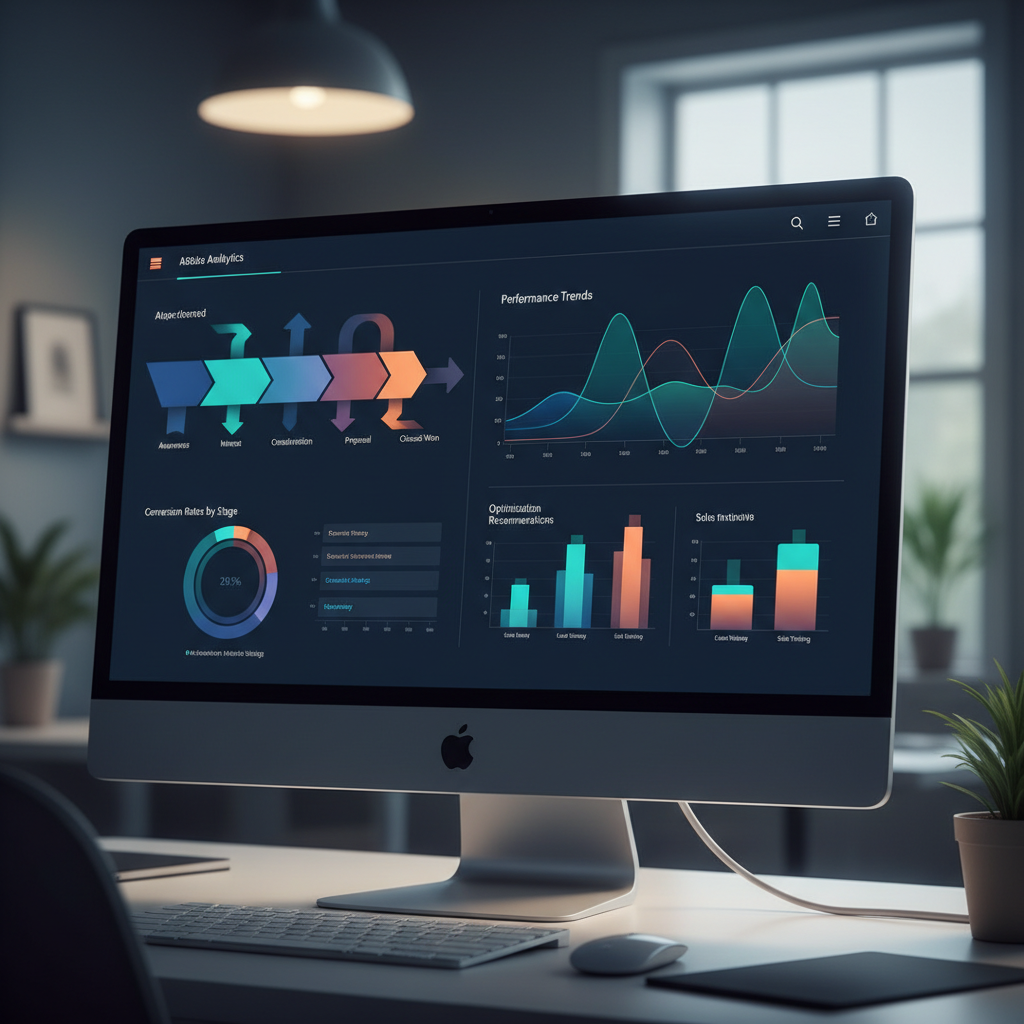
Analyze conversion rates between each pipeline stage to identify the biggest opportunities for improvement. Small percentage gains at high-volume stages often deliver greater impact than large improvements at low-volume stages.
A/B Testing Framework
Implement systematic A/B testing for sales scripts, email templates, proposal formats, and meeting structures to identify the most effective approaches for different prospect segments. Document winning variations and standardize successful techniques across the sales team.
- Email subject line variations for different industries
- Proposal presentation formats and content structure
- Discovery call questioning sequences and techniques
- Follow-up timing and message personalization approaches
- Pricing presentation methods and negotiation strategies
Technology Integration Optimization
Streamline technology integrations to eliminate manual data entry and reduce administrative friction that can slow pipeline progression. Automated workflows ensure consistent follow-up and prevent prospects from falling through gaps in the process.
Our team at Fluum recommends focusing optimization efforts on the qualification-to-discovery transition, where many prospects stagnate due to unclear next steps or inadequate value demonstration. Clear advancement criteria and compelling discovery frameworks significantly improve progression rates at this critical juncture.
Common Mistakes to Avoid
Understanding common pipeline management pitfalls helps sales teams avoid costly errors that damage prospect relationships and reduce conversion rates. These mistakes often stem from impatience, poor process discipline, or inadequate prospect qualification.
Premature Stage Advancement
Advancing prospects through pipeline stages without meeting established criteria creates false pipeline inflation and inaccurate forecasting. This common mistake leads to disappointed expectations and wasted resources on unqualified opportunities.
- Moving prospects to discovery without proper qualification
- Advancing to proposal stage without identifying all stakeholders
- Rushing to closing without addressing all objections
- Skipping needs assessment in favor of product demonstrations
Inadequate Prospect Research
Insufficient research about prospect companies, industries, and competitive landscapes undermines credibility and reduces message effectiveness. Modern buyers expect sales professionals to understand their business context before requesting meetings.
A common mistake is relying solely on company websites and LinkedIn profiles for prospect research. Comprehensive preparation includes industry analysis, recent news coverage, financial performance review, and competitive positioning assessment. This depth of preparation distinguishes professional salespeople from generic outreach attempts.
Over-Reliance on Cold Outreach
Many sales teams continue investing heavily in cold email campaigns and generic LinkedIn messages despite declining effectiveness rates. This approach wastes resources and damages brand reputation through spam-like communications that prospects actively avoid.
Pro Tip: Track the source of your highest-converting prospects to identify which channels deliver the best quality opportunities. Shift resources toward proven channels rather than chasing volume through ineffective methods.
Neglecting Pipeline Hygiene
Failing to regularly clean and update pipeline data creates inaccurate forecasting and misallocated resources. Stale opportunities and outdated contact information reduce team efficiency and compromise decision-making quality.
- Leaving dead deals in active pipeline stages
- Maintaining outdated contact information and company details
- Ignoring prospects who haven’t engaged for extended periods
- Failing to update opportunity values and timeline estimates
Sources & References
- Artisan, “Breaking down the 8 essential stages of the B2B sales pipeline”
- MarketingProfs, “The B2B Sales Pipeline: A Simple Guide”
- Default, “B2B Sales Pipeline: Definition, Key Stages & How to Build”
- Marketing Journal, “Best Practices: B2B Sales Pipeline Optimization”
- Belkins, “B2B Sales Pipeline Stages: Examples and Best Practices”
- MarTech, “How strong brands build stronger B2B pipelines”
Frequently Asked Questions
1. What is the ideal length for a B2B sales pipeline?
The optimal B2B sales pipeline length varies by industry and deal complexity, typically ranging from 3-18 months. Technology sales often complete in 3-6 months, while manufacturing and enterprise deals may extend 9-18 months due to stakeholder complexity and implementation requirements.
2. How many prospects should be in each pipeline stage?
Maintain a 3:1 ratio of early-stage prospects to late-stage opportunities to ensure consistent revenue flow. This ratio accounts for natural attrition rates and provides sufficient volume to meet quarterly targets while avoiding pipeline overcrowding.
3. What’s the difference between a sales funnel and sales pipeline?
A sales funnel represents the buyer’s journey from awareness to purchase, while a sales pipeline tracks specific deals through your internal sales process. Funnels focus on marketing activities and lead generation, while pipelines manage individual opportunities and forecast revenue.
4. How often should pipeline data be updated?
Update pipeline data weekly at minimum, with daily updates for active opportunities in negotiation or closing stages. Regular updates ensure accurate forecasting and enable timely intervention when deals show signs of stagnation or risk.
5. What conversion rate should I expect between pipeline stages?
Typical conversion rates range from 20-30% between early stages and 60-80% between later stages. Qualification to discovery often converts at 25%, while proposal to negotiation typically achieves 70% conversion rates in well-managed pipelines.
6. How can I accelerate pipeline velocity?
Accelerate pipeline velocity through better qualification, automated follow-up sequences, and warm introduction strategies. Focus on eliminating administrative delays and providing prospects with clear next steps and decision-making frameworks throughout the sales process.
7. Should I remove stalled deals from my pipeline?
Remove deals stalled for more than twice your average sales cycle length to maintain pipeline accuracy. Move these opportunities to a separate “nurture” category for long-term follow-up while keeping active pipeline focused on realistic near-term revenue opportunities.
8. How do I measure pipeline quality versus quantity?
Measure pipeline quality through conversion rates, average deal size, and sales cycle length rather than just total opportunity count. Quality pipelines show consistent stage progression, accurate forecasting, and predictable revenue generation patterns regardless of overall volume.
Building an effective B2B sales pipeline requires systematic approach combining strategic planning, technology optimization, and relationship-focused prospecting methods. The shift from volume-based cold outreach to quality warm introductions represents a fundamental change in how successful sales teams operate in 2026. Companies implementing these comprehensive pipeline strategies achieve significantly higher conversion rates while building stronger customer relationships that drive long-term business growth.
Remember that pipeline optimization is an ongoing process requiring continuous refinement based on performance data and market feedback. Regular analysis of conversion patterns, prospect behavior, and competitive dynamics ensures your pipeline remains effective as business conditions evolve. The investment in proper pipeline development pays dividends through predictable revenue growth and improved sales team efficiency.
If you are a senior leader or C-suite executive looking to transform your B2B sales pipeline through AI-powered warm introductions, explore additional resources on advanced sales strategies. At Fluum, we connect decision-makers with opportunities they wouldn’t otherwise discover, facilitating the high-quality introductions that drive pipeline success in today’s competitive marketplace.
Recommended Articles
Explore more from our content library:
- Warm Introduction Sales: The High-Converting Alternative
- Curated Business Networks That Actually Work in 2026
- AI-Powered B2B Sales Intelligence: Complete Guide
- The Complete Guide to B2B Warm Introductions in 2026
- Best Account Based Sales Tools to Drive Pipeline Growth
{“@context”:”https://schema.org”,”@type”:”Article”,”headline”:”Complete B2B Sales Pipeline Guide: Build & Optimize 2026″,”description”:”Master your B2B sales pipeline with proven strategies, 8 essential stages, and optimization techniques that deliver 40-50% higher conversion rates in 2026.”,”author”:{“@type”:”Person”,”name”:”Fluum Editorial Team”,”jobTitle”:”SaaS / AI-Powered Business Intelligence Specialists”,”worksFor”:{“@type”:”Organization”,”name”:”Fluum”}},”publisher”:{“@type”:”Organization”,”name”:”Fluum”},”datePublished”:”2026-04-20T22:13:10.849Z”,”dateModified”:”2026-04-20T22:13:10.849Z”,”mainEntityOfPage”:{“@type”:”WebPage”},”keywords”:”B2B sales pipeline”,”about”:{“@type”:”Thing”,”name”:”B2B sales pipeline”},”image”:”https://ciczdkailhqqntlorwkp.supabase.co/storage/v1/object/public/article-asset/generated-images/cmmynsypx0002gt0a55zidu7p/1776723188427-0.png”}
{“@context”:”https://schema.org”,”@type”:”FAQPage”,”mainEntity”:[{“@type”:”Question”,”name”:”1. What is the ideal length for a B2B sales pipeline?”,”acceptedAnswer”:{“@type”:”Answer”,”text”:”The optimal B2B sales pipeline length varies by industry and deal complexity, typically ranging from 3-18 months. Technology sales often complete in 3-6 months, while manufacturing and enterprise deals may extend 9-18 months due to stakeholder complexity and implementation requirements.”}},{“@type”:”Question”,”name”:”2. How many prospects should be in each pipeline stage?”,”acceptedAnswer”:{“@type”:”Answer”,”text”:”Maintain a 3:1 ratio of early-stage prospects to late-stage opportunities to ensure consistent revenue flow. This ratio accounts for natural attrition rates and provides sufficient volume to meet quarterly targets while avoiding pipeline overcrowding.”}},{“@type”:”Question”,”name”:”3. What’s the difference between a sales funnel and sales pipeline?”,”acceptedAnswer”:{“@type”:”Answer”,”text”:”A sales funnel represents the buyer’s journey from awareness to purchase, while a sales pipeline tracks specific deals through your internal sales process. Funnels focus on marketing activities and lead generation, while pipelines manage individual opportunities and forecast revenue.”}},{“@type”:”Question”,”name”:”4. How often should pipeline data be updated?”,”acceptedAnswer”:{“@type”:”Answer”,”text”:”Update pipeline data weekly at minimum, with daily updates for active opportunities in negotiation or closing stages. Regular updates ensure accurate forecasting and enable timely intervention when deals show signs of stagnation or risk.”}},{“@type”:”Question”,”name”:”5. What conversion rate should I expect between pipeline stages?”,”acceptedAnswer”:{“@type”:”Answer”,”text”:”Typical conversion rates range from 20-30% between early stages and 60-80% between later stages. Qualification to discovery often converts at 25%, while proposal to negotiation typically achieves 70% conversion rates in well-managed pipelines.”}},{“@type”:”Question”,”name”:”6. How can I accelerate pipeline velocity?”,”acceptedAnswer”:{“@type”:”Answer”,”text”:”Accelerate pipeline velocity through better qualification, automated follow-up sequences, and warm introduction strategies. Focus on eliminating administrative delays and providing prospects with clear next steps and decision-making frameworks throughout the sales process.”}},{“@type”:”Question”,”name”:”7. Should I remove stalled deals from my pipeline?”,”acceptedAnswer”:{“@type”:”Answer”,”text”:”Remove deals stalled for more than twice your average sales cycle length to maintain pipeline accuracy. Move these opportunities to a separate “nurture” category for long-term follow-up while keeping active pipeline focused on realistic near-term revenue opportunities.”}},{“@type”:”Question”,”name”:”8. How do I measure pipeline quality versus quantity?”,”acceptedAnswer”:{“@type”:”Answer”,”text”:”Measure pipeline quality through conversion rates, average deal size, and sales cycle length rather than just total opportunity count. Quality pipelines show consistent stage progression, accurate forecasting, and predictable revenue generation patterns regardless of overall volume.”}}]}
{“@context”:”https://schema.org”,”@type”:”HowTo”,”name”:”Complete B2B Sales Pipeline Guide: Build & Optimize 2026″,”description”:”Master your B2B sales pipeline with proven strategies, 8 essential stages, and optimization techniques that deliver 40-50% higher conversion rates in 2026.”,”step”:[{“@type”:”HowToStep”,”name”:”What You’ll Need: B2B sales pipeline”,”text”:”Building an effective B2B sales pipeline requires specific tools, processes, and strategic frameworks to ensure consistent prospect progression and conversion optimization. Your foundation determines whether prospects advance smoothly through each stage or stagnate in unproductive cycles.nnEssential”},{“@type”:”HowToStep”,”name”:”Step 1: Define Your Pipeline Stages”,”text”:”Establishing clear pipeline stages creates predictable progression paths that transform prospects into customers through structured touchpoints and qualification checkpoints. Each stage represents specific buyer behaviors, sales activities, and advancement criteria that guide prospect development de”},{“@type”:”HowToStep”,”name”:”Step 2: Identify Target Prospects”,”text”:”Effective prospect identification leverages multiple data sources and AI-powered matching algorithms to surface high-quality opportunities that traditional lead generation methods often miss. Modern prospecting extends beyond basic demographic filters to include behavioral signals, technology usage “},{“@type”:”HowToStep”,”name”:”Step 3: Implement Qualification Framework”,”text”:”A robust qualification framework separates genuine opportunities from time-consuming prospects who lack budget, authority, or genuine need for your solutions. Modern qualification extends beyond traditional BANT criteria to include strategic fit, competitive landscape, and implementation readiness f”},{“@type”:”HowToStep”,”name”:”Step 4: Build Nurturing Sequences”,”text”:”Effective nurturing sequences maintain prospect engagement through valuable content delivery and strategic touchpoints that advance relationships without appearing pushy or sales-focused. Modern buyers expect educational resources and industry insights rather than promotional messages during evaluat”},{“@type”:”HowToStep”,”name”:”Step 5: Track Performance Metrics”,”text”:”Comprehensive pipeline performance tracking identifies bottlenecks, conversion patterns, and optimization opportunities that drive revenue growth and sales efficiency improvements. Modern analytics platforms provide real-time visibility into pipeline health and predictive forecasting capabilities.nn”},{“@type”:”HowToStep”,”name”:”Step 6: Optimize Conversion Points”,”text”:”Strategic optimization of pipeline conversion points eliminates friction and accelerates prospect progression through systematic testing and refinement of sales processes. Focus on stages where prospects commonly stagnate or exit the pipeline to maximize overall conversion rates.nnConversion Rate An”},{“@type”:”HowToStep”,”name”:”Common Mistakes to Avoid”,”text”:”Understanding common pipeline management pitfalls helps sales teams avoid costly errors that damage prospect relationships and reduce conversion rates. These mistakes often stem from impatience, poor process discipline, or inadequate prospect qualification.nnPremature Stage AdvancementnnAdvancing pr”}]}