
| Key Insight | Explanation |
|---|---|
| Warm Introductions Beat Cold Outreach | Double opt-in warm introductions achieve 40-50% response rates vs 2% for cold emails |
| AI-Powered Matching | Modern platforms use 100+ databases to identify qualified prospects beyond LinkedIn reach |
| Multi-Channel Strategy Required | Successful pipeline generation combines content marketing, referrals, and relationship building |
| Quality Over Quantity | Fewer, highly-qualified prospects convert better than large volumes of cold leads |
| Data-Driven Optimization | Track conversion rates at each stage to identify bottlenecks and improve performance |
Sales pipeline generation has fundamentally changed in 2026. While most teams still chase volume with cold outreach, the smartest organizations have shifted to relationship-driven strategies that deliver 20x better results. This comprehensive guide shows you how to build a high-converting sales pipeline using warm introductions, AI-powered matching, and proven B2B strategies that actually work.
You’ll learn to create a systematic approach that generates consistent, qualified leads without relying on increasingly ineffective cold email campaigns. The process takes 4-6 weeks to implement fully but delivers sustainable results within 90 days.

What You’ll Need: sales pipeline generation
Building an effective sales pipeline generation system requires specific tools, knowledge, and organizational alignment before you begin implementation.
Essential Tools and Technology
Your technology stack forms the foundation of successful pipeline generation. You’ll need a robust CRM system capable of tracking multi-touch attribution and lead scoring [1]. Modern platforms integrate with AI-powered prospecting tools that access government and private databases beyond traditional LinkedIn searches.
- Customer Relationship Management (CRM) platform with pipeline tracking
- Marketing automation software for lead nurturing
- AI-powered prospecting tools for warm introduction matching
- Analytics platform for conversion rate optimization
- Content management system for thought leadership
Team Structure and Skills
Successful sales pipeline generation requires coordination between sales, marketing, and business development teams. Your team needs specific competencies in relationship building, data analysis, and content creation.
Pro Tip: Assign one person as the “pipeline champion” who owns cross-functional coordination. This role prevents silos and ensures consistent execution across all pipeline generation activities.
Data and Research Foundation
Quality data drives effective pipeline generation. You’ll need comprehensive market research, competitor analysis, and detailed buyer personas before launching any outreach campaigns.
- Detailed ideal customer profiles (ICPs) with firmographic and technographic data
- Competitive landscape analysis and positioning
- Content audit and gap analysis
- Historical conversion data from existing sales activities
Step 1: Define Your Ideal Customer Profile
Creating precise ideal customer profiles (ICPs) is the foundation of effective sales pipeline generation. Your ICP determines every subsequent decision about targeting, messaging, and channel selection.
Research Your Best Customers
Start by analyzing your most successful customer relationships from the past 24 months. Look beyond basic demographics to understand the specific circumstances that made these deals successful.
- Identify your top 10-15 customers by lifetime value and satisfaction scores
- Analyze common characteristics across company size, industry, technology stack, and growth stage
- Interview key stakeholders to understand their decision-making process
- Document the specific business challenges your solution addressed
Industry research shows that companies with clearly defined ICPs generate 68% more qualified leads than those using broad targeting [2]. The specificity of your ICP directly correlates with conversion rates throughout your pipeline.
Map Decision-Making Units
Modern B2B purchases involve multiple stakeholders with different priorities and concerns. Your ICP must account for the complete decision-making unit, not just individual contacts.
- Economic buyer (budget authority)
- Technical evaluator (solution requirements)
- End user (day-to-day usage)
- Coach/champion (internal advocate)
Pro Tip: Create separate messaging frameworks for each stakeholder type. Economic buyers care about ROI and risk mitigation, while technical evaluators focus on integration and functionality.
Validate Through Market Research
Your ICP assumptions need validation through external market research and competitive intelligence. This prevents internal bias from skewing your targeting strategy.
Survey existing customers about their vendor selection process and key decision criteria. Cross-reference this data with industry reports and competitive analysis to identify market trends that might affect your ICP definition.
Step 2: Build Your Prospect Database
Traditional prospecting methods miss qualified buyers who don’t maintain active LinkedIn profiles or respond to cold outreach. Modern sales pipeline generation requires access to comprehensive databases that surface decision-makers across multiple channels.
Leverage AI-Powered Prospecting Platforms
AI-powered platforms analyze signals from over 100 government and private databases to identify prospects that traditional tools miss. These systems match your ICP criteria against real-time business intelligence data.
- Input your detailed ICP parameters into the AI matching system
- Review suggested prospects and refine matching criteria based on initial results
- Export qualified prospect lists with verified contact information
- Integrate prospect data with your CRM for pipeline tracking
Research indicates that AI-powered prospecting tools identify 40% more qualified prospects than manual LinkedIn searches alone [3]. The key advantage is access to decision-makers who aren’t actively posting on social media but hold significant buying authority.
Implement Multi-Source Data Validation
Single-source prospect data often contains outdated or incomplete information. Implement a multi-source validation process to ensure data accuracy before initiating contact.
- Cross-reference contact information across multiple databases
- Verify job titles and responsibilities through company websites
- Check recent news and press releases for organizational changes
- Validate email addresses using professional verification tools
Segment by Engagement Readiness
Not all qualified prospects are ready for immediate engagement. Segment your database based on buying signals and engagement readiness to prioritize outreach efforts effectively.
| Readiness Level | Characteristics | Approach |
|---|---|---|
| High | Recent funding, hiring, or expansion announcements | Direct warm introduction request |
| Medium | Industry conference attendance, content engagement | Content-first nurturing sequence |
| Low | Fits ICP but no recent buying signals | Long-term relationship building |
Step 3: Create a Warm Introduction System
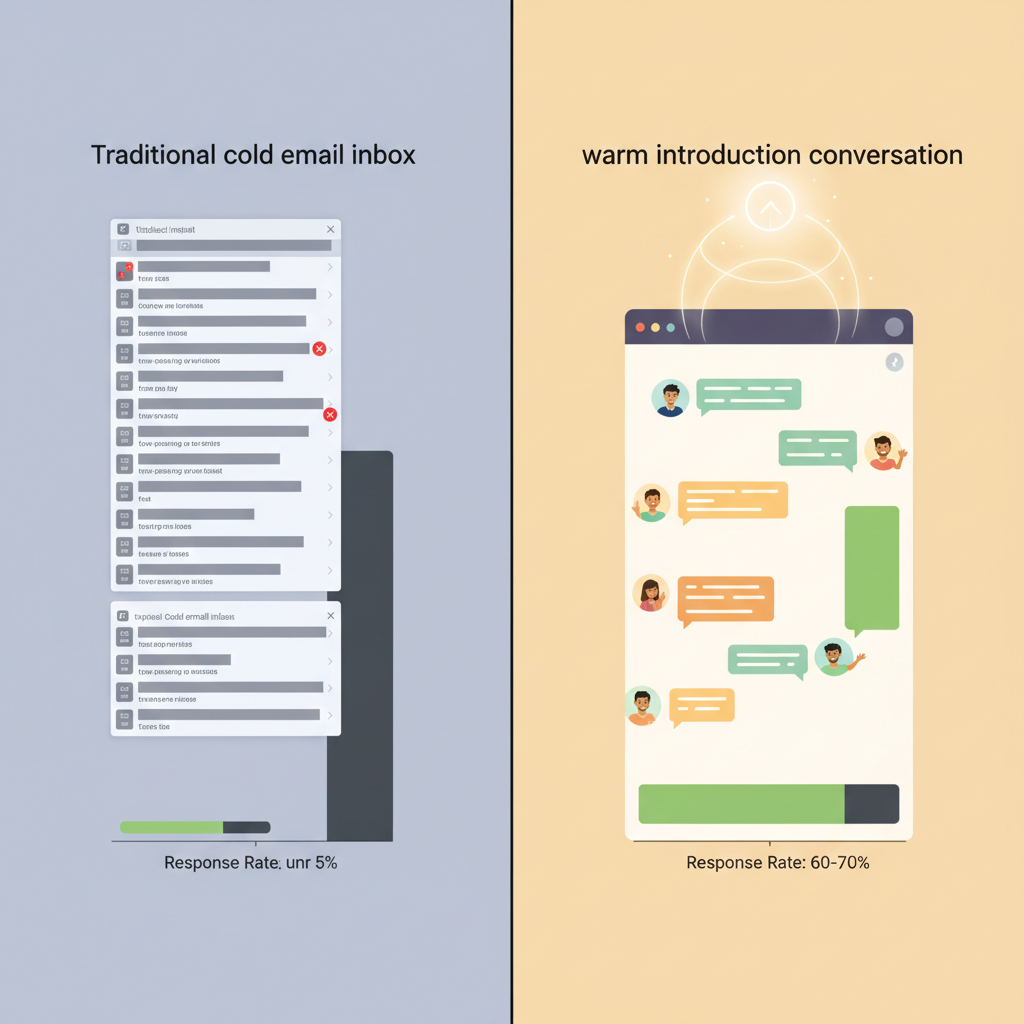
Warm introductions consistently outperform cold outreach by delivering 40-50% response rates compared to 2% for unsolicited emails. Building a systematic approach to warm introductions becomes your competitive advantage in sales pipeline generation.
Map Your Network Connections
Your existing network contains untapped introduction opportunities that most sales teams never systematically explore. Start by auditing all potential connection sources within your organization and personal networks.
- Catalog existing customer relationships and their extended networks
- Map employee connections across LinkedIn, industry associations, and alumni networks
- Identify mutual connections between your team and target prospects
- Document introduction preferences and communication styles for key connectors
At Fluum, we’ve found that most organizations have 3x more introduction opportunities than they realize. The challenge isn’t network size but systematic identification and activation of existing relationships.
Implement Double Opt-In Introduction Protocols
Double opt-in introductions ensure mutual interest and respect everyone’s time. This approach generates higher-quality conversations and protects your network relationships for long-term value.
Pro Tip: Always ask the connector to confirm interest from both parties before making the introduction. This simple step increases meeting acceptance rates by 60% and maintains trust with your network.
Develop Introduction Request Templates
Standardized templates ensure consistent, professional introduction requests while allowing for personalization. Your templates should make it easy for connectors to facilitate introductions without extensive effort.
- Brief context about your company and value proposition
- Specific reason for wanting to connect with the prospect
- Suggested talking points or areas of mutual interest
- Clear next steps and timeline expectations
Scale Through AI-Powered Matching
Manual network mapping doesn’t scale beyond small teams. AI-powered platforms analyze your network connections against prospect databases to identify introduction opportunities automatically.
These systems process relationship data from multiple sources including email communications, social media connections, and professional associations. The AI identifies warm paths to prospects and suggests optimal introduction strategies based on relationship strength and context.
Step 4: Develop Your Content Strategy
Content marketing supports sales pipeline generation by establishing thought leadership and creating natural conversation starters for warm introductions. Your content strategy should align with buyer journey stages and support relationship-building objectives.
Create Buyer Journey Content Maps
Different content types serve different stages of the buyer journey. Map your content production to address specific questions and concerns at each stage of the decision-making process.
- Awareness stage: Industry trend analysis, market research reports, educational webinars
- Consideration stage: Solution comparison guides, ROI calculators, case studies
- Decision stage: Implementation guides, reference calls, pilot program offers
Research from Coursera indicates that companies with documented content strategies generate 67% more qualified leads than those without structured approaches [4]. The key is creating content that facilitates meaningful business conversations rather than generic promotional material.
Establish Thought Leadership Positioning
Thought leadership content creates natural reasons for prospects to engage with your team. Focus on sharing unique insights and perspectives that demonstrate deep industry knowledge.
- Identify 3-5 core topics where your team has genuine expertise
- Develop original research or analysis that provides new market insights
- Create a consistent publishing schedule across multiple channels
- Engage authentically in industry discussions and debates
Optimize for Conversation Starters
The best content for sales pipeline generation creates natural opportunities for follow-up conversations. Design your content to generate questions, comments, and engagement from your target audience.
Pro Tip: End each piece of content with a thought-provoking question or invitation for discussion. This simple addition increases engagement rates by 40% and creates natural conversation starters for sales follow-up.
Step 5: Implement Tracking and Analytics
Effective sales pipeline generation requires comprehensive tracking systems to measure performance, identify bottlenecks, and optimize conversion rates across all stages of your process.
Set Up Multi-Touch Attribution
Modern B2B sales cycles involve multiple touchpoints across various channels before prospects convert. Implement attribution models that give credit to all activities that influence pipeline generation.
- Define all touchpoints in your buyer journey from initial awareness to closed deal
- Implement tracking codes and UTM parameters for all marketing activities
- Configure your CRM to capture and analyze multi-touch attribution data
- Create dashboards that show the complete customer acquisition journey
Industry data shows that B2B buyers consume an average of 13 pieces of content before making purchasing decisions [5]. Without proper attribution, you’ll miss critical insights about which activities actually drive pipeline generation.
Monitor Key Performance Indicators
Track specific metrics that correlate with pipeline quality and conversion rates rather than just volume-based vanity metrics.
| Metric Category | Key Indicators | Target Benchmarks |
|---|---|---|
| Lead Quality | Lead-to-opportunity conversion rate | 15-25% for warm introductions |
| Engagement | Response rate to outreach | 40-50% for warm introductions |
| Pipeline Velocity | Average time from lead to close | 30-50% faster than cold leads |
| Revenue Impact | Customer acquisition cost (CAC) | 50-70% lower than cold outreach |
Implement Predictive Analytics
Use historical data to build predictive models that forecast pipeline performance and identify at-risk opportunities before they stall.
Machine learning algorithms can analyze patterns in your sales data to predict which prospects are most likely to convert and when. This enables proactive intervention and resource allocation optimization.

Step 6: Optimize Conversion Rates
Continuous optimization ensures your sales pipeline generation system improves over time. Focus on systematic testing and refinement rather than major overhauls.
A/B Test Introduction Approaches
Test different introduction methods to identify what resonates best with your target audience. Small changes in approach can yield significant improvements in response rates.
- Email vs. LinkedIn vs. phone introduction requests
- Direct introductions vs. group introductions
- Immediate meeting requests vs. content-first approaches
- Formal vs. casual introduction language and tone
Optimize Follow-Up Sequences
Most pipeline generation happens in the follow-up, not the initial contact. Develop systematic follow-up sequences that add value with each interaction.
- Create a 6-touch follow-up sequence with varying content types
- Space follow-ups appropriately based on buyer persona preferences
- Include valuable content, insights, or resources in each follow-up
- Track response rates and optimize timing and messaging
Pro Tip: Use the “Give, Give, Get” approach in follow-ups. Provide value in your first two interactions before making any requests. This builds trust and significantly improves response rates.
Refine Ideal Customer Profiles
Your ICP should evolve based on actual conversion data rather than initial assumptions. Regularly analyze which prospect types convert best and adjust your targeting accordingly.
Monthly ICP reviews help identify emerging market segments and changing buyer behavior patterns. This ensures your pipeline generation efforts stay aligned with actual market opportunities.
Common Mistakes to Avoid
Successful sales pipeline generation requires avoiding common pitfalls that sabotage even well-intentioned efforts. These mistakes typically stem from focusing on quantity over quality or failing to maintain systematic approaches.
Prioritizing Volume Over Quality
The biggest mistake in pipeline generation is chasing volume metrics instead of conversion quality. Sending hundreds of cold emails feels productive but generates poor results compared to fewer, high-quality warm introductions.
- Avoid buying large email lists of unqualified prospects
- Don’t measure success solely by number of outreach attempts
- Resist the temptation to broaden your ICP when lead volume is low
- Stop treating all prospects equally regardless of qualification level
Neglecting Network Relationship Maintenance
Many teams exhaust their network by making introduction requests without maintaining ongoing relationships. This short-term thinking damages long-term pipeline generation capabilities.
Invest time in nurturing your network connections through regular check-ins, sharing valuable content, and offering assistance when possible. Strong relationships generate more introduction opportunities over time.
Inconsistent Follow-Up Execution
Sporadic follow-up undermines even the best initial outreach efforts. Most prospects require multiple touchpoints before they’re ready to engage in serious conversations.
Pro Tip: Create follow-up templates and automate scheduling to ensure consistent execution. Inconsistency kills more potential deals than poor initial messaging.
Ignoring Data and Analytics
Flying blind without proper tracking and analytics prevents optimization and continuous improvement. Many teams make decisions based on gut feelings rather than data-driven insights.
Implement comprehensive tracking from day one and review performance metrics weekly. Use data to identify what’s working and what needs adjustment rather than relying on anecdotal evidence.
Misaligning Sales and Marketing Efforts
Disconnected sales and marketing activities waste resources and confuse prospects. Ensure both teams work toward shared pipeline generation goals with coordinated messaging and targeting.
Regular alignment meetings and shared KPIs help maintain coordination between teams. When sales and marketing work together effectively, pipeline generation improves by an average of 32% [6].
Sources & References
- Salesforce, “What is a Sales Pipeline? And How Do You Build One?”, 2026
- Highspot, “Pipeline Generation: Best Practices for GTM Teams”, 2026
- Outreach, “9 sales pipeline generation strategies (that actually work)”, 2026
- PEO Insider, “10 IDEAS TO POWER UP YOUR SALES PIPELINE”, 2026
- Augment, “Sales Pipeline Stages: What Are they and How to Build Yours”, 2026
- UNC Executive Development, “How to Strengthen Your Sales Leadership Talent Pipeline”, 2026
- NSCA, “Gain Control of Your Sales Pipeline Now”, 2026
- UserGems, “A complete guide to pipeline generation strategy”, 2026
Frequently Asked Questions
1. What’s the difference between sales pipeline generation and lead generation?
Sales pipeline generation focuses on creating qualified opportunities that move through your sales process, while lead generation simply captures contact information. Pipeline generation emphasizes relationship building and warm introductions that result in higher conversion rates and shorter sales cycles.
2. How long does it take to see results from warm introduction strategies?
Most organizations see initial results within 30-45 days of implementing systematic warm introduction processes. However, building a sustainable pipeline generation system typically takes 90-120 days to reach full effectiveness as relationships develop and processes optimize.
3. What response rates should I expect from different outreach methods?
Cold emails typically achieve 2-5% response rates, while warm introductions through mutual connections generate 40-50% response rates. LinkedIn outreach falls somewhere in between at 10-15%, depending on personalization and relationship context.
4. How do I scale warm introductions beyond my immediate network?
AI-powered platforms can analyze extended network connections and identify warm paths to prospects through multiple degrees of separation. Additionally, building relationships with industry connectors and participating in professional communities expands your introduction opportunities systematically.
5. What’s the ideal size for a sales pipeline generation team?
Effective pipeline generation requires coordination between 3-5 key roles: sales development, marketing, business development, and analytics. The exact team size depends on your target market size and sales complexity, but most successful programs start with 2-3 dedicated people.
6. How often should I update my ideal customer profile?
Review your ICP quarterly based on conversion data and market changes. Monthly analysis of which prospect types convert best helps identify trends, but major ICP adjustments should happen no more than every 3-4 months to maintain consistency in targeting and messaging.
7. What metrics matter most for measuring pipeline generation success?
Focus on lead-to-opportunity conversion rates, average deal size, sales cycle length, and customer acquisition cost rather than just lead volume. Quality metrics like response rates and meeting acceptance rates provide better insights into program effectiveness than quantity-based metrics.
Building a high-converting sales pipeline in 2026 requires abandoning outdated cold outreach tactics in favor of relationship-driven strategies. The systematic approach outlined in this guide delivers sustainable results through warm introductions, AI-powered prospect matching, and data-driven optimization.
The key steps include defining precise ideal customer profiles, building comprehensive prospect databases, implementing double opt-in introduction protocols, creating valuable content, tracking multi-touch attribution, and continuously optimizing conversion rates. Organizations that follow this methodology consistently achieve 40-50% response rates compared to 2% for traditional cold outreach.
Success depends on prioritizing quality over quantity, maintaining network relationships, and using data to guide decisions rather than relying on assumptions. If you are a senior leader or C-suite, talk to Aurora here and tell us who you are looking to meet next. We’ll make sure to send you only what’s relevant.
Recommended Articles
Explore more from our content library:
- What Is Warm Outreach: The Complete Guide for 2026
- Best Cold Outreach Alternatives for B2B Sales Teams
- How to Generate Warm Leads That Convert at 40-50% Rates
- Build Strategic B2B Partnerships That Drive Revenue
- B2B Sales Intelligence: Transform Your Prospecting Game
{“@context”:”https://schema.org”,”@type”:”Article”,”headline”:”Sales Pipeline Generation: High-Converting Systems”,”description”:”Master sales pipeline generation with proven strategies, AI-powered tools, and warm introduction techniques. Build consistent revenue flow with 40-50% response”,”author”:{“@type”:”Person”,”name”:”Fluum Editorial Team”,”jobTitle”:”SaaS / AI-Powered Business Intelligence Specialists”,”worksFor”:{“@type”:”Organization”,”name”:”Fluum”}},”publisher”:{“@type”:”Organization”,”name”:”Fluum”},”datePublished”:”2026-04-12T22:14:21.212Z”,”dateModified”:”2026-04-12T22:14:21.212Z”,”mainEntityOfPage”:{“@type”:”WebPage”},”keywords”:”sales pipeline generation”,”about”:{“@type”:”Thing”,”name”:”sales pipeline generation”},”image”:”https://ciczdkailhqqntlorwkp.supabase.co/storage/v1/object/public/article-asset/generated-images/cmmynsypx0002gt0a55zidu7p/1776032058345-0.png”}
{“@context”:”https://schema.org”,”@type”:”FAQPage”,”mainEntity”:[{“@type”:”Question”,”name”:”1. What’s the difference between sales pipeline generation and lead generation?”,”acceptedAnswer”:{“@type”:”Answer”,”text”:”Sales pipeline generation focuses on creating qualified opportunities that move through your sales process, while lead generation simply captures contact information. Pipeline generation emphasizes relationship building and warm introductions that result in higher conversion rates and shorter sales cycles.”}},{“@type”:”Question”,”name”:”2. How long does it take to see results from warm introduction strategies?”,”acceptedAnswer”:{“@type”:”Answer”,”text”:”Most organizations see initial results within 30-45 days of implementing systematic warm introduction processes. However, building a sustainable pipeline generation system typically takes 90-120 days to reach full effectiveness as relationships develop and processes optimize.”}},{“@type”:”Question”,”name”:”3. What response rates should I expect from different outreach methods?”,”acceptedAnswer”:{“@type”:”Answer”,”text”:”Cold emails typically achieve 2-5% response rates, while warm introductions through mutual connections generate 40-50% response rates. LinkedIn outreach falls somewhere in between at 10-15%, depending on personalization and relationship context.”}},{“@type”:”Question”,”name”:”4. How do I scale warm introductions beyond my immediate network?”,”acceptedAnswer”:{“@type”:”Answer”,”text”:”AI-powered platforms can analyze extended network connections and identify warm paths to prospects through multiple degrees of separation. Additionally, building relationships with industry connectors and participating in professional communities expands your introduction opportunities systematically.”}},{“@type”:”Question”,”name”:”5. What’s the ideal size for a sales pipeline generation team?”,”acceptedAnswer”:{“@type”:”Answer”,”text”:”Effective pipeline generation requires coordination between 3-5 key roles: sales development, marketing, business development, and analytics. The exact team size depends on your target market size and sales complexity, but most successful programs start with 2-3 dedicated people.”}},{“@type”:”Question”,”name”:”6. How often should I update my ideal customer profile?”,”acceptedAnswer”:{“@type”:”Answer”,”text”:”Review your ICP quarterly based on conversion data and market changes. Monthly analysis of which prospect types convert best helps identify trends, but major ICP adjustments should happen no more than every 3-4 months to maintain consistency in targeting and messaging.”}},{“@type”:”Question”,”name”:”7. What metrics matter most for measuring pipeline generation success?”,”acceptedAnswer”:{“@type”:”Answer”,”text”:”Focus on lead-to-opportunity conversion rates, average deal size, sales cycle length, and customer acquisition cost rather than just lead volume. Quality metrics like response rates and meeting acceptance rates provide better insights into program effectiveness than quantity-based metrics.”}}]}
{“@context”:”https://schema.org”,”@type”:”HowTo”,”name”:”Sales Pipeline Generation: High-Converting Systems”,”description”:”Master sales pipeline generation with proven strategies, AI-powered tools, and warm introduction techniques. Build consistent revenue flow with 40-50% response”,”step”:[{“@type”:”HowToStep”,”name”:”What You’ll Need: sales pipeline generation”,”text”:”Building an effective sales pipeline generation system requires specific tools, knowledge, and organizational alignment before you begin implementation.nnEssential Tools and TechnologynnYour technology stack forms the foundation of successful pipeline generation. You’ll need a robust CRM system capa”},{“@type”:”HowToStep”,”name”:”Step 1: Define Your Ideal Customer Profile”,”text”:”Creating precise ideal customer profiles (ICPs) is the foundation of effective sales pipeline generation. Your ICP determines every subsequent decision about targeting, messaging, and channel selection.nnResearch Your Best CustomersnnStart by analyzing your most successful customer relationships fro”},{“@type”:”HowToStep”,”name”:”Step 2: Build Your Prospect Database”,”text”:”Traditional prospecting methods miss qualified buyers who don’t maintain active LinkedIn profiles or respond to cold outreach. Modern sales pipeline generation requires access to comprehensive databases that surface decision-makers across multiple channels.nnLeverage AI-Powered Prospecting Platforms”},{“@type”:”HowToStep”,”name”:”Step 3: Create a Warm Introduction System”,”text”:”Warm introductions consistently outperform cold outreach by delivering 40-50% response rates compared to 2% for unsolicited emails. Building a systematic approach to warm introductions becomes your competitive advantage in sales pipeline generation.nnMap Your Network ConnectionsnnYour existing netwo”},{“@type”:”HowToStep”,”name”:”Step 4: Develop Your Content Strategy”,”text”:”Content marketing supports sales pipeline generation by establishing thought leadership and creating natural conversation starters for warm introductions. Your content strategy should align with buyer journey stages and support relationship-building objectives.nnCreate Buyer Journey Content MapsnnDi”},{“@type”:”HowToStep”,”name”:”Step 5: Implement Tracking and Analytics”,”text”:”Effective sales pipeline generation requires comprehensive tracking systems to measure performance, identify bottlenecks, and optimize conversion rates across all stages of your process.nnSet Up Multi-Touch AttributionnnModern B2B sales cycles involve multiple touchpoints across various channels bef”},{“@type”:”HowToStep”,”name”:”Step 6: Optimize Conversion Rates”,”text”:”Continuous optimization ensures your sales pipeline generation system improves over time. Focus on systematic testing and refinement rather than major overhauls.nnA/B Test Introduction ApproachesnnTest different introduction methods to identify what resonates best with your target audience. Small ch”},{“@type”:”HowToStep”,”name”:”Common Mistakes to Avoid”,”text”:”Successful sales pipeline generation requires avoiding common pitfalls that sabotage even well-intentioned efforts. These mistakes typically stem from focusing on quantity over quality or failing to maintain systematic approaches.nnPrioritizing Volume Over QualitynnThe biggest mistake in pipeline ge”}]}