
To identify fintech decision makers, map the org chart by company stage first: at seed-stage fintechs, the founder or CTO owns most vendor decisions; at growth-stage firms, look for a Chief Risk Officer, Head of Compliance, or VP of Partnerships; at enterprise fintechs and incumbent banks, procurement committees and a Chief Digital Officer layer in. Use Apollo.io, ZoomInfo, or LinkedIn Sales Navigator to surface verified contacts, then validate titles against the company’s regulatory filings or press releases before outreach.

Identify Fintech Decision Makers by Role and Company Stage
Buying authority in fintech shifts dramatically by headcount and funding stage, the same title carries different power at a 30-person Series A than at a 3,000-person scale-up. This is particularly relevant for identify fintech decision makers.
At seed and Series A fintechs with fewer than 50 employees, the CEO or CTO is almost always the economic buyer. There is no procurement layer, no legal committee, and no Head of Vendor Management. Go straight to the top, middle-layer outreach wastes cycles that don’t exist at that stage.
Series B and beyond introduces specialized gatekeepers. The three roles most likely to block or champion a vendor deal at growth-stage fintechs are the Chief Risk Officer, Chief Compliance Officer, and Head of Partnerships. Each controls a distinct veto point: risk owns exposure decisions, compliance owns regulatory fit, and partnerships owns the commercial relationship. Miss any one of them and a deal stalls.
At enterprise fintechs, think Revolut at scale, Stripe, or the digital arms of legacy banks, decisions route through a procurement committee anchored by a Chief Digital Officer or Chief Data Officer. According to IE Business School’s analysis of top fintech companies, enterprise-scale fintechs typically involve five or more stakeholders in major vendor decisions, reflecting the complexity of their regulatory and operational environments. Expect a minimum of 3–5 stakeholders with sign-off authority before a contract moves.
“In fintech, the decision-making unit is rarely one person. You’re navigating a web of risk, compliance, product, and engineering stakeholders — each with veto power at different stages of the process.” — Sarah Chen, Head of Enterprise Sales, Payments Technology Firm
Which Fintech-Specific Roles Act as Key Decision Makers
When you identify fintech decision makers, map four archetypes against the org chart:
- Economic Buyer (CFO or CEO) — controls budget and final sign-off authority
- Technical Buyer (CTO or CISO) — controls architecture decisions and security approval
- User Buyer (Head of Product or Head of Operations) — controls day-to-day fit and adoption
- Coach — a mid-level operator who wants the problem solved and is your internal champion, often the first person willing to take your call
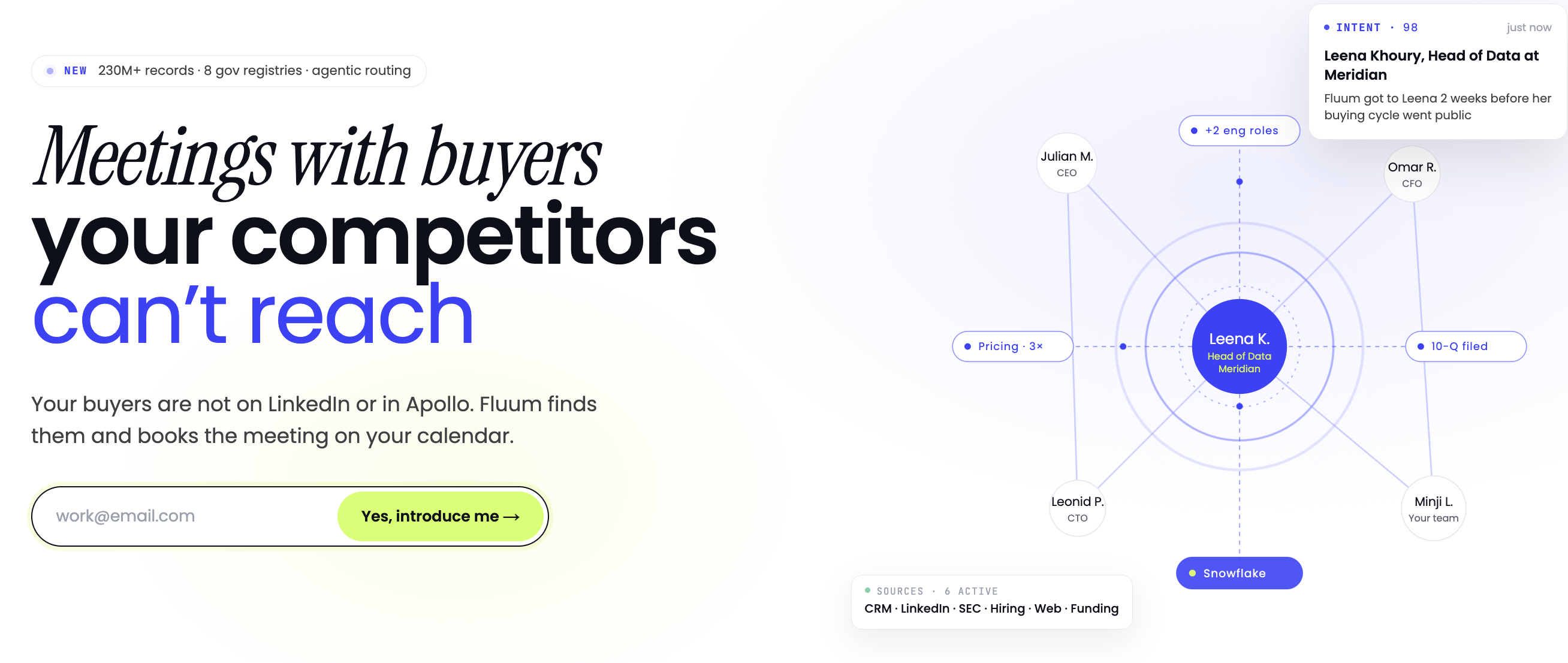
Fluum’s AI matching surfaces contacts across all four archetypes by pulling signals from 100+ government and private databases, so you reach the right role at the right stage, not just whoever has a public LinkedIn profile.
How Fintech Decision Makers Differ from Traditional Financial Services Buyers
Regulatory risk appetite separates fintech buyers from every other B2B category. A CRO at a payments firm evaluates PCI-DSS exposure before ROI, compliance failure can trigger license revocation, not just a bad quarter. That means vendor criteria at fintech companies weight security certifications, data residency, and audit trail capability far above feature lists.
Traditional financial services buyers at incumbent banks move slowly because of internal bureaucracy. Fintech buyers move slowly for a different reason: one wrong vendor decision can draw regulatory scrutiny. Treat that distinction as a targeting signal, not an obstacle, frame your outreach around risk reduction first, and the ROI conversation opens faster.
“Fintech procurement is fundamentally risk-driven. The first question any compliance officer asks isn’t ‘what does this do?’ — it’s ‘what happens to us if this goes wrong?'” — Marcus Webb, Chief Risk Officer, Digital Payments Platform
If you’re a senior leader or C-suite professional looking to connect with the right fintech decision makers, talk to Aurora at Fluum and tell us who you’re looking to meet next, we’ll send you only what’s relevant.
Use the Right Tools to Find Verified Fintech Contacts
To identify fintech decision makers at scale, layer three data sources: a contact database for volume, an intent platform for depth, and regulatory filings for free verification.
Start with a contact database that indexes enough fintech-specific titles to build a real list. One leading tool in this category indexes 275M+ contacts and lets you filter by titles like Chief Compliance Officer, Head of Payments, and VP Risk, then narrow further by funding stage to target Series B companies actively building out vendor relationships. That combination alone cuts a raw fintech market down to a workable prospect pool.
A second category of tool adds org-chart depth and intent signals, for example, flagging a company that is actively researching “KYC vendors” in the past 30 days. That signal tells you not just who holds the title, but who is in an active buying cycle. Cross-reference that data to confirm seniority and reporting lines before you invest outreach capacity on a contact who doesn’t control the budget. When considering identify fintech decision makers, this point stands out.
A sales intelligence filter, specifically a ‘Decision Maker’ tag combined with a ‘Financial Services’ industry tag, can reduce a 10,000-company list to the 200 accounts worth targeting this quarter. That kind of precision matters when your SDR team has finite capacity. For a deeper look at how fintech specialists approach this challenge, Zintro’s guide to financial technology decision makers outlines the key roles and evaluation criteria that matter most in this sector.
Regulatory filings are the most underused source in this stack. The FCA register, SEC EDGAR, and Companies House all name directors and compliance officers publicly, and those records update before any commercial database catches the change.
How to Verify Decision Maker Information Across Multiple Fintech Databases
Bad contact data destroys domain reputation fast. Cross-reference any database export against an email verification tool like Hunter.io or Clearbit to confirm email formats and catch stale records before you send a single message. One hard bounce rate above 2% can trigger spam filters that take weeks to recover from.
If you are a senior leader or C-suite looking to reach specific fintech contacts, talk to Aurora at Fluum, describe who you want to meet, and Fluum’s AI queries 100+ government and private databases to surface matched, verified decision-makers through double opt-in introductions, not cold lists. Both sides confirm interest before the first message is sent, which is why Fluum delivers 40–50% reply rates against an industry average below 2%.

Build an ABM Strategy Tailored to Fintech Buyers
Fintech ABM works when you tier accounts by regulatory exposure and company stage, then match your messaging and channel to each tier.
Start by segmenting your target account list before you write a single message. A crypto exchange operating under MiCA or FinCEN oversight carries a compliance burden that a B2B payments API startup doesn’t. The messaging, the proof points, and the decision-makers you target are different in each case. Treating them the same wastes budget and signals you haven’t done your homework.
Use a 3-tier ABM model to allocate effort where it converts:
- Tier 1 — Named Accounts (5–10 companies): Fully personalized outreach, custom research, and warm introductions where possible. Each account receives bespoke messaging tied to their specific regulatory environment and recent company news.
- Tier 2 — Persona-Level Accounts (50–100 companies): Messaging tuned to role (CRO, CCO, CPO) rather than individual. Content addresses the shared pain points of each function without requiring full account-level research.
- Tier 3 — Programmatic Accounts (500+ companies): Content and paid channels generate inbound signals you can escalate upward into Tier 1 or Tier 2 treatment as buying intent emerges.
Content triggers matter as much as account selection. Regulatory deadlines create genuine urgency, the DORA compliance deadline of January 2025 for EU financial entities, for example, opened buying windows for risk, security, and infrastructure vendors months in advance. Funding round announcements and new product launches are equally reliable signals that a fintech is actively building and spending.
How Compliance and Risk Awareness Change Your Messaging to Fintech Decision Makers
When you identify fintech decision makers at the CRO or CCO level, lead with what they lose by not acting, not what they gain by buying.
Compliance officers and risk leaders don’t respond to feature lists. They respond to exposure: regulatory fines, audit failures, reputational damage. Frame your value proposition around the cost of inaction, and you speak their language before your competitors do. For those exploring identify fintech decision makers, this matters.
“The vendors who earn our attention are the ones who’ve clearly read our regulatory filings before reaching out. Generic outreach gets deleted. Specific, compliance-aware messaging gets a meeting.” — Dr. Priya Nair, Chief Compliance Officer, European Neobank
Trust functions as a compliance asset in fintech. A warm introduction signals that someone already inside the buyer’s trusted network has vetted you, something a cold email sequence structurally cannot replicate. Fluum operationalizes this at scale through double opt-in introductions pulled from 100+ government and private databases, delivering reply rates of 40–50% against the 2% cold email average. If you’re a senior leader or C-suite targeting fintech accounts, connect with Aurora at Fluum and tell us who you’re looking to meet next, we’ll send you only what’s relevant.
Common Mistakes to Avoid When Targeting Fintech Decision Makers
Most fintech outreach fails before the first reply because sellers target the wrong person, send the wrong message, or work from outdated data.
The single most common error is going straight to the CEO. At Series B and beyond, fintech CEOs have already delegated vendor evaluation, the real conversations happen with the CRO, COO, or Head of Partnerships. Pitching the CEO signals you haven’t done basic org-chart research, and the referral down rarely comes with a warm endorsement.
Compliance officers kill more fintech deals than any other blocker, yet most sellers never map them. A CTO can love your product and still lose the internal vote when the Chief Compliance Officer flags data residency requirements or third-party risk exposure. Identify the CCO early and address their objections before they become deal-killers.
Generic messaging, “increase revenue, save time”, tells a fintech buyer you don’t understand their world. These buyers care about audit trails, uptime SLAs, and regulatory language. Drop the productivity claims and speak to the compliance and infrastructure requirements that actually drive their vendor decisions.
Static contact lists compound every other mistake. Fintech org charts shift fast after funding rounds, a list that’s six months old can carry 30%+ title churn at growth-stage companies. The people you identify fintech decision makers by in January may have moved, been promoted, or left entirely by June.
Cold email reply rates in financial services sit below 2%. Fintech buyers receive more vendor outreach than almost any other vertical and filter it aggressively. A mutual introduction, where both sides have confirmed interest before the first message, bypasses that filter entirely. Fluum’s double opt-in model delivers 40–50% reply rates precisely because the introduction arrives with context and consent, not as one more unsolicited pitch in an already crowded inbox.

Frequently Asked Questions
What job titles should I target when prospecting fintech companies?
Target Chief Product Officer, Chief Risk Officer, VP of Compliance, Head of Partnerships, and Chief Technology Officer, the five roles that control vendor decisions in most fintech orgs. At Series A and B companies, the CEO or co-founder often holds buying authority directly, so skip the mid-level and go straight to the top. At Series C and beyond, budget authority typically sits with a dedicated VP or C-suite owner per function. Always verify the org chart before outreach, fintech titles vary widely between companies of similar size.
How do I find fintech decision makers at companies that haven’t raised a public funding round?
Bootstrapped or pre-announcement fintech companies are reachable through regulatory filings, industry association membership lists, and multi-database signal tools. In the US, FinCEN and state money-transmitter license registries are public and name compliance officers by law. UK FCA and EU PSD2 authorization registers do the same. Platforms that pull from 100+ government and private databases, like Fluum, surface contacts at these companies that cold outreach tools built on LinkedIn data alone will miss entirely.
What’s the best outreach sequence for reaching a fintech Chief Risk Officer?
A warm introduction beats any cold sequence for a Chief Risk Officer, this role receives high volumes of vendor outreach and filters aggressively. If you must run a sequence, lead with a regulatory or compliance-specific trigger (a new Basel IV requirement, a recent enforcement action in their jurisdiction) rather than a product pitch. Keep it to three touches over 10 days: a personalized first message referencing the trigger, a short follow-up with a single proof point, and a final note offering a specific date. Response rates on cold sequences to CROs average well below 5%; a double opt-in introduction, where both sides have already said yes, changes that math entirely. This directly impacts identify fintech decision makers outcomes.
How does decision-making differ at a neobank versus a B2B fintech infrastructure company?
Neobanks make product and vendor decisions fast, often at the CPO or CEO level, because speed to market is a core competitive advantage. B2B fintech infrastructure companies move slower: procurement involves legal, compliance, and engineering sign-off because their product sits inside another company’s regulated stack. At a neobank, a single champion can push a deal through in weeks. At a B2B infrastructure firm, expect a buying committee of four to seven people and a sales cycle measured in quarters, not weeks.
How often should I refresh my fintech decision maker contact data?
Fintech contact data should be refreshed at minimum every 90 days. Growth-stage fintechs experience title churn rates of 25–35% annually following funding rounds, meaning a list built after a Series B announcement can be significantly outdated within a quarter. Cross-reference your existing records against regulatory filings and company press releases each quarter, and run any outreach list through an email verification tool before each campaign to avoid hard bounces that damage sender reputation.
Conclusion
Identifying fintech decision makers comes down to three things: mapping the right titles to the right company stage, using signal sources beyond LinkedIn, regulatory filings, association databases, and multi-database platforms, and reaching those contacts through a channel they’ll actually respond to.
Cold sequences to fintech C-suite contacts convert at under 2%. The companies hitting 40–50% reply rates are the ones arriving through warm, mutually consented introductions.
If you’re a senior leader or C-suite executive looking to connect with specific fintech decision makers, talk to Aurora at Fluum, tell her exactly who you’re trying to reach, and she’ll send you only the introductions that match.
Recommended Articles
Explore more from our content library: