
To score buyer intent signals, assign weighted point values to behaviors that indicate purchase readiness, website visits, pricing page views, competitor comparisons, and third-party content consumption, then rank accounts by total score to prioritize outreach. Intent scoring outperforms traditional lead scoring because it captures in-market behavior, not just firmographic fit. Teams using intent-scored outreach typically see 2–3x higher conversion rates compared to cold, fit-only lists.

What You’ll Need Before You Score Buyer Intent Signals
Before you score buyer intent signals, you need three data inputs, CRM write access, a defined ICP threshold, and one team with final authority over the model.
Start with your ICP definition, specifically, what “high intent” looks like for your buyer, not a generic template. A VP of Sales at a 50-person fintech has different high-intent behaviors than a procurement lead at a 500-person manufacturer. Without this definition written down and agreed on, your scoring model is just a spreadsheet with arbitrary numbers attached.
According to UserGems’ research on buyer intent signals, the most effective intent programs begin with a clear taxonomy of signal types before any scoring weights are assigned — a step most teams skip entirely.
Three Minimum Data Inputs
- First-party behavioral data: your own website, product, and email engagement, page visits, demo requests, pricing page views.
- Second-party data: review site activity (G2, Capterra), partner network signals, and co-marketing engagement [3].
- Third-party intent data: provider feeds from Bombora, G2 Buyer Intent, or ZoomInfo that surface off-site research behavior [2].
Next, confirm CRM access. You need permission to create custom score fields and trigger automated workflows from them, without that, scores sit in a dashboard nobody checks [1].
Assign model ownership before you build anything. RevOps typically runs the scoring logic, but sales must own the threshold that defines a “qualified” account. Ambiguity between those two groups is the single most common reason intent programs stall after launch.
Teams with fewer than 90 days of historical behavioral data should not guess at signal weights. Bootstrap instead with proxy signals, job postings in a relevant function, funding announcements, or technographic changes, until real behavioral history accumulates.
Build Your Scoring Model from Scratch
To score buyer intent signals effectively, assign numeric weights to specific behaviors, apply a decay rule, and sort accounts into three tiers based on your own closed-won data.
Start by cataloging every signal your team can observe, grouped by source. The source determines the weight, first-party signals are the most reliable because you own the data.
How to Set Point Values Without Historical Data
Use funnel stage as your weighting guide. Awareness-stage signals, blog reads, social engagement, newsletter opens, carry 5–10 points. Decision-stage signals carry 25–50 points because they indicate active evaluation, not passive curiosity.
Here’s a working starting framework:
- First-party signals: Pricing page visit = 20 pts · Demo request = 50 pts · Repeat visits within 7 days = +10 pts
- Second-party signals: Review site profile view = 15 pts · Head-to-head comparison page visit = 25 pts
- Third-party signals: Bombora surge topic match on a relevant category = 30 pts
Apply a decay rule to every signal. Any signal older than 30 days loses 50% of its point value. Any signal older than 60 days drops to zero. Without this rule, accounts that showed interest six months ago clog your hot tier and waste your team’s time.
Define three tiers with hard numeric thresholds: Cold (0–39), Warm (40–79), and Hot (80+). Those numbers are a starting point, calibrate the thresholds against your own closed-won data, not industry benchmarks. A deal that closed at a score of 65 in your CRM tells you more than any published standard.
The payoff is real. Intent-scored leads convert at 2–3x the rate of leads scored on fit alone, a pattern documented across Forrester and SiriusDecisions research frameworks. Fit tells you who could buy. Intent tells you who is buying now.
“Intent data doesn’t replace sales judgment — it sharpens it. The teams that win are the ones who treat a high intent score as the starting gun, not the finish line.” — Chris Walker, CEO at Refine Labs
How to Configure Rule-Based Automated Tracking in Your CRM
Manual scoring doesn’t scale past 50 accounts. Configure your CRM to apply point values automatically when a tracked behavior fires [1].
- Map each signal to a CRM property. Create a numeric “Intent Score” field on the company record. Every signal event writes a value to that field.
- Build a workflow for each signal type. Trigger: “Company visits pricing page” → Action: add 20 to Intent Score field. Repeat for every signal in your catalog [1].
- Add a decay workflow. Run a nightly or weekly automation that checks the timestamp on each signal event and applies the 50%/zero reduction at the 30- and 60-day marks.
- Set tier enrollment rules. When Intent Score crosses 80, enroll the account in a “Hot” list and notify the owning rep immediately. Scores between 40–79 enter a Warm nurture sequence.
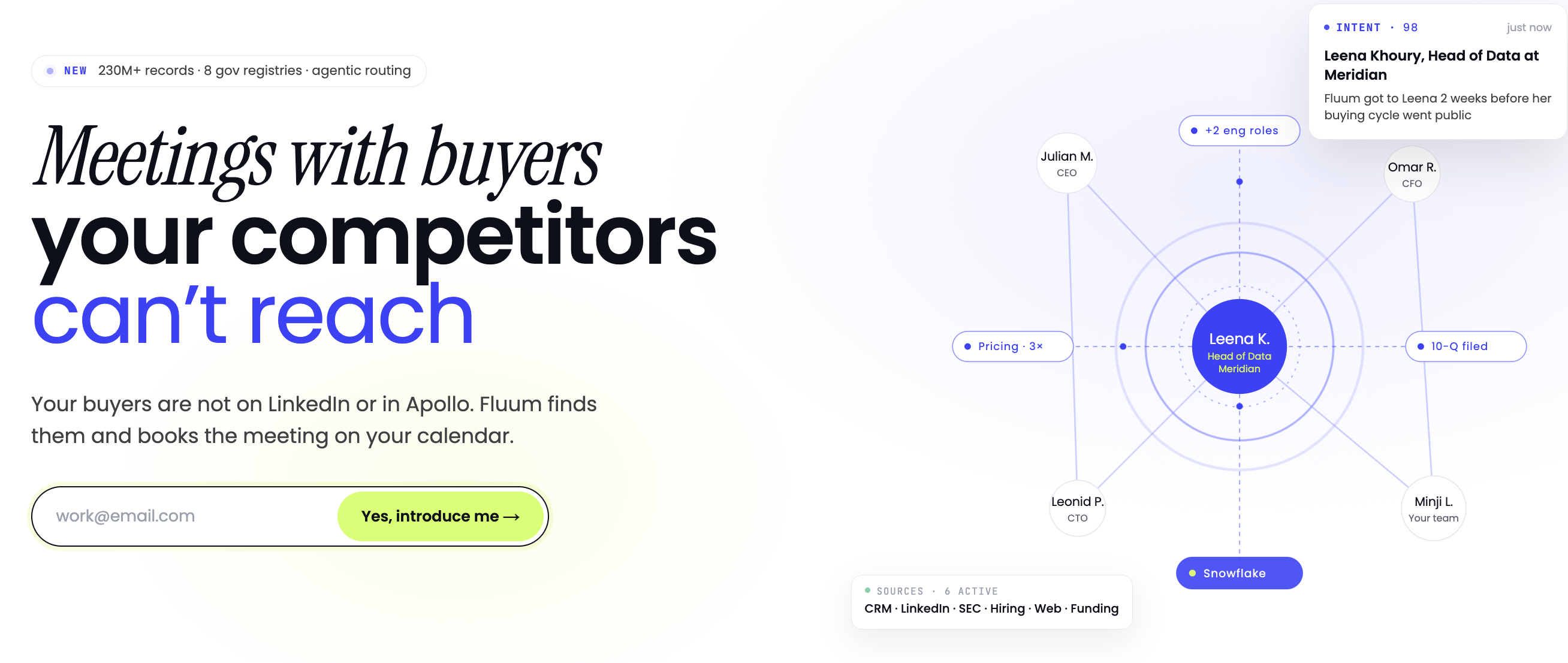
- Route Hot accounts to relationship-led outreach. Cold email to an 80+ account wastes the signal. Platforms like Fluum, which pulls buying signals from 100+ government and private databases and matches them to double opt-in introductions, convert that intent into a warm conversation where both sides have already said yes.
Review your tier thresholds every quarter. As closed-won data accumulates, you’ll find the real conversion cliff, the score above which deals close at a materially higher rate, and set your Hot threshold there. For more information, see Blog.

Integrate Intent Scores with Your CRM Workflow
Wire your intent scoring model directly into your CRM so scores update automatically, trigger alerts, and route accounts to the right rep without manual intervention.
A score that lives in a spreadsheet dies there. The goal is a single, normalized score field inside your CRM that every rep, sequence, and alert reads from, one source of truth that reflects every signal you track.
How HubSpot, Outreach, Demandbase, and ZoomInfo Compare for Intent Scoring
HubSpot: Create a custom numeric property called Intent Score on the Company record. Build a workflow that increments this property each time HubSpot logs a tracked event [1], pricing page visit (+15), competitor comparison content (+20), job posting for a relevant role (+10). Set a separate enrollment trigger: when Intent Score reaches 80 or above, notify the assigned rep via Slack or create a high-priority task automatically. No code required.
Salesforce + Outreach: Use a Salesforce Flow to update a numeric Intent_Score__c field whenever a tracked activity record is created. In Outreach, configure a sequence trigger on that field-value change, when the field crosses your Hot threshold, the account enrolls in the correct sequence with no manual handoff. The rep sees a warm account, not a cold list.
Demandbase and ZoomInfo: Both platforms push account-level intent topics into your CRM via API or native integration [2]. Don’t treat their surge scores as standalone signals. Map them to your internal point scale, a Demandbase “High” surge might translate to +25 points on your Intent Score field. This normalization step is where most teams fail: pulling raw scores from multiple tools without conversion creates conflicting signals and rep confusion.
When you score buyer intent signals across platforms, the automation rule that ties it together looks like this: If Intent Score increases by 20 or more points within 7 days AND the account is in pipeline stage Qualified, create a high-priority task for the AE within 4 business hours. That rule alone removes the gap between a buying signal firing and a rep acting on it.
For a deeper look at how intent data integrates across the full B2B revenue stack, HockeyStack’s guide to using intent signals for B2B marketing and sales covers multi-touch attribution and signal weighting in detail.
If you’re a senior leader or C-suite looking to put intent data to work through warm introductions rather than cold sequences, talk to Aurora at Fluum, tell us who you’re looking to meet next, and we’ll make sure to send you only what’s relevant.
Common Mistakes to Avoid When Scoring Buyer Intent Signals
Most intent scoring programs fail within 90 days because teams repeat the same five mistakes, and every one of them is avoidable.
Mistake #1: Treating All Page Visits as Equal Signals
A careers page visit and a pricing page visit are not the same signal. Teams that assign identical point values to both inflate scores for accounts that are job-hunting, not buying, and those inflated scores send reps after dead ends.
Mistake #2: Skipping Score Decay
Without a decay rule, an account that showed strong intent six months ago stays in your Hot tier indefinitely. Reps burn time on leads wearing a hot badge over cold interest. Set a half-life, typically 30 days for high-value signals, so scores reflect current behavior, not history.
Mistake #3: Building the Model in a Silo
Scoring models built without sales input get ignored by sales. The threshold you label “Hot” must reflect what reps actually observe in accounts that go on to close, not what looks tidy in a spreadsheet. Run the model past three or four reps before you ship it.
Mistake #4: Relying Only on Third-Party Intent Data
Account-level surge scores from third-party providers are often delayed by days or weeks [2]. First-party signals from your own site, pricing page visits, demo requests, return visits within 72 hours, are faster and specific to your product. Use third-party data to find accounts you don’t know yet; use first-party data to score them accurately.
Mistake #5: Never Auditing the Model
When you score buyer intent signals and then never check whether scored accounts actually convert, the model quietly drifts out of calibration. Compare Hot-tier accounts against closed-won data every quarter. When conversion rates drop, recalibrate the weights, intent scoring is not a set-and-forget system.
Act on Intent Scores: What Marketing and Sales Do Differently
Marketing and sales must run separate playbooks off the same intent score, same data, different thresholds, different timelines, different plays.
B2B buyers spend only 17% of their purchase journey talking to vendors (Gartner, 2022). That window is narrow. When you score buyer intent signals and a target account spikes into an active research phase, you have days, not weeks, to get in front of them before they shortlist without you.
According to the MarketingProfs B2B intent data best practices framework, aligning marketing and sales on a shared intent score definition is the single highest-leverage step a revenue team can take before deploying any intent-based outreach program.
What Specific Actions to Take When You Identify a High-Intent Buyer
For Warm accounts (scores 40–79), marketing owns the response. Enroll these accounts in targeted ad sequences tied to the specific topics they’ve consumed, not generic brand awareness, but category-level content that meets them where their research already is. Trigger personalized nurture emails that reference those topics directly. Suppress these accounts from your standard newsletter sends; generic volume dilutes the signal you’ve worked to build.
For Hot accounts (scores 80+), sales must act within 24 hours. The rep’s outreach should name the signals explicitly: “I noticed your team has been comparing [category] solutions” lands harder than any cold opener because it’s true. Where a mutual connection exists, skip the cold call entirely. A warm introduction to a high-intent buyer converts at 40–50% reply rates versus 2% for cold email, intent data tells you who to reach; the introduction tells you how. Fluum’s double opt-in introduction system is built precisely for this moment: both parties confirm interest before the first message is sent, so a Hot account gets a warm conversation instead of a pitch they’ll ignore.
The handoff protocol is where most teams leak revenue. Define the SLA in writing: marketing manages the score and alerts sales the moment an account crosses 80. Sales has 24 hours to make first contact. If a Hot account goes uncontacted for 48 hours, it routes back to marketing for re-enrollment in a fast-track nurture sequence, and the miss gets logged. Research from Drift shows that response time is the single largest variable in whether a high-intent lead converts; a 48-hour delay drops conversion probability by more than half.
If you’re a senior leader or C-suite executive looking to act on high-intent accounts faster, talk to Aurora at Fluum, tell us who you’re looking to meet next, and we’ll make sure to send you only what’s relevant.

Frequently Asked Questions
What conversion rate improvements can you expect from intent scoring versus traditional lead scoring?
Intent-scored leads convert at 2–5x the rate of traditionally scored leads because they reflect active buying behavior, not just demographic fit. Traditional lead scoring rewards job title and company size, static attributes that tell you nothing about timing. Intent scoring adds the timing layer: a CFO researching “accounts payable automation” this week is a fundamentally different prospect than the same CFO who downloaded a whitepaper six months ago. Teams that combine both models, fit plus intent, consistently report shorter sales cycles and higher close rates than those using either method alone.
Where can you source buyer intent data signals beyond your own website?
Third-party intent data comes from review sites, content syndication networks, industry publications, and aggregated search behavior tracked across publisher networks [2]. Government databases, funding announcements, job postings, and regulatory filings are also strong sources, Fluum, for example, pulls signals from 100+ government and private databases to surface buying indicators that standard outreach tools miss entirely. First-party signals from your CRM, email sequences, and event attendance round out the picture.
How often should you recalibrate your intent scoring model?
Recalibrate your intent scoring model at minimum every quarter, and immediately after any major product launch, pricing change, or shift in your ICP. Buyer behavior patterns drift, a signal that predicted purchase intent six months ago may now indicate early research rather than active evaluation. Pull closed-won and closed-lost data from your CRM, compare it against the intent scores those accounts held at the time of decision, and adjust signal weights accordingly. Monthly reviews are worth the effort if your sales cycle is under 60 days.
Can small B2B teams implement intent scoring without a dedicated RevOps function?
Yes, small teams can run a working intent scoring model using a CRM with built-in scoring rules and one or two third-party intent data sources [1]. The key is starting with five signals or fewer, assigning point values manually, and reviewing outcomes weekly rather than building a complex automated system from day one. Platforms that combine signal aggregation with introduction facilitation, rather than handing you a raw data list, reduce the operational overhead significantly, which matters when you don’t have a dedicated analyst running the model.
How do you prevent intent score inflation from non-buying activity?
Intent score inflation occurs when low-value behaviors, such as careers page visits, press release reads, or repeated visits from existing customers, accumulate points alongside genuine purchase signals. Prevent this by creating an exclusion list of page types and visitor segments that should never trigger scoring events. Tag known customers, job applicants, and competitors in your CRM and suppress their activity from scoring workflows entirely. Audit your top-scoring accounts monthly and flag any that haven’t progressed in pipeline despite high scores — these are your inflation indicators.
Conclusion
Scoring buyer intent signals is not a data exercise, it’s a timing discipline. The teams that win pipeline consistently are the ones who act on behavioral signals within hours, not days, and who weight recency and specificity over volume of activity.
Three things to take away: define your signal taxonomy before you touch a scoring tool; weight third-party intent data at least as heavily as first-party CRM activity; and set a hard recalibration date every quarter so your model reflects current buyer behavior, not last year’s patterns.
If you’re a senior leader or C-suite executive, talk to Aurora at Fluum, tell her who you’re looking to meet next, and she’ll make sure you only see what’s relevant to your pipeline.
Sources & References
- Use intent signals
- How to Use Intent Signals for B2B Marketing & Sales
- Buyer Intent Signals: Examples, Types and Use Cases
Recommended Articles
Explore more from our content library: