

Let’s learn role of ai in business coaching. Most American business owners are surprised to learn that artificial intelligence can cut coaching administrative time by over 50 percent. The pace of this technological shift means those embracing AI-powered coaching stand to gain sharper insights and more personalized strategies than ever before. Exploring how these innovations reshape the coaching experience sheds light on why so many American entrepreneurs are eager to take advantage of smarter, more adaptive business solutions.
Table of Contents
- AI-Powered Business Coaching Explained
- Types of AI Used in Coaching Platforms
- How AI Detects Buying Intent and Opportunities
- Benefits and Challenges of AI for Solopreneurs
- Avoiding Common Pitfalls in AI-Driven Coaching
Key Takeaways
| Point | Details |
|---|---|
| AI Enhances Coaching | Artificial intelligence provides personalized insights and automates administrative tasks, allowing coaches to focus on high-value interactions. |
| Hybrid Coaching Model | The integration of AI and human intuition creates a more dynamic coaching experience, offering tailored interventions for clients. |
| Opportunity Detection | AI identifies potential business opportunities by analyzing behavioral signals and data patterns that may be overlooked by humans. |
| Navigating Challenges | Successful AI integration requires clear boundaries and continuous human oversight to maintain the effectiveness of coaching relationships. |
AI-Powered Business Coaching Explained
The role of ai in business coaching is fundamentally transforming it by introducing unprecedented capabilities for personalized performance enhancement. At its core, artificial intelligence enables coaches to deliver more precise, data-driven insights while dramatically reducing administrative overhead. Research exploring generative AI tools in professional coaching reveals how machine learning algorithms can automate complex workflow processes, allowing coaches to focus on high-value strategic interactions.
The hybrid coaching model represents a powerful integration of technological efficiency and human emotional intelligence. Artificial intelligence excels at rapid data analysis, pattern recognition, and predictive modeling, which can generate nuanced recommendations for client development. Coaches leverage these AI-generated insights to craft more targeted interventions, understanding client needs with greater depth and accuracy. AI-powered business coaching technologies demonstrate remarkable potential in providing real-time feedback and personalized guidance.
Key advantages of AI-enhanced business coaching include:
- Faster performance assessment through advanced analytics
- Personalized learning pathways based on individual behavioral data
- Continuous monitoring of professional development metrics
- Automated administrative task management
- Enhanced predictive capabilities for identifying potential growth opportunities
The future of business coaching lies not in replacing human expertise, but in creating a symbiotic relationship where artificial intelligence amplifies a coach’s natural capabilities. By integrating sophisticated algorithms with human intuition, coaches can deliver more sophisticated, responsive, and transformative client experiences.
Types of AI Used in Coaching Platforms
Modern coaching platforms leverage multiple sophisticated artificial intelligence technologies to enhance client interactions and performance development. One prominent approach involves generative language models that can generate personalized guidance and strategic recommendations. For instance, AI-powered web applications like BizChat assist small business owners by providing targeted support through advanced language processing capabilities, demonstrating how machine learning can deliver nuanced professional insights.
Another emerging category of AI technologies includes dual-agent systems designed for specialized skill development. Advanced coaching platforms utilize interactive AI agents that can simulate complex scenarios, generate model performance videos, and provide real-time feedback. These systems go beyond traditional coaching methods by creating immersive, adaptive learning environments that respond dynamically to individual user needs.
The primary types of AI technologies employed in coaching platforms include:
- Natural Language Processing (NLP) algorithms
- Machine Learning predictive models
- Generative AI content creation tools
- Interactive simulation agents
- Personalized recommendation engines
These AI technologies work synergistically to transform coaching from a linear, human-dependent process into a sophisticated, data-driven ecosystem. By combining advanced algorithmic capabilities with human expertise, coaching platforms can now offer unprecedented levels of personalization, continuous learning, and strategic development across various professional domains.
How AI Detects Buying Intent and Opportunities
Artificial intelligence has revolutionized the process of identifying potential business opportunities by analyzing complex behavioral signals and data patterns that human analysts might overlook. Advanced cognitive models combined with large language models now enable sophisticated proactive identification of entrepreneurial risks and strategic opportunities, transforming how businesses understand potential market dynamics.
The mechanism of detecting buying intent involves sophisticated multi-layered analysis that goes far beyond traditional data interpretation. AI systems can comprehensively analyze vast amounts of data from multiple sources to generate precise insights, eliminating traditional guesswork in strategic decision making. These intelligent systems leverage machine learning algorithms to recognize subtle patterns indicating potential client interest, purchase readiness, and market opportunities.
Key components of AI-driven buying intent detection include:
- Behavioral pattern recognition
- Sentiment analysis across digital interactions
- Predictive modeling of consumer engagement
- Social media signal tracking
- Network connection strength assessment
- Historical transaction pattern evaluation
By synthesizing data from diverse sources, AI platforms can create nuanced profiles that reveal potential business opportunities with remarkable accuracy. The technology transforms raw data into actionable intelligence, enabling businesses and coaches to anticipate client needs, personalize approaches, and strategically position their services before traditional methods would even recognize an emerging opportunity.
Benefits and Challenges of AI for Solopreneurs
Solopreneurs are experiencing a transformative shift with artificial intelligence technologies that offer unprecedented support for business growth and operational efficiency. AI-powered web applications like BizChat are addressing digital skill disparities by providing accessible, personalized guidance that helps small business owners overcome traditional barriers to strategic planning and development.
The landscape of AI benefits for independent professionals encompasses multiple dimensions of business optimization. Cost-effective AI coaching tools provide scalable solutions that enable solopreneurs to maximize productivity and enhance decision-making processes. These intelligent systems offer capabilities that were previously accessible only to larger organizations with substantial resources.
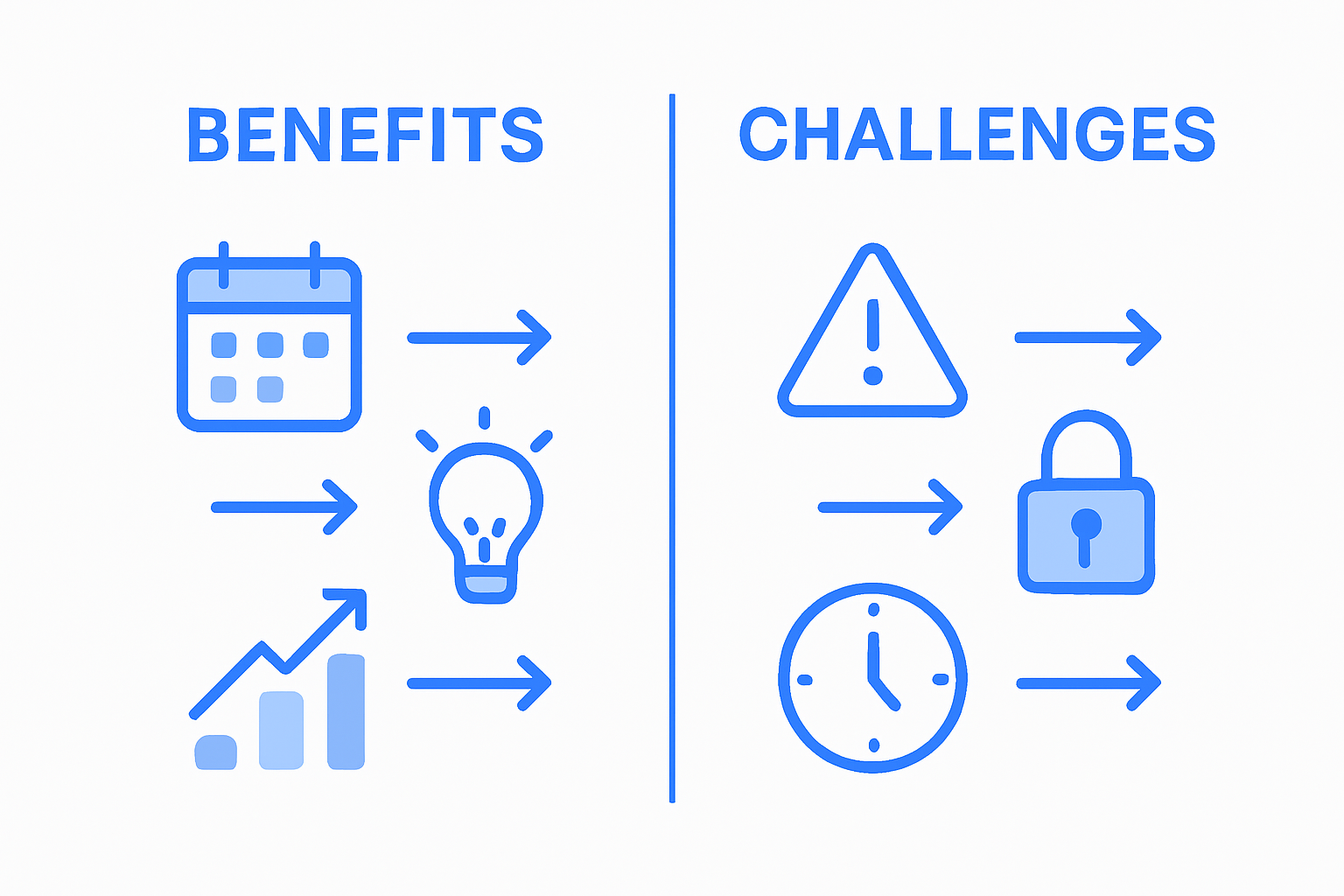
Key benefits and potential challenges of AI for solopreneurs include:
- Automated administrative task management
- Personalized business strategy recommendations
- Real-time performance analytics
- Potential overreliance on technological solutions
- Learning curve for implementing AI tools
- Data privacy and security considerations
While AI presents remarkable opportunities, successful integration requires a balanced approach. Solopreneurs must view these technologies as collaborative tools that augment human creativity and strategic thinking, rather than complete replacements for personal expertise and intuition. The most effective implementation involves leveraging AI’s computational power while maintaining the unique human elements of innovation, empathy, and contextual understanding.
Avoiding Common Pitfalls in AI-Driven Coaching
Navigating the complex landscape of AI-driven coaching requires a nuanced understanding of potential challenges and strategic mitigation techniques. Comprehensive AI literacy training and ethical guidelines are crucial for responsible implementation, addressing critical concerns around data privacy, over-reliance on technological solutions, and maintaining the essential human element in coaching relationships.
Proactive AI systems must be designed to scaffold metacognition and human collaboration, recognizing the inherent tensions around trust and potential misdiagnosis. Coaches must develop a sophisticated approach that leverages AI’s computational power while preserving the irreplaceable emotional intelligence and contextual understanding that define transformative coaching experiences.
Key strategies for avoiding AI-driven coaching pitfalls include:
- Establishing clear boundaries between AI assistance and human intervention
- Implementing robust data privacy and consent protocols
- Continuously updating AI training with diverse, ethical datasets
- Maintaining human oversight and critical evaluation
- Developing AI systems with transparency and explainability
- Regular skills training for coaches on AI integration
Successful AI integration in coaching is not about technological replacement, but creating a symbiotic relationship where artificial intelligence amplifies human capabilities. Coaches who approach AI as a collaborative tool rather than a complete solution will be best positioned to deliver exceptional, nuanced client experiences that combine technological efficiency with deep personal insight.
Unlock Client Growth with AI-Powered Business Development
The article highlights the challenge many coaches and solopreneurs face in detecting genuine buying intent and turning emerging opportunities into meaningful client relationships. Pain points include the complexity of analyzing behavioral signals, the need for personalized outreach, and overcoming inefficient cold sales tactics. Concepts such as AI-driven warm introductions, social intelligence, and behavioral pattern recognition are key to unlocking client growth effectively.
Fluum directly addresses these challenges by acting as your AI-powered business development engine. Its AI co-founder identifies high-intent clients hiding within your broader network and automates personalized warm introductions. By using social intelligence and behavioral signals to detect buying intent and create real connections, Fluum helps you transform potential leads into paying clients without relying on cold outreach or a costly sales team.
Take control of your client pipeline today with smarter AI-driven coaching support. Discover how Fluum can help you:
- Find and prioritize prospects with genuine interest
- Automate warm introductions based on data-backed insights
- Focus on delivering coaching value while Fluum handles outreach
Ready to see how AI unlocks new growth paths for your business coaching?

Explore Fluum’s plans and start transforming connections into revenue at Fluum Pricing.
Learn more about how AI detects buying intent and opens opportunities by visiting AI-Powered Business Coaching Technologies and understand the benefits of overcoming digital skill gaps with AI-Powered Web Applications for Small Business Owners.
Frequently Asked Questions
How does AI enhance business coaching?
AI enhances business coaching by providing data-driven insights, automating administrative tasks, and enabling faster performance assessments. This allows coaches to focus on personalized interactions and deliver more targeted recommendations for client development.
What types of AI technologies are used in coaching platforms?
Coaching platforms use various AI technologies, including Natural Language Processing (NLP) algorithms, machine learning predictive models, generative AI content creation tools, interactive simulation agents, and personalized recommendation engines to improve client interactions and performance development.
What are the main benefits of AI for solopreneurs in business coaching?
The main benefits of AI for solopreneurs include automated task management, personalized strategy recommendations, real-time performance analytics, and accessible guidance for overcoming traditional business barriers, leading to increased productivity and better decision-making.
What challenges should coaches be aware of when implementing AI?
Coaches should be aware of potential challenges like overreliance on technology, data privacy issues, and the need for ongoing training in AI integration. It’s important to maintain a balance between AI assistance and human intervention to ensure effective coaching relationships.
Recommended
- How To Get Coaching Clients: Build Your Clientele In 2025
- Smart Dog Training Tips for Every Owner: 2025 Guide – iPupPee
- Fluum | Effective Stress Management Techniques for Busy Professionals
- Fluum | How to Onboard Clients Effectively for Lasting Success
- Fluum | Master Managing Multiple Projects for Success
- Fluum | Build Your Brand with a Branding Builder in 2025
- Fluum | 7 Customer Retention Examples to Boost Your Business