

Having a client outreach workflow guide is fundamental. Over 85 percent of American businesses say that identifying high-intent leads is their biggest outreach challenge. In a fast-paced digital world, making lasting client connections demands more than cold emails and generic social posts. This guide shows how to turn your outreach workflow into a powerful system using real-world steps that help American professionals set up platforms, spot true opportunities, and build relationships that actually convert.
Table of Contents
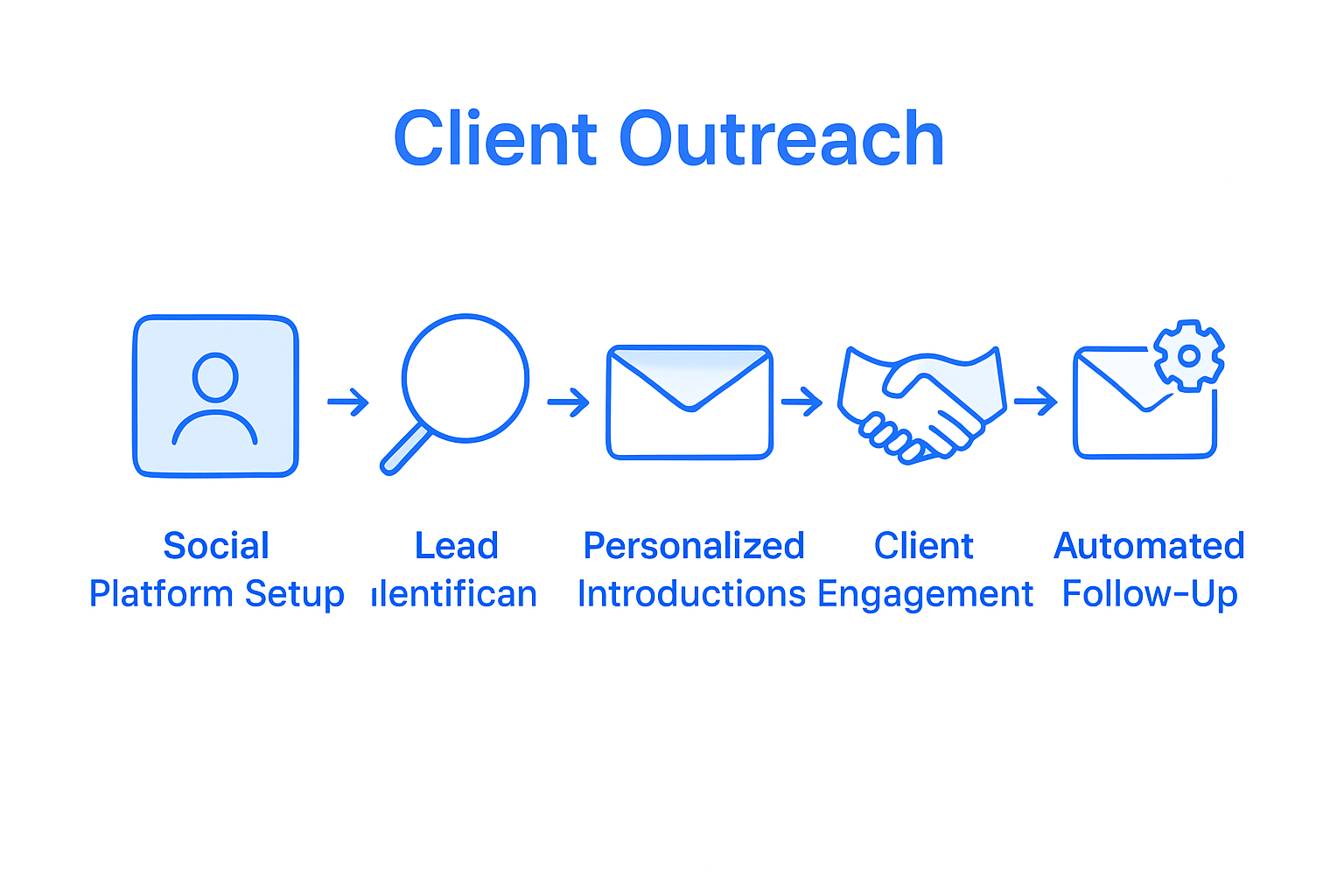
- Step 1: Set Up Your Social Intelligence Platform
- Step 2: Identify and Prioritize High-Intent Leads
- Step 3: Request Personalized Warm Introductions
- Step 4: Engage and Qualify Interested Clients
- Step 5: Automate Follow-Ups and Track Progress
Quick Summary
| Key Insight | Explanation |
|---|---|
| 1. Analyze your professional network | Map your current connections and identify referral sources for better outreach. |
| 2. Focus on high-intent leads | Use AI to identify leads showing genuine buying signals to improve conversion rates. |
| 3. Request warm introductions | Leverage personal connections for introductions to potential clients, enhancing credibility. |
| 4. Qualify potential clients carefully | Develop a structured framework to assess leads and ensure they fit your services. |
| 5. Automate follow-ups thoughtfully | Implement strategies for ongoing engagement while maintaining a personal touch. |
Step 1: Set Up Your Social Intelligence Platform
The first step of a client outreach workflow guide is building an effective social intelligence platform starts with understanding how technology can transform your client outreach workflow. Your goal is to create a strategic system that identifies potential opportunities and manages professional connections seamlessly.
To begin setting up your platform, start by analyzing your existing professional network. This means mapping out your current connections, identifying potential referral sources, and understanding the social intelligence skills that will help you maximize these relationships. Look for professionals who operate in adjacent industries or complementary service areas where mutual introductions could be beneficial.
The key is creating a systematic approach that goes beyond traditional networking. Integrate tools that can track interaction histories, monitor communication patterns, and help you understand the subtle dynamics of professional relationships. Your platform should enable you to quickly assess which connections have high potential for generating meaningful business opportunities.
One critical tip: avoid overwhelming yourself by trying to connect with everyone. Focus on quality over quantity. Select connections that align closely with your professional expertise and demonstrate genuine potential for meaningful collaboration.
In the next section, you will learn how to activate these connections and transform your professional network into a robust client acquisition system.
Step 2: Identify and Prioritize High-Intent Leads
In this crucial stage of your client outreach workflow, you will learn how to systematically identify and rank potential leads that are most likely to convert into paying clients. Your objective is to develop a strategic approach that focuses your energy on prospects with the highest probability of engagement.

Begin by implementing advanced lead identification techniques. Using AI to analyze customer behaviors and patterns allows you to uncover nuanced signals of buying intent. Look for specific indicators such as repeated website visits, engagement with pricing pages, extended session times, and interactions with specific content that suggest genuine interest in your services.
The prioritization process requires a methodical scoring system. Create a weighted framework that assigns points based on different interaction types. For instance, downloading a detailed service guide might score higher than a brief website visit. Consider factors like professional background, industry alignment, and demonstrated need for your specific expertise.
Warning: Avoid the common mistake of chasing every potential lead. Quality trumps quantity. Develop a disciplined approach where you invest significant time only in leads showing strong, multidimensional signals of genuine interest.
In the next section, you will learn how to craft personalized outreach strategies that transform these high-intent leads into actual client conversations.
Step 3: Request Personalized Warm Introductions
In this critical stage of your client outreach workflow, you will learn how to transform your professional network into a powerful client acquisition engine. Your goal is to leverage personal connections and generate meaningful introductions that bypass traditional cold outreach methods.
The art of requesting warm introductions requires strategic preparation and genuine relationship building. Start by carefully mapping your professional network and identifying key connectors who understand your service offerings and can authentically recommend you. Loan Wellness 2 highlights the importance of strategic networking in professional growth. Focus on professionals who have direct exposure to your ideal client demographic and can provide nuanced, credible recommendations.
When approaching potential referral sources, craft personalized messages that clearly articulate your unique value proposition. Explain precisely how your services solve specific business challenges. Offer reciprocal value by demonstrating your willingness to support their professional objectives. This approach transforms introduction requests from transactional interactions into collaborative opportunities.
Warning: Authenticity is paramount. Never pressure connections or send generic introduction requests. Each outreach should reflect a genuine understanding of the connector’s network and potential mutual benefits.
In the next section, you will learn advanced techniques for converting warm introductions into meaningful client conversations.
Step 4: Engage and Qualify Interested Clients
In this crucial phase of your client outreach workflow, you will transform initial interest into meaningful business opportunities. Your objective is to systematically evaluate potential clients and determine their genuine fit with your services while building authentic professional relationships.
Real-time lead prioritization strategies are essential for efficiently managing your client engagement process. Develop a structured qualification framework that assesses potential clients across multiple dimensions. Evaluate factors such as their specific business challenges, budget alignment, decision making authority, and genuine need for your unique service offerings.
Create an initial engagement strategy that combines strategic communication with active listening. During preliminary conversations, ask targeted questions that reveal the depth of their business requirements. Pay close attention to their responses, looking for specific indicators that demonstrate serious intent and potential for long term collaboration. Develop a scoring system that objectively ranks prospects based on their alignment with your ideal client profile.
Warning: Do not rush the qualification process. Comprehensive assessment prevents wasted time on prospects unlikely to convert and helps you focus energy on high potential opportunities.
In the next section, you will learn advanced techniques for converting qualified leads into committed clients.
Step 5: Automate Follow-Ups and Track Progress
In this pivotal stage of your client outreach workflow, you will implement systematic processes that transform initial interactions into consistent professional relationships. Your primary objective is to create an efficient follow-up mechanism that keeps potential clients engaged without appearing pushy or desperate.
Strategic tracking approaches for high-intent leads are critical for maintaining momentum in your client acquisition process. Design a multi-tiered follow-up strategy that adapts to different client interaction levels. Develop automated communication sequences that include personalized email templates, scheduled check-in intervals, and contextual messaging based on previous interactions.
Implement a robust tracking system that monitors client engagement metrics such as email open rates, response times, meeting participation, and content interaction. Create a scoring mechanism that helps you prioritize and segment leads based on their demonstrated interest and potential conversion likelihood. Use technology platforms that allow you to visualize your pipeline and understand the progression of each potential client relationship.
Warning: Automation should enhance personal connection, not replace it. Ensure every automated communication feels genuine and tailored to the specific recipient.
In the next section, you will learn advanced strategies for nurturing and converting your most promising client relationships.
Transform Your Client Outreach with AI-Powered Warm Introductions
Building an effective client outreach workflow is challenging, especially when you want to avoid cold outreach and focus on authentic connections. This article highlights the importance of social intelligence, identifying high-intent leads, and requesting personalized warm introductions to grow your business. If you find yourself overwhelmed by chasing leads or unsure how to prioritize and qualify prospects, Fluum offers a solution designed exactly for solopreneurs and freelancers like you.
Fluum’s AI-powered platform uncovers opportunities hidden in your existing network by detecting behavioral signals and buying intent. It simplifies the process of requesting warm introductions and automates follow-ups so you can engage with clients who truly matter. Say goodbye to generic outreach and hello to meaningful conversations that convert.
Ready to turn your professional relationships into real revenue without a full sales team? Discover how Fluum can be your personal business development engine by exploring our pricing and plans. Start focusing less on chasing leads and more on doing what you love today.
Frequently Asked Questions
How can I set up a social intelligence platform for client outreach?
To set up a social intelligence platform, start by mapping your existing professional network to identify potential referral sources. Use tools to track interactions and manage relationships, focusing on quality connections that align with your skills and expertise.
What are high-intent leads, and how do I identify them?
High-intent leads are prospects showing genuine interest in your services, often indicated by behaviors like repeated visits to your website and engagement with specific content. Implement techniques like analyzing customer behaviors to prioritize leads based on their intent and interaction history.
How do I request personalized warm introductions?
Request personalized warm introductions by identifying key connections in your network who can authentically recommend you. Craft personalized messages that clearly state your value proposition and how your services address specific business challenges.
What should I include in my engagement strategy for potential clients?
Your engagement strategy should incorporate strategic communication, active listening, and a structured qualification framework to assess client fit. Ask targeted questions about their business needs and create a scoring system to rank prospects based on alignment with your services.
How can I automate follow-ups without losing personal touch?
To automate follow-ups effectively, design a multi-tiered strategy that includes personalized email templates and contextual messaging based on previous interactions. Utilize a robust tracking system to monitor client engagement and ensure your automated communications feel genuine and tailored.
What steps can I take to nurture my most promising client relationships?
Nurture client relationships by implementing consistent follow-up practices and personal engagement tailored to their needs. Develop a scoring mechanism to assess relationship progress, enabling you to focus your efforts on the highest-potential clients.
Recommended
- What Is Client Onboarding? Complete Guide For Solopreneurs
- How To Find New Clients For Solopreneurs And Freelancers
- 7 Work Life Balance Tips Every Solopreneur Should Know
- 7 Effective Client Engagement Strategies for Better Outcomes – Mastering Conflict
- Fluum | Effective Stress Management Techniques for Busy Professionals
- Fluum | How to Onboard Clients Effectively for Lasting Success
- Fluum | Master Managing Multiple Projects for Success
- Fluum | Build Your Brand with a Branding Builder in 2025
- Fluum | 7 Customer Retention Examples to Boost Your Business