
| Key Insight | Explanation |
|---|---|
| Warm Introductions Outperform Cold Outreach | AI-powered warm introduction platforms achieve 40-50% response rates compared to 2% for cold emails |
| Integration Capabilities Matter Most | The best platforms seamlessly connect with existing CRM systems and marketing automation tools |
| AI-Powered Matching Is Essential | Modern platforms use machine learning to identify ideal prospects from 100+ data sources |
| Multi-Channel Approach Required | Successful sales development requires coordinated outreach across email, LinkedIn, and phone |
| Data Quality Determines Success | Platforms with access to verified, real-time contact data deliver significantly better results |
| ROI Measurement Is Critical | Top platforms provide detailed analytics on pipeline contribution and conversion rates |
Why Sales Development Platforms Matter in 2026
A sales development platform is a technology solution that automates and optimizes the process of identifying, engaging, and nurturing prospects to generate qualified leads for B2B sales teams. These platforms combine data intelligence, automation, and communication tools to streamline the entire sales development process.
Cold email open rates have plummeted 70% over the past five years, forcing sales teams to rethink their approach entirely [1]. The traditional spray-and-pray method of cold outreach isn’t just ineffective—it’s actively damaging brand reputation and deliverability rates. Modern sales development platforms address this challenge by focusing on relationship-building rather than volume-based outreach.
The shift toward warm introductions and relationship-driven sales has fundamentally changed what constitutes an effective sales development platform. Instead of competing with 300 other cold emails in a prospect’s inbox, the most successful platforms now facilitate genuine connections through mutual contacts and shared interests.

This comprehensive analysis examines 15 leading sales development platforms across different categories, helping you identify the solution that best fits your team’s specific needs and budget constraints. We’ll explore everything from AI-powered warm introduction platforms to traditional email automation tools, providing the insights you need to make an informed decision.
1. AI-Powered Warm Introduction Platforms
AI-powered warm introduction platforms represent the cutting edge of sales development technology, leveraging machine learning to facilitate meaningful connections between buyers and sellers through mutual contacts. These platforms achieve response rates of 40-50% compared to the industry average of 2% for cold outreach [2].
How AI-Powered Introductions Work
The technology behind these platforms analyzes vast networks of professional relationships to identify potential introduction paths. Advanced algorithms consider factors like:
- Mutual connections and their relationship strength
- Shared interests, backgrounds, or experiences
- Industry expertise and domain knowledge
- Geographic proximity and market relevance
- Timing based on recent activities or announcements
Pro Tip: Look for platforms that offer double opt-in introductions, ensuring both parties have explicitly agreed to connect before the introduction is made.
Key Features to Evaluate
When assessing AI-powered warm introduction platforms, prioritize these capabilities:
- Real-time relationship mapping across multiple data sources
- Automated introduction request generation with context
- Integration with existing CRM and sales tools
- Performance analytics and conversion tracking
- Compliance with data privacy regulations
The most sophisticated platforms pull signals from over 100 government and private databases to surface high-quality prospects that traditional tools miss entirely. This comprehensive data approach ensures your team connects with decision-makers who have both the authority and budget to make purchasing decisions.
Best For
AI-powered warm introduction platforms excel for enterprise sales teams, partnerships and business development professionals, and companies selling high-value solutions where relationship quality matters more than volume. They’re particularly effective in industries like finance, technology, and manufacturing where trust and credibility are paramount.
2. Comprehensive Sales Engagement Platforms
Comprehensive sales engagement platforms serve as command centers for modern sales development teams, combining prospecting, outreach, and analytics in unified workflows. These all-in-one solutions streamline the entire sales development process from initial research through qualified lead handoff.
Core Platform Capabilities
Modern sales engagement platforms integrate multiple communication channels and automation features:
- Multi-channel sequence automation (email, phone, LinkedIn, SMS)
- Advanced personalization using AI and data enrichment
- Real-time activity tracking and engagement scoring
- Built-in dialing and call recording functionality
- Pipeline reporting and conversion analytics
The most effective platforms don’t just automate outreach—they provide intelligent recommendations on timing, messaging, and channel selection based on prospect behavior and historical performance data [3].
Integration and Workflow Management
Pro Tip: Choose platforms with robust API capabilities and pre-built integrations for your existing tech stack to avoid data silos and workflow disruptions.
Leading platforms offer seamless integration with:
- CRM systems (Salesforce, HubSpot, Pipedrive)
- Marketing automation tools (Marketo, Pardot, ActiveCampaign)
- Data enrichment services (ZoomInfo, Clearbit, Apollo)
- Communication tools (Slack, Microsoft Teams, Zoom)
- Analytics platforms (Google Analytics, Mixpanel, Amplitude)
Performance Optimization Features
The best sales engagement platforms provide actionable insights to continuously improve performance:
- A/B testing capabilities for subject lines, messaging, and timing
- Deliverability monitoring and domain health management
- Response sentiment analysis and conversation intelligence
- Team performance benchmarking and coaching recommendations
- Predictive analytics for pipeline forecasting
These platforms typically show ROI within 3-6 months through increased response rates, shortened sales cycles, and improved team productivity. They’re ideal for mid-market and enterprise companies with dedicated SDR teams who need sophisticated automation and analytics capabilities.
3. CRM-Integrated Sales Development Tools
CRM-integrated sales development tools eliminate data silos by building prospecting and outreach capabilities directly into existing customer relationship management systems. This native integration ensures consistent data flow and reduces the learning curve for sales teams already familiar with their CRM interface.
Native CRM Advantages
Built-in sales development functionality offers several key benefits over standalone platforms:
- Unified contact and opportunity management
- Automatic activity logging and attribution
- Consistent data governance and security policies
- Simplified user training and adoption
- Lower total cost of ownership
Feature Comparison by CRM Platform
| CRM Platform | Native SDR Features | Best For |
|---|---|---|
| Salesforce Sales Cloud | Einstein Lead Scoring, High Velocity Sales, Pardot Integration | Enterprise teams with complex workflows |
| HubSpot CRM | Sequences, Prospecting Tools, Sales Hub | SMBs and growing companies |
| Pipedrive | LeadBooster, Campaigns, Smart Contact Data | Small to mid-market sales teams |
| Microsoft Dynamics 365 | Sales Insights, Relationship Analytics, LinkedIn Integration | Microsoft-centric organizations |
Customization and Scalability
The most successful CRM-integrated solutions offer extensive customization options to match existing sales processes. Look for platforms that support:
- Custom field mapping and data validation rules
- Workflow automation based on prospect behavior
- Territory and lead routing configuration
- Role-based permissions and access controls
- Custom reporting and dashboard creation
Pro Tip: Evaluate the platform’s ability to scale with your team growth. Look for usage-based pricing models that align costs with value generated rather than flat per-user fees.
While CRM-integrated tools may lack some advanced features found in specialized platforms, they excel in environments where data consistency and user adoption are primary concerns. They’re particularly effective for companies with established CRM processes who want to enhance rather than replace their existing workflows.
4. Specialized Prospecting Platforms
Specialized prospecting platforms focus exclusively on lead identification and contact discovery, offering the most comprehensive databases and advanced search capabilities available in the market. These platforms excel at finding hard-to-reach decision-makers and providing accurate contact information.
Advanced Search and Filtering
The best prospecting platforms provide sophisticated search capabilities that go far beyond basic demographic filters:
- Technographic data (software usage, tech stack analysis)
- Firmographic intelligence (company size, revenue, growth stage)
- Intent data (recent searches, content consumption, buying signals)
- Organizational charts and reporting structures
- Funding events, hiring patterns, and expansion indicators
Data Quality and Verification
Data accuracy remains the biggest challenge in B2B prospecting, with contact databases showing decay rates of 2-3% monthly [4]. Leading prospecting platforms address this through:
- Real-time email verification and deliverability scoring
- Phone number validation and mobile detection
- Social profile matching and verification
- Regular data refresh cycles and crowd-sourced updates
- Bounce-back monitoring and automatic list cleaning
Integration and Export Capabilities
Modern prospecting platforms must integrate smoothly with existing sales and marketing tools. Essential integration features include:
- One-click export to CRM systems with field mapping
- API access for custom integrations and workflows
- Chrome extensions for LinkedIn and website prospecting
- Bulk operations and list management tools
- Usage tracking and credit management systems
Pro Tip: Test data quality by requesting sample lists in your target market before committing to annual contracts. Look for platforms offering data guarantees or credits for invalid contacts.
Specialized prospecting platforms work best for teams with dedicated researchers or those targeting very specific niches where general-purpose tools fall short. They’re particularly valuable for account-based marketing initiatives and complex enterprise sales cycles.
5. Multi-Channel Outreach Platforms
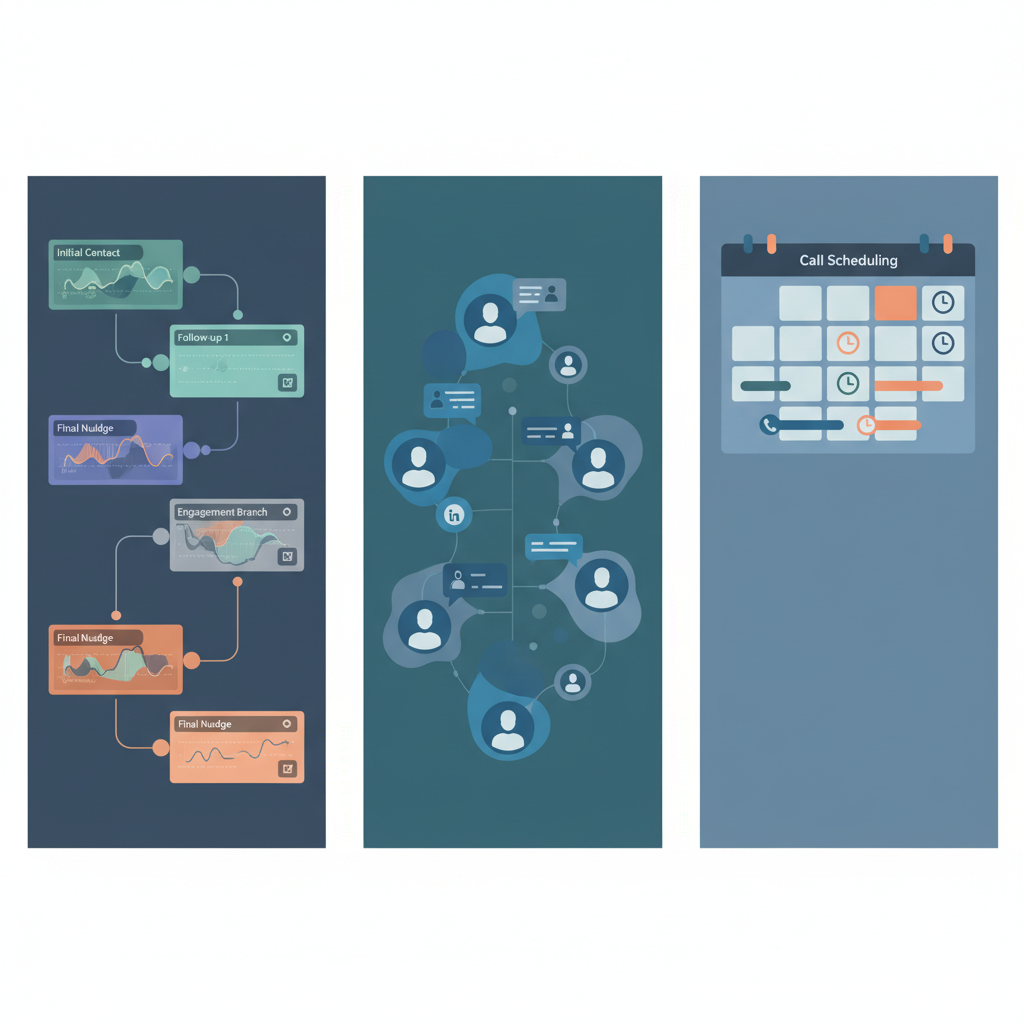
Multi-channel outreach platforms orchestrate coordinated campaigns across email, phone, LinkedIn, and SMS to maximize prospect engagement and response rates. These platforms recognize that modern buyers consume information across multiple touchpoints before making purchasing decisions.
Channel Coordination and Timing
Effective multi-channel platforms don’t just enable outreach across different channels—they intelligently coordinate timing and messaging to create cohesive prospect experiences:
- Automatic channel switching based on engagement levels
- Cross-channel personalization using unified prospect profiles
- Optimal timing algorithms for each communication channel
- Conflict resolution to prevent over-communication
- Response tracking across all touchpoints
Channel-Specific Optimization
Each communication channel requires unique optimization strategies and compliance considerations:
- Email: Deliverability management, A/B testing, template libraries
- Phone: Local presence dialing, voicemail automation, call recording
- LinkedIn: Connection request limits, message personalization, InMail credits
- SMS: Opt-in compliance, carrier filtering, message length optimization
- Video: Personalized video creation, hosting, and engagement tracking
Performance Analytics and Attribution
Multi-channel campaigns require sophisticated analytics to understand which touchpoints drive results:
- Cross-channel conversion tracking and attribution modeling
- Channel performance comparison and optimization recommendations
- Prospect engagement scoring across all touchpoints
- ROI analysis by channel and campaign type
- Team performance benchmarking and coaching insights
Research shows that prospects contacted through multiple channels are 3x more likely to respond than those reached through single-channel outreach [5]. However, success requires careful orchestration to avoid appearing pushy or desperate.
Pro Tip: Start with 2-3 channels and master the coordination before expanding. Poor multi-channel execution is worse than focused single-channel outreach.
These platforms work best for teams with the bandwidth to manage complex campaigns and those selling to prospects who engage across multiple channels. They’re particularly effective for mid-market and enterprise sales where longer sales cycles justify the additional complexity.
6. AI-Powered Lead Generation Platforms
AI-powered lead generation platforms use machine learning algorithms to identify prospects most likely to convert, automatically score leads, and predict optimal engagement strategies. These platforms represent the evolution from reactive to predictive sales development.
Machine Learning Applications
Modern AI platforms apply machine learning across multiple aspects of lead generation:
- Lookalike modeling to find prospects similar to best customers
- Behavioral prediction based on digital footprint analysis
- Content consumption patterns and intent signal detection
- Optimal outreach timing based on prospect activity patterns
- Message personalization using natural language processing
Predictive Lead Scoring
Traditional lead scoring relies on static demographic and firmographic data. AI-powered platforms incorporate dynamic behavioral signals and external data sources to create more accurate predictions:
- Website behavior and engagement patterns
- Social media activity and professional updates
- Company news, funding events, and leadership changes
- Technology adoption and vendor evaluation activities
- Competitive intelligence and market positioning shifts
Automated Qualification and Routing
Advanced AI platforms can automatically qualify leads and route them to appropriate team members based on:
- Product fit scoring using company and contact attributes
- Geographic territory and industry specialization
- Sales rep performance and capacity optimization
- Historical conversion patterns and success rates
- Real-time availability and workload balancing
The most sophisticated platforms continuously learn from outcomes to improve their predictions. They track which leads convert, identify patterns in successful engagements, and adjust their algorithms accordingly [6].
Pro Tip: Ensure the AI platform can explain its scoring decisions. Black-box algorithms make it difficult to coach reps and improve processes.
AI-powered lead generation platforms deliver the highest value for companies with large prospect volumes and the data infrastructure to support machine learning models. They’re particularly effective for SaaS companies and other businesses with clear conversion metrics and sufficient historical data.
7. Conversation Intelligence Platforms
Conversation intelligence platforms analyze sales calls, emails, and meetings to extract insights about prospect needs, competitive threats, and deal progression. These platforms turn unstructured conversation data into actionable intelligence for sales teams and managers.
AI-Powered Analysis Capabilities
Modern conversation intelligence platforms offer sophisticated analysis across multiple communication formats:
- Automatic call transcription with speaker identification
- Sentiment analysis and emotional intelligence scoring
- Keyword and topic extraction from conversations
- Competitor mention detection and positioning analysis
- Objection identification and response effectiveness
Coaching and Performance Improvement
These platforms excel at identifying coaching opportunities and improving team performance:
- Talk-to-listen ratio analysis and optimization recommendations
- Question quality assessment and discovery improvement
- Successful conversation pattern identification
- Objection handling technique comparison
- Competitive positioning effectiveness measurement
Deal Intelligence and Forecasting
Conversation intelligence provides unique insights into deal health and progression likelihood:
- Stakeholder engagement mapping and influence assessment
- Decision criteria identification and alignment scoring
- Timeline commitment analysis and accuracy tracking
- Risk factor detection and mitigation recommendations
- Next step clarity and follow-through measurement
Research indicates that sales teams using conversation intelligence improve their win rates by 20-30% within the first year of implementation [7]. The platforms provide objective data about what actually happens in sales conversations, rather than relying on subjective rep reporting.
Pro Tip: Use conversation intelligence insights to create more effective prospecting messages. The language that resonates in sales calls often works well in initial outreach.
Conversation intelligence platforms work best for teams with regular prospect calls and those focused on complex, consultative sales processes. They’re particularly valuable for enterprise sales teams and those selling high-value solutions with longer sales cycles.
8. Social Selling Platforms
Social selling platforms leverage professional networks, particularly LinkedIn, to identify prospects, build relationships, and generate qualified leads through authentic social engagement. These platforms recognize that modern B2B buyers research vendors and make initial contact through social channels.
LinkedIn Automation and Compliance
Professional social selling platforms provide sophisticated LinkedIn automation while maintaining compliance with platform terms of service:
- Connection request personalization and scheduling
- Message sequence automation with natural delays
- Profile viewing and engagement automation
- Content sharing and interaction scheduling
- Lead extraction and CRM synchronization
Relationship Building Features
The most effective social selling platforms focus on genuine relationship building rather than aggressive outreach:
- Prospect research and common connection identification
- Content curation and thought leadership positioning
- Engagement tracking and relationship scoring
- Social listening and conversation starter identification
- Network growth and influence measurement
Multi-Platform Social Intelligence
Leading platforms extend beyond LinkedIn to incorporate insights from multiple social networks:
- Twitter engagement and conversation monitoring
- Facebook business page interaction tracking
- Instagram professional account analysis
- YouTube channel and content consumption patterns
- Professional blog and publication activity
Social selling requires a fundamentally different approach than traditional outbound sales. Success depends on providing value through content and insights rather than pushing products or services [8].
Pro Tip: Focus on industry-specific content sharing and thought leadership before attempting direct outreach. Prospects are more likely to engage with recognized experts in their field.
Social selling platforms work best for consultative sales processes and industries where personal branding and thought leadership influence purchasing decisions. They’re particularly effective for professional services, technology solutions, and high-value B2B products.
9. Email Automation Platforms
Email automation platforms specialize in creating, managing, and optimizing email outreach campaigns at scale. While email open rates have declined, these platforms use advanced techniques to improve deliverability and engagement rates.

Advanced Deliverability Management
Modern email platforms employ sophisticated strategies to maintain inbox placement and sender reputation:
- Domain warming and reputation management
- IP rotation and sending volume optimization
- Spam filter testing and content optimization
- Bounce handling and list hygiene automation
- Authentication setup (SPF, DKIM, DMARC)
Personalization and Dynamic Content
The most effective email platforms go beyond basic merge fields to create truly personalized experiences:
- Company-specific research and custom messaging
- Industry-relevant case studies and social proof
- Dynamic content based on prospect behavior
- Trigger-based messaging from external data sources
- Video personalization and interactive elements
Performance Optimization Features
Leading email platforms provide comprehensive testing and optimization capabilities:
- Multivariate testing for subject lines, content, and timing
- Send time optimization based on recipient behavior
- Template performance analysis and recommendations
- Engagement scoring and follow-up automation
- Unsubscribe rate monitoring and content adjustment
Despite declining open rates, email remains a critical component of B2B sales development when executed properly. The key is focusing on quality over quantity and providing genuine value in every message [9].
Integration and Workflow Automation
Modern email platforms integrate with broader sales and marketing ecosystems:
- CRM synchronization and activity logging
- Marketing automation platform connectivity
- Calendar scheduling and meeting coordination
- Social media profile enrichment
- Lead scoring and qualification workflows
Email automation platforms work best for teams with high prospect volumes and those targeting markets where email remains a primary communication channel. They’re particularly effective for SaaS companies, professional services, and B2B technology vendors.
10. Data Enrichment Platforms
Data enrichment platforms enhance existing prospect and customer records with additional information from external data sources, improving targeting accuracy and personalization capabilities. These platforms solve the common problem of incomplete or outdated contact information in CRM systems.
Data Sources and Coverage
The most comprehensive enrichment platforms aggregate information from hundreds of sources:
- Public business registries and government databases
- Social media profiles and professional networks
- Company websites and job posting analysis
- News articles and press release monitoring
- Technology vendor databases and usage tracking
Real-Time vs. Batch Enrichment
Different use cases require different enrichment approaches:
| Enrichment Type | Best Use Cases | Typical Response Time |
|---|---|---|
| Real-Time | Website forms, CRM data entry, sales call preparation | 1-3 seconds |
| Batch Processing | Database cleanup, campaign preparation, list building | Minutes to hours |
| Scheduled Updates | CRM maintenance, data quality monitoring | Daily/weekly cycles |
Quality Control and Accuracy
Data enrichment platforms must balance completeness with accuracy. Leading platforms provide:
- Confidence scoring for enriched data points
- Source attribution and verification timestamps
- Conflict resolution for contradictory information
- Manual review workflows for high-value accounts
- Custom validation rules and business logic
Privacy and Compliance Considerations
With increasing data privacy regulations, enrichment platforms must address compliance requirements:
- GDPR and CCPA compliance for data processing
- Opt-out mechanisms and consent management
- Data retention policies and deletion capabilities
- Audit trails and processing documentation
- Cross-border data transfer restrictions
Pro Tip: Implement data enrichment gradually, starting with critical fields like email validation and company information before expanding to more detailed demographic data.
Data enrichment platforms provide the foundation for effective sales development by ensuring teams have accurate, complete information about their prospects. They’re essential for any organization serious about data-driven sales and marketing.
11. Sales Analytics Platforms
Sales analytics platforms transform raw sales activity data into actionable insights about team performance, pipeline health, and revenue forecasting. These platforms help sales leaders make data-driven decisions about resource allocation, process improvements, and strategic planning.
Advanced Analytics Capabilities
Modern sales analytics platforms provide sophisticated analysis beyond basic CRM reporting:
- Predictive analytics for deal closure probability
- Cohort analysis and customer lifetime value modeling
- Attribution analysis across marketing and sales touchpoints
- Seasonal pattern recognition and trend forecasting
- Competitive win/loss analysis and positioning insights
Performance Benchmarking and Optimization
These platforms excel at identifying performance gaps and improvement opportunities:
- Individual rep performance against team and industry benchmarks
- Activity-to-outcome correlation analysis
- Pipeline velocity and conversion rate optimization
- Territory and market segment performance comparison
- Sales process bottleneck identification and resolution
Revenue Intelligence and Forecasting
Advanced analytics platforms provide sophisticated forecasting capabilities that go beyond traditional pipeline analysis:
- Machine learning-powered revenue predictions
- Risk assessment for individual deals and overall pipeline
- Scenario modeling for different market conditions
- Goal attainment probability and gap analysis
- Resource requirement forecasting and capacity planning
The most valuable analytics platforms integrate data from multiple sources to provide a complete picture of sales performance. This includes CRM data, email engagement metrics, call recordings, and external market intelligence [10].
Custom Dashboards and Reporting
Leading platforms provide flexible visualization and reporting capabilities:
- Role-based dashboards for different user types
- Custom metric creation and KPI tracking
- Automated report generation and distribution
- Mobile-optimized views for field sales teams
- API access for custom integrations and analysis
Sales analytics platforms work best for data-driven organizations with sufficient sales activity volume to generate meaningful insights. They’re particularly valuable for companies with complex sales processes and multiple product lines or market segments.
How to Choose the Right Sales Development Platform
Selecting the optimal sales development platform requires careful evaluation of your team’s specific needs, existing technology stack, and growth objectives. The wrong choice can waste months of implementation time and thousands of dollars in licensing fees.
Assessment Framework
Start your evaluation with a comprehensive assessment of current state and future requirements:
- Team Size and Structure: Consider current headcount and planned growth
- Sales Process Complexity: Evaluate cycle length and stakeholder involvement
- Target Market Characteristics: Analyze prospect communication preferences
- Technology Integration Requirements: Document existing tools and data flows
- Budget and ROI Expectations: Define success metrics and timeline
Key Evaluation Criteria
Use these criteria to compare potential platforms objectively:
- Data Quality and Coverage: Accuracy rates, database size, update frequency
- Integration Capabilities: API quality, pre-built connectors, data synchronization
- User Experience: Interface design, learning curve, mobile accessibility
- Compliance and Security: Data privacy, industry certifications, audit capabilities
- Support and Training: Onboarding process, documentation quality, response times
Implementation Planning
Pro Tip: Plan for a 3-6 month implementation timeline including data migration, team training, and process optimization. Rush implementations typically fail to deliver expected results.
Successful platform implementations require careful planning and change management:
- Pilot Program: Start with a small team or specific use case
- Data Migration: Clean and organize existing data before transfer
- Training and Adoption: Provide comprehensive training and ongoing support
- Process Documentation: Update sales processes and playbooks
- Performance Measurement: Establish baseline metrics and tracking systems
Common Implementation Pitfalls
Avoid these common mistakes that derail platform implementations:
- Choosing features over fit with existing processes
- Underestimating training and change management requirements
- Failing to clean data before migration
- Not establishing clear success metrics upfront
- Attempting to implement too many features simultaneously
The most successful implementations focus on solving specific, well-defined problems rather than trying to transform everything at once. Start with your biggest pain point and expand functionality over time as the team becomes comfortable with the new platform.
Frequently Asked Questions
1. What is SDR and CRM?
SDR stands for Sales Development Representative, a role focused on prospecting and qualifying leads before passing them to account executives. CRM (Customer Relationship Management) software helps SDRs track prospect interactions, manage lead data, and coordinate follow-up activities. Modern CRM systems integrate with sales development platforms to provide comprehensive pipeline management, automated workflows, and performance analytics that enable SDRs to work more efficiently and effectively.
2. What is the 2 2 2 rule in sales?
The 2 2 2 rule is a systematic follow-up framework that recommends contacting prospects at three specific intervals: 2 days after initial outreach, 2 weeks later if no response, and 2 months after that for a final attempt. This approach balances persistence with respect for prospects’ time while maximizing response opportunities. Modern sales development platforms can automate this sequence while allowing for personalization and channel variation to improve effectiveness beyond traditional email-only approaches.
3. How do warm introduction platforms achieve higher response rates?
Warm introduction platforms achieve 40-50% response rates by leveraging existing relationships and mutual connections rather than cold outreach. They use AI to identify introduction paths through professional networks, ensuring both parties have explicitly opted into the connection. This approach builds immediate trust and credibility, as prospects receive introductions from people they already know and respect, eliminating the skepticism associated with unsolicited cold emails. This is particularly relevant for sales development platform.
4. What features should I prioritize in a sales development platform?
Prioritize data quality and integration capabilities above all else. Look for platforms with verified contact databases, real-time data enrichment, and seamless CRM integration. Multi-channel outreach capabilities, automation workflows, and comprehensive analytics are also essential. However, avoid feature-heavy platforms that complicate adoption—focus on solutions that solve your specific pain points while providing room for growth and scaling. When considering sales development platform, this point stands out.
5. How long does it take to see ROI from a sales development platform?
Most organizations see initial ROI within 3-6 months of proper implementation, with full value realization occurring within 12 months. The timeline depends on factors like team size, implementation complexity, and existing process maturity. Quick wins often come from improved data quality and automation, while longer-term benefits include increased pipeline velocity, higher conversion rates, and enhanced team productivity through better workflows and analytics. For those exploring sales development platform, this matters.
6. Are AI-powered platforms worth the additional cost?
AI-powered platforms justify their higher cost through significantly improved targeting accuracy, personalization capabilities, and predictive insights. They’re particularly valuable for teams with high prospect volumes or complex target markets where manual research becomes inefficient. However, AI platforms require sufficient data and activity volume to generate meaningful insights—smaller teams may benefit more from simpler, cost-effective solutions focused on fundamental sales development activities. This directly impacts sales development platform outcomes.
7. How important is multi-channel capability?
Multi-channel capability is increasingly important as prospects engage across email, phone, LinkedIn, and other touchpoints. Research shows prospects contacted through multiple channels are 3x more likely to respond than single-channel approaches. However, successful multi-channel execution requires careful coordination and sufficient team bandwidth. Start with 2-3 channels and master the orchestration before expanding to additional communication methods. This is particularly relevant for sales development platform.
Sources & References
- Autobound, “Best AI Sales Tools (2026): 15 Platforms Compared”, 2026
- SalesHive, “B2B Sales Agency & SDR Lead Generation Platform”, 2026
- Cognism, “12 Must-Have SDR Tools to Drive More Sales”, 2026
- Apollo.io, “Best Sales Software Tools to Accelerate Revenue in 2026”, 2026
- Forecast.io, “Top Sales Engagement Tools in 2026 | Drive More Conversions”, 2026
- Learn Prompting, “Best AI Tools for Sales Teams in 2025”, 2025
- Artisan AI, “The Ultimate List of 12 SDR Tools for Sales Development”, 2026
- Salesloft, “The Leading AI Revenue Orchestration Platform”, 2026
- Outreach, “Sales Development: Build Qualified Pipeline”, 2026
- NYU CLaME, “The Sales Development Playbook”, 2026
The modern sales development landscape has evolved dramatically from the spray-and-pray cold email tactics of the past. Today’s most successful teams leverage AI-powered platforms that facilitate warm introductions, provide comprehensive prospect intelligence, and orchestrate multi-channel engagement strategies.
The platforms outlined in this analysis represent the cutting edge of sales development technology in 2026. From AI-powered warm introduction platforms achieving 40-50% response rates to comprehensive sales engagement solutions that automate entire workflows, these tools enable sales teams to work smarter rather than harder.

The key to success lies not in choosing the most feature-rich platform, but in selecting the solution that best aligns with your team’s specific needs, existing processes, and growth objectives. Whether you’re a startup looking to establish repeatable prospecting processes or an enterprise team seeking to optimize complex multi-channel campaigns, there’s a platform designed to help you achieve your goals.
As cold outreach continues to decline in effectiveness, the future belongs to platforms that facilitate genuine relationship building and provide contextual, personalized engagement opportunities. At Fluum, we’ve seen firsthand how warm introductions and AI-powered matching can transform sales development results, replacing the frustration of ignored cold emails with meaningful conversations and qualified pipeline.
If you’re a senior leader or C-suite executive looking to revolutionize your sales development approach, talk to Aurora here and tell us who you’re looking to meet next. We’ll make sure to send you only what’s relevant, connecting you with the right prospects through our curated network of decision-makers who are genuinely interested in what you have to offer.
Recommended Articles
Explore more from our content library:
- Sales Pipeline Generation: High-Converting Systems
- What Is Warm Outreach: The Complete Guide for 2026
- Best Cold Outreach Alternatives for B2B Sales Teams
- How to Generate Warm Leads That Convert at 40-50% Rates
- Build Strategic B2B Partnerships That Drive Revenue
{“@context”:”https://schema.org”,”@type”:”Article”,”headline”:”Best Sales Development Platforms for B2B Teams in 2026″,”description”:”Discover the top 15 sales development platforms for 2026. Compare features, pricing, and ROI to find the best solution for your B2B sales team’s pipeline growth”,”author”:{“@type”:”Person”,”name”:”Fluum Editorial Team”,”jobTitle”:”SaaS / AI-Powered Business Intelligence Specialists”,”worksFor”:{“@type”:”Organization”,”name”:”Fluum”}},”publisher”:{“@type”:”Organization”,”name”:”Fluum”},”datePublished”:”2026-04-13T22:19:25.973Z”,”dateModified”:”2026-04-13T22:19:25.973Z”,”mainEntityOfPage”:{“@type”:”WebPage”},”keywords”:”sales development platform”,”about”:{“@type”:”Thing”,”name”:”sales development platform”},”image”:”https://ciczdkailhqqntlorwkp.supabase.co/storage/v1/object/public/article-asset/generated-images/cmmynsypx0002gt0a55zidu7p/1776118740241-0.png”}
{“@context”:”https://schema.org”,”@type”:”FAQPage”,”mainEntity”:[{“@type”:”Question”,”name”:”1. What is SDR and CRM?”,”acceptedAnswer”:{“@type”:”Answer”,”text”:”SDR stands for Sales Development Representative, a role focused on prospecting and qualifying leads before passing them to account executives. CRM (Customer Relationship Management) software helps SDRs track prospect interactions, manage lead data, and coordinate follow-up activities. Modern CRM systems integrate with sales development platforms to provide comprehensive pipeline management, automated workflows, and performance analytics that enable SDRs to work more efficiently and effectively.”}},{“@type”:”Question”,”name”:”2. What is the 2 2 2 rule in sales?”,”acceptedAnswer”:{“@type”:”Answer”,”text”:”The 2 2 2 rule is a systematic follow-up framework that recommends contacting prospects at three specific intervals: 2 days after initial outreach, 2 weeks later if no response, and 2 months after that for a final attempt. This approach balances persistence with respect for prospects’ time while maximizing response opportunities. Modern sales development platforms can automate this sequence while allowing for personalization and channel variation to improve effectiveness beyond traditional email-only approaches.”}},{“@type”:”Question”,”name”:”3. How do warm introduction platforms achieve higher response rates?”,”acceptedAnswer”:{“@type”:”Answer”,”text”:”Warm introduction platforms achieve 40-50% response rates by leveraging existing relationships and mutual connections rather than cold outreach. They use AI to identify introduction paths through professional networks, ensuring both parties have explicitly opted into the connection. This approach builds immediate trust and credibility, as prospects receive introductions from people they already know and respect, eliminating the skepticism associated with unsolicited cold emails. This is particularly relevant for sales development platform.”}},{“@type”:”Question”,”name”:”4. What features should I prioritize in a sales development platform?”,”acceptedAnswer”:{“@type”:”Answer”,”text”:”Prioritize data quality and integration capabilities above all else. Look for platforms with verified contact databases, real-time data enrichment, and seamless CRM integration. Multi-channel outreach capabilities, automation workflows, and comprehensive analytics are also essential. However, avoid feature-heavy platforms that complicate adoption—focus on solutions that solve your specific pain points while providing room for growth and scaling. When considering sales development platform, this point stands out.”}},{“@type”:”Question”,”name”:”5. How long does it take to see ROI from a sales development platform?”,”acceptedAnswer”:{“@type”:”Answer”,”text”:”Most organizations see initial ROI within 3-6 months of proper implementation, with full value realization occurring within 12 months. The timeline depends on factors like team size, implementation complexity, and existing process maturity. Quick wins often come from improved data quality and automation, while longer-term benefits include increased pipeline velocity, higher conversion rates, and enhanced team productivity through better workflows and analytics. For those exploring sales development platform, this matters.”}},{“@type”:”Question”,”name”:”6. Are AI-powered platforms worth the additional cost?”,”acceptedAnswer”:{“@type”:”Answer”,”text”:”AI-powered platforms justify their higher cost through significantly improved targeting accuracy, personalization capabilities, and predictive insights. They’re particularly valuable for teams with high prospect volumes or complex target markets where manual research becomes inefficient. However, AI platforms require sufficient data and activity volume to generate meaningful insights—smaller teams may benefit more from simpler, cost-effective solutions focused on fundamental sales development activities. This directly impacts sales development platform outcomes.”}},{“@type”:”Question”,”name”:”7. How important is multi-channel capability?”,”acceptedAnswer”:{“@type”:”Answer”,”text”:”Multi-channel capability is increasingly important as prospects engage across email, phone, LinkedIn, and other touchpoints. Research shows prospects contacted through multiple channels are 3x more likely to respond than single-channel approaches. However, successful multi-channel execution requires careful coordination and sufficient team bandwidth. Start with 2-3 channels and master the orchestration before expanding to additional communication methods. This is particularly relevant for sales development platform.”}}]}