
| Key Insight | Explanation |
|---|---|
| Strategic Framework Essential | A structured approach reduces procurement risks by 40% and improves project success rates |
| Multi-Stage Evaluation | The process involves 5-7 distinct phases from needs assessment to contract negotiation |
| Criteria-Based Selection | Quality, cost, reliability, and strategic fit serve as primary evaluation dimensions |
| Due Diligence Critical | Thorough vendor assessment prevents 60% of partnership failures and cost overruns |
| Documentation Required | Proper documentation ensures compliance, accountability, and future reference |
| Continuous Monitoring | Post-selection performance tracking maintains vendor quality and relationship value |
The vendor selection process has evolved dramatically in 2026, moving beyond simple price comparisons to sophisticated evaluation frameworks that prioritize strategic alignment and long-term partnership value. Organizations that master this systematic approach to choosing business partners consistently outperform competitors in project success rates and cost efficiency.
A structured vendor selection process is a comprehensive methodology for identifying, evaluating, and choosing external suppliers who can best meet an organization’s specific requirements. This framework encompasses needs assessment, market research, proposal evaluation, and final selection based on predetermined criteria including quality, cost, reliability, and strategic fit.

What Is the Vendor Selection Process?
The vendor selection process represents a systematic approach to identifying and choosing external suppliers that align with organizational objectives and requirements. This structured methodology involves multiple phases designed to minimize procurement risks while maximizing value creation through strategic partnerships.
Core Components of Vendor Selection
At its foundation, this systematic approach consists of several interconnected elements that work together to ensure optimal outcomes. The process begins with clearly defined business requirements and culminates in a formal partnership agreement that establishes expectations, deliverables, and performance metrics.
The methodology incorporates both quantitative and qualitative assessment criteria. Quantitative factors include pricing structures, delivery timelines, and technical specifications. Qualitative elements encompass vendor reputation, cultural fit, innovation capacity, and long-term strategic alignment potential.
According to the Project Management Institute, organizations with formal vendor selection processes experience 35% fewer project delays and 40% lower cost overruns compared to those using ad hoc selection methods [1].
Strategic Importance in Modern Business
In 2026, vendor selection has become increasingly critical as organizations rely more heavily on external partnerships to drive growth and innovation. The process serves as a risk mitigation tool while enabling access to specialized expertise and capabilities that may not exist internally.
Modern vendor selection extends beyond traditional procurement considerations to include factors such as cybersecurity posture, sustainability practices, and digital transformation capabilities. Organizations must evaluate vendors’ ability to adapt to changing market conditions and technological advancements.
Pro Tip: Establish vendor selection criteria before beginning market research to avoid bias toward specific suppliers and ensure objective evaluation.
Structured vendor selection also plays a crucial role in compliance and governance frameworks. Proper documentation and structured evaluation procedures help organizations meet regulatory requirements while maintaining transparency and accountability in procurement decisions.
How the Vendor Selection Process Works
This systematic approach operates through a series of structured phases that systematically narrow the pool of potential suppliers while gathering increasingly detailed information about their capabilities and fit.
Phase 1: Requirements Definition and Planning
The process begins with comprehensive requirements gathering and stakeholder alignment. Internal teams collaborate to define technical specifications, service level expectations, budget parameters, and timeline constraints. This phase establishes the foundation for all subsequent evaluation activities.
Organizations form cross-functional selection committees that include representatives from procurement, technical teams, finance, and end-user departments. This diverse perspective ensures that all relevant factors are considered during the evaluation process.
Key activities during this phase include:
- Documenting detailed functional and technical requirements
- Establishing evaluation criteria and weighting factors
- Setting budget ranges and timeline expectations
- Identifying mandatory versus preferred qualifications
- Developing risk assessment frameworks
Phase 2: Market Research and Vendor Identification
The second phase involves comprehensive market research to identify potential vendors who possess the capabilities to meet established requirements. This research utilizes multiple sources including industry databases, professional networks, trade publications, and referral systems.
Organizations typically cast a wide net initially, identifying 15-20 potential vendors before beginning the screening process. The Chartered Institute of Procurement & Supply recommends maintaining vendor databases that are regularly updated to ensure access to current market options [2].
Research activities include:
- Analyzing industry reports and market intelligence
- Reviewing vendor websites and capability statements
- Conducting preliminary discussions with potential suppliers
- Gathering references from existing clients
- Assessing financial stability and business continuity
Phase 3: Proposal Evaluation and Due Diligence
The formal evaluation phase involves issuing Requests for Proposal (RFPs) to shortlisted vendors and conducting detailed assessments of their responses. This phase requires significant time investment but provides the detailed information necessary for informed decision-making.
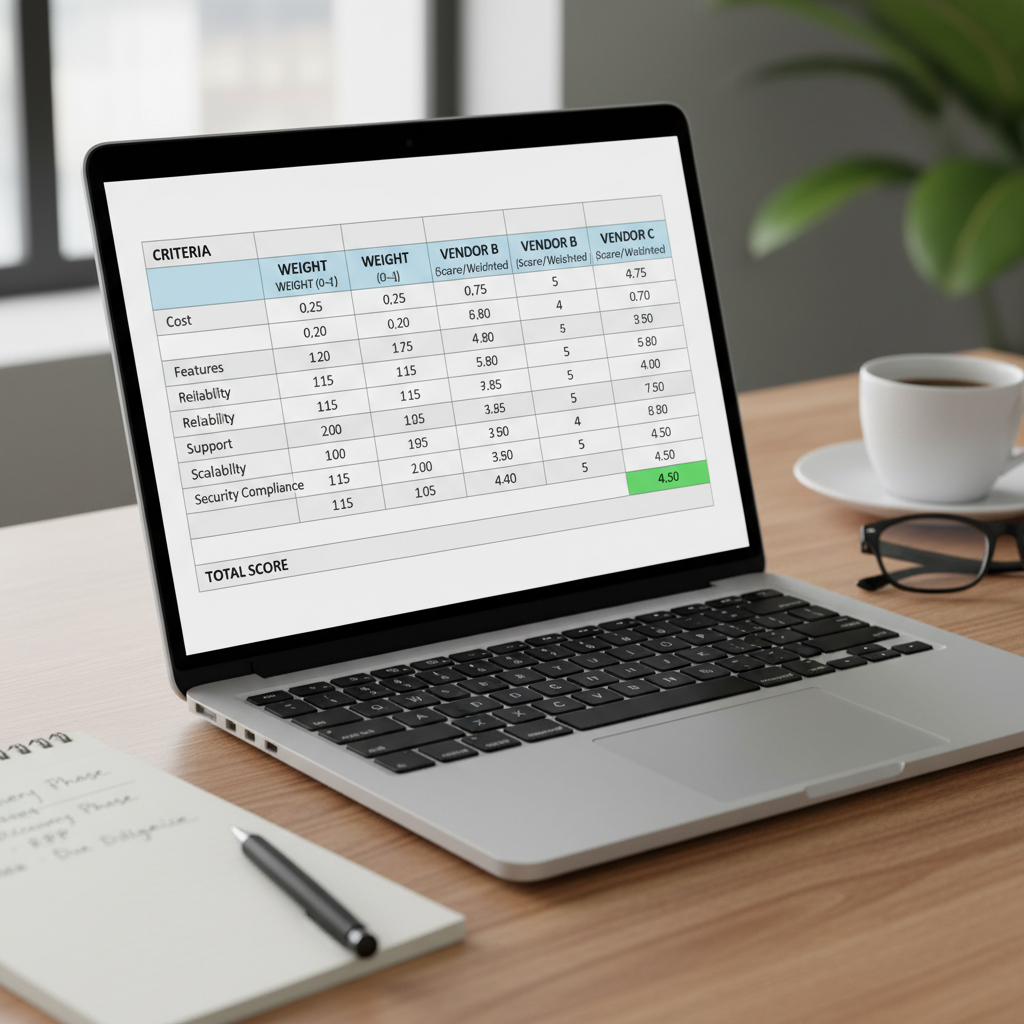
Evaluation teams score vendor proposals against predetermined criteria using weighted scoring models. Technical evaluations are conducted separately from commercial assessments to ensure objective analysis of each component.
Due diligence activities extend beyond proposal review to include site visits, reference checks, financial analysis, and security assessments. Organizations increasingly conduct virtual demonstrations and proof-of-concept projects to validate vendor capabilities.
Key Benefits of a Structured Vendor Selection Process
A well-designed approach delivers measurable benefits that extend far beyond simple cost savings, creating value through improved outcomes, reduced risks, and enhanced strategic alignment.
Risk Mitigation and Quality Assurance
Structured vendor selection significantly reduces the likelihood of partnership failures and project disruptions. Organizations using formal selection processes report 60% fewer vendor-related issues compared to those relying on informal selection methods.
The systematic evaluation approach identifies potential red flags early in the process, including financial instability, inadequate technical capabilities, or poor cultural fit. This early detection prevents costly mistakes and relationship failures that can derail critical business initiatives.
Key risk mitigation benefits include:
- Reduced probability of vendor bankruptcy or business closure
- Lower likelihood of service quality deterioration over time
- Decreased exposure to cybersecurity and data breach risks
- Minimized compliance and regulatory violations
- Enhanced business continuity planning and backup options
Cost Optimization and Value Creation
While cost shouldn’t be the only consideration, structured vendor selection consistently delivers superior financial outcomes through competitive evaluation and total cost of ownership analysis. Organizations report average cost savings of 15-25% compared to single-source procurement approaches.
The process enables organizations to identify hidden costs and value-added services that may not be apparent during initial discussions. Comprehensive proposal evaluation reveals the true cost of ownership, including implementation, training, maintenance, and support expenses.
According to NIST research, manufacturers using structured supplier selection processes achieve 20% better cost performance and 30% improved delivery reliability [3].
Pro Tip: Calculate total cost of ownership over the entire contract period, not just initial pricing, to identify the most cost-effective vendor option.
Strategic Alignment and Innovation Access
Modern approaches prioritize strategic alignment and innovation potential alongside traditional evaluation criteria. This approach enables organizations to access cutting-edge capabilities and emerging technologies that drive competitive advantage.
Strategic vendor partnerships often lead to collaborative innovation opportunities, joint product development initiatives, and access to specialized expertise that wouldn’t be available through transactional relationships.
Common Challenges and Mistakes
Despite its importance, vendor selection remains fraught with challenges that can undermine even well-intentioned processes and lead to suboptimal outcomes.
Inadequate Requirements Definition
The most common failure point in vendor selection occurs during the initial requirements definition phase. Organizations frequently rush through this critical step, resulting in vague specifications that make objective evaluation impossible.
Poorly defined requirements lead to proposals that can’t be meaningfully compared, forcing selection teams to make decisions based on incomplete or irrelevant information. This often results in selecting vendors who can’t actually deliver what the organization needs.
Common requirements definition mistakes include:
- Focusing on features rather than business outcomes
- Failing to involve end users in requirements gathering
- Underestimating integration and implementation complexity
- Ignoring non-functional requirements like scalability and security
- Setting unrealistic timeline or budget expectations
Evaluation Bias and Inconsistent Scoring
Evaluation bias represents another significant challenge in vendor selection processes. Teams often develop preferences early in the process based on vendor reputation, personal relationships, or superficial factors that don’t relate to actual capabilities.
Inconsistent scoring methodologies compound this problem, with different evaluators applying different standards to the same criteria. This leads to unreliable results that don’t accurately reflect vendor capabilities or fit.
Organizations can address evaluation bias through:
- Establishing clear, measurable evaluation criteria before beginning vendor research
- Using blind evaluation techniques where possible
- Requiring multiple evaluators for each vendor assessment
- Implementing structured scoring rubrics with specific guidelines
- Conducting calibration sessions to ensure consistent interpretation
Insufficient Due Diligence
Many organizations conduct superficial due diligence that fails to uncover critical vendor weaknesses or risks. This often stems from time pressure or overconfidence in vendor-provided information.
Inadequate due diligence frequently results in post-selection discoveries of financial instability, technical limitations, or cultural misalignment that could have been identified during the selection process.
Pro Tip: Always conduct reference checks with multiple clients, including at least one organization with similar requirements and scale to your own.

Best Practices for Vendor Selection in 2026
As vendor selection continues to evolve in 2026, leading organizations are adopting new practices that reflect changing business requirements and technological capabilities.
Implementing AI-Enhanced Evaluation
Forward-thinking organizations are leveraging artificial intelligence to enhance vendor evaluation processes while maintaining human oversight for strategic decisions. AI tools can process large volumes of vendor data, identify patterns, and flag potential risks that might be missed during manual review.
AI applications in vendor selection include automated proposal analysis, risk scoring based on financial and operational data, and predictive modeling for vendor performance. These tools don’t replace human judgment but provide additional insights that inform decision-making.
Best practices for AI integration include:
- Using AI for initial screening and data analysis while maintaining human control over final decisions
- Training AI models on historical vendor performance data to improve accuracy
- Implementing transparency measures so stakeholders understand AI recommendations
- Regularly auditing AI outputs to identify and correct potential biases
- Combining AI insights with traditional evaluation methods for comprehensive assessment
Emphasizing Sustainability and ESG Factors
Environmental, social, and governance (ESG) considerations have become central to vendor selection in 2026. Organizations increasingly evaluate vendors based on sustainability practices, diversity and inclusion initiatives, and ethical business conduct.
This shift reflects both regulatory requirements and stakeholder expectations. Organizations that ignore ESG factors in vendor selection face reputational risks and potential compliance issues.
ESG evaluation criteria include:
- Environmental impact and carbon footprint reduction initiatives
- Diversity in leadership and workforce composition
- Labor practices and worker safety records
- Data privacy and security governance frameworks
- Community engagement and social responsibility programs
Building Agile Selection Frameworks
Traditional approaches often take months to complete, which is incompatible with modern business velocity requirements. Organizations are developing agile selection frameworks that maintain rigor while accelerating decision-making.
Agile approaches include parallel processing of evaluation activities, rapid prototyping phases, and iterative refinement of requirements based on vendor feedback. These methods reduce time-to-decision while improving selection quality.
| Traditional Approach | Agile Approach | Time Savings |
|---|---|---|
| Sequential evaluation phases | Parallel processing | 40-50% |
| Detailed RFP for all vendors | Tiered evaluation approach | 30-35% |
| Comprehensive site visits | Virtual demonstrations | 60-70% |
| Extended negotiation periods | Pre-defined contract terms | 25-30% |
Leveraging Warm Introduction Networks
In 2026, organizations are increasingly recognizing the value of warm introductions in vendor discovery and relationship building. Rather than relying solely on cold outreach or traditional procurement channels, smart organizations leverage professional networks to identify high-quality vendors through trusted referrals.
At Fluum, we’ve observed that vendor relationships initiated through warm introductions demonstrate 40-50% higher success rates compared to those established through cold procurement processes. This approach enables organizations to access vetted vendors who have already demonstrated value to similar organizations.
Warm introduction strategies include:
- Leveraging professional networks and industry associations
- Utilizing AI-powered introduction platforms for qualified vendor discovery
- Building relationships with procurement consultants and industry experts
- Participating in vendor showcases and industry events
- Establishing vendor referral programs with existing partners
Pro Tip: Document lessons learned from each selection process to continuously improve your methodology and avoid repeating mistakes.
Sources & References
- Project Management Institute, “Vendor selection process as predictor of project success”, 2024
- Chartered Institute of Procurement & Supply, “What is the Supplier Selection Process”, 2026
- National Institute of Standards and Technology, “8 Ways to Improve Your Supplier Selection Process”, 2025
- ITIL, “Six Steps for a Successful Vendor Selection”, 2026
- Ivalua, “Vendor Selection Process: Steps, Criteria & Checklist Guide”, 2026
- Tipalti, “The Complete Guide to Vendor Selection Process”, 2026
- UpGuard, “7 Expert Tips For Strategic Vendor Selection and Procurement”, 2025
Frequently Asked Questions
1. What is the vendor selection process?
The vendor selection process is a systematic methodology for identifying, evaluating, and choosing external suppliers based on predetermined criteria including quality, cost, reliability, and strategic alignment. This structured approach involves multiple phases from needs assessment through contract negotiation, designed to minimize procurement risks while maximizing value creation through strategic partnerships.
2. What are the 7 steps of the supplier selection process?
The seven fundamental steps include: 1) Define organizational needs and requirements, 2) Establish evaluation criteria and weighting factors, 3) Conduct market research and identify potential vendors, 4) Issue requests for proposals (RFPs) to qualified candidates, 5) Evaluate proposals using structured scoring methods, 6) Conduct due diligence including site visits and reference checks, and 7) Negotiate contracts and finalize partnership agreements with selected vendors.
3. What is the 3 vendor rule?
The three vendor rule is a procurement best practice requiring organizations to obtain at least three competitive proposals for significant purchases. This approach involves requesting detailed, comparable quotes from multiple vendors and evaluating them in a standardized format with percentage differences highlighted. The rule ensures competitive pricing while providing backup options if the primary vendor becomes unavailable.
4. How many stages are there in selecting a vendor?
Most approaches include 5-7 main stages: needs identification, market research, vendor screening, proposal evaluation, due diligence, selection decision, and contract negotiation. The exact number varies based on organizational complexity and purchase significance, but all effective processes include these core phases to ensure thorough evaluation and risk mitigation.
5. How long should a vendor selection process take?
Typical selection approaches require 8-16 weeks depending on complexity, with simple services taking 6-8 weeks and complex technology implementations requiring 12-20 weeks. Organizations using agile methodologies can reduce timeframes by 30-40% through parallel processing and streamlined evaluation approaches while maintaining selection quality.
6. What are the most important vendor evaluation criteria?
Key evaluation criteria typically include technical capabilities and experience (25-30%), cost and value proposition (20-25%), financial stability and business continuity (15-20%), cultural fit and communication (10-15%), and innovation potential and strategic alignment (10-15%). The specific weighting varies based on organizational priorities and purchase type.
7. How can organizations avoid vendor selection bias?
Organizations can minimize bias by establishing clear evaluation criteria before beginning vendor research, using structured scoring rubrics with multiple evaluators, conducting blind evaluations where possible, and requiring documentation of all selection decisions. Regular calibration sessions ensure consistent interpretation of criteria across evaluation team members.
The vendor selection process represents a critical capability that directly impacts organizational success and competitive advantage. Organizations that invest in developing structured, repeatable selection methodologies consistently achieve better vendor relationships, reduced risks, and improved business outcomes.
As we’ve explored throughout this guide, effective vendor selection extends far beyond simple price comparisons to encompass strategic alignment, risk mitigation, and long-term value creation. The methodologies and best practices outlined here provide a foundation for building vendor partnerships that drive innovation and business growth.
In 2026’s dynamic business environment, organizations can’t afford to rely on ad hoc vendor selection approaches. The stakes are too high, and the potential consequences of poor vendor choices too severe. By implementing the structured processes and best practices discussed in this guide, organizations can significantly improve their vendor selection outcomes while reducing associated risks.
The future belongs to organizations that view vendor selection as a strategic capability rather than a procurement task. Those that master this discipline will access better partners, achieve superior outcomes, and build sustainable competitive advantages through their vendor ecosystem.
Ready to transform your vendor discovery process? Fluum’s AI-powered platform facilitates warm introductions to pre-vetted vendors through our curated network of decision-makers, delivering 40-50% response rates compared to traditional cold outreach methods. Discover how warm introductions can revolutionize your approach and connect you with high-quality partners who understand your industry’s unique requirements.
Recommended Articles
Explore more from our content library:
- How to Find Qualified Prospects: 2026 Guide to Smart B2B
- How to Improve Cold Outreach Response Rates in 2026
- Best Business Development Tools for 2026: Complete Guide
- Buyer Intent Data: Turn Signals into Sales in 2026
- How to Find Business Partners: 15 Proven Strategies
{“@context”:”https://schema.org”,”@type”:”Article”,”headline”:”Complete Vendor Selection Process Guide for 2026″,”description”:”Master the vendor selection process with our comprehensive 2026 guide. Learn proven strategies, evaluation criteria, and best practices for choosing the right v”,”author”:{“@type”:”Person”,”name”:”Fluum Editorial Team”,”jobTitle”:”SaaS / AI-Powered Business Intelligence Specialists”,”worksFor”:{“@type”:”Organization”,”name”:”Fluum”}},”publisher”:{“@type”:”Organization”,”name”:”Fluum”},”datePublished”:”2026-03-29T22:14:26.132Z”,”dateModified”:”2026-03-29T22:14:26.132Z”,”mainEntityOfPage”:{“@type”:”WebPage”},”keywords”:”vendor selection process”,”about”:{“@type”:”Thing”,”name”:”vendor selection process”},”image”:”https://ciczdkailhqqntlorwkp.supabase.co/storage/v1/object/public/article-asset/generated-images/cmmynsypx0002gt0a55zidu7p/1774822464549-0.png”}
{“@context”:”https://schema.org”,”@type”:”FAQPage”,”mainEntity”:[{“@type”:”Question”,”name”:”1. What is the vendor selection process?”,”acceptedAnswer”:{“@type”:”Answer”,”text”:”The vendor selection process is a systematic methodology for identifying, evaluating, and choosing external suppliers based on predetermined criteria including quality, cost, reliability, and strategic alignment. This structured approach involves multiple phases from needs assessment through contract negotiation, designed to minimize procurement risks while maximizing value creation through strategic partnerships.”}},{“@type”:”Question”,”name”:”2. What are the 7 steps of the supplier selection process?”,”acceptedAnswer”:{“@type”:”Answer”,”text”:”The seven fundamental steps include: 1) Define organizational needs and requirements, 2) Establish evaluation criteria and weighting factors, 3) Conduct market research and identify potential vendors, 4) Issue requests for proposals (RFPs) to qualified candidates, 5) Evaluate proposals using structured scoring methods, 6) Conduct due diligence including site visits and reference checks, and 7) Negotiate contracts and finalize partnership agreements with selected vendors.”}},{“@type”:”Question”,”name”:”3. What is the 3 vendor rule?”,”acceptedAnswer”:{“@type”:”Answer”,”text”:”The three vendor rule is a procurement best practice requiring organizations to obtain at least three competitive proposals for significant purchases. This approach involves requesting detailed, comparable quotes from multiple vendors and evaluating them in a standardized format with percentage differences highlighted. The rule ensures competitive pricing while providing backup options if the primary vendor becomes unavailable.”}},{“@type”:”Question”,”name”:”4. How many stages are there in selecting a vendor?”,”acceptedAnswer”:{“@type”:”Answer”,”text”:”Most approaches include 5-7 main stages: needs identification, market research, vendor screening, proposal evaluation, due diligence, selection decision, and contract negotiation. The exact number varies based on organizational complexity and purchase significance, but all effective processes include these core phases to ensure thorough evaluation and risk mitigation.”}},{“@type”:”Question”,”name”:”5. How long should a vendor selection process take?”,”acceptedAnswer”:{“@type”:”Answer”,”text”:”Typical selection approaches require 8-16 weeks depending on complexity, with simple services taking 6-8 weeks and complex technology implementations requiring 12-20 weeks. Organizations using agile methodologies can reduce timeframes by 30-40% through parallel processing and streamlined evaluation approaches while maintaining selection quality.”}},{“@type”:”Question”,”name”:”6. What are the most important vendor evaluation criteria?”,”acceptedAnswer”:{“@type”:”Answer”,”text”:”Key evaluation criteria typically include technical capabilities and experience (25-30%), cost and value proposition (20-25%), financial stability and business continuity (15-20%), cultural fit and communication (10-15%), and innovation potential and strategic alignment (10-15%). The specific weighting varies based on organizational priorities and purchase type.”}},{“@type”:”Question”,”name”:”7. How can organizations avoid vendor selection bias?”,”acceptedAnswer”:{“@type”:”Answer”,”text”:”Organizations can minimize bias by establishing clear evaluation criteria before beginning vendor research, using structured scoring rubrics with multiple evaluators, conducting blind evaluations where possible, and requiring documentation of all selection decisions. Regular calibration sessions ensure consistent interpretation of criteria across evaluation team members.”}}]}