

Over 80 percent of American solopreneurs admit that clearly defined goals make the biggest difference in their business success. Operating alone means every decision, plan, and outcome depends on personal initiative. Understanding how to set and achieve meaningful goals is not just useful for American entrepreneurs, it is essential for sustainable growth. This guide reveals practical strategies that help solopreneurs transform vision into measurable accomplishments.
Table of Contents
- Defining Goal Setting For Solopreneurs
- Popular Goal Setting Frameworks Explained
- Aligning Goals With Business Growth
- Leveraging Ai For Goal Tracking And Progress
- Overcoming Challenges And Common Mistakes
Key Takeaways
| Point | Details |
|---|---|
| Strategic Goal Setting is Essential | Solopreneurs must create personalized and flexible goals to drive sustainable business growth. |
| Utilize Effective Frameworks | Employ methodologies like SMART criteria or OKRs to formulate clear, measurable business objectives. |
| Leverage AI for Improvement | Implement AI tools for dynamic goal tracking and real-time insights, enhancing adaptability in goal management. |
| Avoid Common Pitfalls | Focus on setting specific, actionable goals and maintaining a balance between ambition and realism to overcome challenges. |
Defining Goal Setting for Solopreneurs
Goal setting for solopreneurs represents a strategic roadmap for transforming entrepreneurial vision into measurable business outcomes. Unlike traditional business models, solopreneurs operate as singular entities, managing all aspects of their professional journey independently. This unique position demands a highly personalized and adaptive approach to setting business goals.
At its core, goal setting for solopreneurs involves breaking complex professional objectives into manageable, actionable milestones. Research demonstrates that effective self-management through goal strategies can significantly enhance problem-solving performance. By systematically decomposing ambitious targets into smaller, achievable tasks, independent professionals create a structured pathway toward sustainable business growth.
Successful goal setting for solopreneurs requires a multifaceted approach that balances strategic thinking with practical execution. This means developing goals that are not just aspirational, but also realistic, measurable, and aligned with individual strengths and market opportunities. Key components include establishing clear short-term objectives, maintaining flexible strategies, and continuously reassessing progress against defined benchmarks. The University of Phoenix emphasizes that for solopreneurs, goal setting is fundamentally about maintaining focus and creating a deliberate framework for professional advancement.
The most effective goal-setting strategies for solopreneurs typically involve:
- Identifying precise, quantifiable business targets
- Creating accountability mechanisms
- Developing adaptable yet structured action plans
- Regularly reviewing and recalibrating objectives
- Leveraging personal motivation and intrinsic drive
By embracing a comprehensive and dynamic approach to goal setting, solopreneurs can transform individual potential into sustainable professional success.
Popular Goal Setting Frameworks Explained
Solopreneurs navigating the complex landscape of business growth require robust goal-setting frameworks that provide structure and clarity. Two predominant methodologies stand out for independent professionals seeking strategic direction: SMART criteria and Objectives and Key Results (OKRs). These frameworks offer systematic approaches to transforming abstract aspirations into concrete, actionable business strategies.
The SMART Criteria framework represents a comprehensive approach to goal formulation. This methodology ensures that business objectives are Specific, Measurable, Achievable, Relevant, and Time-bound. For solopreneurs, this means crafting goals that are precisely defined and strategically aligned. A specific goal might transform a vague aspiration like “grow my business” into a clear target such as “increase monthly client acquisition by 25% within the next quarter by implementing targeted social media marketing strategies.”

Objectives and Key Results (OKRs) provide another powerful framework for solopreneurs seeking structured goal management. This approach involves setting ambitious objectives and defining quantifiable key results that indicate progress. Unlike traditional goal-setting methods, OKRs encourage professionals to set challenging targets that push boundaries while maintaining measurable tracking mechanisms. The framework allows solopreneurs to break down complex business goals into manageable, trackable components that facilitate continuous performance evaluation.
Key differences between these frameworks include:
- SMART Criteria
- Emphasizes realistic, achievable goals
- Focuses on precision and specificity
- Ideal for incremental, steady growth
- OKRs
- Encourages ambitious, stretch goals
- Prioritizes measurable outcomes
- Supports aggressive business expansion
Whether choosing SMART criteria or OKRs, the ultimate objective remains consistent: transforming entrepreneurial vision into structured, executable business strategies that drive meaningful progress.
Aligning Goals With Business Growth
Successful business growth for solopreneurs requires more than just setting arbitrary targets. It demands a strategic approach that integrates external knowledge and self-motivation into a cohesive growth strategy. Aligning goals effectively means creating a dynamic framework that adapts to changing market conditions while maintaining a clear vision of professional development.
Research reveals that solopreneurs who actively engage with external networks significantly enhance their ability to recognize and capitalize on emerging business opportunities. By cultivating robust social connections and continuously learning, independent professionals can develop goals that are not just aspirational, but strategically positioned for sustainable growth. This approach transforms goal setting from a static planning exercise into a fluid, responsive mechanism for business evolution.
The psychological dimension of goal alignment plays a crucial role in driving business performance. Studies demonstrate that self-defined goals dramatically increase motivation and professional output, enabling solopreneurs to push beyond conventional limitations. When goals are personally meaningful and strategically crafted, they become powerful catalysts for business transformation.
Key strategies for aligning goals with business growth include:
- Regularly reassessing market trends
- Maintaining flexibility in goal definition
- Building diverse professional networks
- Investing in continuous skill development
- Creating measurable, adaptive milestones
Ultimately, effective goal alignment is about creating a harmonious relationship between personal ambition and strategic business objectives, turning individual potential into sustainable professional success.
Leveraging AI for Goal Tracking and Progress
Artificial intelligence is revolutionizing how solopreneurs approach goal management, transforming traditional tracking methods into dynamic, intelligent systems. Digital co-founders are emerging as powerful tools that can help independent professionals navigate complex business landscapes by providing real-time insights, predictive analytics, and strategic recommendations.
The power of AI in goal tracking lies in its ability to break down complex objectives into manageable subgoals. Sophisticated AI systems can deconstruct intricate business challenges, enabling solopreneurs to approach their goals with unprecedented precision and adaptability. This computational approach allows for granular tracking, providing insights that go beyond traditional spreadsheet-based monitoring.
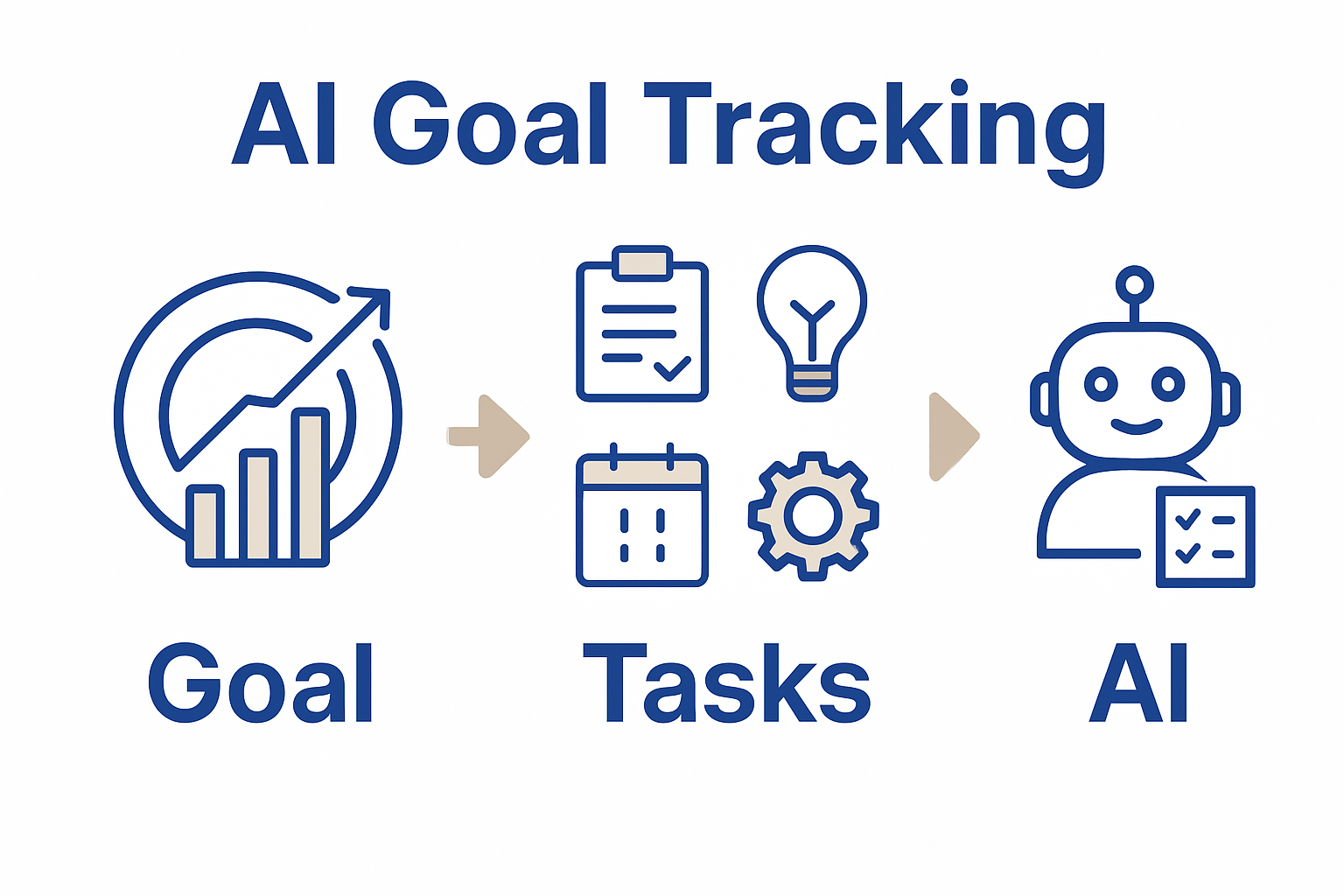
AI-driven goal management offers solopreneurs multiple strategic advantages. These intelligent systems can analyze historical performance data, predict potential obstacles, and suggest adaptive strategies in real time. By leveraging machine learning algorithms, solopreneurs can receive personalized recommendations that evolve alongside their business, creating a responsive and intelligent goal-tracking ecosystem.
Key benefits of AI-powered goal tracking include:
- Automated progress monitoring
- Predictive performance analysis
- Intelligent resource allocation
- Personalized strategic recommendations
- Dynamic goal recalibration
As technology continues to advance, AI will increasingly become an indispensable partner for solopreneurs, transforming goal setting from a static planning exercise into a dynamic, intelligent growth mechanism.
Overcoming Challenges and Common Mistakes
Solopreneurs face unique challenges that can derail their goal-setting efforts, with time management and financial planning emerging as critical obstacles. These professionals must develop strategic approaches to navigate the complex landscape of independent business ownership, recognizing that traditional workplace structures do not apply to their independent work model.
One of the most significant pitfalls for solopreneurs is setting unrealistic or overly broad goals that lack specificity and actionable steps. Self-defined goals can dramatically increase motivation when crafted with precision and personal commitment, transforming potential challenges into opportunities for growth. This means moving beyond generic aspirations and creating targeted, measurable objectives that align with individual strengths and market realities.
Psychological barriers often pose the most significant challenges for independent professionals. Typical mistakes include overcommitting, failing to establish clear boundaries, and neglecting personal well-being in pursuit of business objectives. Successful solopreneurs learn to balance ambition with realistic expectations, creating goal-setting strategies that prioritize sustainable progress over short-term intensity.
Common goal-setting mistakes to avoid include:
- Setting vague, unmeasurable objectives
- Neglecting personal skill development
- Ignoring market research and trends
- Failing to create flexible adaptation strategies
- Underestimating resource requirements
Ultimately, overcoming challenges requires a holistic approach that combines strategic planning, self-awareness, and continuous learning, transforming potential obstacles into stepping stones for professional growth.
Transform Your Solopreneur Goals into Real Growth with Fluum
Setting clear and measurable goals as a solopreneur can be challenging when juggling every aspect of your business alone. The article highlights the importance of breaking down complex objectives into manageable milestones and leveraging frameworks like SMART or OKRs to stay focused and motivated. Fluum understands these unique challenges, offering an AI-powered platform designed to help you automate daily tasks and track progress intelligently. By aligning your goals with data-driven insights and adaptive workflows, Fluum acts as your strategic growth partner, empowering you to scale your business efficiently without the overhead of a full team.
Ready to experience how AI can simplify your goal setting and propel your business to new heights? Explore how Fluum’s dynamic AI co-founder can handle everything from client outreach to scheduling while providing personalized guidance tailored to your unique objectives. Take control of your solopreneur journey today by discovering our pricing and plans designed for independent creators, coaches, and consultants. Start scaling smarter with Fluum and turn your goals into actionable success.
Frequently Asked Questions
What is goal setting for solopreneurs?
Goal setting for solopreneurs is the process of creating a strategic roadmap to transform entrepreneurial vision into measurable business outcomes, focusing on breaking complex objectives into achievable milestones.
What are some effective goal-setting frameworks for solopreneurs?
Two popular goal-setting frameworks for solopreneurs are SMART criteria, which emphasizes specific, measurable, achievable, relevant, and time-bound goals, and Objectives and Key Results (OKRs), which focuses on setting ambitious objectives with quantifiable key results to track progress.
How can I align my goals with business growth as a solopreneur?
To align your goals with business growth, regularly reassess market trends, maintain flexibility in goal definition, build professional networks, invest in skill development, and create measurable, adaptable milestones.
What are common mistakes solopreneurs make when setting goals?
Common goal-setting mistakes include setting vague or unmeasurable objectives, neglecting personal skill development, ignoring market research, and failing to create flexible strategies for adaptation.
Recommended
- Setting Business Goals For Solopreneurs: Step-by-Step Success
- Short Term Business Goals: Complete Expert Guide
- Business Objectives In A Business Plan: Complete Guide
- Business And Decisions: Complete Guide For Solopreneurs
- 7 Top Podcasts for Entrepreneurs to Boost Success | Prodcast
- How to Set Fitness Goals for Lasting Success – Dietium
- Fluum | Effective Stress Management Techniques for Busy Professionals
- Fluum | How to Onboard Clients Effectively for Lasting Success
- Fluum | Master Managing Multiple Projects for Success
- Fluum | Build Your Brand with a Branding Builder in 2025
- Fluum | 7 Customer Retention Examples to Boost Your Business