

Many american small business owners believe scaling up your business simply means working harder or hiring staff, yet the reality is far more nuanced. More than 70 percent of new ventures struggle because they do not understand the difference between scaling and regular growth. Gaining a clear view of what business scaling actually involves can help you avoid common pitfalls and unlock smarter paths to sustainable success as a solopreneur or freelancer.
Table of Contents
- Defining Business Scaling And Common Misconceptions
- Key Growth Models For Solopreneurs And Freelancers
- How AI And Automation Enable Efficient Scaling
- Essential Steps For Sustainable Business Growth
- Common Pitfalls And How To Avoid Them
Key Takeaways
| Point | Details |
|---|---|
| Understanding Scaling | Business scaling involves strategic growth that increases capacity and revenue without proportionate cost increases. It requires optimizing processes and technology, rather than simply adding more hours or team members. |
| Impact of Technology | AI and automation are critical for efficient scaling, enabling solopreneurs to manage complex tasks without significant increases in operational complexity or resources. |
| Avoiding Common Pitfalls | Solopreneurs must avoid misconceptions about scaling, such as confusing it with linear growth; premature hiring and resource misallocation can undermine business sustainability. |
| Focus on Sustainable Growth | Creating a robust business model that allows for systematic expansion without compromising service quality or personal well-being is key for long-term success. |
Defining Business Scaling and Common Misconceptions
Scaling up your business represents a strategic process of growing your business’s capacity, revenue, and impact without proportionally increasing operational costs. Unlike simple growth, scaling requires intelligent expansion that maintains efficiency and profitability. As research from Wikipedia’s definition of scaleup companies suggests, true scaling involves growing over 20% annually in revenue or employee count while maintaining a stable, established business model.
Many solopreneurs mistakenly believe scaling means adding more hours or hiring multiple team members. In reality, scaling is about optimizing processes, leveraging technology, and creating systems that enable your business to generate more revenue with minimal additional resources. For independent professionals, this often means automating repetitive tasks, developing scalable service packages, and implementing strategic workflows that multiply your output without exponentially increasing your personal workload.
Common misconceptions about business scaling include thinking it requires massive capital investment or is only suitable for large corporations. The truth is that solopreneurs and freelancers can effectively scale through smart technological solutions, strategic service design, and focused growth strategies. Understanding what scaling truly means for solo businesses allows professionals to approach expansion methodically and sustainably, transforming their individual practice into a robust, profitable enterprise.
Successful scaling fundamentally depends on three key elements: reproducible service delivery, efficient operational systems, and strategic market positioning. By concentrating on these core areas, solopreneurs can create a business model that grows exponentially while maintaining quality and personal bandwidth.
Key Growth Models for Solopreneurs and Freelancers
Business growth for solopreneurs requires strategic models that leverage individual skills and emerging technologies. Innovative entrepreneurship frameworks demonstrate how modern professionals can enhance their capabilities through intelligent technological integration, transforming traditional business scaling approaches. The AI Enabled Individual Entrepreneurship Theory highlights how technology can augment individual skills and modify risk profiles, enabling more dynamic business expansion strategies.
Three primary growth models emerge for independent professionals: service diversification, automation scaling, and strategic positioning. Service diversification involves expanding service offerings strategically, creating complementary products that leverage existing client relationships. Automation scaling focuses on implementing technological solutions that multiply output without increasing personal workload. Strategic positioning requires refining market messaging and targeting higher-value client segments that offer more substantial revenue potential.
Technology plays a critical role in modern scaling strategies. AI-powered transformation frameworks provide solopreneurs with sophisticated tools for converting innovative ideas into scalable business models. These approaches allow independent professionals to move beyond linear growth limitations, creating systems that generate exponential revenue while maintaining personal flexibility. Successful scaling requires a combination of strategic thinking, technological integration, and continuous skill development.
Practical implementation of these growth models demands consistent evaluation and adaptive strategies. Solopreneurs must continuously assess their service offerings, technological capabilities, and market positioning to identify opportunities for intelligent expansion. By embracing a flexible, technology-enhanced approach, independent professionals can transform their individual practices into robust, sustainable businesses that generate significant revenue with minimal additional resource investment.
How AI and Automation Enable Efficient Scaling
Artificial intelligence has revolutionized scaling strategies for solopreneurs, transforming how independent professionals approach business growth. Advanced AI technologies are enabling entrepreneurs to undertake complex business activities at scales previously impossible without significant organizational infrastructure. This technological shift allows solo professionals to dramatically expand their capabilities without proportionally increasing time investment or operational complexity.
Automation provides critical mechanisms for efficient scaling across multiple business domains. Business automation tools enable solopreneurs to streamline repetitive tasks such as customer communication, content generation, scheduling, and administrative workflows. Modern AI systems can now manage intricate processes that traditionally required multiple team members, including generating marketing copy, responding to customer inquiries, managing social media engagement, and tracking financial metrics with remarkable precision and speed.
The emerging landscape of AI-powered business solutions offers solopreneurs unprecedented opportunities for strategic expansion. Recent research highlights how AI tools empower independent professionals to manage complex tasks like content creation and customer service without increasing headcount. By intelligently leveraging these technologies, solopreneurs can create sophisticated operational systems that generate exponential productivity gains while maintaining lean, agile business models.
Successful implementation of AI and automation requires a strategic approach that balances technological capabilities with human creativity. Solopreneurs must continuously evaluate and integrate new tools, focusing on solutions that genuinely enhance productivity and align with their unique business objectives. The most effective scaling strategies will combine intelligent automation with personalized, high-touch service that distinguishes their professional offerings in an increasingly competitive marketplace.
Essential Steps for Sustainable Business Growth
Sustainable business growth requires a strategic approach that balances innovation, adaptability, and systematic planning. Transformative frameworks for solopreneurs emphasize the importance of structured experimentation and continuous learning as fundamental pillars of scalable business development. This approach involves creating flexible systems that can evolve with changing market conditions while maintaining core business objectives and professional integrity.
The foundation of sustainable growth lies in developing robust business infrastructure that supports consistent expansion. This includes creating scalable service models, implementing efficient operational processes, and building a strategic client acquisition system. Key elements involve diversifying revenue streams, developing repeatable service packages, and establishing clear performance metrics that allow for continuous performance evaluation and strategic adjustments.
Sustainable business practices demand a holistic approach to growth that integrates technological innovation with strategic human decision making. Successful solopreneurs must develop adaptive capabilities that allow them to pivot quickly, leverage emerging technologies, and maintain high-quality service delivery. This requires ongoing skill development, strategic networking, and a commitment to understanding evolving market dynamics and client needs.
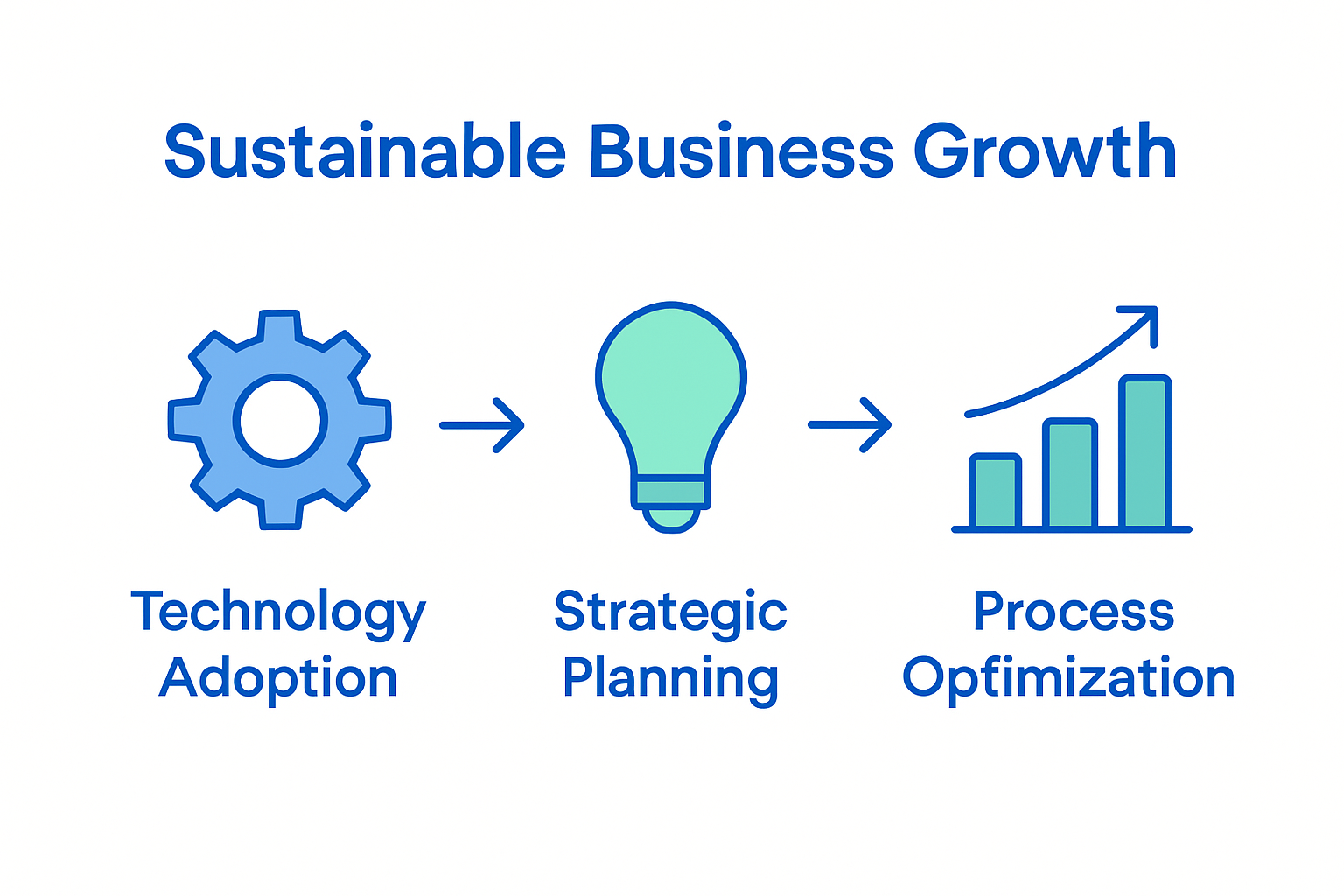
Ultimately, sustainable growth is about creating a business model that can expand without compromising quality or personal well-being. Solopreneurs must prioritize systems that generate consistent revenue, minimize operational complexity, and provide flexibility for personal and professional development. By focusing on strategic scalability, continuous learning, and intelligent resource management, independent professionals can build businesses that are not just profitable, but genuinely sustainable and fulfilling.
Common Pitfalls and How to Avoid Them
One of the most significant challenges for solopreneurs is misunderstanding the fundamental concept of business scaling. Strategic growth approaches reveal that many independent professionals mistakenly equate scaling with simple expansion or linear growth. This misconception often leads to premature hiring, unnecessary overhead, and unsustainable business models that drain resources instead of generating strategic value.
Three critical pitfalls consistently undermine solopreneur scaling efforts. Premature Complexity occurs when professionals implement sophisticated systems before establishing a stable core business model. Resource Misallocation happens through indiscriminate spending on tools or services that do not directly contribute to revenue generation. Capacity Overextension emerges when solopreneurs accept every potential client or project without considering their long-term strategic alignment and personal bandwidth.
Avoiding these common mistakes requires developing a disciplined, strategic approach to growth. Successful solopreneurs must create clear evaluation frameworks that assess potential opportunities against core business objectives. This involves setting precise performance metrics, maintaining rigorous client selection criteria, and continuously refining service offerings to maximize efficiency and impact. Technology can play a crucial role in this process, providing intelligent insights and automation that enable more strategic decision making.
Ultimately, sustainable scaling is about making intentional, measured choices that align with your professional vision and personal capacity. By maintaining flexibility, focusing on high-value activities, and resisting the impulse to overcomplicate your business model, you can create a robust, adaptable enterprise that grows organically and sustainably. The most successful solopreneurs recognize that true scaling is not about doing more, but about doing the right things more effectively.
Scale Your Business Smarter with AI-Powered Automation
Scaling a solo business requires more than just working harder. The article highlights the challenge of growing your business without adding unnecessary complexity or overhead. If you are struggling to transform your services into a scalable model while maintaining personal bandwidth and high-quality client experiences Fluum is designed precisely for you. It solves key pain points such as operational inefficiency client acquisition challenges and time-consuming repetitive tasks through intelligent automation and strategic growth insights.
With Fluum’s AI co-founder that learns from your behavior and goals you gain a dynamic partner that:
- Automates sales outreach on platforms like Instagram
- Manages client communication and scheduling seamlessly
- Tracks performance and offers actionable growth guidance
Ready to stop juggling every task alone and focus on what truly matters? Discover how Fluum can help you scale sustainably without the headache of premature complexity or resource misallocation. Take the first step toward effortless growth and smarter business decisions by exploring Fluum pricing and plans now. Empower your business to grow exponentially with less stress starting today.
Frequently Asked Questions
What does it mean to scale a business?
Scaling a business refers to the process of increasing its capacity, revenue, and impact without a corresponding increase in operational costs. It involves optimizing processes and efficient use of resources to achieve growth sustainably.
How can solopreneurs effectively scale their business?
Solopreneurs can scale by automating repetitive tasks, diversifying service offerings, leveraging technology, and creating strategic workflows. These methods enable higher revenue generation with minimal additional workload.
What are some common misconceptions about business scaling?
Common misconceptions include believing that scaling requires significant capital investment or that it is only suited for large companies. In fact, solopreneurs can scale effectively using smart technology and strategic service design.
What key elements are essential for successful scaling?
Successful scaling hinges on reproducible service delivery, efficient operational systems, and strategic market positioning. Focusing on these areas helps solopreneurs maintain quality and manage personal workload while growing their business.
Recommended
- What Is Business Scaling? Complete Guide For Solopreneurs
- Master Scaling A Service Business For Growth And Profit
- 7 Proven Entrepreneur Morning Routines For Solo Success
- Develop Growth As A Solopreneur: Step-by-Step Guide
- Complete Guide to Why Scale Marketing Teams – Kadima
- Understanding What is AI Scalability for Small Businesses – BizDev Strategy
- Fluum | Effective Stress Management Techniques for Busy Professionals
- Fluum | How to Onboard Clients Effectively for Lasting Success
- Fluum | Master Managing Multiple Projects for Success
- Fluum | Build Your Brand with a Branding Builder in 2025
- Fluum | 7 Customer Retention Examples to Boost Your Business