


Let’s learn the role of referrals in freelancing. Most successful American freelancers never rely on cold outreach when they need new clients. Referrals, built on real connections and trusted recommendations, consistently deliver high-intent clients ready to invest in creative talent. For creative freelancers and solopreneurs across continents, understanding the power of referrals can transform sporadic gigs into a stream of qualified opportunities. This guide uncovers what actually makes a referral work, how different types affect your pipeline, and which mistakes can cost you valuable introductions.
Table of Contents
- Defining Referrals In Freelance Careers
- Types Of Referrals And Key Differences
- How Referral Systems Drive Opportunities
- Referral Best Practices For Solopreneurs
- Common Mistakes And How To Avoid Them
Key Takeaways
| Point | Details |
|---|---|
| Importance of Referrals | Referrals serve as a trust-based mechanism that enhances freelancers’ credibility and accelerates business growth. |
| Types of Referrals | Key types include client referrals, network referrals, and platform-generated referrals, each with varying trust levels and conversion potentials. |
| Systems for Referral Growth | Building a systematic referral network is essential for freelancers, requiring consistent follow-up and appreciation of referrals. |
| Common Mistakes | Avoid treating referrals as transactional; focus on relationship-building and maintain high-quality standards when engaging referred leads. |
Defining Referrals in Freelance Careers
Referrals represent a powerful networking mechanism where professional contacts recommend freelancers directly to potential clients, creating a trust-based pathway for business opportunities. In the freelance ecosystem, referrals go beyond simple introductions – they are strategic connections that transform professional relationships into potential revenue streams. Referral networks in freelance careers fundamentally operate on the principle of social proof, where trusted recommendations carry significant weight in client decision making.
At its core, a referral involves an existing professional contact vouching for a freelancer’s skills, reliability, and work quality to another potential client. These recommendations can emerge from previous clients, colleagues, industry peers, or professional network connections. Unlike traditional job applications, referrals provide an immediate credibility boost, signaling to potential clients that the freelancer has already demonstrated competence in their professional domain.
The strategic importance of referrals becomes evident when examining freelance workforce dynamics. Research from Upwork’s Freelance Forward report highlights that referrals serve as a critical trust mechanism in the growing freelance economy. Successful freelancers understand that cultivating strong professional relationships and consistently delivering high-quality work increases their chances of receiving genuine, high-intent referrals that can significantly accelerate their business growth.
Pro tip: Systematically track and nurture professional relationships by maintaining a dedicated contact management system that helps you stay connected with past clients and professional contacts who might generate future referrals.
Types of Referrals and Key Differences
Referrals in the freelance ecosystem are not monolithic but represent a nuanced spectrum of professional connections with distinct characteristics and strategic implications. Research indicates that referral types can be comprehensively categorized based on source, interaction method, and trust mechanisms, revealing a complex landscape of potential client acquisition strategies.
Three primary referral types dominate the freelance marketplace: client referrals, network referrals, and platform-generated referrals. Client referrals emerge directly from satisfied previous customers who recommend a freelancer’s services to their professional contacts. Network referrals arise through professional connections, industry peers, or mutual contacts who understand the freelancer’s expertise. Platform-generated referrals represent more structured recommendations facilitated by professional networking platforms or freelance marketplaces, often with less personal context compared to direct network introductions.
The qualitative differences between referral types significantly impact conversion potential. Referral systems demonstrate varying operational frameworks that influence client engagement dynamics. Network and client referrals typically generate higher-intent prospects because they carry stronger personal endorsements and trust signals. In contrast, platform-generated referrals might present more transactional opportunities with lower initial trust levels, requiring additional relationship-building efforts from the freelancer.
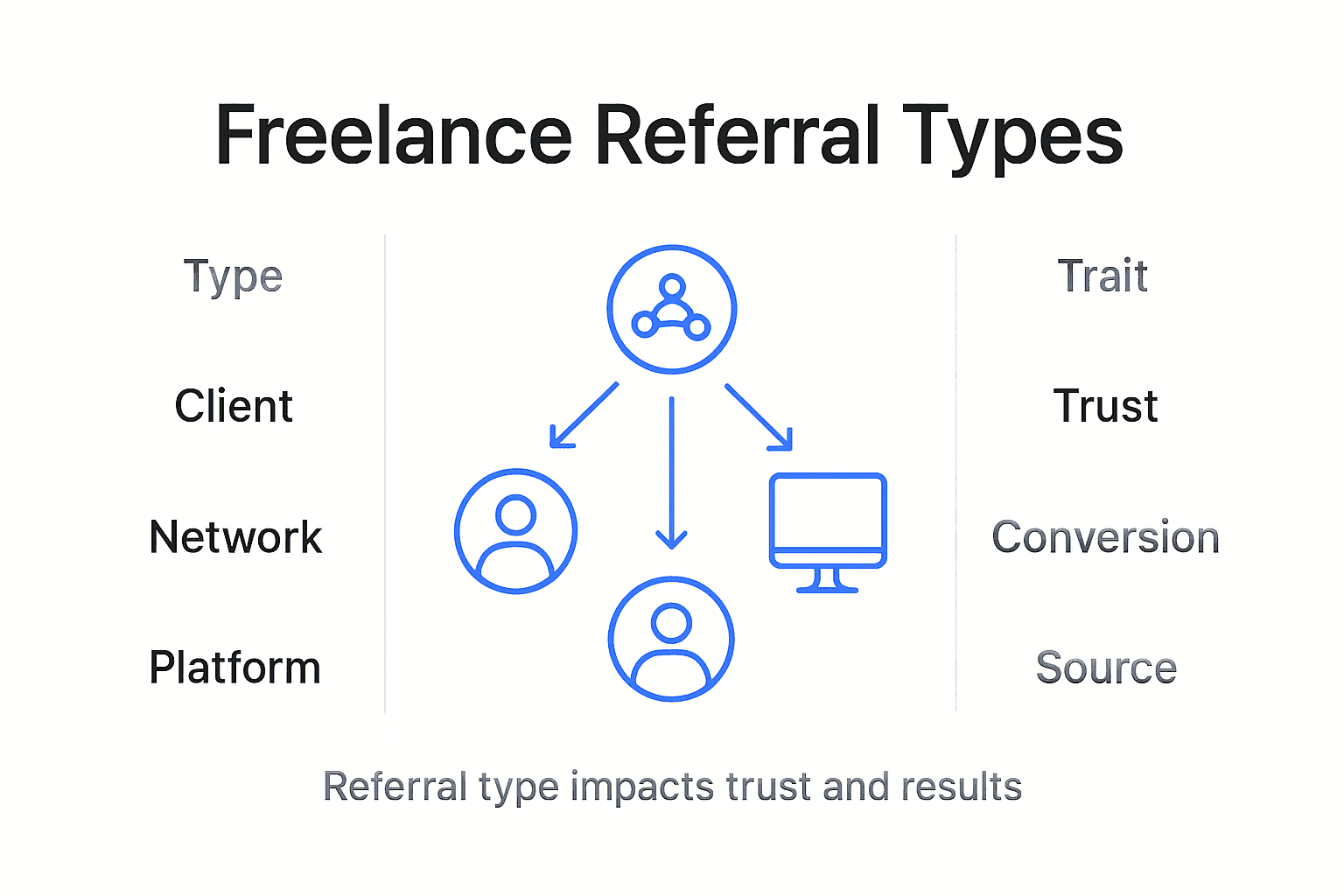
Here’s a breakdown of the main freelance referral types and their impact:
| Referral Type | Main Source | Trust Level | Conversion Likelihood |
|---|---|---|---|
| Client | Past clients | Very high | High |
| Network | Industry peers | High | Moderate to high |
| Platform | Online marketplaces | Moderate | Lower, needs nurturing |
Pro tip: Develop a systematic approach to tracking referral sources and documenting the origin of each professional introduction to understand which networks and connections generate the most valuable client opportunities.
How Referral Systems Drive Opportunities
Referral systems function as sophisticated professional ecosystems that transform social connections into strategic business opportunities for freelancers. Efficient referral networks reduce search costs and screening efforts by creating streamlined pathways for client matching, dramatically accelerating the process of connecting talented professionals with high-potential projects.

The mechanics of referral systems revolve around trust amplification and social validation. When a respected professional recommends a freelancer, they essentially transfer their credibility, providing an instant trust signal that traditional marketing channels cannot replicate. This transfer of professional reputation allows freelancers to bypass typical client acquisition barriers, presenting themselves as pre-vetted, reliable service providers who come with implicit endorsements from trusted sources.
Beyond mere introductions, advanced referral systems create complex opportunity networks that dynamically map professional relationships and potential connections. These systems leverage interconnected professional graphs, analyzing subtle relationship signals to identify potential client matches that might remain invisible through conventional networking approaches. By intelligently parsing professional networks, referral systems can uncover hidden opportunities, matching freelancers with clients whose specific needs align precisely with the freelancer’s unique skill set and professional expertise.
Pro tip: Cultivate a diverse professional network and consistently deliver exceptional work to create a self-reinforcing referral ecosystem that generates opportunities organically.
Referral Best Practices for Solopreneurs
Successful solopreneurs understand that referral strategies are not passive processes but intentional systems requiring strategic cultivation. Implementing effective referral programs demands defining clear mutual value for both referrers and potential clients, creating transparent pathways that incentivize meaningful professional connections.
The foundation of a robust referral ecosystem lies in consistently delivering exceptional work that naturally encourages professionals to recommend your services. This means going beyond basic competence and striving to exceed client expectations in every engagement. High-quality deliverables, responsive communication, and demonstrating genuine understanding of client challenges transform satisfied clients into active advocates who are motivated to refer your services within their professional networks.
Structuring a systematic referral approach involves multiple strategic components. Solopreneurs should develop standardized follow-up processes that make requesting referrals comfortable and professional. This includes creating gentle, non-intrusive mechanisms for soliciting recommendations after successful project completions, such as personalized thank-you notes that subtly invite clients to share their experiences with potential contacts. Tracking referral sources, maintaining detailed relationship records, and expressing genuine gratitude to those who provide recommendations further reinforces the referral network’s strength and potential for organic growth.
Pro tip: Create a dedicated referral tracking system that documents every professional introduction, noting the source, context, and outcome to continuously refine your referral generation strategy.
Common Mistakes and How to Avoid Them
Freelancers often undermine their referral potential by making critical errors that can permanently damage professional relationships and future opportunity streams. Referral systems are vulnerable to breakdown when communication lacks clarity and coordination, making it essential to understand and proactively address common pitfalls that can derail successful professional networking.
One fundamental mistake solopreneurs frequently make is treating referrals as transactional interactions rather than relationship-building opportunities. This approach manifests through behaviors like aggressive solicitation, failing to follow up appropriately, or neglecting to express genuine appreciation for referral sources. Successful freelancers recognize that each referral represents a delicate trust ecosystem where the referring professional is essentially vouching for their reputation. Mishandling these opportunities can quickly erode professional goodwill and shut down future referral pathways.
Another significant error involves inadequate preparation and follow-through when receiving referred leads. This includes being unprepared for initial consultations, providing inconsistent communication, or failing to maintain the high-quality standards that initially prompted the referral. Solopreneurs must treat every referred opportunity as a critical test of their professional capabilities, understanding that the referring contact is essentially extending their own professional credibility by making the introduction. Unprofessional responses or subpar work can damage not just the immediate opportunity but the broader professional network’s perception of the freelancer.
Common referral pitfalls and strategies to avoid them:
| Mistake | Consequence | Best Practice |
|---|---|---|
| Transactional approach | Damaged relationships | Focus on long-term value |
| Poor preparation | Lost opportunities | Prepare for each lead |
| Lack of gratitude | Fewer future referrals | Thank every referrer promptly |
Pro tip: Develop a standardized referral response protocol that ensures immediate, professional, and appreciative communication for every single referral opportunity, regardless of its immediate conversion potential.
Unlock High-Intent Client Growth Through Strategic Referrals and AI
The article highlights the crucial role referrals play in building trust and accelerating business growth for freelancers. Yet many solopreneurs struggle with tracking referral sources, nurturing these networks, and converting referrals into paying clients. If you want to transform your professional relationships into a steady stream of warm, high-quality leads without the hassle of cold outreach or exhausting follow-ups, Fluum is the solution designed just for you.
Fluum uses advanced AI and social intelligence to uncover hidden referral pathways within your existing network. It detects buying signals and requests personalized warm introductions on your behalf. This creates authentic, trust-based conversations with potential clients who already have a high intent to engage. Imagine having a personal business development engine that automates introductions, manages follow-ups, and helps you grow without sacrificing your craft.

Take control of your referral ecosystem today with Fluum. Don’t miss out on opportunities buried deep in your network. Visit Fluum Pricing to explore plans that fit your freelancing career and start turning referrals into real revenue. Act now and find high-intent clients with ease while focusing on what you love.
Frequently Asked Questions
What are referrals in freelancing?
Referrals in freelancing are recommendations made by professional contacts who vouch for a freelancer’s skills and reliability to potential clients. They create trustworthy connections that can lead to new business opportunities.
Why are referrals important for freelancers?
Referrals are crucial for freelancers because they provide immediate credibility and trust, often leading to higher conversion rates when acquiring new clients compared to traditional job applications.
What are the different types of referrals?
There are three primary types of referrals: client referrals from satisfied previous clients, network referrals from industry peers, and platform-generated referrals from online marketplaces. Each type has varying levels of trust and conversion potential.
How can freelancers effectively generate referrals?
Freelancers can generate referrals by consistently delivering high-quality work, actively nurturing professional relationships, and implementing systematic processes for requesting and tracking referrals after successful projects.
Recommended
- Maximizing Freelance Lead Pipelines For High-Intent Clients
- What Is Referral Marketing And Why It Works
- Finding Clients Without Sales Team: Warm Intro Strategies
- 7-Step Lead Generation Checklist For Solopreneurs And Freelancers
- Niche Edits Benefits That Will Elevate Your Online Presence – LSA SEO Agency
- Fluum | Effective Stress Management Techniques for Busy Professionals
- Fluum | How to Onboard Clients Effectively for Lasting Success
- Fluum | Master Managing Multiple Projects for Success
- Fluum | Build Your Brand with a Branding Builder in 2025
- Fluum | 7 Customer Retention Examples to Boost Your Business