
| Key Insight | Explanation |
|---|---|
| Response Rate Advantage | Warm introductions deliver 40-50% response rates compared to just 2% for cold outreach |
| Trust Transfer | Mutual connections transfer credibility instantly, bypassing initial skepticism |
| Decision-Maker Access | B2B buyers are 5x more likely to engage when properly introduced through trusted networks |
| Double Opt-In Process | Both parties consent before connection, ensuring genuine interest and reducing rejection |
| AI-Powered Matching | Modern platforms use AI to identify optimal introduction opportunities across 100+ databases |
Cold email open rates have plummeted 70% over the past five years, leaving B2B sales teams scrambling for alternatives. The solution isn’t sending more emails to bigger lists. It’s leveraging warm introduction B2B strategies that deliver 40-50% response rates through trusted connections. A warm introduction B2B is a facilitated connection between two business professionals made through a mutual contact who knows both parties. This approach transforms cold prospecting into relationship-based selling, where trust transfers instantly through shared connections.

What Is Warm Introduction B2B?
Warm introduction B2B is a relationship-driven approach that connects businesses with decision-makers through trusted mutual connections. Unlike cold outreach, these introductions leverage existing relationships to create immediate credibility and significantly higher engagement rates.
Core Components of Warm Introductions
The anatomy of a successful warm introduction includes three essential elements:
- Mutual connector: A trusted contact who knows both the introducer and the prospect personally
- Double opt-in process: Both parties consent to the introduction before any connection occurs
- Context-rich messaging: Specific details about why the connection makes sense for both parties
- Clear value proposition: Explicit benefits for the prospect, not just the person requesting the introduction
Research from industry analysts shows that warm introduction approaches tap into fundamental principles of human psychology. People trust recommendations from their network significantly more than unsolicited outreach [1]. This trust transfer happens instantly when a respected colleague vouches for someone.
The Psychology Behind Warm Introductions
The effectiveness of warm introductions stems from several psychological principles. Social proof plays a crucial role, as prospects view introduced connections as pre-vetted opportunities rather than potential threats. The reciprocity principle also activates, where prospects feel obligated to respond respectfully to someone recommended by a trusted contact.
Pro Tip: The most effective warm introduction requests include specific mutual benefits, not just one-sided asks. Frame introductions as opportunities for both parties to explore potential collaboration.
According to research from leading B2B sales organizations, warm introductions work because they bypass the natural skepticism that accompanies cold outreach [2]. When someone you trust recommends a connection, you’re predisposed to view that person favorably before the first conversation even begins.
How Warm Introduction B2B Works
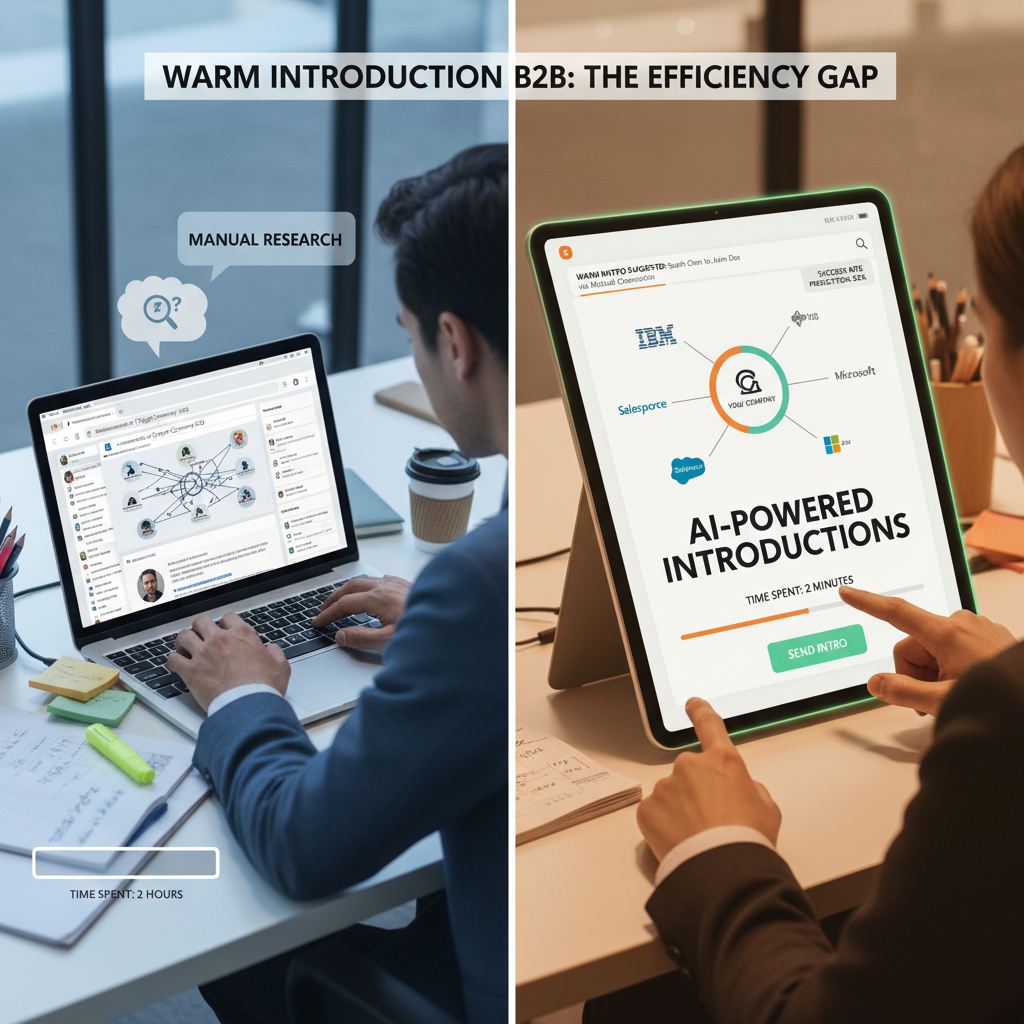
The warm introduction process follows a systematic approach that maximizes success rates while respecting all parties’ time and relationships. Modern platforms have transformed this traditionally manual process into a scalable, AI-powered system.
Traditional Manual Process
The conventional warm introduction workflow involves several manual steps:
- Identify target prospects: Research ideal customers and decision-makers in your target market
- Map mutual connections: Use LinkedIn and other networks to find shared contacts
- Evaluate connection strength: Assess how well your mutual contact knows both parties
- Craft introduction request: Write compelling messages explaining the value for all parties
- Follow up appropriately: Maintain relationships while respecting boundaries
This manual approach typically yields results, but it’s time-intensive and doesn’t scale effectively for enterprise sales teams. Each introduction request requires careful research and personalized messaging, limiting the number of quality introductions sales professionals can secure.
AI-Powered Warm Introduction Platforms
Modern warm introduction platforms leverage artificial intelligence to automate and optimize the entire process. These systems analyze vast databases to identify optimal introduction opportunities that human researchers might miss.
At Fluum, we’ve developed AI algorithms that scan over 100 government and private databases to surface high-quality prospects in finance, technology, and manufacturing sectors. The system identifies mutual connections and facilitates double opt-in introductions automatically, delivering response rates of 40-50% compared to 2% for cold emails.
| Process Step | Manual Approach | AI-Powered Platform |
|---|---|---|
| Prospect Identification | Hours of manual research | Automated database scanning |
| Connection Mapping | LinkedIn searches, guesswork | AI analysis of 100+ networks |
| Introduction Requests | Individual crafted messages | Personalized automation |
| Response Tracking | Manual follow-up systems | Automated tracking & analytics |
The key advantage of AI-powered warm introduction platforms lies in their ability to identify connections that aren’t obvious on the surface. These systems can trace indirect relationships and professional histories that create introduction opportunities human researchers would never discover.
Key Benefits of Warm Introduction B2B
The advantages of warm introductions extend far beyond higher response rates, fundamentally transforming how sales teams approach prospecting and relationship building. These benefits compound over time, creating sustainable competitive advantages for organizations that master the approach.
Dramatically Higher Response Rates
The most immediate benefit of warm introductions is the substantial improvement in response rates. Industry data consistently shows that warm introductions generate 40-50% response rates, compared to just 2% for cold emails [3]. This 20-25x improvement in engagement translates directly to more qualified conversations and shorter sales cycles.
B2B buyers are five times more likely to respond when properly introduced through trusted networks [4]. This statistic reflects the fundamental shift in how decision-makers evaluate incoming communications. A warm introduction immediately signals that the opportunity has been pre-vetted by someone they trust.
Accelerated Trust Building
Trust transfer represents one of the most powerful aspects of warm introduction strategies. When a respected colleague vouches for someone, that endorsement carries significant weight in initial conversations. This accelerated trust building allows sales professionals to focus on value creation rather than credibility establishment.
- Instant credibility: Prospects view introduced connections as legitimate business opportunities
- Reduced skepticism: Natural barriers to new vendor conversations dissolve through trusted recommendations
- Faster rapport building: Shared connections provide immediate conversation starters and common ground
- Higher-quality discussions: Conversations focus on business value rather than establishing legitimacy
Access to Decision-Makers
One of the most challenging aspects of B2B sales is reaching actual decision-makers. Cold outreach often gets filtered by gatekeepers or relegated to junior team members. Warm introductions bypass these obstacles by leveraging existing relationships with senior executives.
Research indicates that warm introductions provide direct access to C-level executives and budget holders who rarely respond to cold outreach [5]. This access advantage becomes increasingly valuable in complex B2B sales where multiple stakeholders influence purchasing decisions.
Pro Tip: Track your warm introduction success metrics beyond just response rates. Monitor meeting conversion rates, deal velocity, and average deal size to understand the full impact on your sales pipeline.
Cost-Effective Lead Generation
From a resource allocation perspective, warm introductions deliver superior ROI compared to traditional lead generation methods. The higher conversion rates mean sales teams spend less time on unqualified prospects and more time with genuine opportunities.
A comprehensive analysis of B2B lead generation costs shows that warm introductions deliver 30% higher conversion rates while requiring significantly less marketing spend than paid advertising or large-scale cold outreach campaigns [6]. This efficiency gain becomes more pronounced as organizations scale their warm introduction processes.
Common Challenges and Mistakes
Despite the clear advantages of warm introductions, many organizations struggle with implementation due to common pitfalls and misconceptions. Understanding these challenges helps sales teams avoid costly mistakes and maximize their introduction success rates.
Over-Relying on Direct Connections
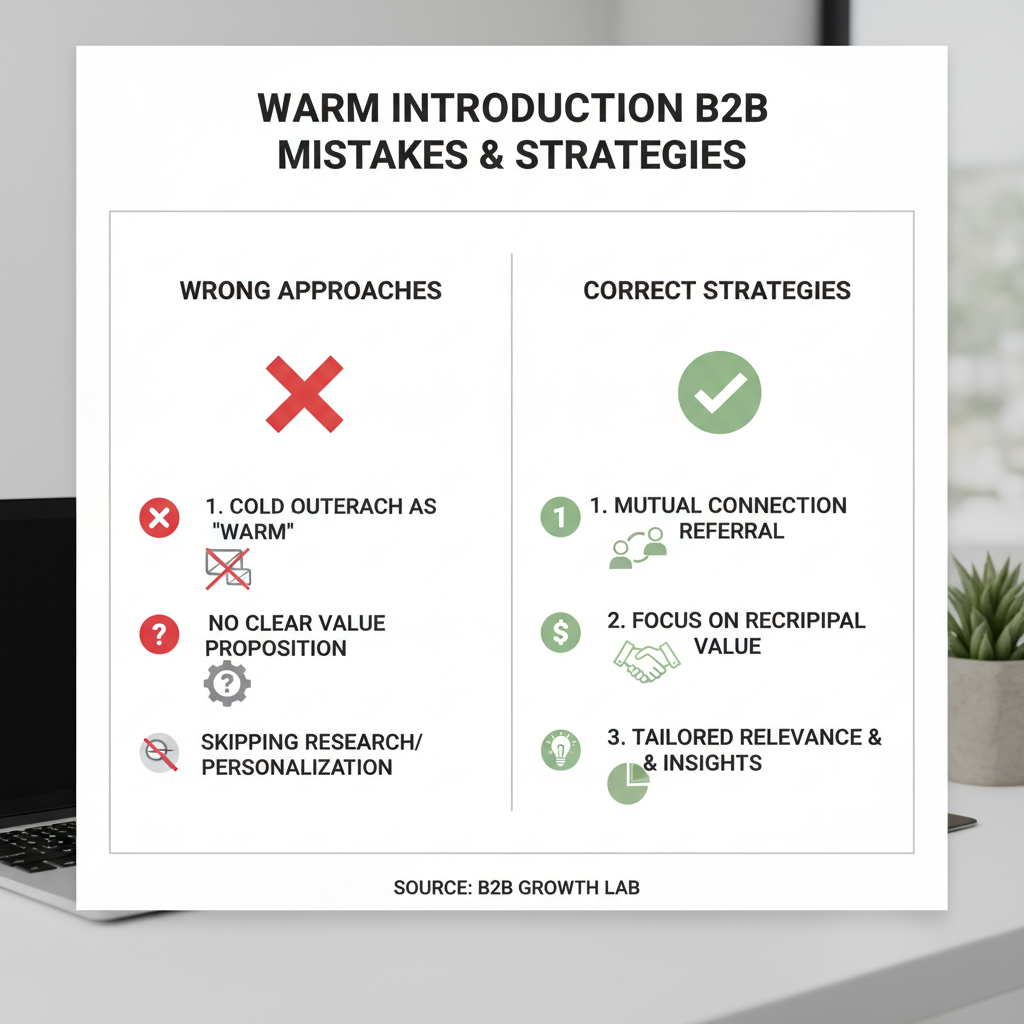
One frequent mistake in warm introduction strategies is limiting requests to immediate, obvious connections. Sales professionals often focus only on first-degree LinkedIn connections, missing valuable second and third-degree relationships that could provide better introduction opportunities.
The most effective warm introduction strategies cast a wider net, identifying indirect connections through professional associations, alumni networks, and industry relationships. These extended networks often provide access to higher-value prospects who aren’t reachable through direct connections.
Poor Introduction Request Crafting
Many warm introduction requests fail because they focus too heavily on the requester’s needs rather than mutual value creation. Common mistakes include:
- One-sided value propositions: Emphasizing only what the requester wants to gain
- Vague connection rationale: Failing to explain why the introduction makes sense
- Excessive length: Writing lengthy requests that busy professionals won’t read
- Missing context: Not providing enough background for the introducer to craft compelling messages
- Weak follow-through: Failing to maintain relationships after successful introductions
Research from leading sales organizations shows that the most successful warm introduction requests include specific mutual benefits and clear next steps [7]. The message should make it easy for the introducer to understand and communicate the value to both parties.
Neglecting Relationship Maintenance
A critical mistake many organizations make is treating introducers as one-time resources rather than ongoing relationship partners. This short-sighted approach damages valuable connections and limits future introduction opportunities.
Pro Tip: Always close the loop with introducers, regardless of the outcome. Update them on meeting results and express gratitude for their time and connections. This maintains goodwill for future warm introduction opportunities.
Successful warm introduction programs include systematic relationship nurturing processes. This involves regular check-ins with key introducers, sharing relevant industry insights, and reciprocating with introductions when possible.
Scaling Challenges
Many organizations struggle to scale warm introductions beyond individual contributor efforts. The manual nature of traditional introduction processes creates bottlenecks that prevent systematic implementation across larger sales teams.
Without proper systems and processes, warm introduction efforts remain ad-hoc activities that depend on individual relationships rather than organizational capabilities. This limitation prevents companies from fully leveraging their collective networks for business development.
Best Practices for Warm Introduction B2B in 2026
As warm introduction strategies mature in 2026, leading organizations have developed sophisticated frameworks that maximize success rates while maintaining relationship integrity. These best practices reflect lessons learned from thousands of introduction campaigns and evolving buyer preferences.
Implement Double Opt-In Processes
The most successful warm introduction programs in 2026 universally employ double opt-in processes that ensure both parties consent before any connection occurs. This approach respects everyone’s time while dramatically improving meeting conversion rates.
The double opt-in process works as follows:
- Initial introduction request: Explain the potential value to the introducer with specific mutual benefits
- Prospect consent verification: The introducer confirms the prospect’s interest before sharing contact information
- Formal introduction: Both parties receive context-rich introductions with clear next steps
- Direct follow-up: The requester contacts the prospect directly with relevant, personalized messaging
This systematic approach ensures that warm introduction conversations begin with genuine mutual interest rather than obligatory politeness. The result is higher-quality meetings and stronger business relationships.
Leverage AI-Powered Matching
Leading organizations in 2026 use artificial intelligence to identify optimal warm introduction opportunities across vast professional networks. These systems analyze relationship strength, mutual interests, and business compatibility to suggest the most promising connections.
At Fluum, our AI algorithms evaluate over 100 data sources to identify introduction opportunities that human researchers would miss. The system considers factors like:
- Professional background alignment: Shared industry experience and complementary expertise
- Geographic proximity: Local connections that enable in-person meetings
- Timing indicators: Signals that prospects are actively evaluating solutions
- Mutual connection strength: Relationship quality between introducers and prospects
Create Introduction Templates That Convert
Successful warm introduction requests follow proven templates that make it easy for introducers to understand and act on opportunities. The most effective templates include specific elements that address common concerns and objections.
| Template Element | Purpose | Example |
|---|---|---|
| Context Setting | Explain the relationship and credibility | “You mentioned working with [Company] on their digital transformation…” |
| Mutual Value | Benefits for both parties | “Both companies are expanding into manufacturing AI solutions…” |
| Specific Ask | Clear, actionable request | “Would you be comfortable introducing us for a brief conversation?” |
| Easy Out | Reduce pressure and maintain relationship | “No worries if the timing isn’t right.” |
Measure and Optimize Performance
Advanced warm introduction programs in 2026 track comprehensive metrics that go beyond simple response rates. Leading organizations monitor introduction request acceptance rates, meeting conversion rates, deal progression, and relationship health indicators.
Key performance indicators for warm introductions include:
- Introduction acceptance rate: Percentage of requests that result in actual introductions
- Meeting conversion rate: Introductions that lead to scheduled meetings
- Pipeline contribution: Revenue attributed to warm introduction sourced opportunities
- Relationship satisfaction: Introducer feedback and willingness to make future connections
Pro Tip: Set up automated tracking systems that monitor warm introduction performance across your entire sales team. Use this data to identify top-performing introducers and optimize your request messaging for better results.
Regular analysis of these metrics helps organizations refine their warm introduction strategies and identify the most effective approaches for different market segments and prospect types.
Sources & References
- DraftBoard, “The Psychology of Warm Intros: Why They Work in B2B Sales”, 2026
- Commsor, “Warm Intros 101: The Sales Play Every B2B Team Should Be Running”, 2026
- Intch, “How to Boost BizDev With Warm Introductions”, 2026
- B2B Appointment Setting, “From Cold Call to Warm Intro: Strategies for Leveraging Mutual Connections”, 2026
- SaaSBoomi, “How to get your first 10 B2B customers in the US”, 2026
- Great Careers Network, “How to make an Introduction on LinkedIn”, 2026
- Introhive, “How to Get a Warm Introduction (+ 5 Email Templates)”, 2026
Frequently Asked Questions
1. What is a warm introduction in business?
Understanding warm introduction B2B is essential. A warm introduction is a facilitated connection between two business professionals made through a trusted mutual contact who personally knows both parties. Unlike cold outreach, warm introductions transfer credibility instantly through the shared relationship, resulting in significantly higher response rates and more meaningful business conversations. The introducer acts as a trusted intermediary who can vouch for both parties’ credibility and explain why the connection makes business sense.
2. What is the 95-5 rule in B2B marketing?
The 95-5 rule states that only 5% of your serviceable addressable market is actively in-market for your solution at any given time, while 95% aren’t ready to purchase until future quarters. This principle explains why warm introductions are so effective – they help you identify and connect with prospects who are actually in the buying mindset, rather than broadcasting to audiences who aren’t ready. Warm introductions often surface prospects who are actively evaluating solutions but haven’t yet engaged with vendors publicly.
3. How to give a warm introduction?
To give an effective warm introduction, first confirm both parties’ interest in connecting, then craft a brief email introducing each person with relevant context about why the connection makes sense. Include each person’s background, the potential mutual value, and suggest a clear next step like a brief call. Always respect both parties’ time by keeping the introduction concise and actionable, and follow up to ensure the connection was valuable for everyone involved.
4. How to do a warm intro?
A successful warm introduction follows a structured approach: start by getting permission from both parties, then send a brief email with clear context about each person and why they should connect. Use a format like “I’d like to introduce [Name] from [Company] who [relevant background] to [Name] from [Company] who [relevant background]. I thought you might find value in discussing [specific mutual interest or opportunity].” Keep it under 150 words and suggest a specific next step to facilitate the connection.
5. What’s the difference between warm and cold outreach in B2B?
Warm introductions leverage existing relationships and mutual connections to facilitate introductions, while cold outreach contacts prospects without any prior relationship or referral. Warm introductions typically achieve 40-50% response rates because they include trust transfer from mutual connections, whereas cold emails average only 2% response rates. Cold outreach requires extensive credibility building, while warm introductions begin with pre-established trust through the shared connection.
6. How can AI improve warm introduction processes?
AI-powered warm introduction platforms analyze vast professional networks to identify optimal connection opportunities that human researchers would miss. These systems scan multiple databases, social networks, and professional associations to map indirect relationships and suggest high-potential introductions. AI can also personalize introduction requests at scale, track performance metrics, and optimize messaging based on successful patterns, transforming warm introductions from manual relationship management into scalable business development processes.
As warm introduction strategies continue evolving in 2026, organizations that master relationship-driven sales approaches gain sustainable competitive advantages. The shift from volume-based cold outreach to quality-focused warm introductions reflects broader changes in B2B buyer behavior and communication preferences.
The most successful companies don’t just implement warm introductions as a tactical approach – they build it into their organizational DNA. This means developing systematic processes for relationship mapping, creating introduction request templates that convert, and measuring performance beyond simple response rates.
At Fluum, we’ve seen firsthand how AI-powered warm introduction platforms transform B2B sales results. Our clients consistently achieve 40-50% response rates while building stronger, more sustainable business relationships. The future belongs to organizations that prioritize authentic connections over aggressive outreach tactics.
Recommended Articles
Explore more from our content library:
- 15 Ways to Increase Sales Conversion Rates in 2026
- Complete Vendor Selection Process Guide for 2026
- How to Find Qualified Prospects: 2026 Guide to Smart B2B
- How to Improve Cold Outreach Response Rates in 2026
- Best Business Development Tools for 2026: Complete Guide
{“@context”:”https://schema.org”,”@type”:”Article”,”headline”:”Warm Introduction B2B: Complete Guide for Sales Teams”,”description”:”Learn how warm introduction B2B strategies deliver 40-50% response rates vs 2% for cold outreach. Complete guide with templates, best practices & expert tips.”,”author”:{“@type”:”Person”,”name”:”Fluum Editorial Team”,”jobTitle”:”SaaS / AI-Powered Business Intelligence Specialists”,”worksFor”:{“@type”:”Organization”,”name”:”Fluum”}},”publisher”:{“@type”:”Organization”,”name”:”Fluum”},”datePublished”:”2026-03-31T22:14:03.856Z”,”dateModified”:”2026-03-31T22:14:03.856Z”,”mainEntityOfPage”:{“@type”:”WebPage”},”keywords”:”warm introduction B2B”,”about”:{“@type”:”Thing”,”name”:”warm introduction B2B”},”image”:”https://ciczdkailhqqntlorwkp.supabase.co/storage/v1/object/public/article-asset/generated-images/cmmynsypx0002gt0a55zidu7p/1774995241941-0.png”}
{“@context”:”https://schema.org”,”@type”:”FAQPage”,”mainEntity”:[{“@type”:”Question”,”name”:”1. What is a warm introduction in business?”,”acceptedAnswer”:{“@type”:”Answer”,”text”:”Understanding warm introduction B2B is essential. A warm introduction is a facilitated connection between two business professionals made through a trusted mutual contact who personally knows both parties. Unlike cold outreach, warm introductions transfer credibility instantly through the shared relationship, resulting in significantly higher response rates and more meaningful business conversations. The introducer acts as a trusted intermediary who can vouch for both parties’ credibility and explain why the connection makes business sense.”}},{“@type”:”Question”,”name”:”2. What is the 95-5 rule in B2B marketing?”,”acceptedAnswer”:{“@type”:”Answer”,”text”:”The 95-5 rule states that only 5% of your serviceable addressable market is actively in-market for your solution at any given time, while 95% aren’t ready to purchase until future quarters. This principle explains why warm introductions are so effective – they help you identify and connect with prospects who are actually in the buying mindset, rather than broadcasting to audiences who aren’t ready. Warm introductions often surface prospects who are actively evaluating solutions but haven’t yet engaged with vendors publicly.”}},{“@type”:”Question”,”name”:”3. How to give a warm introduction?”,”acceptedAnswer”:{“@type”:”Answer”,”text”:”To give an effective warm introduction, first confirm both parties’ interest in connecting, then craft a brief email introducing each person with relevant context about why the connection makes sense. Include each person’s background, the potential mutual value, and suggest a clear next step like a brief call. Always respect both parties’ time by keeping the introduction concise and actionable, and follow up to ensure the connection was valuable for everyone involved.”}},{“@type”:”Question”,”name”:”4. How to do a warm intro?”,”acceptedAnswer”:{“@type”:”Answer”,”text”:”A successful warm introduction follows a structured approach: start by getting permission from both parties, then send a brief email with clear context about each person and why they should connect. Use a format like “I’d like to introduce [Name] from [Company] who [relevant background] to [Name] from [Company] who [relevant background]. I thought you might find value in discussing [specific mutual interest or opportunity].” Keep it under 150 words and suggest a specific next step to facilitate the connection.”}},{“@type”:”Question”,”name”:”5. What’s the difference between warm and cold outreach in B2B?”,”acceptedAnswer”:{“@type”:”Answer”,”text”:”Warm introductions leverage existing relationships and mutual connections to facilitate introductions, while cold outreach contacts prospects without any prior relationship or referral. Warm introductions typically achieve 40-50% response rates because they include trust transfer from mutual connections, whereas cold emails average only 2% response rates. Cold outreach requires extensive credibility building, while warm introductions begin with pre-established trust through the shared connection.”}},{“@type”:”Question”,”name”:”6. How can AI improve warm introduction processes?”,”acceptedAnswer”:{“@type”:”Answer”,”text”:”AI-powered warm introduction platforms analyze vast professional networks to identify optimal connection opportunities that human researchers would miss. These systems scan multiple databases, social networks, and professional associations to map indirect relationships and suggest high-potential introductions. AI can also personalize introduction requests at scale, track performance metrics, and optimize messaging based on successful patterns, transforming warm introductions from manual relationship management into scalable business development processes.”}}]}