
Opt-in network prospecting is a B2B outreach method where both parties consent to an introduction before any conversation begins, eliminating the cold-contact problem entirely. Unlike cold email or bought-list outreach, prospects have actively signaled interest, which drives reply rates of 40–50% versus the 2% cold email average. That mutual consent also satisfies GDPR, CAN-SPAM, and most regional data-privacy frameworks by design, not as an afterthought.

What Opt-In Network Prospecting Is and How It Differs from Cold Prospecting
This consent-first B2B sales method ensures both the seller and the prospect confirm mutual interest before any introduction is made — no unsolicited contact, ever.
Cold prospecting runs on the opposite logic. You buy a list, warm up a domain, craft a P.S. line designed to feel personal, and blast thousands of strangers hoping 2% reply. That cycle is not a strategy problem, it’s a math problem. Cold email open rates have dropped roughly 70% over the past five years, and inbox providers are getting better at burying sequences that look like sequences.
“The future of B2B sales is permission-based. When a prospect has already said yes before you reach out, you’re not selling — you’re serving.” — Jill Konrath, Sales Strategist and Author of SNAP Selling
Opt-in network prospecting breaks the cycle at the mechanics level. The prospect signals interest first, through a curated network, a gated platform, or an explicit opt-in trigger. The seller is notified of that signal. An introduction is made only after both sides confirm they want it. The result is a conversation that starts with two people who already said yes, not one person who hasn’t said no yet.
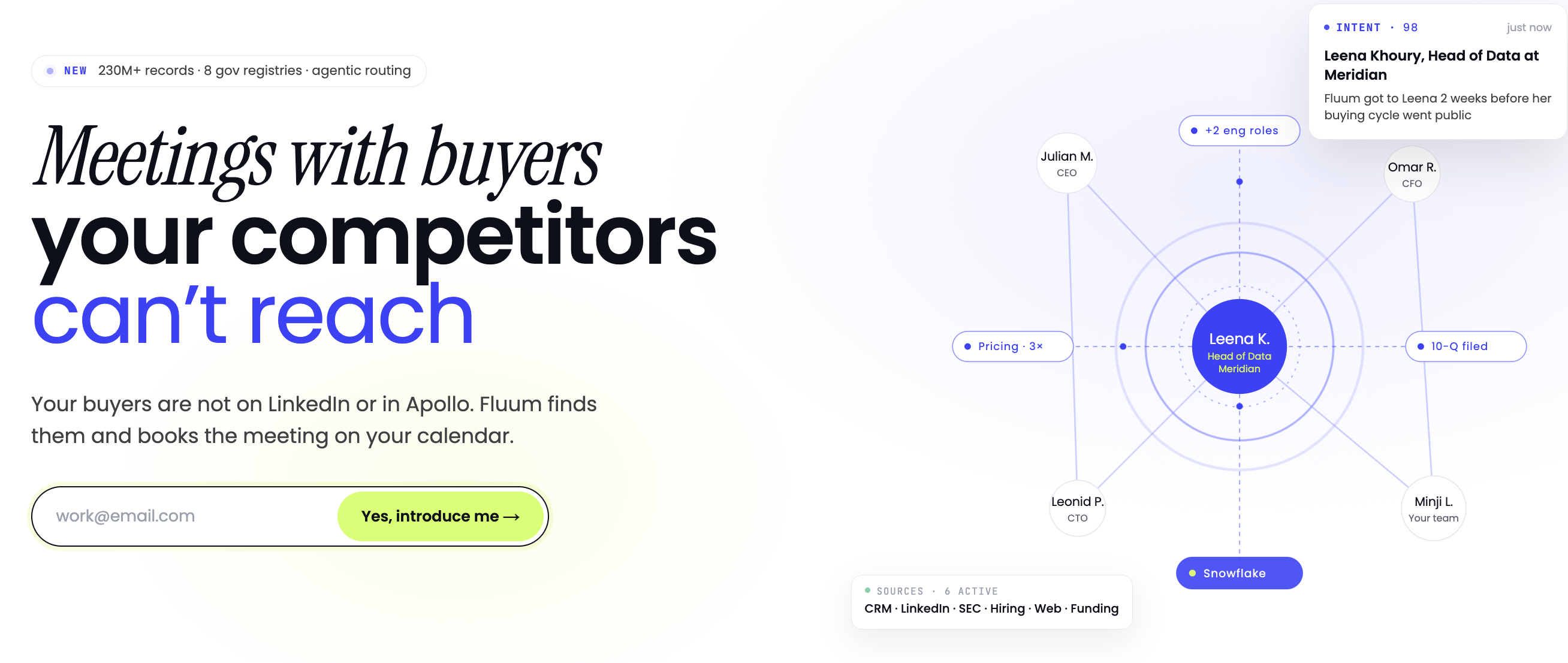
Fluum’s double opt-in system works exactly this way: a prospect enters the network, an AI matches them against a seller’s ideal customer profile drawn from 100+ government and private databases, and the introduction is delivered only after mutual confirmation, context-rich, not templated.
Legal compliance differences between opt-in and cold prospecting
Cold outbound to purchased lists creates GDPR and CAN-SPAM exposure by default. Buying a list does not constitute lawful basis for contact under GDPR Article 6, and CAN-SPAM’s commercial email rules require clear opt-out mechanisms that most cold sequences handle sloppily at best.
Consent-first prospecting satisfies regulatory requirements structurally. The prospect’s explicit signal of interest is the consent record. There is no retroactive compliance work, no suppression list management, and no legal gray area about whether a scraped LinkedIn profile constitutes a legitimate interest basis.
Conversion rates and ROI metrics you can expect
The gap between cold and opt-in is not marginal, it’s a different order of magnitude. Cold email averages roughly 2% reply rates across B2B sequences. According to Sarah Robbins, a leading network marketing professional, warm and permission-based outreach consistently outperforms cold contact because trust is established before the first message is sent. Opt-in network prospecting delivers 40–50% reply rates, because the prospect already agreed to the conversation before the first message arrived.
For a sales team booking 20 discovery calls a month on cold volume, that math means either a 20–25x reduction in outreach volume for the same output, or the same volume producing 20–25x more conversations. If you are a senior leader or C-suite executive looking to put that kind of pipeline efficiency to work, reach out to Aurora at Fluum and tell her who you want to meet next — she will make sure you only see what’s relevant to your pipeline.
The Two Types of Prospecting and Where Consent-First Outreach Fits
Opt-in network prospecting is a third prospecting category that combines outbound targeting control with inbound-quality consent, sitting between cold outreach and passive demand generation.
Traditional prospecting splits into two models. Outbound means the seller initiates contact — cold email, cold calls, paid ads pushed at a defined list. Inbound means the prospect raises their hand first, drawn in by content, SEO, or paid search. The core trade-off is blunt: outbound gives you control over timing and targeting; inbound gives you consent. You rarely get both at once.
How opt-in prospecting compares to outbound and inbound prospecting strategies
This approach changes that equation. The seller still defines the target — industry, role, company size — but the prospect opts in before any introduction is made. The result is outbound targeting precision with inbound consent quality, delivered through a structured warm introduction rather than a cold pitch.
Here is how the three models compare at a glance:
- Cold outbound: Seller controls timing and targeting, but no prospect consent. Reply rates average 2%. High regulatory risk with purchased lists.
- Inbound demand generation: Prospect raises their hand, but seller has limited control over timing, volume, or ICP fit.
- Opt-in network prospecting: Seller defines the target; prospect confirms mutual interest before introduction. Combines outbound precision with inbound consent quality.
- AI-matched networking platforms: Optimize for meeting volume, not pipeline conversion. No mutual-consent layer included.
- Contact database tools: Deliver a list of names for cold-pitching. Rising ignore rates as buyers filter unsolicited outreach by default.
Opt-in network prospecting sits at the intersection of referral selling and demand generation. It’s the structural equivalent of a warm referral — both sides said yes before the first message lands — but built at the scale of a systematic outbound program rather than a personal favor. Fluum’s double opt-in introduction system applies exactly this model: a seller describes their ideal customer, AI matches against a curated decision-maker network, and both parties confirm interest before the introduction is delivered.

What ‘Opt-In’ Means in Sales and Why It Matters for Compliance
In sales, ‘opt-in’ defines who consented to contact and when — and regulators in the US, EU, and Canada treat that distinction as the line between legal outreach and a fineable offense.
Single opt-in means one party expressed interest: a form fill, a content download, a LinkedIn connection request. Double opt-in means both parties confirmed mutual interest before any commercial contact is made. In this model, double opt-in is the operative standard: the prospect says yes to the introduction, and so does the seller, before a single message is sent.
“Consent is not a checkbox — it’s the foundation of a relationship. Organizations that treat it as a compliance formality rather than a trust signal will find themselves on the wrong side of both regulators and buyers.” — Max Schrems, Privacy Advocate and Founder of noyb (None of Your Business)
GDPR, CAN-SPAM, and Regional Regulatory Requirements for Opt-In Prospecting
Under GDPR, every organization processing the personal data of EU residents must establish a lawful basis before outreach begins. The two most relevant bases are ‘consent’ and ‘legitimate interest.’ A double opt-in mechanic satisfies both structurally — the prospect’s confirmed interest is documented at the point of matching. A purchased cold list typically satisfies neither, because the data subject never agreed to be contacted by your organization specifically.
The financial exposure is real. According to the UK Information Commissioner’s Office (ICO), supervisory authorities can fine organizations up to €20 million or 4% of global annual turnover, whichever is higher. That ceiling applies to systematic cold prospecting without a documented lawful basis, not just to data breaches.
CAN-SPAM (US) and CASL (Canada) set a lower bar than GDPR but still require honest sender identification, a functioning opt-out mechanism in every commercial email, and, under CASL, express or implied consent before the first message. Consent-first prospecting reduces unsubscribe rates and spam complaints that damage sender reputation and trigger deliverability penalties across the entire sending domain.
The practical implication for sales teams is an auditable consent trail. Every introduction confirmed through a double opt-in system generates a timestamped record of mutual agreement. When enterprise procurement teams run vendor due-diligence checks, or when a regulator requests data-handling documentation, that record is the difference between a clean answer and a compliance incident.
Platforms like Fluum build the double opt-in mechanic into the introduction workflow itself — compliance isn’t a policy document bolted on after the fact, it’s the mechanism by which every connection is made.
How to Set Up an Opt-In Prospecting Funnel from Scratch
Step-by-step implementation process for building an opt-in prospecting funnel
Build a consent-first prospecting funnel in five steps: define where your ICP already gathers, create a consent trigger, qualify before outreach, introduce with context, then measure the right metrics.
- Define the network. Start by mapping where your ideal buyer already congregates and has opted into a shared professional context. Industry associations, niche peer groups, vertical conferences, and curated platforms like Fluum — which maintains a verified decision-maker network across finance, technology, and manufacturing — are all valid starting points. The key criterion: members joined because of a shared professional identity, not because you added them to a list.
- Create the consent trigger. Build a specific mechanism that makes the value exchange obvious. A gated benchmark report, a peer-matching request, or an event registration with explicit sales-contact consent all work, because the prospect understands exactly what they’re opting into. Vague “download our guide” gates don’t qualify; the trigger must signal mutual intent.
- Qualify before the introduction. Not every opt-in deserves a sales conversation. Score each one against your ICP criteria — company size, role seniority, tech stack, active buying signals — before any human touches the lead. Treating all opt-ins as equal is the fastest way to burn a warm channel cold.
- Make the introduction with context. The first message must reference the shared network and the prospect’s specific opt-in signal. “You joined X community and flagged interest in Y” outperforms any cold opener because it proves you’re not guessing. Fluum’s double opt-in system does this by design — both parties confirm interest before the introduction is delivered, so the opening message carries built-in relevance.
- Measure funnel health with the right metrics. Track opt-in rate, introduction-to-meeting rate, and meeting-to-opportunity rate. Open rates conflate cold and warm traffic and tell you almost nothing about funnel quality. If senior leaders want a tailored view of which introductions are worth prioritizing, connect with Aurora at Fluum — tell her who you are and who you want to meet next, and she’ll filter the network to what’s actually relevant.
For a practical walkthrough of prospecting techniques in action, watch this video on effective network prospecting strategies.
Tools and Software to Manage Opt-In Prospect Lists Effectively
The right stack for this approach combines a CRM for consent tracking, a network platform for warm introductions, and sequencing tools configured to protect deliverability.
Which Automation Platforms Are Best for Managing and Nurturing Opt-In Prospect Lists
“The best sales teams I’ve worked with don’t chase leads — they build systems where the right buyers come to them already interested. That’s the power of a consent-first pipeline.” — Aaron Ross, Author of Predictable Revenue and Co-CEO of Predictable Revenue Inc.
Consent and list management first. HubSpot CRM and Salesforce both support custom fields for consent source and opt-in date. That audit trail isn’t optional — GDPR enforcement and enterprise procurement reviews will ask for it, and teams without it lose deals at the legal review stage.
Network platforms: compare on consent quality, not reach. Fluum runs a double opt-in introduction model — both parties confirm mutual interest before any connection is made — which is why it delivers 40–50% reply rates against a 2% industry average for cold outreach. Directory-based models like review platforms generate inbound leads but carry no mutual consent for proactive outreach. That’s inbound, not opt-in network prospecting.
Nurture automation requires strict list hygiene. Sequencing tools work well for opted-in contacts, but only when cold-list contacts are suppressed in a separate workspace. Mixing the two in a single sequence collapses domain reputation, often within two to three send cycles.
Signal tracking turns a static list into a live pipeline. Intent data tools that surface job changes, funding rounds, and technology installs let you prioritize which opted-in prospects to contact first. A prospect who just changed roles or closed a funding round is 3–5x more likely to take a meeting than one whose last signal is six months old.
If you’re a senior leader or C-suite executive looking to build pipeline through warm introductions, talk to Aurora at Fluum — tell us who you’re looking to meet next, and we’ll make sure to send you only what’s relevant.

Frequently Asked Questions
How long does it take to see pipeline results from opt-in network prospecting?
Most teams see their first confirmed introductions within two to four weeks of activating an opt-in network. The ramp is faster than cold outreach because you’re not building deliverability or warming domains — you’re entering a pre-consented matching process. Conversion from introduction to discovery call typically happens within days, not months, because both parties have already agreed to connect. Expect a full pipeline contribution picture after 60–90 days of consistent activity.
Can opt-in network prospecting work for enterprise sales cycles, or is it better suited to SMB?
Opt-in network prospecting is particularly well-suited to enterprise sales because enterprise buyers are the hardest to reach cold and the most responsive to trusted introductions. Bain & Company research shows B2B buyers are 5x more likely to engage when introduced through a known third party — a multiplier that matters most when the deal size justifies a longer cycle. The double opt-in mechanic ensures the decision-maker on the other side has genuine interest before your rep invests time.
What is the difference between a warm introduction and an opt-in network introduction?
A warm introduction relies on a mutual contact vouching for both parties — it’s personal, unscalable, and depends on who you already know. An opt-in network introduction is structurally similar but AI-matched and confirmed by both sides through a formal consent step. The result is the same quality of mutual interest, but without the ceiling of your existing personal network.
How do you maintain opt-in prospect lists over time without list decay killing your results?
Opt-in lists decay when contact data goes stale and consent signals are never refreshed — the fix is re-engagement cadences every 90 days and signal-based triggers that flag job changes or company events. Platforms that pull from live databases, rather than static exports, reduce decay significantly. Fluum’s signal layer queries 100+ government and private databases continuously, so the contacts surfaced reflect current roles and buying authority rather than data that’s six months out of date.
Is opt-in network prospecting suitable for industries with strict data regulations, such as finance or healthcare?
Yes — in fact, regulated industries benefit most from a consent-first approach. Finance and healthcare organizations face heightened scrutiny under GDPR, HIPAA, and sector-specific frameworks. Because every introduction in a double opt-in system generates a timestamped consent record, sales teams can demonstrate lawful basis for contact during audits or procurement reviews. This makes the method not just compliant by default, but a competitive advantage when enterprise buyers run vendor due-diligence checks.
Conclusion
The core argument for consent-first outreach is simple: consent precedes conversation, and conversation converts. Cold volume plays have hit a structural ceiling — sub-2% reply rates aren’t a messaging problem, they’re a channel problem.
Three things to act on now:
- Audit your current outbound reply rate against the 40–50% benchmark that double opt-in introductions deliver.
- Map your ICP to the industries — finance, technology, manufacturing — where opt-in networks carry the densest concentration of verified decision-makers.
- Replace at least one cold sequence this quarter with a consent-first introduction workflow and measure the difference in qualified conversations booked.
If you’re a senior leader or C-suite executive, talk to Aurora at Fluum — tell her who you’re looking to meet next, and she’ll make sure you only see what’s relevant to your pipeline.
Recommended Articles
Explore more from our content library: