
Understanding how to build warm introduction strategy systems is essential for modern sales teams. To build a warm introduction strategy, map your existing network to target accounts, identify mutual connections who can vouch for you, and make it easy for them to say yes with a pre-written double opt-in request. Warm introductions convert at 40–50% reply rates versus roughly 2% for cold email, not because buyers are nicer, but because trust transfers. A repeatable system turns one-off favors into a predictable pipeline channel.

Build Your Warm Introduction Strategy from the Ground Up: build warm introduction strategy
A warm introduction strategy is a repeatable system where a mutual connection facilitates a double opt-in match, both sides agree before the first message is sent.
That single mechanic explains the performance gap. Cold email converts at under 2% [3]. Warm introductions convert at 40–50%, a 20–25x difference that has nothing to do with better copywriting and everything to do with transferred trust. When someone you respect says “you should meet this person,” you pay attention. When a stranger’s email lands in your inbox, you don’t.
“Referrals and warm introductions are the highest-converting channel in B2B sales because trust is transferred before the first word is spoken.” — Joanne Black, Founder of No More Cold Calling and author on referral selling
Why warm introductions differ from cold outreach
Most sales teams default to buying contact lists or blasting LinkedIn connection requests. Both tactics put you in the same position: fighting for attention before you’ve earned any. Warm introductions sidestep that fight entirely because the credibility travels with the message. According to Introhive’s research on warm introductions, buyers introduced through a trusted third party are significantly more likely to engage than those reached through cold channels.
The contrast across three metrics makes the case clearly:
- Reply rate: 40–50% for warm intros vs. roughly 2% for cold email [3]
- Time-to-first-meeting: warm intro paths typically compress the cycle by days or weeks because the ask arrives pre-validated
- Deal close rate: referred leads convert four times more often than leads from other channels [3], and referred customers retain at a 37% higher rate [3]
Content marketing and partnerships can build awareness, but neither delivers a named decision-maker who has already said yes to a conversation.
What measurable results to expect across industries
Before you send a single introduction request, three components must be in place. First, a mapped network graph, a structured view of who you know, what companies they’re connected to, and how strong each relationship is. Second, a tiered ask framework that defines who you approach for which type of introduction, because not every contact can credibly vouch for you in every context. Third, a tracking layer, a CRM field or a dedicated spreadsheet at minimum, so you know which requests are pending, which converted, and which connectors you’ve already leaned on.
That third component points to a concept most practitioners ignore: introduction capital. Every time you ask a contact for an introduction, you spend a portion of their social goodwill. That currency is finite. A contact who makes three introductions for you and sees none of them go well will stop making them. Protecting introduction capital, by asking selectively, preparing your connectors thoroughly, and closing the loop after every meeting, is as important as spending it. When you build warm introduction strategy systems with this discipline, your connector relationships compound over time rather than erode.
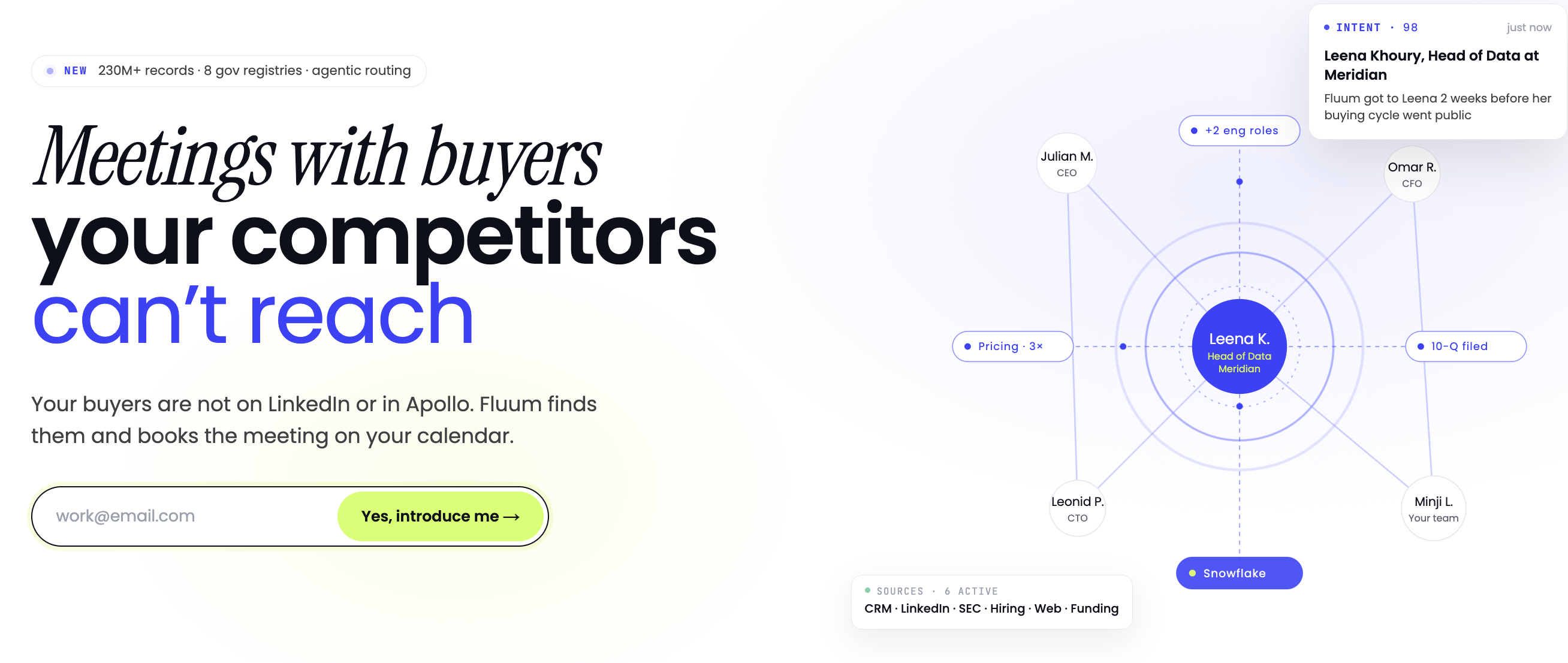
Platforms like Fluum operationalize exactly this model: describe your ideal customer or partner, and the AI surfaces matched decision-makers from 100+ government and private databases, then confirms mutual interest from both sides before any introduction is made. That’s the double opt-in mechanic built into a system, not left to chance. Senior leaders and C-suite executives looking to build warm introduction strategy at scale can connect directly with Aurora at Fluum, tell her who you’re trying to meet next, and she’ll make sure you only see what’s relevant.
Map Your Network to Find Introduction Paths You Already Have
Your existing network already contains warm introduction paths, the audit process reveals them in under two hours using tools you have now.
How to find warm introduction paths you didn’t know you had
Start with a LinkedIn connection export (Settings → Data Privacy → Get a copy of your data). Load the CSV into HubSpot, Salesforce, or a free Airtable base, then cross-reference every contact against your target account list. Flag any connection who works at, or previously worked at, a priority account. Those are your first-degree paths.
Second-degree paths are where most sales teams leave money on the table. The common mistake is stopping at first-degree connections. A second-degree path through one trusted node is often less socially costly to activate and lands with more credibility than a direct ask to someone who barely knows you [3].
- Export your LinkedIn connections and import them into your CRM.
- Run a “TeamLink” search in Sales Navigator to surface colleagues’ connections at target accounts, this filter shows paths your team has that you don’t personally hold.
- Use “Relationship Explorer” in Sales Navigator to see which decision-makers share a mutual connection, a past employer, or a school with anyone on your team.
- Flag every second-degree overlap and rank by relationship strength of the shared node, not by how well you know the target.
These two filters surface introduction paths that standard contact-data tools don’t expose natively. When you build a warm introduction strategy, this step alone typically doubles the number of viable paths before you’ve sent a single message. For a deeper walkthrough of how this process works in practice, this video guide on warm introduction tactics covers the network mapping process step by step.
What tactics work when you have a limited professional network
Weak ties, former colleagues, conference contacts, and people you’ve met once, generate more novel introductions than close friends do. This finding, from sociologist Mark Granovetter’s 1973 research on job markets, holds in B2B sales: breadth beats depth when your network is small. According to Stanford’s sociology research on social networks, weak ties consistently outperform strong ties when it comes to accessing new information and opportunities.
Four tactics that work even with a thin first-degree network: For more information, see Ai Seo For Small Business Complete 2026 Strategy Guide.
- Alumni databases: University and MBA alumni portals give you a pre-existing trust signal with strangers, filter by industry and seniority before reaching out.
- Industry Slack communities: Active participation in a relevant community for 30 days before asking for anything creates the social proof that makes an introduction request land.
- Mutual investor or advisor relationships: A shared board member or early-stage investor is one of the highest-trust introduction nodes available, map these in Crunchbase before you approach anyone directly.
- Co-authored content: Writing a short piece with a target contact, a LinkedIn post, a webinar, a data snapshot, warms the relationship before any commercial ask enters the picture [3].
If you’re a senior leader or C-suite executive looking to accelerate this process, talk to Aurora at Fluum, describe who you want to meet next, and Fluum’s AI matches you against a curated network of decision-makers drawn from 100+ government and private databases, so only relevant introductions reach you.

Ask for and Execute Warm Introductions That Actually Get Made
Most warm introduction requests fail because the connector has to do too much work, fix that, and your conversion rate climbs immediately.
The single rule that separates a working warm introduction strategy from a polite dead end: always use a double opt-in structure. Before any introduction is made, ask your connector to send a pre-intro ping to the target. Here’s a word-for-word script your connector can send in 30 seconds:
“Hey [Target], I know someone who [one-line reason it benefits the target]. Would you be open to a quick intro? Happy to make it if so.”
That message takes 30 seconds to send and filters out targets who aren’t interested before anyone’s time is wasted. Fluum’s platform runs this same double opt-in mechanic at scale, both sides confirm mutual interest before a single introduction is delivered, which is why the platform consistently hits 40–50% reply rates versus the 2% industry average for cold outreach.
“The best salespeople don’t ask for meetings — they ask trusted connectors to open doors. The double opt-in introduction is the single highest-leverage move in enterprise sales.” — David Priemer, Founder of Cerebral Selling and former Salesforce VP of Sales
What to include in a warm introduction request email
A strong introduction request email has three components: one sentence on why the target benefits (not you), one sentence anchoring the connector’s credibility with that target, and a specific ask with a clear next step. “Would love to connect” is not a next step. “A 20-minute call Thursday at 2pm” is.
Always draft the forwardable email for your connector, one paragraph, written in their voice, ready to copy-paste. Connectors who have to write from scratch rarely follow through. When you build a warm introduction strategy the right way, you remove every friction point between your connector’s goodwill and the actual sent message. The Warm Intro Strategy framework on LinkedIn outlines how top performers structure these forwardable emails to maximize connector follow-through.
The right timing and follow-up cadence after a warm introduction
Send your introduction request when the connector has fresh, positive context with the target, they just met at a conference, just closed a deal together, just exchanged a compliment on LinkedIn. A cold-ask to a connector who hasn’t spoken to the target in eight months kills conversion before the email is even written.
Once the introduction lands, respond within 2 hours. Reference the connector by name in your first line and propose a specific 20-minute slot. Response rates drop 40% after 24 hours [3], so speed signals respect for everyone’s time, the connector’s reputation is on the line too.
If you’re a senior leader or C-suite executive, Aurora at Fluum can match you directly with the decision-makers you’re trying to reach next, tell her who you’re looking to meet, and she’ll make sure you only see introductions that are already relevant.
Common Mistakes to Avoid When Running a Warm Introduction Program
Three etiquette failures kill warm introduction programs faster than any market condition: skipping double opt-in, burning connectors, and never closing the loop.
The three rules you must never break when you build a warm introduction strategy are non-negotiable. First, always get double opt-in, confirm both parties want the connection before making it. Second, never ask the same connector for more than two introductions in any 90-day window without giving something back first: a referral, a useful contact, a piece of relevant intelligence. Third, always close the loop. When an intro leads somewhere, or doesn’t, tell the connector. They put their reputation on the line. Leaving them in the dark is how you lose them permanently.
Burning connectors is the fastest way to collapse your pipeline long-term. If you ghost the person they introduced you to, or open with a hard pitch before any rapport exists, the connector looks bad, not you. That connector will quietly stop introducing you to anyone. One burned relationship can cost you access to an entire network tier.
How to manage and track warm introduction requests at scale with CRM tools
Most teams lose 60–70% of introduction opportunities because requests live in scattered email threads with no owner and no status. The minimum viable fix is a shared tracking layer with five columns: connector, target, status, date requested, and outcome. Airtable works for teams under 10 reps. Above that, push it into your CRM.
In HubSpot, use the Associations feature to link the connector’s contact record directly to the deal. In Salesforce, add a custom Introduction Source field on the Opportunity object, this lets you filter pipeline by intro origin and measure conversion rates by connector over time.
The connectors who introduce you most are the ones you’ve introduced to others. Keep a give-first log, a simple running record of every outbound introduction you make on someone else’s behalf. Reciprocity isn’t a courtesy here; it’s the mechanism that keeps the system running. Teams that consistently build warm introduction strategy practices around reciprocity see connector participation rates two to three times higher than those that only ask.

Frequently Asked Questions
How do warm introductions compare to cold outreach in terms of conversion rates?
Warm introductions convert at 4x the rate of cold outreach, and reply rates can reach 40–50% versus under 2% for cold email [3]. The gap exists because a mutual connection transfers credibility before the first word is read. Bain & Company research shows B2B buyers are 5x more likely to engage when introduced through a trusted third party, meaning the channel itself does qualification work your SDRs currently do manually, at far lower volume and cost.
How do you systematically expand your warm introduction opportunities over time?
Expand your introduction opportunities by treating every closed deal and every delivered favor as a relationship asset to map and activate on a 90-day cycle. Document who introduced you to whom, which connections produced meetings, and which contacts have since moved into new roles or companies. Networks decay, a contact who couldn’t help you 18 months ago may now sit on a buying committee. Platforms that pull signals from multiple databases surface these shifts automatically, removing the manual tracking burden.
What is the difference between a warm introduction and a referral?
A referral is a recommendation, someone tells a prospect your name and leaves the follow-up to you. A warm introduction is an active facilitation, the connector personally bridges both parties in a single message or meeting, with both sides agreeing to connect [3]. Referrals generate inbound interest; warm introductions generate confirmed conversations. The distinction matters for pipeline forecasting: a warm introduction produces a booked meeting, a referral produces a lead that may or may not respond.
How many warm introduction requests should you send per week without burning your network?
Send no more than 3–5 warm introduction requests per week to any single connector, and no more than 2 requests to the same person within a 30-day window. Quality of context matters more than volume, a request with a clear, specific ask and a named reason why the match benefits both parties gets fulfilled. Connectors who feel used stop responding; connectors who see their introductions land well become repeat advocates.
How long does it take to build warm introduction strategy results into a reliable pipeline channel?
Most teams see measurable results within 60–90 days of implementing a structured warm introduction program. The first 30 days focus on network mapping and identifying viable introduction paths. Days 31–60 involve sending initial requests and refining your connector outreach templates. By day 90, you should have enough data to identify which connectors, industries, and introduction formats produce the highest conversion rates, allowing you to concentrate effort where the return is strongest.
Conclusion
A warm introduction strategy built on mapped relationships, disciplined connector outreach, and double opt-in confirmation consistently outperforms cold volume plays, not occasionally, but structurally. The three moves that matter most: map your second-degree network before you need it, make every ask specific enough that your connector can say yes in under 60 seconds, and track which introductions convert so you know where to invest relationship capital next quarter. Every organization that commits to build warm introduction strategy as a core channel rather than an occasional tactic sees compounding returns as connector relationships deepen and network coverage expands.
If you’re a senior leader or C-suite executive, talk to Aurora at Fluum and tell her exactly who you’re looking to meet next, she’ll make sure you only see introductions that are relevant to your pipeline, not a list to cold-work your way through.
Sources & References
- How to Get a Warm Introduction (+ 5 Email Templates)
- The “Warm Intro” Strategy — LinkedIn
- Stanford Department of Sociology — Social Network Research
Recommended Articles
Explore more from our content library: