

Let’s learn client discovery strategies. Most american freelance coaches and consultants struggle to attract high-intent clients without endless cold outreach. Recent Harvard research shows that effective client discovery goes far beyond basic market research, yet common myths still hold many professionals back. This guide unpacks how strategic discovery methods, social intelligence, and warm introductions can help you connect with serious clients while avoiding costly missteps.
Table of Contents
- Defining Client Discovery And Common Myths
- Types Of Client Discovery Methods
- Using Behavioral Signals And Social Intelligence
- Leveraging Warm Introductions Versus Cold Outreach
- Avoiding Common Mistakes And Misalignments
Key Takeaways
| Point | Details |
|---|---|
| Client Discovery Is Essential | Understanding client needs and motivations is crucial for developing effective solutions. This process goes beyond simple market research. |
| Beware of Common Myths | Misconceptions about client knowledge and needs can hinder effective discovery efforts. Approach each interaction as a learning opportunity. |
| Utilize Varied Discovery Methods | Employ a combination of direct, digital, and indirect methods to gain a comprehensive understanding of clients. |
| Warm Introductions Enhance Engagement | Leveraging mutual connections fosters trust and accelerates relationship-building compared to cold outreach. |
Defining Client Discovery and Common Myths
Client discovery is the systematic process of understanding potential clients’ deep needs, motivations, and challenges before designing solutions. Entrepreneurial research from Harvard Business School reveals this approach goes far beyond basic market research by creating an iterative framework for truly comprehending client situations.
At its core, client discovery involves multiple strategic techniques designed to uncover genuine client pain points. These methods include targeted interviews, comprehensive journey mapping, persona development, and continuous validation of problem-solution alignment. Professionals who master these techniques can distinguish between surface-level wants and fundamental business needs.
Common myths frequently derail effective client discovery efforts. Academic research highlights how prevalent misconceptions can distort understanding of client motivations. Some prevalent myths include:
- Assuming clients always know exactly what they want
- Believing that one interview provides comprehensive insights
- Rushing toward solution development before fully understanding the problem
- Generalizing insights across an entire market without nuanced validation
Successful client discovery requires persistent curiosity, active listening, and a commitment to challenging existing assumptions. Coaches and consultants must approach each potential client interaction as a learning opportunity, treating discovery as an ongoing dialogue rather than a one-time transaction.
Pro tip: Create a standardized client discovery interview template with open-ended questions that encourage deep, reflective responses about challenges and aspirations.
Types of Client Discovery Methods
Client discovery encompasses a diverse range of strategic approaches designed to uncover deep insights about potential clients. Comprehensive research highlights the importance of gathering information through multiple interconnected channels, ensuring a holistic understanding of client needs and motivations.
Strategic discovery methods can be categorized into several key approaches:
Direct Conversation Techniques
- One-on-one client interviews
- Discovery phone calls
- Structured consultation sessions
- Networking event interactions
Digital Research Methods
- Social media profile analysis
- LinkedIn professional background reviews
- Company website and public financial document examination
- Industry report and market trend research
Indirect Discovery Approaches
- Customer testimonial reviews
- Third-party referral conversations
- Competitor client case study analysis
- Industry forum and discussion board insights
Each discovery method offers unique advantages, requiring professionals to blend multiple techniques for comprehensive client understanding. The goal is not just collecting information, but developing nuanced insights that reveal underlying business challenges and potential collaboration opportunities.
Successful client discovery demands a strategic, multi-dimensional approach that combines qualitative and quantitative research techniques. Professionals must remain flexible, adapting their discovery strategy based on specific client industries, communication preferences, and available information sources.

Here’s a summary of key discovery methods and the unique insights they provide:
| Method Type | Primary Benefit | Common Use Case |
|---|---|---|
| Direct Conversation | Uncovers unspoken needs | Strategic solution design |
| Digital Research | Reveals market position | Client profiling |
| Indirect Approaches | Discovers hidden motivators | Competitive differentiation |
Pro tip: Create a standardized discovery method scorecard to systematically track and evaluate insights gathered through different research channels.
Using Behavioral Signals and Social Intelligence
Applying social intelligence in client discovery reveals nuanced insights that extend far beyond traditional research techniques. Behavioral signals provide a sophisticated lens for understanding potential client motivations, communication preferences, and underlying business challenges.
Social intelligence in client discovery involves multiple sophisticated dimensions:
Communication Pattern Analysis
- Response timing and frequency
- Communication channel preferences
- Language and tone sophistication
- Non-verbal cues during interactions
Behavioral Signal Interpretation
- Professional network engagement levels
- Social media interaction patterns
- Online content sharing behaviors
- Professional milestone and achievement tracking
Contextual Intelligence Mapping
- Industry connection networks
- Professional development trajectories
- Collaborative relationship dynamics
- Strategic interest indicators
Professionals who master social intelligence can decode complex client landscapes with remarkable precision. These insights allow for more targeted, personalized engagement strategies that resonate deeply with potential client needs and expectations.
Successful social intelligence requires continuous learning and adaptive interpretation. Practitioners must develop a nuanced understanding of how behavioral signals interconnect, creating a comprehensive view of client potential beyond surface-level interactions.
Pro tip: Develop a systematic scoring framework to quantify and track behavioral signals across multiple interaction touchpoints.
Leveraging Warm Introductions Versus Cold Outreach
Warm introductions dramatically transform client discovery strategies by establishing immediate trust and credibility where cold outreach often struggles. Unlike traditional cold approaches, warm introductions create an instant connection through mutual networks, significantly reducing initial resistance and increasing receptivity.
Comparative Approach Analysis:
Warm Introduction Characteristics
- Pre-established credibility
- Higher trust coefficient
- Lower initial client skepticism
- Faster relationship development
- Targeted, intentional engagement
Cold Outreach Limitations
- High rejection rates
- Significant trust-building requirements
- Lower response percentages
- Extended engagement timelines
- Generic communication strategies
Professionals who understand the nuanced differences between warm introductions and cold outreach can strategically position themselves for more effective client acquisition. The fundamental distinction lies not just in communication method, but in the underlying relationship dynamics that each approach generates.
Below is a comparison of warm introductions and cold outreach for client discovery:
| Aspect | Warm Introduction | Cold Outreach |
|---|---|---|
| Initial Trust | High, due to mutual contact | Low, must be established |
| Response Rate | Significantly higher | Often minimal |
| Personalization | Customized from start | Generic until rapport forms |
| Time to Engage | Fast relationship building | Slower, requires nurturing |
Successful warm introduction strategies require a sophisticated understanding of professional networks, social intelligence, and strategic relationship mapping. Practitioners must develop skills in identifying and leveraging mutual connections that can facilitate meaningful, high-intent client interactions.
Pro tip: Map your professional network quarterly, identifying potential connectors who can facilitate warm introductions across different industry segments.
Avoiding Common Mistakes and Misalignments
Effective client discovery demands strategic awareness of potential pitfalls that can derail meaningful professional relationships. Understanding and proactively addressing common mistakes helps professionals create more authentic, productive client interactions.
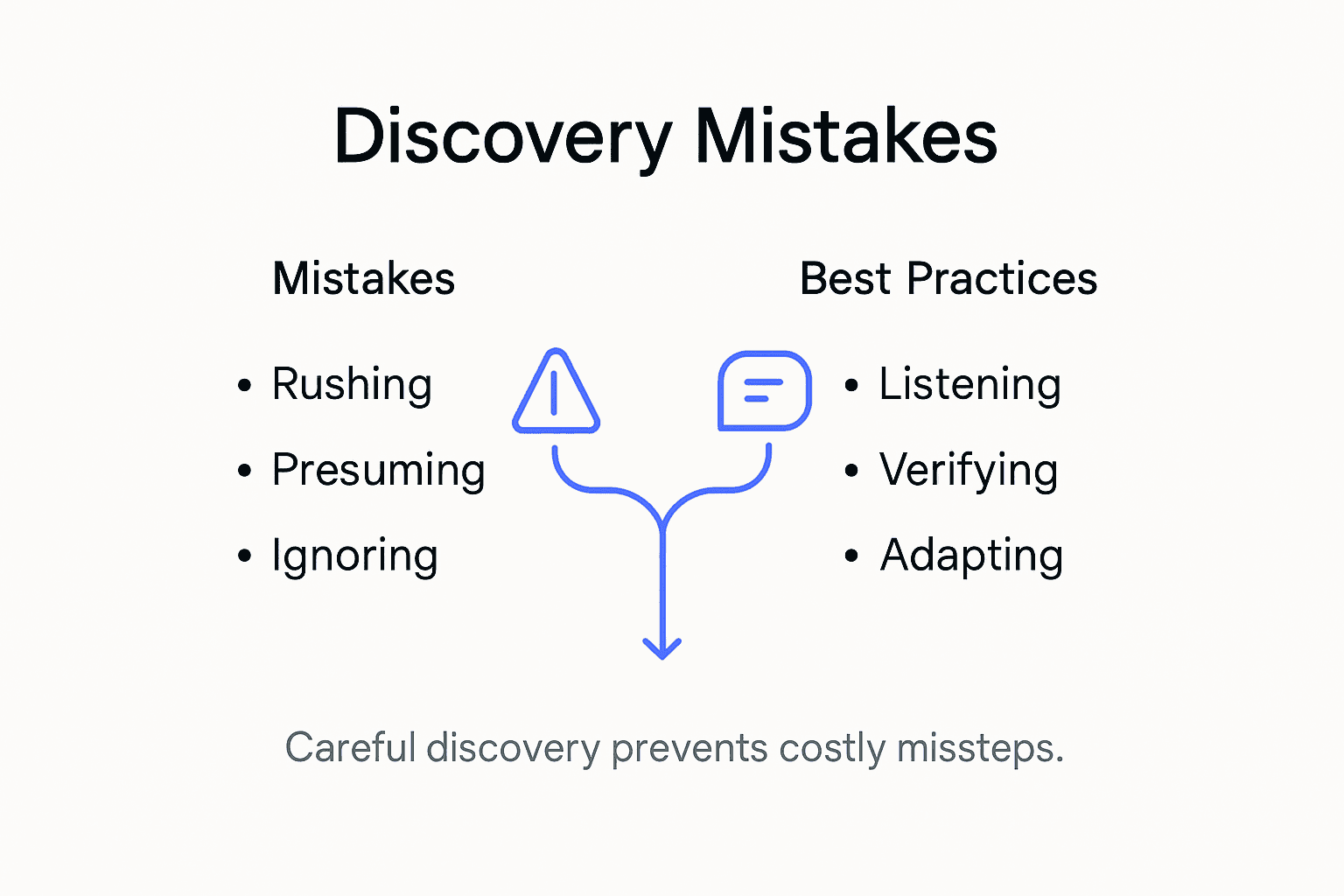
Critical Discovery Mistakes:
Preparation Failures
- Insufficient background research
- Lack of structured discovery agenda
- No clear meeting objectives
- Minimal understanding of client context
Communication Misalignments
- Talking more than listening
- Premature solution proposing
- Overlooking non-verbal communication signals
- Failing to confirm mutual understanding
- Rigid communication approach
Relationship Disruption Risks
- Making assumptions about client needs
- Neglecting emotional intelligence
- Inconsistent follow-up practices
- Treating discovery as transactional
- Ignoring potential network connections
Successful professionals recognize that client discovery is an intricate dance of listening, understanding, and strategic engagement. Each interaction represents an opportunity to build trust, demonstrate value, and create meaningful professional connections.
Navigating client discovery requires continuous learning and adaptive communication strategies. Practitioners must remain flexible, empathetic, and committed to understanding the deeper motivations driving potential client interactions.
Pro tip: Develop a standardized post-discovery meeting reflection template to systematically analyze and improve your client engagement approach.
Unlock High-Intent Client Discovery with AI-Powered Warm Introductions
The article highlights the challenges of understanding deep client needs and the power of warm introductions to build trust fast. Many professionals struggle with ineffective cold outreach, rushing client discovery, and missing the hidden behavioral signals that reveal true buying intent. Fluum addresses these exact pain points by using AI-driven social intelligence to uncover real opportunities hidden within your network. Instead of just guessing what clients want, Fluum precisely identifies prospects ready for collaboration and creates personalized warm introductions on your behalf.
Fluum’s approach aligns perfectly with proven client discovery strategies, helping you avoid common mistakes like premature solution selling and low response cold calls. By leveraging behavioral signals and your professional connections, you benefit from higher trust, faster engagement, and ongoing relationship growth. This means less wasted time chasing leads and more focus on meaningful conversations that convert.
Ready to transform your client discovery process and access high-intent clients through trusted warm intros?

Discover how Fluum’s AI co-founder can become your ultimate business development engine today. Explore pricing and start your journey at Fluum Pricing. Don’t let valuable opportunities stay hidden—take the first step toward smarter client discovery now.
Frequently Asked Questions
What is client discovery?
Client discovery is the systematic process of understanding potential clients’ deep needs, motivations, and challenges before designing solutions. It involves techniques like targeted interviews, journey mapping, and persona development.
What are some common myths about client discovery?
Common myths include the belief that clients always know what they want, that one interview suffices for insights, and that solutions should be developed before fully understanding the problems.
What are effective methods for conducting client discovery?
Effective methods include direct conversation techniques (like one-on-one interviews), digital research methods (such as social media analysis), and indirect discovery approaches (such as reviewing customer testimonials and competitor case studies).
How can behavioral signals enhance client discovery?
Behavioral signals, such as communication patterns and online engagement, provide nuanced insights into potential client motivations and preferences, allowing for personalized engagement strategies.
Recommended
- Finding Clients Without Sales Team: Warm Intro Strategies
- Understanding Client Management Strategies For Success
- Client Outreach Workflow Guide | Solopreneurs Guide
- Understanding Nurturing Client Relationships For Success
- Fluum | Effective Stress Management Techniques for Busy Professionals
- Fluum | How to Onboard Clients Effectively for Lasting Success
- Fluum | Master Managing Multiple Projects for Success
- Fluum | Build Your Brand with a Branding Builder in 2025
- Fluum | 7 Customer Retention Examples to Boost Your Business