
| Key Insight | Explanation |
|---|---|
| Path mapping reveals hidden influencers | Most B2B buying decisions involve 6 to 10 stakeholders. Mapping the path shows who really controls budget, sign-off, and veto power. |
| Cold outreach misses the actual buyer | Scraping LinkedIn titles finds job labels, not decision authority. Path mapping identifies the real route to the person who signs. |
| Warm introductions outperform cold by 20x | Research from Bain & Company consistently shows B2B buyers are 5x more likely to engage when introduced through a trusted third party. |
| AI accelerates path discovery | Modern platforms aggregate signals from government registries, private databases, and intent data to surface decision paths that manual research cannot find. |
| Regulated industries require deeper mapping | In fintech, cybersecurity, and manufacturing, procurement involves compliance officers and legal teams that standard contact tools never surface. |
| Double opt-in introductions close the loop | Mapping the path is only half the job. Getting a warm, mutually consented introduction to the right node converts knowledge into pipeline. |
Decision maker path mapping is the process of identifying every stakeholder involved in a B2B purchasing decision, charting the formal and informal routes between them, and determining the most direct, highest-probability path to the person with actual buying authority. It replaces guesswork with a structured model of organizational influence. Done well, it cuts sales cycles by weeks and eliminates the waste of pitching the wrong person at the wrong stage.
Most sales teams skip this step entirely. They find a title on a contact database, fire off a sequence, and wonder why nobody replies. The problem isn’t the email copy. It’s that they never mapped who actually makes the decision, who influences it, who can block it, and how those people connect to each other.
This guide covers how decision maker path mapping works in practice, why it matters more than ever in regulated and complex B2B markets, and how AI-powered tools are making the process faster and more accurate than anything a manual research workflow could produce.

What Is Decision Maker Path Mapping?
Decision maker path mapping is a structured methodology for charting the people, roles, and relationships that govern a B2B buying decision, so sales teams can identify the most effective route to the right stakeholder before the first outreach attempt.
The Core Concept: More Than an Org Chart
An org chart shows reporting lines. A decision maker path map shows influence lines, which are often completely different things. The CFO may technically approve the budget, but the Head of Security Architecture already decided which vendor she trusts. The VP of Procurement signs the contract, but his direct report flagged the shortlist three months earlier.
According to research published in PLOS One on decision-making path estimation, the routes people take through decision processes are rarely linear and can be parameterized and predicted when the underlying functions are understood [1]. That finding applies directly to B2B sales: the path to a buying decision follows patterns, and those patterns can be mapped.
Business decision mapping (BDM), as defined in the academic literature, is a technique for making complex organizational decisions transparent by identifying the logical structure of choices and the actors involved in them [2]. Decision maker path mapping extends this into the sales context by adding the relational and political dimensions that pure logic diagrams omit.
Why the Title on a Contact Record Isn’t Enough
As of 2026, the average B2B buying group involves 6 to 10 stakeholders, according to Gartner’s ongoing research into enterprise purchasing behavior. That number climbs higher in regulated industries. A fintech vendor selling into a UK bank may encounter:
- A Chief Risk Officer who sets vendor policy
- A Head of Procurement who controls the RFP process
- A technology architect who writes the technical requirements
- A compliance officer who reviews FCA Register status
- A budget holder who may be in a completely different business unit
- An executive sponsor who can fast-track or kill a deal based on a single conversation
Targeting only one of these people and hoping for the best isn’t a strategy. It’s a lottery. Decision maker path mapping replaces that lottery with a deliberate sequence of engagements, each informed by the one before it.
Pro Tip: Start your path map by identifying the economic buyer (the person who controls budget) and the technical buyer (the person who controls access) separately. They’re rarely the same individual, and your path to each requires a different approach and different context.
How Decision Maker Path Mapping Works
this strategy works by systematically identifying stakeholders, scoring their influence and accessibility, and then building a sequenced engagement plan that moves from the most accessible entry point to the highest-authority decision node.
The Five-Stage Mapping Process
The decision process mapping framework from WGU outlines a structured approach to understanding how decisions flow through organizations [3]. Applied to B2B sales, the process breaks down into five stages:
- Define the target account and buying trigger. Identify what event or condition makes this account a genuine prospect right now. A funding round, a regulatory change, a leadership hire, or a contract renewal cycle all signal different entry points.
- Identify all stakeholder roles in the buying group. Map economic buyers, technical evaluators, end users, compliance gatekeepers, and executive sponsors. Don’t stop at the obvious title.
- Score each stakeholder on influence and accessibility. High influence but low accessibility (a C-suite executive) requires a different approach than high accessibility but low influence (a mid-level analyst). Both matter, but for different reasons.
- Chart the relationship connections between nodes. Who reports to whom? Who has worked together previously? Who is likely to refer internally? These connections define the actual paths available to you.
- Identify the warmest entry point and the optimal introduction sequence. The goal isn’t to reach the CEO first. It’s to reach the most influential accessible stakeholder who can carry your message upward or laterally to the decision maker.
How AI Changes the Mechanics
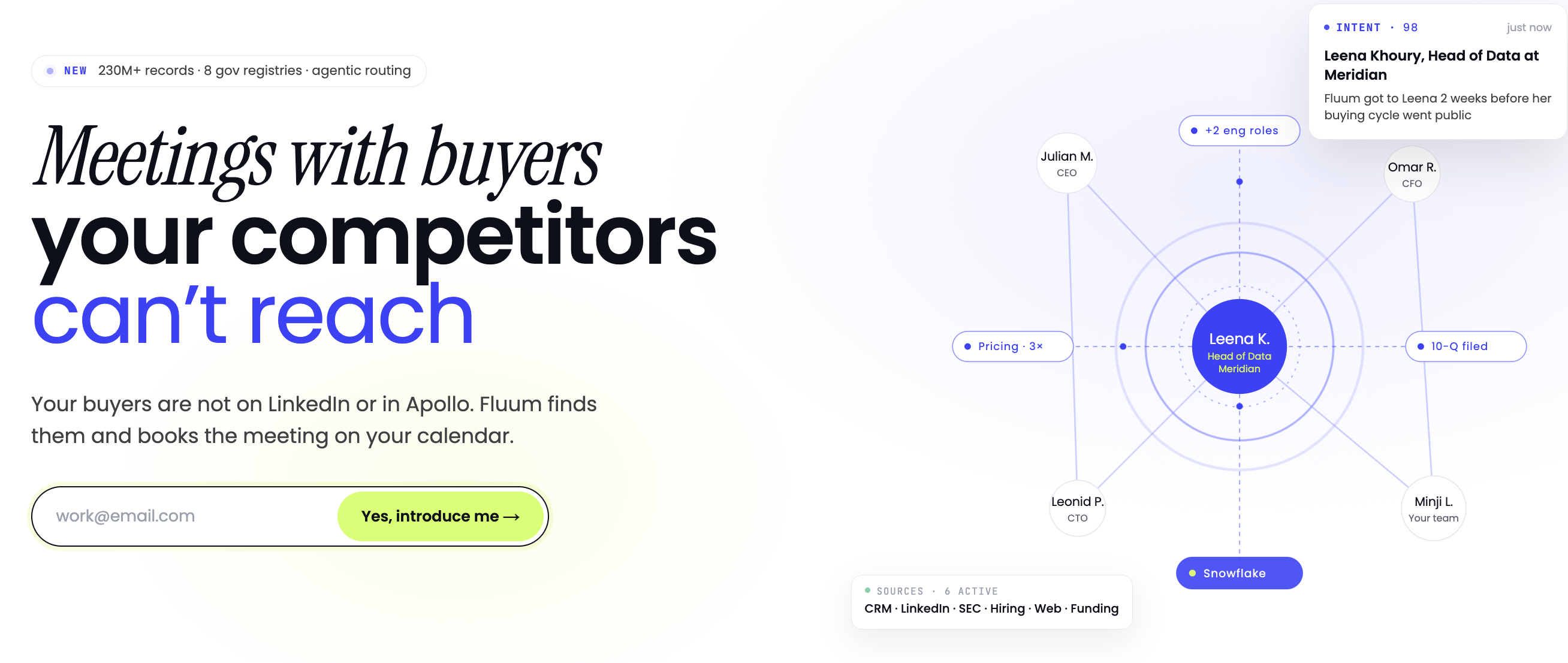
Manual path mapping is time-consuming and limited by what’s publicly visible. AI-powered platforms change the equation significantly. By aggregating signals from government registries like Companies House, the FCA Register, SEC EDGAR, and SIRENE, alongside private data vendors, these systems surface relationship connections and organizational structures that no LinkedIn search would ever reveal.
The WWT decision mapping methodology describes how visual diagrams of logical decision structures reduce cognitive bias and improve outcome quality [4]. AI adds a data layer that makes those diagrams accurate at scale, not just conceptually sound.
Intent signals, job change alerts, funding announcements, and regulatory filings all feed into a dynamic path map that updates in near real-time. A static spreadsheet of contacts can’t do that. A buyer graph built from 40+ data sources can.
| Mapping Method | Data Sources | Accuracy | Scalability |
|---|---|---|---|
| Manual Research | LinkedIn, company website, news | Low (surface-level only) | Very low |
| Contact Database Tools | Scraped profiles, email databases | Medium (titles, not authority) | High |
| AI Buyer Graph Platforms | 40+ private vendors, 8 government registries | High (authority + relationships) | High |
| Warm Introduction Networks | Opted-in decision-maker networks | Very high (verified, consented) | Medium-High |

Key Benefits of Decision Maker Path Mapping in 2026
this approach directly reduces sales cycle length, improves conversion rates, and increases the quality of pipeline by ensuring every outreach attempt targets the right person through the most effective channel.
Measurable Pipeline Impact
The numbers are not subtle. Research from Bain & Company consistently shows that B2B buyers are 5x more likely to engage when introduced through a trusted third party. When path mapping is combined with warm introductions, that multiplier compounds. At Fluum, we’ve found that introductions made after proper path mapping, where the right node in the buying group is identified before the introduction is facilitated, convert at 40 to 50% reply rates. Cold email averages 2%.
That’s not a marginal improvement. It’s a structural one.
The benefits of rigorous the practice include:
- Shorter sales cycles. Reaching the right stakeholder on the first or second attempt eliminates weeks of internal forwarding and ignored follow-ups.
- Higher close rates. Deals sourced through mapped, warm introductions close at significantly higher rates than cold-sourced pipeline.
- Better qualification earlier. Understanding the full buying group before outreach begins reveals whether a deal is actually winnable before any resources are committed.
- Reduced SDR burnout. SDRs who work mapped accounts spend less time on dead-end sequences and more time on conversations that matter.
- Competitive intelligence. Mapping the buying group often reveals which competitors are already inside the account, and through whom.
Specific Value in Regulated Industries
Regulated industries, including fintech, cybersecurity, and manufacturing, present buying groups that standard contact tools simply cannot map. A cybersecurity vendor selling into a financial institution needs to reach a CISO (Chief Information Security Officer), but the CISO’s buying decision is shaped by a compliance team reviewing FCA or SEC requirements, a procurement team managing approved vendor lists, and a technology committee that controls the architecture roadmap.
None of those relationships are visible on a scraped contact list. They require data from government registries, corporate filings, and opted-in professional networks. Tools like Wasaphi represent the kind of specialized intelligence infrastructure that modern B2B teams are layering into their path mapping workflows to surface connections in hard-to-reach markets.
The Lucid Software guide to decision mapping notes that the visualization of decision processes helps teams identify bottlenecks and hidden dependencies that would otherwise derail progress [5]. In regulated B2B sales, those bottlenecks are almost always human, not technical.
Pro Tip: In regulated industries, always map the compliance and legal stakeholders before you map the commercial ones. They have veto power that no amount of relationship with the business sponsor can override. Identifying them early and engaging them appropriately is the difference between a deal that closes and one that stalls at legal review for six months.
Common Challenges and Mistakes
The most common failure in this practice is confusing job titles with decision authority, which leads sales teams to invest time and credibility in stakeholders who have no real power to advance or close a deal.
The Title Trap and Other Mapping Errors
A common mistake is assuming that seniority equals authority. In large organizations, a VP-level title may describe someone who manages a team but has no budget discretion. Meanwhile, a Director of Operations in the same company might control a seven-figure technology budget and have the ear of the CEO. Mapping by title alone produces a path that looks right but leads nowhere.
Other frequent errors include:
- Mapping only the visible org chart. Formal reporting structures rarely reflect actual influence. Informal networks, previous working relationships, and internal political dynamics shape decisions as much as hierarchy does.
- Ignoring the blocker. Every buying group contains at least one stakeholder whose primary function is to slow things down. Not identifying blockers early means being surprised by them late.
- Treating the map as static. Organizations change. People leave, get promoted, change remit. A path map that was accurate three months ago may be completely wrong today. Maps need to be living documents, not one-time exercises.
- Over-indexing on the economic buyer. Going straight to the budget holder without building support among technical and operational stakeholders is a classic mistake. The economic buyer relies on recommendations from people inside the organization. Alienate the influencers and you lose the deal before you ever get to the decision maker.
- Using a single data source. Any platform that maps decision paths from one data source (a scraped LinkedIn export, for example) will miss the majority of the relevant information. Accurate mapping requires cross-referencing multiple private and public data sources.
The Cold Outreach Trap
Here’s an uncomfortable truth: most sales teams do all this mapping and then blow the execution by sending a cold email anyway. They’ve identified the right person, confirmed the right timing, and then opened with a generic sequence that gets ignored like every other cold email in that person’s inbox.
The ResearchGate study on decision mapping in organizational contexts emphasizes that mapping the process is only valuable when it informs the actual engagement strategy, not just the targeting [6]. Knowing who to reach is step one. Reaching them in a way that earns a response is step two, and cold outreach fails step two at a 98% rate.
Best Practices for Decision Maker Path Mapping in 2026
The most effective this method combines AI-powered signal aggregation with a warm introduction strategy, ensuring that the path from data to conversation is as short and high-conversion as possible.
Build the Map Before You Build the Sequence
The sequence should be a product of the map, not a template applied before the map exists. In practice, this means:
- Start with the buying trigger, not the account. Identify what’s happening in the target organization right now that makes them a real prospect. Regulatory changes, leadership transitions, funding events, and technology refresh cycles are all high-signal triggers.
- Use government and private registry data to identify all relevant entities. Companies House filings, SEC EDGAR disclosures, and FCA Register data reveal corporate structures, subsidiary relationships, and regulated individuals that no commercial contact database captures.
- Score stakeholders by influence, accessibility, and relationship proximity. The MEDDIC framework (Metrics, Economic Buyer, Decision Criteria, Decision Process, Identify Pain, Champion) provides a structured methodology for this scoring. Apply it to each node in your map.
- Identify the warmest path to the highest-value node. Who in your network, or in an opted-in introduction platform, has a direct relationship with a key stakeholder? That warm connection is worth more than 500 cold emails.
- Validate and update the map continuously. Set triggers for map updates: a key stakeholder changes role, the company announces a new initiative, a competitor wins a deal in the same account. Each of these events changes the path.
Combine Path Mapping with Warm Introduction Infrastructure
Mapping the path is necessary but not sufficient. The execution layer matters just as much. Our team at Fluum recommends treating the introduction itself as a product, not an afterthought. A double opt-in introduction, where both the buyer and the seller have confirmed mutual interest before the first message is exchanged, converts at rates that cold outreach cannot approach.
The Wizer Decision Profile Mapping methodology highlights the importance of identifying blind spots and unheard voices in the decision process [7]. In B2B sales, those blind spots are often the stakeholders your path map hasn’t reached yet, and those unheard voices are the ones most likely to block or accelerate a deal.
The Blue Matter Decision Path framework defines a five-principle model for good decision-making that integrates coordination across all relevant parties [8]. Applied to sales, this means treating the buyer’s internal decision process as something to support and navigate, not something to circumvent.
Pro Tip: If you’re a senior leader or C-suite executive looking to accelerate your path to the right buyers, talk to Aurora at Fluum. Tell us who you are and who you’re looking to meet next. We’ll make sure to send you only what’s relevant, no noise, no cold lists, just the introduction you actually need.
The PubMed research on estimating paths through decision maps demonstrates that the functions underlying decision paths can be parameterized and estimated from behavioral data [9]. This is exactly what AI-powered buyer graph platforms do at scale: they estimate the most probable path through a buying organization based on aggregated signal data, not guesswork.
Sources & References
- PLOS One, “Estimating a Path through a Map of Decision Making,” 2014
- Wikipedia, “Business Decision Mapping,” 2024
- WGU, “Decision Process Mapping: Streamline Your Decision-Making Process,” 2024
- WWT, “Decision Mapping: A Method for Improving Decision Making,” 2023
- Lucid Software, “A Guide to Decision Mapping,” 2023
- ResearchGate, “Decision Mapping: Understanding Decision Making Processes,” 2015
- Wizer Technologies, “Decision Profile Mapping,” 2024
- Blue Matter Consulting, “Decision Path Framework,” 2023
- PubMed, “Estimating a Path Through a Map of Decision Making,” 2014
Frequently Asked Questions
1. What is mapping in decision-making?
Decision mapping is a structured method for visually representing the full logical and relational structure of a decision process, including the problem being solved, the available options, the criteria for evaluating them, the evidence supporting each criterion, and the people who influence or control the final choice. In B2B sales contexts, this strategy extends this concept to include organizational influence networks, relationship proximity, and the sequenced engagement paths most likely to reach the actual buyer.
2. How is decision maker path mapping different from a standard org chart?
An org chart shows formal reporting relationships. A decision maker path map shows actual influence, authority, and accessibility. The person who signs the contract may be three levels above the person who made the vendor recommendation. The person with veto power may not appear on the org chart at all. Path mapping captures informal networks, previous relationships, political dynamics, and cross-functional dependencies that org charts ignore entirely.
3. What data sources are most useful for decision maker path mapping?
The most accurate path maps draw from multiple source types simultaneously. Government registries (Companies House, SEC EDGAR, FCA Register, SIRENE) reveal corporate structures and regulated individuals. Private data vendors surface contact-level information and organizational hierarchies. Intent signal platforms identify active buying behavior. Opted-in professional networks provide relationship proximity data that no scraped database can replicate. Using a single source, particularly a commercial contact database alone, produces maps that are systematically incomplete.
4. How many stakeholders should a typical B2B path map include?
As of 2026, most enterprise B2B deals involve 6 to 10 active stakeholders across the buying group. In regulated industries like fintech, cybersecurity, and manufacturing, that number can reach 12 to 15 when compliance, legal, and technical evaluation teams are included. A robust path map should account for all of them, even if the active engagement strategy focuses on a smaller subset. Missing even one high-influence stakeholder is enough to derail a deal at the final stage.
5. How does decision maker path mapping improve warm introduction success rates?
Path mapping identifies not just who the right decision maker is, but which node in the buying group is most accessible through existing relationships or opted-in networks. A warm introduction targeted at the right person, with the right context, at the right moment in their buying process, converts at 40 to 50% reply rates. Without path mapping, even warm introductions can land with the wrong stakeholder, reducing their value significantly. The map is what makes the introduction precise rather than lucky.
6. Can decision maker path mapping work for small sales teams without dedicated research resources?
Yes, particularly when AI-powered platforms handle the data aggregation layer. Manual path mapping at scale requires significant research time. AI buyer graph platforms that pull from government registries and private data vendors automate the signal collection, leaving the sales team to focus on strategy and engagement rather than data gathering. For small teams, this makes rigorous path mapping feasible without a dedicated intelligence function.
Conclusion
this approach isn’t a nice-to-have for enterprise sales teams. It’s the difference between a pipeline built on guesswork and one built on verified intelligence. Knowing who makes the decision, who influences it, who can block it, and how those people connect to each other is the foundation of every high-conversion sales motion in 2026.
The tools have caught up with the methodology. AI platforms that aggregate signals from government registries, private data vendors, and opted-in professional networks now make accurate path mapping accessible at scale, even in the most complex and regulated industries. The remaining question is whether your team is willing to replace volume-based cold outreach with a more precise, relationship-first approach.
Fluum builds buyer graphs from 40+ private data vendors and 8 government registries, scores intent signals through AI agents, and delivers warm double opt-in introductions directly to the decision maker your path map identifies. No cold lists. No ignored sequences. Just the right introduction, to the right person, at the right time.
Recommended Articles
Explore more from our content library: