

How to increase business efficiency? More than 80 percent of solopreneurs say that juggling daily tasks often leaves them little time for critical business growth. Building a one person business can feel like an endless balancing act where strategic planning often takes a back seat to routine admin work. If you want to break out of this cycle and scale smarter, it’s vital to pinpoint your true business priorities and learn how modern tools can multiply your productivity in ways you may not expect.
Table of Contents
- Step 1: Define Key Business Goals And Pain Points
- Step 2: Streamline Daily Operations With AI Tools
- Step 3: Automate Client Communication And Scheduling
- Step 4: Optimize Workflow With Personalized Insights
- Step 5: Monitor Results And Adjust Systems
Quick Summary
| Key Point | Explanation |
|---|---|
| 1. Define business goals and customer pain points | Identify your specific services and ideal clients to understand market gaps and create valuable offerings. |
| 2. Utilize AI tools to streamline operations | Automate repetitive tasks like scheduling and client communication to improve efficiency and save time for strategic activities. |
| 3. Implement AI for personalized insights | Use AI-driven analytics to gain insights into your business patterns, helping you adjust strategies and optimize performance. |
| 4. Continuously monitor and adjust systems | Regularly review performance metrics to enhance your automated systems and adapt strategies for improved efficiency. |
| 5. Create actionable workflows | Establish a clear intersection between your skills and customer challenges to form targeted, compelling service offerings. |
Step 1: Define key business goals and pain points
Defining clear business goals and understanding customer pain points are foundational steps for solopreneur success and to learn how to increase business efficiency. According to research from Leeds Faculty, identifying specific customer frustrations provides the critical insight needed to develop compelling business solutions.
Start by conducting a comprehensive self assessment of your professional strengths and desired outcomes. Ask yourself targeted questions like: What specific services or products do I want to offer? Who is my ideal client? What unique value can I provide that differentiates me from competitors? Then shift focus to understanding potential customer challenges. Observe daily frustrations people experience within your industry. These observations will help you pinpoint precise problems your business can solve.
One practical approach is creating a strategic mapping exercise. Draw two columns labeled “My Skills” and “Customer Problems.” List your professional capabilities on one side and specific market challenges on the other. Look for natural intersections where your expertise directly addresses client needs. This visual method helps transform abstract goals into actionable business strategies. When you clearly understand both your capabilities and market demands, you can design service offerings that resonate powerfully with your target audience.
For more guidance on setting effective business objectives, check out our guide on business goals for solopreneurs.
Step 2: Streamline daily operations with AI tools
Streamlining your daily operations with AI tools can dramatically increase your business efficiency and free up valuable time for strategic work. According to National Business, small business owners can leverage AI to automate multiple critical business functions including customer service, social media management, marketing personalization, and bookkeeping.
Begin by identifying repetitive tasks in your workflow that consume significant time and mental energy. Common areas for AI automation include email responses, scheduling, social media posting, client communication, and basic administrative tasks. Research AI tools specifically designed for solopreneurs that can integrate seamlessly with your existing systems. Look for solutions that offer intuitive interfaces and can learn from your specific business patterns. Focus on tools that provide customizable workflows and can adapt to your unique professional requirements.
Start small and strategically implement AI tools one at a time. Select tools with robust trial periods so you can thoroughly test their functionality before full commitment. Track the time saved and productivity gained with each AI implementation. Pay special attention to tools that offer intelligent learning capabilities, which can continuously optimize their performance based on your specific business needs.
For deeper insights into business automation strategies, explore our guide on understanding business automation to help refine your approach.
Step 3: Automate client communication and scheduling
Streamlining client communication and scheduling is critical for solopreneurs seeking to maximize their operational efficiency. According to National Business, AI tools can now handle customer inquiries 24/7 and automate scheduling processes, allowing professionals to focus on high value strategic work.
Start by implementing AI powered chatbots and intelligent scheduling systems that integrate seamlessly with your existing workflows. These tools can manage appointment bookings, send automated reminders, answer frequently asked questions, and handle basic client interactions without requiring your constant attention. Look for solutions that offer customizable communication templates, real time availability tracking, and intelligent routing of more complex client requests directly to you.
When selecting communication automation tools, prioritize platforms that provide robust analytics and learning capabilities. Choose systems that can track response times, client satisfaction rates, and offer insights into communication patterns. This approach allows you to continuously refine your automated communication strategy. Pay special attention to tools that maintain a personalized feel while reducing your administrative workload.
For additional insights into optimizing client communication technologies, explore our guide on scheduling software for wellness professionals to help you make informed decisions.
Step 4: Optimize workflow with personalized insights
Optimizing your workflow through personalized insights requires strategic use of intelligent technologies that can transform how you work. According to research from National Business, AI platforms can now analyze customer behavior and create targeted recommendations that help small business owners connect with their ideal audience more effectively.
Implement AI driven analytics tools that provide deep insights into your professional performance and business patterns. These intelligent systems can track key metrics such as time allocation, client interaction frequencies, project completion rates, and potential bottlenecks in your workflow. By understanding these granular details, you can make data informed decisions about where to focus your energy and which processes need refinement. As recommended by ALA, effectively integrating AI into your daily work routines can foster innovation and significantly improve overall work quality.
Critical to successful workflow optimization is selecting tools that offer genuine personalization. Look for platforms that learn from your specific work patterns and provide tailored suggestions rather than generic recommendations. Pay attention to systems that can predict potential challenges before they arise and offer proactive solutions. Remember that the goal is not just collecting data but transforming insights into actionable strategies that continuously evolve with your business.
For additional strategies on maintaining peak productivity, explore our guide on productivity apps for freelancers.
Step 5: Monitor results and adjust systems
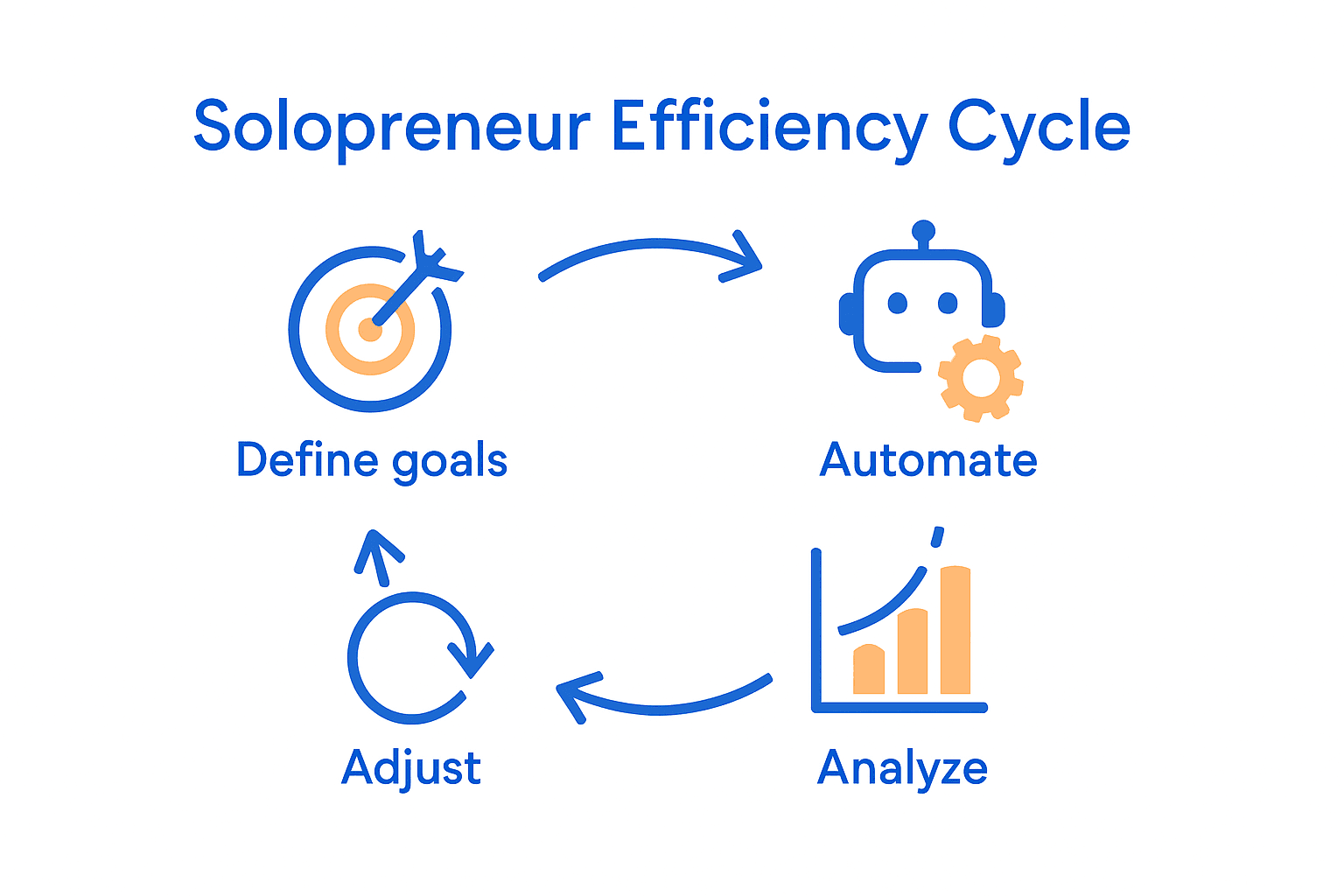
Monitoring and continuously adjusting your business systems is crucial for sustained growth and efficiency. According to ALA, evaluating AI tools requires a strategic approach that focuses on data quality, ethical practices, and ongoing performance assessment.
Establish a consistent review process that involves analyzing key performance indicators across all automated systems. Set up monthly or quarterly performance dashboards that track critical metrics such as client engagement rates, time saved through automation, revenue generated, and workflow efficiency. National Business suggests using AI tools to predict future behavior and proactively adjust strategies before potential issues arise. This means looking beyond surface level metrics and understanding the deeper patterns in your business operations.
Develop a flexible mindset of continuous improvement. Create a systematic approach to testing and refining your tools where you allocate specific time to review performance data, identify bottlenecks, and experiment with alternative configurations. Pay attention to tools that offer built in learning capabilities which can automatically suggest optimization strategies based on your unique business patterns. Remember that the goal is not perfection but progressive enhancement of your business systems.
To gain additional insights into refining your professional approach, explore our guide on stress management strategies for solopreneurs.
Boost Your Solopreneur Efficiency with Fluum AI
The article highlights common challenges solopreneurs face such as managing daily operations, automating client communication, and making data-driven decisions while juggling multiple roles alone. These pain points can lead to overwhelm and lost growth opportunities when there is no team to rely on. If your goal is to streamline your workflow, automate repetitive tasks, and gain personalized insights that evolve with your business, you need a system that works as hard as you do.
Fluum is an AI-powered platform designed exactly for solopreneurs and freelancers who want to scale their businesses without adding more overhead. With an intelligent AI co-founder made up of specialized agents, Fluum automates sales outreach, client management, scheduling, and even finds new leads on Instagram. It continuously learns your unique business patterns and adapts its strategies to help you save time and focus on what truly matters — creativity and client connections.
Take control of your business growth now by exploring Fluum’s all-in-one solution that brings automation and strategic insight together.
Ready to free up hours every week and grow your business smarter?
Explore Fluum’s pricing and plan options to see how our AI co-founder can transform your daily workflow.
Don’t let busywork hold you back any longer. Start maximizing your efficiency and accelerating your success with Fluum today.
Frequently Asked Questions
How can I identify key business goals as a solopreneur?
To identify your key business goals, conduct a self-assessment of your skills and desired outcomes. List the services you want to offer and understand your ideal clients, focusing on the unique value you can provide to differentiate yourself from competitors.
What are some effective AI tools to streamline operations for solopreneurs?
AI tools can help automate repetitive tasks like customer service, scheduling, and social media management. Research user-friendly automation tools that fit your workflow and start by implementing one or two at a time to see how they impact your productivity.
How can I automate client communication and scheduling?
You can automate client communication by using AI-powered chatbots and scheduling software that manage bookings and responses. Set up systems that can send automated reminders and handle FAQs to minimize your administrative workload.
What steps should I take to optimize my workflow with personalized insights?
To optimize your workflow, implement AI analytics tools that analyze your performance and customer behavior. Use these insights to identify areas where you can improve efficiency and adjust your processes accordingly, aiming for measurable improvements within a few weeks.
How do I monitor results and adjust my systems effectively?
Establish a routine to review performance metrics regularly, such as client engagement and workflow efficiency. Use these insights to identify any bottlenecks and test different configurations to enhance your systems, adjusting strategies at least monthly for continuous improvement.
Recommended
- 7 Work Life Balance Tips Every Solopreneur Should Know
- 7 Essential Business Goals Objectives For Solopreneurs
- Complete Guide To Business Decision-Making Success
- Business And Decisions: Complete Guide For Solopreneurs
- 7 Best CRMs for Freelancers in 2026 – Expert Comparison
- What Is Marketing Automation? Complete Breakdown | Website Design & Google Ads That Generate Leads
- Fluum | Effective Stress Management Techniques for Busy Professionals
- Fluum | How to Onboard Clients Effectively for Lasting Success
- Fluum | Master Managing Multiple Projects for Success
- Fluum | Build Your Brand with a Branding Builder in 2025
- Fluum | 7 Customer Retention Examples to Boost Your Business