

Let’s learn a very useful lead qualification process. Most American freelance digital marketers waste hours chasing leads that never convert into real business. With so much noise in the market, knowing exactly who your ideal client is and spotting the right buying signals can make the difference between frustration and success. Discover how to shift from endless cold messages to proven strategies that attract and qualify high-intent clients, freeing you to focus on the connections that truly matter.
Table of Contents
- Step 1: Define Ideal Client Profiles And Buying Signals
- Step 2: Set Up Warm Introduction Channels Using AI Tools
- Step 3: Evaluate And Score Incoming Leads For Intent
- Step 4: Request And Automate Personalized Introductions
- Step 5: Verify Lead Responsiveness And Qualify For Next Steps
Quick Summary
| Key Insight | Explanation |
|---|---|
| 1. Define Ideal Client Profiles | Analyze your top clients to create detailed profiles highlighting demographics, pain points, and behaviors to optimize client acquisition. |
| 2. Identify Buying Signals | Track explicit signals like inquiries and implicit signals like behavior patterns to gauge client interest effectively. |
| 3. Leverage AI for Introductions | Use AI tools to establish warm introductions based on mutual interests, enhancing networking efficiency and personalization. |
| 4. Implement Lead Scoring Systems | Develop a lead scoring model that evaluates prospects based on both qualitative and quantitative metrics for better qualification. |
| 5. Create Responsive Qualification | Establish verification protocols to assess lead readiness, adjusting criteria dynamically as market and business needs change. |
Step 1: Define ideal client profiles and buying signals
Understanding your ideal client is like drawing a precise map before a business journey. By creating detailed client profiles and recognizing key buying signals, you transform scattered networking efforts into strategic client acquisition.
Start by analyzing your current top clients through comprehensive customer segmentation research. Break down their characteristics across multiple dimensions: demographics, psychographics, professional background, and specific pain points. Look beyond surface level data and dig into behavioral patterns. What motivates them? What challenges are they trying to solve? How do they typically make purchasing decisions?
To effectively map buying signals, track both explicit and implicit indicators of potential client interest. Research shows behavioral cues can reveal significant purchase intent. Explicit signals include direct website inquiries, social media engagement, or response to specific marketing content. Implicit signals might involve repeated website visits, downloading resources, or interactions that suggest deeper research about your services.
Here’s how explicit and implicit buying signals compare in client identification:
| Signal Type | Example Indicators | Detection Method | Business Impact |
|---|---|---|---|
| Explicit | Direct inquiries, social engagement | Direct tracking, analytics | Immediate lead qualification |
| Implicit | Repeat site visits, resource downloads | Behavioral analysis, AI tools | Reveals deeper client interest |
Pro tip: Create a living document for your ideal client profile that you update quarterly to reflect evolving market dynamics and your business growth.
Step 2: Set up warm introduction channels using AI tools
Transforming your business networking strategy requires leveraging intelligent technologies that can seamlessly connect you with potential clients. By implementing AI driven introduction channels, you can create more personalized and efficient pathways to meaningful professional relationships.
Generative AI tools can unlock innovative collaboration approaches that go beyond traditional networking methods. These advanced systems analyze your professional network, understand contextual nuances, and generate highly targeted introduction strategies. They can identify potential connection points by examining shared interests, professional backgrounds, and interaction histories that human networking might overlook.
When setting up these channels, focus on platforms that prioritize ethical and transparent communication. Research from professional integrity organizations emphasizes the importance of responsible AI implementation in professional networking. Select tools that provide clear communication pathways, respect privacy boundaries, and maintain a human touch in automated introductions. Look for AI solutions that can draft personalized outreach messages, suggest optimal connection strategies, and track engagement metrics without compromising professional authenticity.
Pro tip: Configure your AI introduction tools with strict relevance filters to ensure each potential connection genuinely aligns with your professional objectives.
Step 3: Evaluate and score incoming leads for intent
Mastering lead evaluation requires a strategic approach that transforms raw inquiries into actionable opportunities. Your goal is to develop a systematic method for assessing potential client interactions and identifying the most promising prospects.
Advanced lead scoring frameworks combine multiple data points to create a comprehensive evaluation system. This approach involves analyzing both explicit characteristics like demographics and implicit behavioral signals such as engagement patterns. Consider creating a scoring matrix that assigns weighted points across different dimensions including professional background, interaction frequency, content engagement, and specific interest indicators.
Emerging AI technologies now enable more sophisticated intent detection techniques that can dramatically improve your lead qualification precision. Implement a hybrid scoring model that blends traditional rule based assessments with machine learning insights. This means developing a dynamic scoring system that can automatically adjust point values based on evolving interaction patterns and increasingly nuanced understanding of your ideal client profile. Pay special attention to signals that demonstrate genuine interest such as repeat website visits, downloadable resource interactions, and proactive communication attempts.
Pro tip: Regularly calibrate your lead scoring model by tracking conversion rates and retroactively analyzing which initial interaction signals most accurately predicted high value client relationships.
Step 4: Request and automate personalized introductions
Turning potential connections into genuine opportunities requires a strategic approach to personalized introductions. Your mission is to craft intelligent automated systems that feel genuinely human and create meaningful professional connections.
Advanced AI powered communication technologies now enable sophisticated personalization strategies that go far beyond generic outreach. Design your introduction automation to analyze contextual nuances such as shared professional interests, mutual network connections, and specific interaction histories. This means developing intelligent scripts that can dynamically adjust messaging tone, reference specific shared experiences, and demonstrate authentic understanding of each potential client’s unique professional landscape.
Improve your introduction request process by implementing a multi-layered approach that combines algorithmic precision with human insight. Configure your automation tools to perform initial screening based on predefined criteria while maintaining flexibility for manual review and personalization. Focus on creating introduction workflows that prioritize relevance, demonstrate genuine professional value, and respect the recipient’s time and attention.
Pro tip: Create a dynamic introduction template library with modular components that can be intelligently recombined based on specific lead characteristics and interaction contexts.
Step 5: Verify lead responsiveness and qualify for next steps
Successfully converting potential leads requires a strategic approach to engagement and qualification. Your objective is to systematically assess each prospect’s genuine interest and alignment with your professional offerings.
Systematic verification protocols provide a structured framework for evaluating lead readiness and potential. Design a multi stage assessment process that includes initial response tracking, engagement depth analysis, and specific interaction quality metrics. This means creating a responsive screening mechanism that goes beyond surface level interactions and probes deeper into the prospect’s actual needs and potential collaboration potential.
Establish clear qualification criteria that balance quantitative metrics with qualitative insights. Use a combination of response time tracking, communication quality assessment, and alignment with your ideal client profile. Develop a scoring system that considers factors such as communication clarity, specificity of inquiry, demonstrated understanding of your services, and potential mutual value creation. Implement a dynamic evaluation approach that allows for nuanced assessment beyond rigid binary qualification standards.
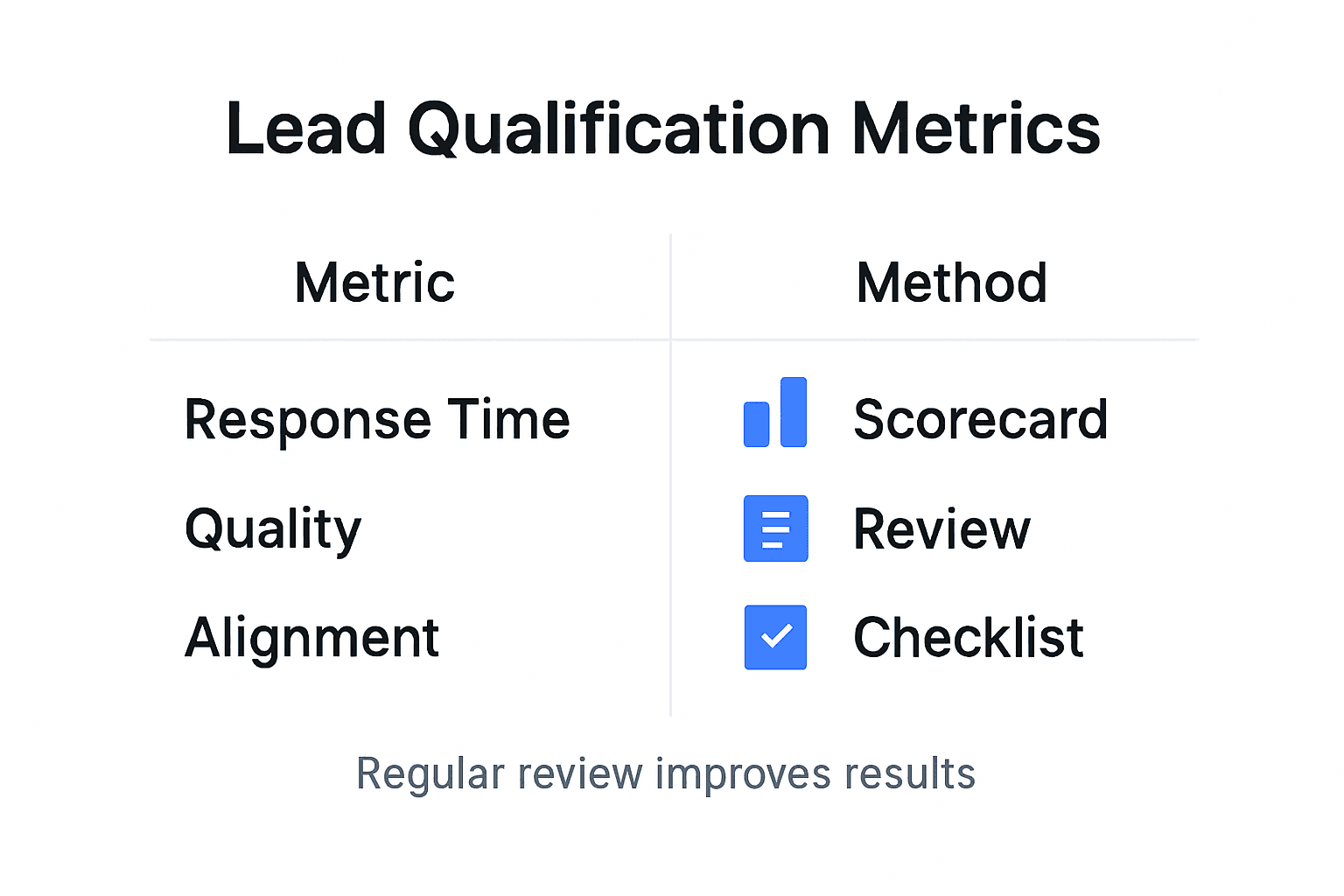
This table summarizes key lead qualification metrics for professional services:
| Qualification Metric | Assessment Method | Value to Business | Adjustment Frequency |
|---|---|---|---|
| Response Time | Automated tracking | Identifies engaged leads | Weekly or monthly |
| Communication Quality | Manual review and scoring | Measures seriousness and clarity | Periodic recalibration |
| Profile Alignment | Data matching algorithms | Ensures lead fits target audience | Quarterly update |
| Inquiry Specificity | Content analysis | Reveals true client needs | As market changes |
Pro tip: Create a responsive lead qualification scorecard with weighted parameters that can be quickly adjusted based on evolving business priorities and market dynamics.
Accelerate Your Lead Qualification Process with Fluum AI Solutions
The challenge of identifying high-intent clients and scoring leads accurately, as explored in the article “Lead Qualification Process for Winning High-Intent Clients”, is one every solopreneur and freelancer faces. From capturing both explicit and implicit buying signals to automating personalized introductions, these steps demand time and precision. Fluum transforms this often overwhelming process into a streamlined system by using social intelligence and behavioral signals to detect genuine purchase intent and surface warm introductions from your existing network.
Imagine turning your networking efforts into a steady pipeline of qualified leads without cold outreach or overwhelming manual follow-ups. Fluum’s AI co-founder does exactly that by uncovering referral paths, automating warm introductions, and managing follow-ups to accelerate your client acquisition. If you want to beat the stress of manual lead scoring and make every connection count, explore how Fluum can power your business development.
Get started today and experience how AI-powered warm introductions can help you focus more on your craft and less on chasing leads. Visit Fluum Pricing and Plans to find the right solution tailored for your freelance or solo business needs.
Ready to win more high-intent clients with less effort Use Fluum to harness AI driven lead qualification and personalized introductions that convert. Discover your hidden opportunities now at Fluum AI Pricing.
Frequently Asked Questions
What is the lead qualification process for high-intent clients?
The lead qualification process involves evaluating potential client interactions to identify genuine interest and alignment with your services. Start by analyzing client behavior and engagement metrics to create a comprehensive scoring system.
How can I effectively define my ideal client profile?
To define your ideal client profile, analyze your current top clients’ characteristics, behavior patterns, and pain points. Use this information to create a living document that reflects these insights and update it quarterly to stay relevant.
What are explicit and implicit buying signals I should track?
Explicit buying signals include direct inquiries and social media engagement, while implicit signals involve repeat visits to your website and resource downloads. Monitor both types to assess potential client interest and tailor your outreach accordingly.
How can I automate personalized introductions for leads?
Automate personalized introductions by using smart communication tools that analyze contextual details like shared interests and network connections. Develop dynamic messaging templates that adjust to the recipient’s profile for more effective outreach.
What metrics should I use to qualify leads effectively?
Key metrics for qualifying leads include response time, communication quality, and profile alignment. Set up a scoring system that evaluates these metrics and allows for regular adjustments based on your business goals and market changes.
How can I verify lead responsiveness?
Verify lead responsiveness by tracking initial responses and analyzing the depth of engagement through follow-up interactions. Create a multi-stage assessment process to ensure you capture genuine interest and alignment with your services.
Recommended
- Maximizing Freelance Lead Pipelines For High-Intent Clients
- Understanding Lead Nurturing Strategies For Growth
- Why Use AI For Client Prospecting Success
- Client Outreach Workflow Guide | Solopreneurs Guide
- Ready For Solar? Home Prep Checklist | PES Solar
- Fluum | Effective Stress Management Techniques for Busy Professionals
- Fluum | How to Onboard Clients Effectively for Lasting Success
- Fluum | Master Managing Multiple Projects for Success
- Fluum | Build Your Brand with a Branding Builder in 2025
- Fluum | 7 Customer Retention Examples to Boost Your Business