
Opted-in network prospecting is a B2B outreach method where both parties have explicitly agreed to connect before any sales conversation begins, eliminating the cold-contact friction that kills most pipeline efforts. Unlike cold prospecting, where you’re fighting for attention from strangers, opted-in approaches start with mutual interest already established. Reply rates run 40–50% versus roughly 2% for cold email, and compliance with CAN-SPAM, GDPR, and CCPA is built in by design.
What Is Opted-In Network Prospecting and How Does It Differ from Cold Prospecting?
This outreach model works because both buyer and seller have signaled interest before any sales message is sent — consent is given, not assumed.
Cold prospecting works the opposite way. You buy a list, warm up a sending domain, craft a P.S. line designed to feel personal, and blast thousands of strangers hoping 2% respond. Most don’t. Cold email open rates have dropped roughly 70% over the past five years as inbox providers tightened spam filters and buyers learned to ignore unfamiliar senders. The playbook is broken, and most sales teams running it already know it.
Opted-in prospecting replaces that cycle entirely. Instead of fighting for attention, you enter a conversation where the other side has already said yes.
“The future of B2B sales isn’t about reaching more people — it’s about reaching the right people who actually want to hear from you.” — Jeb Blount, CEO of Sales Gravy and author of Fanatical Prospecting
Conversion Rate and ROI: Opted-In vs. Cold Prospecting by the Numbers
The reply-rate gap is not marginal, it’s structural. Cold email averages roughly 2% reply rates across B2B industries. Opted-in methods, where both parties have confirmed mutual interest before the first message, average 40–50%. That’s not a better subject line producing the difference; it’s a fundamentally different starting condition.
Fluum’s double opt-in introduction system works on exactly this mechanic: both sides say yes before any introduction is made, which means the conversation starts with established relevance on both ends. No personalization tactic, not dynamic first lines, not LinkedIn voice notes, not video thumbnails, produces a trust signal as strong as mutual, confirmed consent.
For a VP of Sales running an SDR team, the math is direct. If your team books one qualified meeting per 50 cold touches at 2%, the same effort against a mutually consented network produces 20–25 meetings. Headcount stays flat; pipeline output multiplies.
According to ASI Central’s analysis of social networking as a prospecting channel, relationship-based outreach consistently outperforms cold contact methods across B2B industries, reinforcing why consent-first models are gaining traction.
Compliance Built In: How Opt-In Consent Satisfies CAN-SPAM, GDPR, and CCPA
Cold outreach requires careful legal navigation to stay compliant, opted-in prospecting satisfies consent requirements by design, not as an afterthought.
CAN-SPAM governs commercial email in the US and requires a clear opt-out mechanism and honest sender identification. GDPR, covering EU data subjects, demands a lawful basis for processing personal data, legitimate interest is often cited for cold B2B email, but it’s a legal judgment call, not a guarantee. CCPA gives California residents the right to opt out of the sale or sharing of their personal information, adding another layer of exposure for teams buying contact lists.
When both parties have explicitly opted in before any message is sent, consent is the lawful basis, documented, unambiguous, and defensible. Legal review still matters for your specific implementation, but the compliance risk that haunts cold outreach programs disappears at the point of mutual agreement.
“Consent-based marketing isn’t just a legal requirement — it’s a competitive advantage. Brands that earn permission outperform those that assume it.” — Seth Godin, author of Permission Marketing
Key Types and Methods of Opted-In Network Prospecting
This approach uses four distinct methods — warm introductions, double opt-in matching, referral programs, and event-based lists — each requiring explicit consent before contact.
Networking vs. Prospecting: Where the Line Actually Is
Networking builds relationships without an immediate sales agenda. Prospecting actively identifies and qualifies buyers. The opted-in model sits exactly at the intersection, relationship context is already established, but the intent is pipeline, not small talk.
Four methods define this space:
- Warm introductions via shared connections: A mutual contact vouches for both parties before any outreach occurs. Response rates climb because the introduction carries social proof.
- Double opt-in platform matching: An algorithm surfaces mutual interest, both sides confirm before a connection is made. Fluum’s double opt-in system, for example, requires both the buyer and seller to agree before a single message is sent, which is why it delivers 40–50% reply rates versus the 2% cold email industry average.
- Referral programs with explicit consent flows: Structured programs where existing customers or partners nominate contacts who then actively opt in to receiving outreach.
- Event and community opt-in lists: Attendees or members signal openness to relevant business conversations at the point of registration.
Generic connection tools focus on meeting volume, the “let’s get on a call” model with no qualification layer. Consent-first prospecting is a sales-specific, intent-driven evolution of that: consent is the entry ticket, and sales fit is the filter.
Platform-facilitated matching, where an algorithm confirms mutual interest before either party reaches out, is the fastest-growing method in this category. It closes the gap between relationship-building and pipeline generation that no manual networking process can bridge at scale.
For a deeper look at how practitioners think about prospecting in networked environments, this discussion in The Game of Networking community offers candid perspectives from active network marketers on what prospecting really means in practice.
The 5 P’s of Prospecting Applied to an Opted-In Framework
The 5 P’s, Purpose, Preparation, Personalization, Persistence, and Performance, don’t disappear in an opted-in model. They change shape. For more information, see Caries Defence Toothpaste.
- Purpose: Cold outreach requires you to justify why you’re reaching out. Consent removes that barrier, your purpose shifts to demonstrating fit, not earning the right to speak.
- Preparation: When a platform like Fluum pulls signals from 100+ government and private databases to match prospects, your preparation moves from list-building to conversation-readiness.
- Personalization: Generic openers kill warm introductions faster than cold ones. Context-rich, specific messages are non-negotiable when the other party already expects relevance.
- Persistence: Opted-in contacts have signaled openness, not urgency. One well-timed follow-up outperforms five automated nudges.
- Performance: Measuring reply rate and meeting conversion, not send volume, becomes the only metric that matters.
How to Build and Maintain a Compliant Opted-In Prospect List
Build your prospect list from three sources, gated content, event registrations, and platform introductions, then keep it clean through segmentation and regular re-permission.
Each source requires explicit, documented consent. Gated content works when the opt-in language is specific: “Yes, a sales rep may contact me about [product category]” outperforms a vague newsletter checkbox every time. Event registrations should include a separate consent checkbox for sales contact, bundling it into terms-of-service acceptance is legally weak and behaviorally meaningless. Platform-based introductions, where both parties confirm interest before any message is sent, are the strongest source of all, the opt-in is mutual and the intent is unambiguous.
Double opt-in confirmation is the gold standard for building a compliant outreach list. A single checkbox clears the legal bar in some jurisdictions, but it doesn’t filter for genuine interest, anyone can tick a box by reflex. A confirmation step (a follow-up email requiring active reply or click) removes passive sign-ups and leaves a list of contacts who have demonstrated intent twice. That behavioral filter alone improves reply rates before you send a single outreach message.
On the regulatory side, some cold prospectors claim GDPR “legitimate interest” as a basis for contacting people who never opted in. That basis is contested, fact-specific, and increasingly challenged by data protection authorities across the EU. A properly built opted-in list sidesteps that argument entirely, consent is documented, specific, and defensible.
Segmentation Strategies That Improve Conversion, Not Just Compliance
Segment by three variables: intent signal, role and seniority, and recency of opt-in. A contact who downloaded a pricing page signals buying intent; one who read a blog post signals curiosity. Treating both the same wastes your highest-value leads. Role and seniority determine message framing, a VP of Sales needs pipeline ROI numbers, a procurement manager needs vendor qualification criteria.
Recency matters more than most teams acknowledge. Consent given 18 months ago degrades in two ways: the contact’s role may have changed, and their memory of opting in has faded, which means your email feels cold even though it’s technically compliant. Prioritize contacts who opted in within the last 90 days for your highest-effort sequences.
List Hygiene and Re-Permission: Keeping Quality High Over Time
Run re-permission campaigns every 12–18 months. Send a single, direct message asking contacts to confirm they still want to hear from you, those who don’t respond get moved to a suppression list, not recycled into active sequences.
Maintain three suppression categories: unsubscribes, hard bounces, and contacts with zero engagement in 6+ months. The last group is where most teams leak deliverability, continuing to mail unresponsive addresses trains inbox providers to treat your domain as low-quality. A sunset policy that removes 6-month non-engagers protects the deliverability of your entire list, not just the dead-weight contacts you cut.
A Step-by-Step Process for Running an Opted-In Network Prospecting Campaign
A successful opted-in network prospecting campaign runs four steps: define your target, confirm consent, send a mutual-interest message, then follow up no more than three times.
Step 1: Define the Ideal Connection Profile Before You Touch Any Tool
Write down the exact role, company size, and trigger event you’re targeting before opening any platform. “VP of Operations at a 50–200 person manufacturer that just posted 10+ engineering roles” is a workable profile. “Mid-market decision-maker” is not.
The trigger event matters as much as the title. Funding rounds, hiring surges, and new product launches are all signals that a prospect is actively solving a problem, which is exactly when your introduction has the most relevance.
Step 2: Choose Your Opt-In Entry Point and Set Up Consent Before Outreach
Pick one entry point: platform-facilitated matching, a direct referral ask, or a gated asset that captures interest. Whichever you choose, confirm consent before any message goes out. The double opt-in confirmation is not a formality, it’s what separates a warm introduction from a cold one wearing a warm coat.
Step 3: Write the Introduction Message With Mutual-Interest Framing
Reference the shared signal that triggered the match, keep the message under 75 words, and make a specific ask, a 20-minute call, not “let’s connect.” Vague asks produce vague responses. Specificity signals respect for the other person’s time.
Step 4: Run a 3-Touch Follow-Up Sequence, Spaced 4–7 Days Apart
Opted-in prospects don’t need an eight-step cadence. Three touches, spaced 4–7 days apart, is enough. Over-sequencing signals that you don’t trust the opt-in you already earned, and it erodes the goodwill the mutual introduction created.
What Successful Campaigns Look Like in Practice
A B2B SaaS team running platform-facilitated opt-in introductions through Fluum hit a 47% reply rate and booked qualified meetings at 6x the rate of their previous cold-email program. The difference wasn’t the message, it was the consent layer. Both sides had already said yes before the first word was read.
For a practical walkthrough of how consent-first outreach plays out in real conversations, this video on building genuine business relationships illustrates the mindset shift required when moving from cold contact to mutual-interest prospecting.
If you’re a senior leader or C-suite executive, talk to Aurora at Fluum and tell her who you’re looking to meet next, she’ll make sure you only see introductions that are relevant to your current priorities.
Best Tools and Platforms for Opted-In Network Prospecting
No single tool category covers this type of outreach end to end, you need CRM infrastructure, compliant email delivery, and a matching layer working together.
Which CRM and Email Platforms Are Optimized for Consent-First Outreach
CRMs anchor the compliance layer. HubSpot and Salesforce both support custom consent fields, but you have to build the structure yourself: consent timestamp logging, opt-in source tracking, suppression list automation, and re-permission workflow triggers. Out of the box, neither is configured for opted-in prospecting, they’re configured for volume. If your CRM can’t tell you when someone opted in, from what source, and whether that consent is still valid, it’s a contact database, not a consent management system.
Email platforms with built-in compliance features, ActiveCampaign and Klaviyo among them, handle suppression lists and unsubscribe automation natively, which reduces the manual compliance burden. Still, they assume you’ve already solved the consent capture problem upstream.
Data-enrichment tools create a specific risk here. Contact databases built for cold outreach hand you records that were never opted in, using them as a prospecting list exposes you to CAN-SPAM and GDPR violations. The legitimate use is narrower: enrich contacts who have already consented, adding firmographic context to records you earned the right to contact.
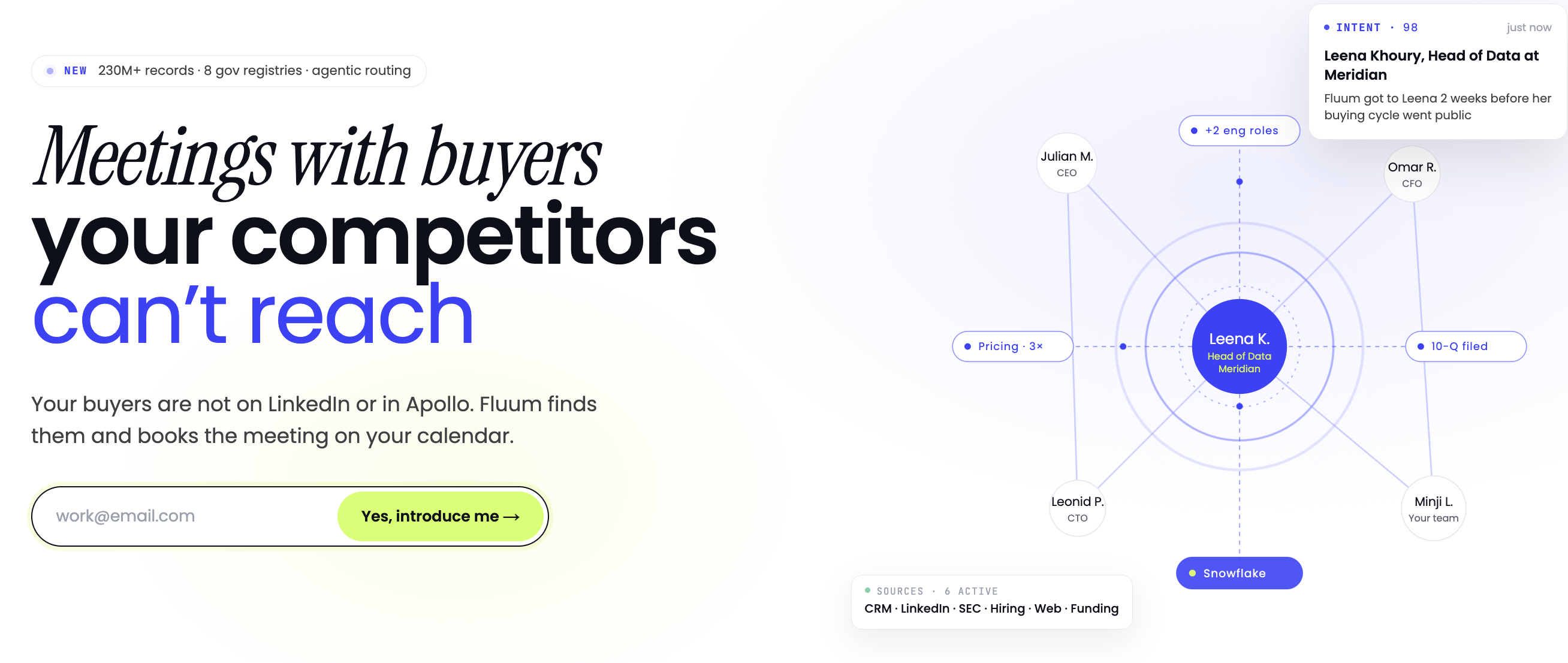
The category that closes this gap is purpose-built AI introduction platforms. Tools that surface mutual interest signals before either party reaches out, confirming both sides want the connection before any message is sent, represent the next evolution of opted-in network prospecting. Fluum operates exactly here: its double opt-in introduction system pulls matching signals from 100+ databases, but no introduction fires until both parties have confirmed interest. That’s not a CRM feature or an email compliance checkbox, it’s consent built into the matching logic itself.
“People don’t buy from companies — they buy from people they trust. The fastest path to trust is a warm, consensual introduction, not a cold pitch.” — Bob Burg, co-author of The Go-Giver
If you’re a senior leader or C-suite executive looking to meet specific decision-makers in finance, technology, or manufacturing, talk to Aurora at Fluum and tell her who you’re trying to reach next. She’ll make sure you only see what’s relevant.
Frequently Asked Questions
What response rate should I realistically expect from opted-in network prospecting compared to cold email?
Opted-in network prospecting delivers 40–50% reply rates on average, compared to under 2% for cold email sequences. The gap exists because both parties have already signaled interest before the first message is sent. A cold email fights for attention; a double opt-in introduction arrives with context and consent already established. That structural difference, not better copywriting or subject lines, drives the lift.
Does opted-in network prospecting work for industries with long sales cycles, like enterprise software or manufacturing?
It works especially well in long-cycle industries, where trust is the primary gating factor at every stage. In manufacturing and enterprise software, a buyer who has opted in to a conversation is already past the awareness hurdle that kills most cold outreach. Fluum’s network focuses specifically on decision-makers in finance, technology, and manufacturing, industries where relationship credibility shortens the time from first conversation to qualified opportunity.
How is opted-in network prospecting different from a referral program?
A referral program relies on existing customers to vouch for you; opted-in network prospecting surfaces net-new prospects who have no prior relationship with your business. Referrals are reactive and dependent on customer goodwill. Opted-in prospecting is a proactive, repeatable system, you define the profile, the matching runs continuously, and introductions are facilitated at scale without waiting for a satisfied customer to remember your name.
What’s the minimum viable opted-in prospect list size to run a meaningful campaign?
A list of 50–75 double opt-in contacts is enough to generate statistically meaningful signal on conversion rates and messaging fit. Below that threshold, results are too variable to distinguish a positioning problem from a targeting problem. The priority is match quality over volume, 60 well-matched, mutually interested prospects will outperform 600 cold contacts pulled from a generic database.
How do I get started with opted-in network prospecting if I have no existing warm network?
Start by identifying two or three communities, events, or platforms where your ideal buyers are already active and self-selecting. Register for industry events that include opt-in contact sharing, contribute to relevant online communities, or use a platform like Fluum that facilitates double opt-in introductions at scale. Even a small seed list of 20–30 genuinely interested contacts built this way will outperform hundreds of cold-sourced records, because consent is established from the first touchpoint.
Conclusion
Opted-in network prospecting is not a refinement of cold outreach, it replaces the underlying mechanic entirely. The three takeaways that matter most: mutual consent before first contact is the single biggest driver of reply rate improvement; signal quality from verified databases determines match accuracy more than any messaging tactic; and the double opt-in structure protects your sender reputation and your team’s time simultaneously.
The concrete next step: map your current ICP to the three highest-value industries in your pipeline, finance, technology, or manufacturing, and define the specific buying title and trigger event you want to reach. That profile is the input Fluum’s AI matching requires to surface verified, consented decision-makers from 100+ databases. If you’re a senior leader or C-suite executive, reach out to Aurora directly and tell her who you’re looking to meet next, she’ll make sure you only see what’s relevant.
Recommended Articles
Explore more from our content library: