

Did you know that professionals with high emotional intelligence at work are nearly four times more likely to report strong workplace relationships? Today, emotional intelligence shapes how people handle conflict, navigate stress, and communicate under pressure. For freelancers and solopreneurs, mastering emotional cues and responses leads to smoother client interactions and a more resilient business. Understanding emotional intelligence helps professionals build trust, manage emotions, and adapt to changing work environments.
Table of Contents
- Defining Emotional Intelligence In The Workplace
- Core Components And Competencies Explained
- Benefits Of Emotional Intelligence For Solopreneurs
- Common Workplace Challenges And Misconceptions
- Practical Strategies For Developing Ei Skills
Key Takeaways
| Point | Details |
|---|---|
| Emotional Intelligence is Essential | EI enhances communication, conflict resolution, and relationship management in the workplace. |
| Core Competencies | Self-awareness, self-regulation, social awareness, and social skills are the foundations of emotional intelligence. |
| Benefits for Solopreneurs | High EI leads to improved stress management, client relationships, and professional growth. |
| Development Strategies | Practicing mindfulness, active listening, and seeking feedback are effective ways to enhance emotional intelligence. |
Defining Emotional Intelligence in the Workplace
Emotional intelligence (EI), and especially emotional intelligence at work, represents a transformative skill set that empowers professionals to navigate workplace interactions with precision and empathy. According to Harvard News, emotional intelligence is the ability to recognize, understand, and manage both personal and interpersonal emotions effectively.
At its core, EI encompasses four critical components: self-awareness, self-regulation, empathy, and social skills. These elements work together to help professionals communicate more effectively, resolve conflicts strategically, and build stronger professional relationships. Harvard Health emphasizes that emotional intelligence enables individuals to identify and regulate emotions, ultimately improving behavior and relationship management in professional environments.
For solopreneurs and freelancers, emotional intelligence becomes an even more crucial skill. When working independently, the ability to read client emotions, understand unspoken expectations, and manage your own emotional responses can significantly impact business success. This means developing keen observation skills, practicing active listening, and maintaining professional composure even during challenging interactions.
Key aspects of emotional intelligence in professional settings include:
- Recognizing and managing personal emotional triggers
- Responding thoughtfully instead of reacting impulsively
- Understanding subtle communication nuances
- Building trust through genuine empathy
- Adapting communication styles to different personality types
By cultivating emotional intelligence, independent professionals can transform potential conflicts into opportunities for deeper understanding and collaboration.
Core Components and Competencies Explained
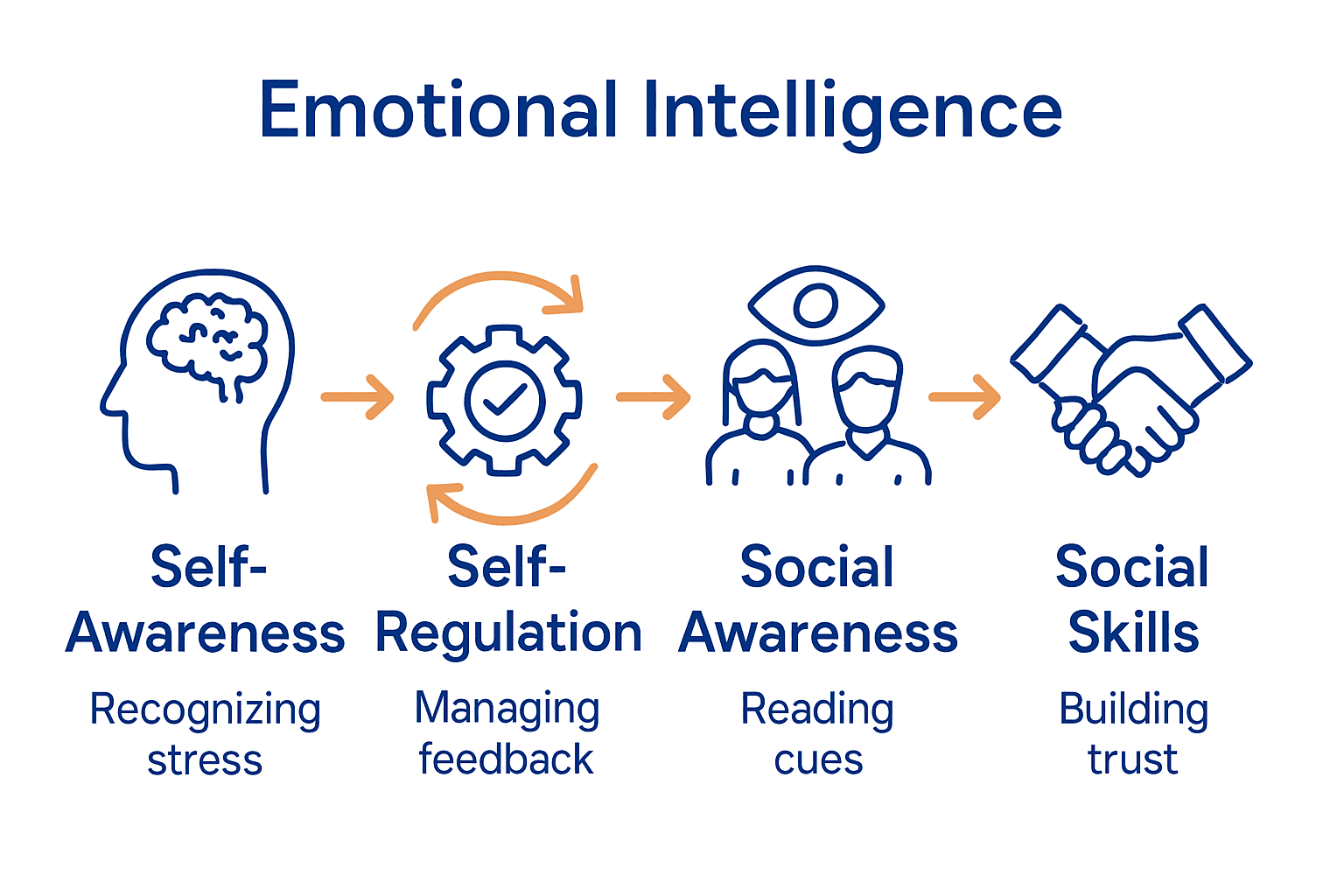
Understanding the core components of emotional intelligence is essential for professional growth and interpersonal success. According to Harvard News, emotional intelligence comprises four key competencies: self-awareness, self-regulation, social awareness, and social skills.
Self-awareness represents the foundational skill of recognizing and understanding your own emotional states, strengths, weaknesses, and potential triggers. This involves deep introspection and honest self-evaluation. For solopreneurs, this means understanding how your emotions impact decision making, client interactions, and overall business performance. When you can accurately identify your emotional patterns, you become more intentional in your professional behavior.
Self-regulation follows self-awareness, focusing on managing and controlling emotional responses. Harvard Health emphasizes the importance of constructively handling emotions instead of being controlled by them. In practice, this means maintaining composure during stressful client negotiations, responding thoughtfully to criticism, and preventing temporary emotional reactions from derailing professional relationships.
The remaining two competencies involve external interactions. Social awareness centers on empathy – the ability to read and understand others’ emotional landscapes. This skill allows professionals to pick up on unspoken client needs, recognize underlying communication dynamics, and adapt accordingly. Social skills complement social awareness by enabling effective relationship building, communication, and collaborative problem solving.
Key development strategies for each competency include:
- Practicing mindfulness meditation for enhanced self-awareness
- Keeping an emotion journal to track emotional triggers
- Developing active listening techniques
- Seeking constructive feedback from peers and clients
- Participating in communication skills workshops
By systematically developing these four interconnected competencies, independent professionals can transform their emotional intelligence from a theoretical concept into a powerful professional asset.
Here’s a summary of the four core emotional intelligence competencies for professionals:
| Competency | Focus Area | Development Strategies |
|---|---|---|
| Self-awareness | Recognizing personal emotions | Mindfulness meditation Emotion journal |
| Self-regulation | Managing emotional responses | Stress management Thoughtful communication |
| Social awareness | Understanding others’ emotions | Active listening Seeking feedback |
| Social skills | Building relationships | Communication workshops Empathetic listening |
Benefits of Emotional Intelligence for Solopreneurs
As independent professionals navigating complex business landscapes, solopreneurs gain tremendous advantages through emotional intelligence. According to Yale Medicine, emotional intelligence fundamentally enhances self-motivation, resilience, and adaptability – critical skills for professionals managing diverse responsibilities independently.
Stress Management emerges as a primary benefit for solopreneurs. Coursera highlights that high emotional intelligence directly contributes to more effective decision-making and improved client relationship management. When facing unpredictable business challenges, emotionally intelligent professionals can maintain composure, assess situations objectively, and respond strategically rather than reactively.
Client relationship dynamics represent another critical area where emotional intelligence delivers significant advantages. By understanding unspoken communication signals, anticipating client needs, and adapting communication styles, solopreneurs can build deeper, more trusting professional connections. This nuanced approach transforms transactional interactions into long-term collaborative partnerships, ultimately driving business growth and client retention.
Key benefits of emotional intelligence for solopreneurs include:
- Enhanced conflict resolution capabilities
- More intuitive client communication
- Improved personal and professional self-regulation
- Greater resilience during business uncertainties
- More authentic professional networking
By intentionally developing emotional intelligence, solopreneurs can differentiate themselves in competitive markets, creating meaningful professional experiences that transcend traditional business interactions.
Common Workplace Challenges and Misconceptions
Emotional intelligence navigates complex professional terrains fraught with misunderstandings and communication barriers. Harvard News dispels a critical misconception that emotional intelligence is an immutable trait – research confirms it can be systematically developed and enhanced over time.
Solopreneurs frequently encounter unique workplace challenges stemming from emotional intelligence gaps. Harvard Health emphasizes that low emotional intelligence often manifests through persistent workplace issues like miscommunication, unresolved conflicts, and ineffective relationship management. These challenges can be particularly pronounced for independent professionals who lack traditional team support structures.
One prevalent misconception is that emotional intelligence equates to constant positivity or excessive empathy. In reality, it represents a nuanced ability to recognize, understand, and strategically navigate emotional landscapes. For solopreneurs, this means developing the skill to read client signals, manage personal emotional reactions, and create professional boundaries that support productive relationships without becoming emotionally overwhelmed.
Common workplace emotional intelligence challenges include:
- Misinterpreting client communication signals
- Struggling with constructive feedback
- Allowing personal emotions to drive business decisions
- Difficulty maintaining professional detachment
- Ineffective conflict resolution strategies
By recognizing these challenges as opportunities for growth, solopreneurs can transform potential obstacles into powerful professional development pathways.
Practical Strategies for Developing EI Skills
Developing emotional intelligence is a deliberate, structured process that requires consistent practice and self-reflection. Harvard Health recommends several key strategies to enhance emotional intelligence, including practicing mindfulness, engaging in active listening, and proactively seeking constructive feedback from peers and clients.
Mindfulness Techniques play a crucial role in emotional intelligence development. By cultivating present-moment awareness, solopreneurs can better recognize emotional triggers and respond more intentionally. Coursera emphasizes the importance of self-reflection and stress management techniques as foundational elements for emotional skill building. This might involve daily meditation, journaling, or structured breathing exercises that help professionals create emotional distance and clarity.
Practical skill development extends beyond individual practices to include interpersonal strategies. Solopreneurs can enhance emotional intelligence by deliberately practicing active listening during client interactions, consciously managing communication patterns, and developing the ability to read subtle emotional nuances. This involves paying attention to non-verbal cues, asking clarifying questions, and demonstrating genuine curiosity about client perspectives.
Strategic approaches for developing emotional intelligence include:
- Implementing a daily meditation or mindfulness practice
- Keeping a detailed emotion and reaction journal
- Requesting structured feedback from clients and peers
- Participating in communication skills workshops
- Practicing empathetic listening techniques
By approaching emotional intelligence as a learnable skill set, solopreneurs can systematically enhance their professional effectiveness and interpersonal capabilities.
Boost Your Emotional Intelligence with Smarter Automation and Insights
Many solopreneurs face challenges like managing stress, interpreting client emotions, and maintaining professional composure—key aspects of emotional intelligence highlighted in the article. These pain points can make business growth feel overwhelming when you also have to handle sales, communication, and scheduling. Imagine having an intelligent partner that helps you navigate these emotional landscapes by automating routine tasks and giving you personalized insights to improve client relationships and decision-making.

Take control of your professional emotions and business growth with Fluum’s AI co-founder. Fluum learns from your unique style and goals to manage outreach, client communication, and payments, freeing you to focus on empathetic connections and strategic thinking. Start scaling your business with confidence and clarity today by exploring our flexible plans at Fluum Pricing. Don’t wait to turn emotional intelligence into your greatest competitive advantage.
Frequently Asked Questions
What is emotional intelligence in the workplace?
Emotional intelligence (EI) is the ability to recognize, understand, and manage both personal and interpersonal emotions effectively. It consists of four core components: self-awareness, self-regulation, empathy, and social skills, which enhance communication, conflict resolution, and relationship building in professional settings.
How can emotional intelligence benefit solopreneurs?
For solopreneurs, emotional intelligence is vital as it enhances stress management, improves intuition in client communication, and helps build authentic professional connections. By understanding and managing emotions, solopreneurs can create collaborative partnerships and navigate business uncertainties more effectively.
What are the core competencies of emotional intelligence?
The core competencies of emotional intelligence include: self-awareness, which involves recognizing personal emotions; self-regulation, which focuses on managing emotional responses; social awareness, which centers on understanding others’ emotions; and social skills, which are essential for building relationships and effective communication.
How can I develop my emotional intelligence skills?
Developing emotional intelligence involves practicing mindfulness, keeping an emotion journal, engaging in active listening, seeking constructive feedback, and participating in communication skills workshops. These strategies help enhance self-awareness, emotional regulation, social awareness, and social skills.
Recommended
- Building Professional Relationships: Complete Guide
- Master Dealing With Difficult Clients: Effective Strategies
- Fluum | Effective Stress Management Techniques for Busy Professionals
- Fluum | How to Onboard Clients Effectively for Lasting Success
- Fluum | Master Managing Multiple Projects for Success
- Fluum | Build Your Brand with a Branding Builder in 2025
- Fluum | 7 Customer Retention Examples to Boost Your Business