

Knowing business objectives in a business plan is fundamental. Nearly 90 percent of solopreneurs fail to meet their business goals because they set objectives that are too broad or unrealistic. Clear objectives are not just motivational—they shape every decision and drive results. Whether you are building a consultancy or launching a creative service, understanding how to define and align your business objectives will help you move from wishful thinking to steady growth and tangible progress.
Table of Contents
- Defining Business Objectives In A Plan
- Key Types Of Business Objectives Explained
- Aligning Objectives With Business Strategy
- Setting SMART And Measurable Objectives
- Common Mistakes When Defining Objectives
Key Takeaways
| Point | Details |
|---|---|
| SMART Framework for Objectives | Business objectives should follow the SMART criteria: Specific, Measurable, Action-oriented, Realistic, and Timely to ensure clarity and trackability. |
| Types of Business Objectives | Key categories include Financial, Growth, and Performance objectives, each necessitating tailored metrics and timelines for effective tracking. |
| Strategic Alignment | Aligning business objectives with the overall strategy enables coherent direction, ensuring that short-term goals support long-term objectives. |
| Common Pitfalls | Avoid vague goals, unrealistic expectations, lack of prioritization, and neglecting adaptability to enhance strategic planning and performance measurement. |
Defining Business Objectives in a Plan
Business objectives are the strategic compass that guides solopreneurs and freelancers toward their professional destinations. According to mdsudaipur.org, objectives represent the “desired future positions that management aims to reach, serving as the end points of planning and guiding all managerial activities.”
For independent professionals, business objectives translate complex aspirations into measurable targets. gh-f.org emphasizes that these objectives focus on practical metrics directly connected to business performance, specifically highlighting key areas such as:
- Revenue generation
- Customer acquisition
- Product or service development
- Performance benchmarks
Successful business objectives share several critical characteristics. They must be specific, measurable, achievable, relevant, and time-bound (SMART). This framework helps solopreneurs transform abstract goals into concrete action plans. Rather than vague statements like “grow my business,” a SMART objective might read “Increase monthly consulting revenue by 25% within the next six months by adding two new corporate clients.”
Creating robust business objectives requires honest self-assessment and strategic thinking. Solopreneurs should analyze their current capabilities, market opportunities, and potential constraints. This introspective process ensures that objectives are not just aspirational but genuinely executable within their unique professional ecosystem.

Key Types of Business Objectives Explained
Business objectives serve as the strategic roadmap for solopreneurs and independent professionals, providing clear direction and measurable targets. According to cio-wiki.org, these objectives are “specific, measurable, and tactical goals that a company wants to achieve, often outlined in a business plan to guide strategic planning.”
For solopreneurs, business objectives can be categorized into several critical types:
- Financial Objectives
- Revenue generation targets
- Profit margin improvements
- Cost reduction strategies
- Investment and capital allocation
- Growth Objectives
- Client base expansion
- Service portfolio diversification
- Market penetration
- Professional skill development
- Performance Objectives
- Client satisfaction rates
- Project completion efficiency
- Quality of service metrics
- Productivity benchmarks
These objective categories are not isolated islands but interconnected strategies that work together to propel a solopreneur’s business forward. Each type requires specific metrics, realistic timelines, and adaptable approaches that reflect the dynamic nature of independent professional work.
Successful solopreneurs recognize that business objectives are living frameworks. They demand continuous evaluation, honest self-assessment, and willingness to pivot when circumstances change. By maintaining flexibility while staying committed to core goals, independent professionals can transform these objectives from theoretical constructs into powerful engines of professional growth and success.
Aligning Objectives With Business Strategy
For solopreneurs and independent professionals, aligning business objectives with an overarching strategy is not just a planning exercise but a critical survival mechanism. According to evbn.org, a comprehensive strategic plan involves “defining mission, vision, and core values, setting business objectives, and conducting SWOT analysis to align objectives with overall business strategy.”
Successful alignment requires a holistic approach that integrates multiple strategic components:
Strategic Alignment Checklist
- Mission Synchronization: Ensure objectives directly support core business purpose
- Vision Mapping: Connect short-term goals to long-term professional aspirations
- Value Integration: Align objectives with personal and professional core values
- Resource Optimization: Match objectives with available skills and capabilities
The alignment process demands rigorous self-assessment and honest evaluation. Solopreneurs must critically examine their current capabilities, market positioning, and potential growth trajectories. This means not just setting objectives, but understanding how each goal interconnects and propels overall business momentum.
Strategic alignment is dynamic, not static. Successful independent professionals treat their business strategy as a living document, regularly reassessing and recalibrating objectives based on market feedback, personal growth, and emerging opportunities. The goal is not rigid adherence to a plan, but creating a flexible framework that can adapt while maintaining a clear strategic direction.
Setting SMART and Measurable Objectives
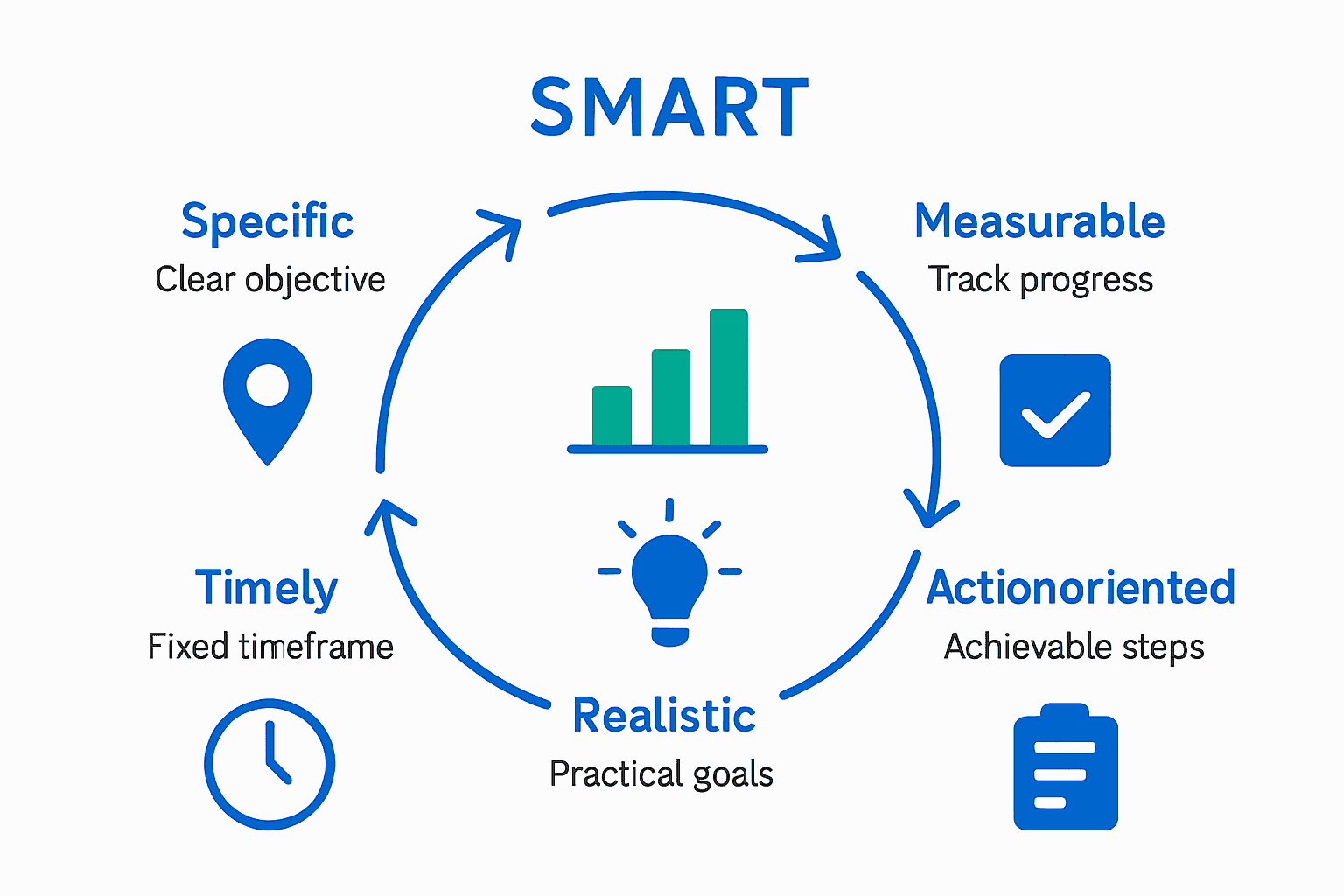
For solopreneurs and independent professionals, creating effective business objectives requires a structured approach. extension.purdue.edu defines a powerful framework known as SMART objectives, which stands for Specific, Measurable, Action-oriented, Realistic, and Timely, designed to guide business planning and performance evaluation.
Breaking down the SMART Objective Framework:
- Specific
- Clearly define what you want to accomplish
- Avoid vague statements
- Provide precise details about the objective
- Measurable
- Establish concrete criteria for measuring progress
- Include quantifiable indicators
- Determine how you will track achievement
- Action-oriented
- Create objectives that prompt active engagement
- Focus on tasks you can directly influence
- Design goals that require proactive steps
- Realistic
- Ensure objectives are attainable given your current resources
- Align goals with your skills and capacity
- Challenge yourself without setting impossible expectations
- Timely
- Set clear deadlines and time-bound milestones
- Create a sense of urgency
- Establish specific timeframes for goal completion
As sbdc.uh.edu emphasizes, applying the SMART framework ensures that business goals are clearly defined, providing direction and facilitating the achievement of desired outcomes. This approach transforms abstract aspirations into actionable, trackable strategies that empower solopreneurs to make consistent progress.
The true power of SMART objectives lies in their ability to convert broad ambitions into structured, manageable actions. By implementing this framework, independent professionals can create a roadmap that not only guides their business growth but also provides motivation, clarity, and a structured approach to achieving professional success.
Common Mistakes When Defining Objectives
Solopreneurs and independent professionals often stumble when crafting business objectives, risking their strategic planning effectiveness. sites.ext.vt.edu highlights that “common mistakes include setting unrealistic or vague objectives, which can hinder effective planning and performance measurement.”
Top Objective-Setting Pitfalls:
- Vague Goal Formulation
- Using ambiguous language
- Lacking specific, measurable outcomes
- Creating objectives without clear parameters
- Unrealistic Expectations
- Overestimating personal capabilities
- Ignoring current resource limitations
- Setting goals disconnected from actual capacity
- Lack of Prioritization
- Attempting too many objectives simultaneously
- Failing to rank objectives by importance
- Spreading energy too thin across multiple goals
- Neglecting Adaptability
- Creating rigid, inflexible objectives
- Ignoring potential market changes
- Resisting necessary strategic pivots
According to ladmc.org, “overreaching in goal-setting without considering current capabilities can lead to unattainable objectives,” emphasizing the critical need for realistic and prioritized planning.
Successful solopreneurs understand that objective-setting is an iterative process. By recognizing these common mistakes, independent professionals can develop more strategic, achievable goals that genuinely propel their business forward. The key is maintaining a balance between ambition and pragmatism, continuously reassessing and recalibrating objectives based on real-world performance and evolving market dynamics.
Turn Your Business Objectives into Action with Fluum
Crafting clear, measurable business objectives can feel overwhelming especially when you are juggling multiple roles as a solopreneur or freelancer. This guide highlights the importance of SMART and aligned goals but achieving them requires more than planning. Common challenges like vague objectives, unrealistic expectations, and lack of ongoing tracking can stall your growth and drain your focus.
Fluum is designed to help you overcome these pain points by acting as your AI co-founder. Our platform automates essential daily tasks such as client outreach, communication, and scheduling so you can truly concentrate on hitting your key revenue and growth targets. With intelligent, adaptive insights, Fluum keeps your objectives measurable and your strategy flexible in changing markets.

Ready to go beyond just setting goals and start achieving them with confidence and clarity? Explore how Fluum’s AI-powered system can transform your business planning into real success. Don’t let ambiguity or overwhelm hold you back. Get started today and see how simple scaling your freelance or solopreneur business can be with the right partner by your side.
Frequently Asked Questions
What are business objectives in a business plan?
Business objectives are specific, measurable goals that guide solopreneurs and freelancers toward achieving their professional targets. They serve as a strategic framework for decision-making and performance evaluation.
How can I set SMART objectives for my business?
To set SMART objectives, ensure they are Specific, Measurable, Action-oriented, Realistic, and Timely. This framework helps convert vague aspirations into clear, actionable goals that provide direction and facilitate progress.
What are the key types of business objectives for solopreneurs?
Key types of business objectives include Financial Objectives (e.g., revenue targets), Growth Objectives (e.g., client base expansion), and Performance Objectives (e.g., client satisfaction metrics). Each category addresses different aspects of business performance.
What common mistakes should I avoid when defining business objectives?
Common mistakes include setting vague or unrealistic goals, failing to prioritize objectives, and creating inflexible plans. Recognizing these pitfalls can help solopreneurs develop more effective, achievable objectives.
Recommended
- 7 Essential Business Goals Objectives For Solopreneurs
- Complete Guide To Business Decision-Making Success
- Fluum | Effective Stress Management Techniques for Busy Professionals
- Fluum | How to Onboard Clients Effectively for Lasting Success
- Fluum | Master Managing Multiple Projects for Success
- Fluum | Build Your Brand with a Branding Builder in 2025
- Fluum | 7 Customer Retention Examples to Boost Your Business