

Knowing the importance of professional development is fundamental. Over 80 percent of small business owners say targeted professional development helps them achieve faster growth. Knowing exactly where your strengths lie and identifying the right areas for improvement gives you a real edge in today’s competitive market. By learning how to assess your skills, set focused goals, and put new knowledge into practice, you can turn challenges into real advantages that fuel your success.
Table of Contents
- Step 1: Identify Key Development Areas For Your Business
- Step 2: Set Clear Professional Development Goals
- Step 3: Leverage Digital Tools And Ai For Learning
- Step 4: Apply New Skills To Real Projects
- Step 5: Track Progress And Validate Growth
Quick Summary
| Key Point | Explanation |
|---|---|
| 1. Identify Key Development Areas | Conduct a self-assessment to evaluate strengths and skill gaps, focusing on strategic growth opportunities. |
| 2. Set SMART Professional Goals | Develop specific, measurable, achievable, relevant, and time-bound goals to provide guidance for your growth journey. |
| 3. Leverage Digital Tools for Learning | Utilize online platforms and AI resources for personalized, efficient learning experiences tailored to your needs. |
| 4. Apply Skills in Real Projects | Integrate new skills into actual work scenarios to enhance practical knowledge and professional growth. |
| 5. Track Progress Systematically | Use structured methods to measure and validate your skill development, ensuring continuous improvement and reflection. |
Step 1: Identify Key Development Areas for Your Business
Successfully getting to know the importance of professional development starts with strategic self assessment and pinpointing precise growth opportunities for your business. By systematically evaluating your current capabilities and future potential, you can create targeted improvement strategies that accelerate your professional trajectory.
According to Wikipedia, opportunity management represents a collaborative approach for business development that focuses on generating ideas and recognizing strategic opportunities. This means you need to conduct a thorough internal audit of your skills, services, and market positioning. Start by mapping out your existing strengths and identifying skill gaps that might be limiting your business potential. Consider areas such as technical expertise, client communication, strategic planning, and operational efficiency.
To effectively identify development areas, create a comprehensive self assessment framework. Break down your evaluation into specific categories:
- Technical Skills: What specialized knowledge do you currently possess?
- Professional Capabilities: Where can you enhance your service delivery?
- Business Strategy: What operational processes need refinement?
- Client Interaction: How can you improve communication and relationship management?
The goal is not just identifying weaknesses but transforming them into strategic growth opportunities.
Theseus Research emphasizes that successful development processes require meticulous documentation and continuous improvement. Track your progress, set measurable goals, and remain committed to your professional evolution.
As you move forward, remember that professional development is an ongoing journey. The most successful solopreneurs view personal growth as a dynamic, iterative process that requires consistent reflection and proactive learning.
Step 2: Set Clear Professional Development Goals
Establishing precise professional development goals transforms your vague aspirations into actionable strategies for meaningful growth. Your goals will serve as a roadmap guiding your business evolution and personal skill enhancement.
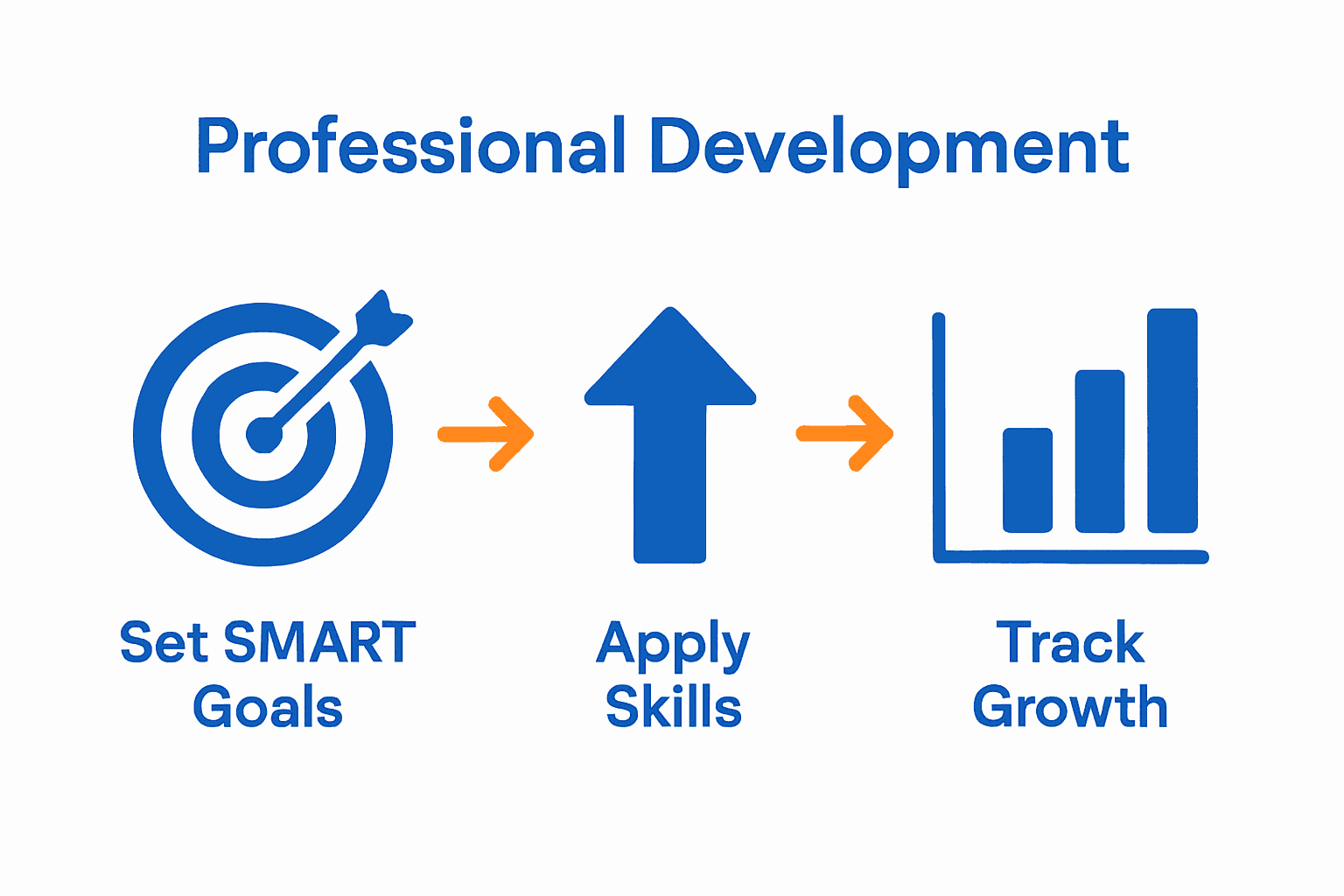
According to Coursera, creating SMART goals is fundamental to clarifying career objectives and identifying tangible steps forward. SMART goals are Specific, Measurable, Achievable, Relevant, and Time-bound. This framework helps you design goals that are not just wishful thinking but realistic milestones you can systematically pursue.
Start by conducting a comprehensive skills audit and developing goals across multiple dimensions:
- Technical Competence: Define specific skills you want to master
- Business Strategy: Outline clear revenue or client acquisition targets
- Professional Network: Set concrete networking and collaboration objectives
- Personal Branding: Create measurable milestones for visibility and reputation building
Research from Columbia University emphasizes that an individual development plan with self-defined goals significantly increases your likelihood of success. When crafting your goals, be ruthlessly specific. Instead of saying “I want to improve my marketing,” specify “I will complete a digital marketing certification and gain three new clients through targeted LinkedIn outreach within six months.”
Remember that goal setting is not a one-time event but an ongoing process of refinement and adaptation. Regularly review and adjust your objectives as your business landscape evolves, ensuring your professional development remains dynamic and responsive to emerging opportunities.
Step 3: Leverage Digital Tools and AI for Learning
Professional development in the digital age requires strategic integration of technological resources to accelerate your learning and skill acquisition. Understanding how to effectively utilize digital tools and AI can transform your approach to personal and professional growth.
Wikipedia highlights that outcome-based education now focuses on achieving specific goals through innovative digital integration, allowing for personalized learning experiences tailored to individual needs. This means you can leverage AI-powered platforms and online resources to create a customized learning journey that aligns precisely with your professional development objectives.
Consider implementing these digital learning strategies:
- Online Learning Platforms: Explore AI-curated courses matching your skill gaps
- Adaptive Learning Tools: Use platforms that adjust content based on your progress
- Microlearning Applications: Engage with bite-sized learning modules fitting busy schedules
- Interactive Skill Assessment Tools: Track your competency development in real time
Understanding Digital Literacy becomes crucial in this technological landscape. Approach digital learning with intentionality choosing resources that provide structured, measurable outcomes. AI-driven platforms can analyze your learning patterns, recommend targeted content, and help you optimize your skill development process.
Remember that technology is a tool not a replacement for your commitment. Combine digital resources with consistent practice and reflection to transform information into genuine professional capabilities. Your ability to intelligently navigate and integrate these tools will distinguish you in an increasingly competitive professional environment.
Step 4: Apply New Skills to Real Projects
Transforming theoretical knowledge into practical application is the critical bridge between learning and professional mastery. Your ability to implement new skills in real world scenarios determines the true value of your professional development efforts.
Wikipedia emphasizes that effective learning requires demonstrating competencies in practical settings. This means intentionally seeking opportunities to integrate your newly acquired skills into actual work projects. Start by identifying specific projects where you can immediately apply your learning, creating a direct connection between education and professional performance.
Consider these strategic approaches to skill application:
- Client Projects: Volunteer specialized skills to existing clients
- Personal Initiatives: Design mock projects mimicking real world scenarios
- Collaborative Efforts: Partner with peers to practice new techniques
- Incremental Implementation: Gradually introduce new skills into current workflows
According to the Life-span model of motivation, personal goals are deeply influenced by social environments. By actively applying skills in tangible contexts, you create momentum that drives further learning and professional growth. Master Managing Multiple Projects can help you effectively balance skill integration with ongoing work responsibilities.
Remember that skill application is not about perfection but consistent practice. Embrace imperfect implementations as valuable learning experiences. Each project becomes an opportunity to refine your capabilities and build confidence in your expanding professional toolkit.
Step 5: Track Progress and Validate Growth
Measuring your professional development journey requires a systematic approach that transforms abstract learning into concrete evidence of growth. Understanding how to effectively track and validate your skill progression becomes crucial for sustained professional advancement.
Wikipedia highlights the importance of using SMART criteria for setting objectives that are Specific, Measurable, Achievable, Relevant, and Time-bound. This framework provides a structured method for transforming your professional development goals from vague aspirations into trackable milestones that demonstrate tangible progress.
Implement these strategic tracking methods:
- Performance Metrics: Establish quantifiable indicators of skill improvement
- Portfolio Documentation: Collect evidence of completed projects and acquired skills
- Skill Assessment Tools: Regularly evaluate competency levels
- Peer and Client Feedback: Gather external perspectives on your professional growth
Drawing inspiration from the Cambridge English Teaching Framework, consider creating a comprehensive self-assessment process that categorizes your development across multiple dimensions. Business Growth Analytics for Wellness Practitioners can provide additional insights into tracking your professional evolution.
Remember that tracking progress is not about achieving perfection but understanding your growth trajectory. Embrace both successes and areas for improvement as valuable data points in your continuous professional development journey. Your commitment to honest self reflection and systematic tracking will ultimately fuel your long term professional success.
Accelerate Your Professional Growth with AI-Powered Support
Identifying key development areas and setting SMART goals are essential steps toward professional success. If you feel overwhelmed by tracking your progress or applying new skills amid busy client work, you are not alone. Many solopreneurs struggle with balancing growth efforts and daily business demands. This is where Fluum can make a real difference. Our AI-driven platform acts as your strategic growth partner by automating routine tasks – from client outreach to payment management – so you can focus on mastering new skills and scaling your business.
Unlock your potential with tailored insights and continuous performance tracking that adapts to your unique goals. Don’t let operational overhead stall your professional development journey. Take control today by exploring Fluum’s pricing plans and discover how an AI co-founder helps transform your aspirations into measurable growth. Start making smarter decisions and applying your new skills more effectively. Visit Fluum now and experience the future of solopreneurship.
Frequently Asked Questions
What are the key areas I should assess for professional development?
Start by evaluating your technical skills, professional capabilities, business strategy, and client interaction. Identify the specific gaps in these areas to create targeted strategies for improvement.
How do I set measurable professional development goals?
Use the SMART criteria to outline your goals: make them Specific, Measurable, Achievable, Relevant, and Time-bound. For example, aim to complete a digital marketing certification within six months and gain three new clients through targeted outreach.
What digital tools can I use for professional development?
Leverage online learning platforms, adaptive learning tools, and microlearning applications to enhance your skills. Explore platforms that curate courses based on your needs and track your progress in real time.
How can I apply my new skills to real-world projects?
Seek opportunities within client projects, volunteer for initiatives, or create mock projects to practice your skills. Gradually implement your new skills in ongoing work to build confidence and practical experience.
What methods can I use to track my professional development progress?
Establish performance metrics, maintain a portfolio of completed work, and regularly assess your skills. Collect feedback from peers and clients to gain insights on your development trajectory.
How often should I review my professional development goals?
Regularly review your goals every few months and adjust them as your business evolves. This ensures your professional development remains relevant and responsive to new opportunities.
Recommended
- Building Professional Relationships: Complete Guide
- How To Stay Motivated: Boost Your Productivity Today
- Understanding The Importance Of Digital Literacy Today
- Fluum | Effective Stress Management Techniques for Busy Professionals
- Fluum | How to Onboard Clients Effectively for Lasting Success
- Fluum | Master Managing Multiple Projects for Success
- Fluum | Build Your Brand with a Branding Builder in 2025
- Fluum | 7 Customer Retention Examples to Boost Your Business