

What is personal branding? Most American solopreneurs underestimate just how much their personal brand shapes first impressions. In a crowded digital world, standing out is not about slick advertising but about conveying expertise and authenticity in everything you share. Nearly 80 percent of professionals say a strong personal brand is crucial for new business opportunities. This article helps you master the essentials, letting your unique skills and values shine in today’s competitive marketplace.
Table of Contents
- Defining Personal Branding For Solopreneurs
- Types Of Personal Brands And Approaches
- Core Elements Of An Effective Brand
- Benefits For Solopreneurs And Freelancers
- Common Personal Branding Mistakes To Avoid
Key Takeaways
| Point | Details |
|---|---|
| Personal Branding Importance | Personal branding is crucial for solopreneurs as it helps to create a distinct identity that attracts clients and differentiates them from competitors. |
| Core Elements of Branding | Effective personal brands must encompass authenticity, consistency, a clear value proposition, and demonstrated expertise to resonate with target audiences. |
| Common Mistakes to Avoid | Solopreneurs should avoid inconsistent messaging and oversharing online, as these can significantly undermine their professional credibility. |
| Ongoing Brand Assessment | Regular audits of personal branding efforts are essential for maintaining relevancy and alignment with professional goals. |
Defining Personal Branding for Solopreneurs
Personal branding represents a strategic process of crafting and communicating a distinctive professional identity that sets you apart in a competitive marketplace. For solopreneurs, this means intentionally developing a reputation that reflects your unique skills, values, and professional approach. Personal branding is a strategic process of creating, positioning, and maintaining a positive public perception that goes beyond traditional marketing techniques.
At its core, personal branding involves understanding your unique value proposition and consistently presenting it across multiple professional channels. This isn’t about creating a fictional persona, but authentically showcasing your professional strengths, expertise, and personality. Solopreneurs can leverage AI-driven strategies to transform creative ideas into successful solo businesses, using personal branding as a powerful differentiation tool.
Successful personal branding requires thoughtful positioning that highlights your specialized skills and professional narrative. For independent professionals, this means developing a clear, compelling story that demonstrates your expertise, communicates your professional values, and resonates with your target audience. Your personal brand becomes a powerful signal that helps potential clients understand exactly what makes you unique and why they should choose you over competitors.
Pro Tip: Personal Brand Audit: Conduct a quarterly review of your online presence, comparing your current professional profiles against your intended brand message to ensure consistent and authentic representation.
Types of Personal Brands and Approaches
Personal branding has evolved into a nuanced landscape with several distinct approaches that solopreneurs can strategically leverage. One prominent model is the Lifestyle Brand approach, which seeks to embody values, aspirations, and interests beyond mere product marketing. This strategy goes deeper than traditional self-promotion, focusing on creating a holistic narrative that connects your professional identity with broader cultural or personal values.
Another sophisticated approach is the Symbol-Intensive Brand, which emphasizes personal branding as a method of identity expression. These brands are adopted not just for functional benefits, but for the strong symbolism they transmit, allowing professionals to signal their unique positioning and group affiliation. For solopreneurs, this means crafting a brand that communicates more than skills – it represents your professional philosophy, core beliefs, and distinctive perspective.
Solopreneurs can typically develop five core personal brand types: the Expert, the Connector, the Innovator, the Storyteller, and the Visionary. Each type requires a different strategic approach. The Expert demonstrates deep specialized knowledge, the Connector builds relationships and networks, the Innovator showcases cutting-edge thinking, the Storyteller creates compelling narratives, and the Visionary offers transformative perspectives that challenge existing paradigms.
Here’s a quick comparison of the five main personal brand types for solopreneurs:
| Brand Type | Core Focus | Strengths | Potential Challenge |
|---|---|---|---|
| Expert | Specialized knowledge | Authority and credibility | Needs ongoing learning |
| Connector | Relationship building | Wide professional network | May lack strong personal voice |
| Innovator | Creative new approaches | Seen as forward-thinking | Risk of rapid idea shifts |
| Storyteller | Crafting compelling narratives | Emotional audience engagement | Story may overshadow expertise |
| Visionary | Big-picture future outlook | Inspires transformative change | Vision may seem impractical |
Pro Tip: Brand Archetype Identification: Spend time reflecting on your professional strengths and conduct a self-assessment to determine which personal brand type most authentically represents your professional identity and core values.
Core Elements of an Effective Brand
Building an effective personal brand requires mastering several critical elements that transform professional identity into a compelling narrative. Effective personal branding fundamentally involves highlighting one’s knowledge, experience, and skills to establish a credible image, creating a foundation that resonates with your target audience. This means going beyond surface-level self-promotion and developing a strategic representation of your professional capabilities.
Authenticity and consistency emerge as paramount in crafting a powerful personal brand. Professionals must maintain a coherent portrayal across different platforms, ensuring that their online and offline personas align seamlessly. Psychographic segmentation principles suggest understanding the deeper psychological characteristics that drive audience connection, which means diving deeper than demographic data to comprehend the motivations, beliefs, and priorities of your potential clients or collaborators.
The core elements of an effective brand include a clear value proposition, distinctive visual and verbal communication, demonstrable expertise, and a genuine representation of professional values. Successful solopreneurs develop a multidimensional brand that communicates not just what they do, but why they do it, creating emotional resonance with their target audience. This involves strategic storytelling, consistent messaging, and a transparent demonstration of professional capabilities that set them apart in a competitive marketplace.
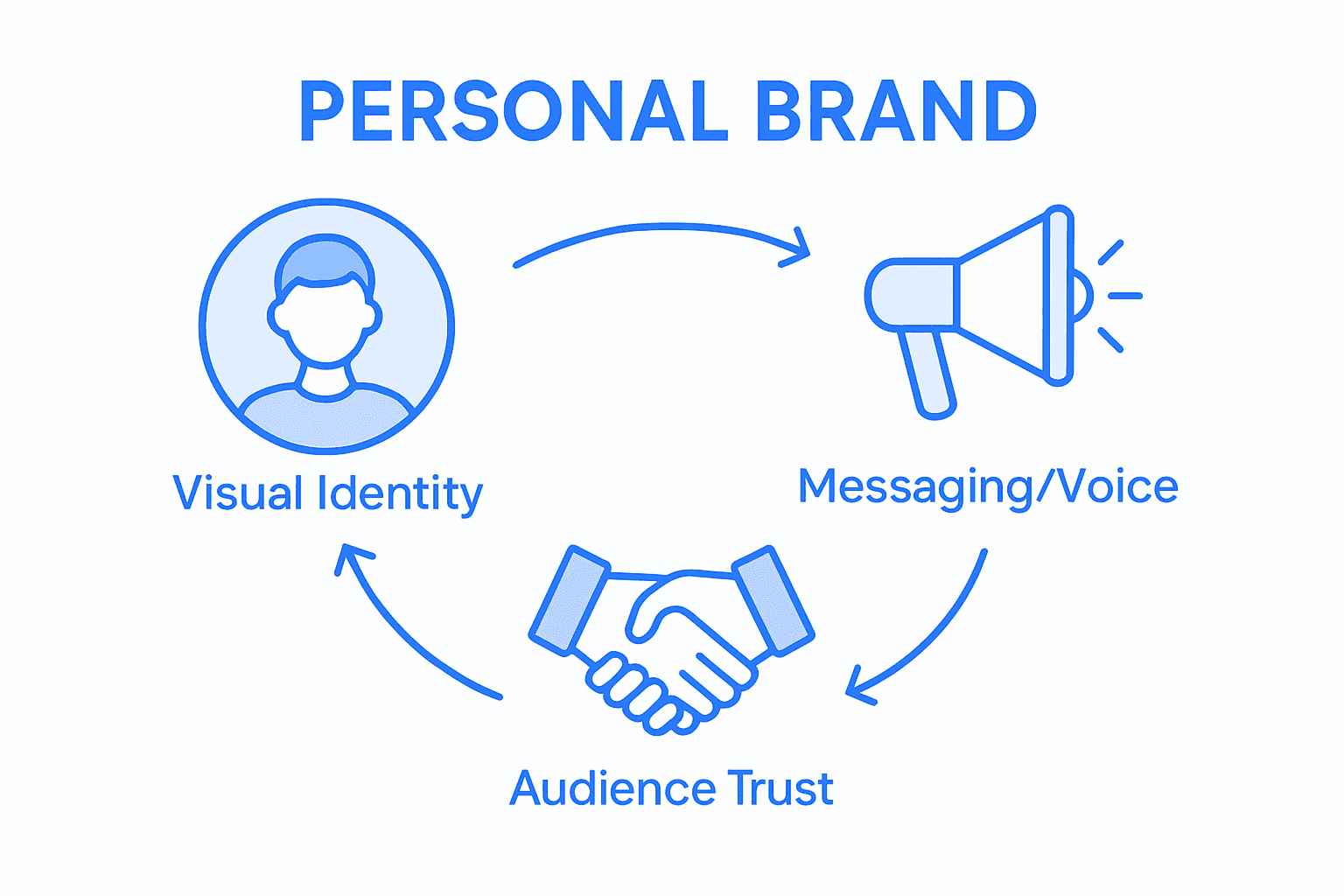
The table below summarizes the core elements that make a personal brand effective and their role:
| Element | Purpose | Impact on Solopreneurs |
|---|---|---|
| Value Proposition | Clarifies unique offering | Attracts ideal clients |
| Visual Identity | Creates memorable recognition | Strengthens brand consistency |
| Verbal Communication | Delivers key messages clearly | Builds trust and authority |
| Authenticity | Ensures genuine representation | Fosters deeper client connections |
| Demonstrated Expertise | Showcases proven capabilities | Establishes credibility and demand |
Pro Tip: Brand Consistency Check: Conduct a monthly audit of your professional profiles, websites, and social media platforms to ensure your messaging, visual identity, and professional narrative remain aligned and authentic.
Benefits for Solopreneurs and Freelancers
Personal branding offers transformative advantages for solopreneurs and freelancers, fundamentally reshaping how they attract opportunities and establish professional credibility. Individual entrepreneurs can turn creative ideas into successful solo businesses by leveraging strategic personal branding techniques, creating a powerful mechanism for professional differentiation and client attraction.
The primary benefits of robust personal branding include enhanced visibility, increased trust, and the ability to command premium pricing for services. By developing a distinctive professional identity, solopreneurs communicate their unique value proposition more effectively than generic marketing approaches. This strategic positioning allows independent professionals to transcend traditional competition, positioning themselves as specialized experts rather than commodity service providers.
Beyond immediate economic advantages, personal branding creates long-term career resilience. Successful solopreneurs use their personal brand as a dynamic asset that evolves with their professional growth, enabling them to pivot between different projects, industries, and client segments. This adaptability becomes particularly critical in an increasingly fluid professional landscape where traditional career paths are rapidly transforming. Personal branding becomes a form of professional capital, generating opportunities through reputation, network effects, and demonstrated expertise.
Pro Tip: Brand Value Tracking: Develop a quarterly self-assessment framework to measure how your personal brand’s perceived value is expanding, tracking metrics like client referral rates, speaking engagement invitations, and unsolicited project opportunities.
Common Personal Branding Mistakes to Avoid
Solopreneurs frequently encounter critical pitfalls that can undermine their professional reputation and personal brand effectiveness. Managing one’s reputation and carefully expressing unique professional attributes is crucial for creating a cohesive, professional narrative, requiring strategic awareness and intentional brand management.
One fundamental mistake is inconsistent messaging across different professional platforms. Many independent professionals inadvertently create fragmented brand identities by presenting contradictory personas on LinkedIn, personal websites, social media, and professional networks. This inconsistency dilutes personal brand credibility and confuses potential clients about a professional’s core expertise and value proposition. Successful solopreneurs understand that brand consistency means presenting a unified, authentic narrative that resonates across all communication channels.
Another significant error involves oversharing or displaying unprofessional content online. In the digital age, every social media post, comment, and interaction becomes part of a professional’s permanent record. Solopreneurs must recognize that their online presence is essentially a continuous job interview, where potential clients and collaborators continuously evaluate their professional judgment, communication skills, and personal values. This means curating content thoughtfully, maintaining professional boundaries, and understanding that personal branding extends far beyond carefully crafted marketing materials.
Pro Tip: Digital Brand Audit: Conduct a monthly comprehensive review of your online presence, systematically evaluating every public profile and content stream to ensure alignment with your professional brand strategy and values.
Elevate Your Personal Brand with Smarter Client Connections
Building a powerful personal brand means showing your unique value and connecting authentically with your ideal clients. This article highlights key challenges like maintaining consistency, demonstrating expertise, and making warm introductions that truly resonate. If you want to stop wasting time on cold outreach and start turning your reputation and network into meaningful opportunities, that is exactly where Fluum can help.

Discover how Fluum’s AI-powered platform acts as your business development engine by uncovering hidden warm leads in your existing network. It uses social intelligence to identify high-intent prospects actively seeking your services and automates personalized introductions so you can focus on showcasing your authentic professional story. Take the next step in growing your expert, innovator, or visionary brand today by exploring Fluum’s pricing and solutions. Don’t wait to transform your personal brand into a lasting competitive advantage.
Frequently Asked Questions
What is personal branding?
Personal branding is a strategic process of creating and communicating a distinct professional identity that showcases your unique skills, values, and approach, helping you stand out in a competitive marketplace.
Why is personal branding important for solopreneurs?
Personal branding is crucial for solopreneurs as it enhances visibility, builds trust, and allows them to command premium pricing by effectively communicating their unique value proposition and differentiating themselves from competitors.
What are the core elements of an effective personal brand?
The core elements of an effective personal brand include a clear value proposition, consistent visual and verbal communication, demonstrated expertise, and authenticity in representing professional values.
What are common mistakes to avoid in personal branding?
Common mistakes in personal branding include inconsistent messaging across different platforms and oversharing unprofessional content online, both of which can undermine credibility and confuse potential clients.
Recommended
- What Is Personal Branding? Understanding Its Importance
- Building A Personal Brand: Stand Out In Your Industry
- Personal Branding Coach: Complete Guide For Solopreneurs
- What Is Brand Video? Complete Guide for Marketers – Kicker Video
- Fluum | Effective Stress Management Techniques for Busy Professionals
- Fluum | How to Onboard Clients Effectively for Lasting Success
- Fluum | Master Managing Multiple Projects for Success
- Fluum | Build Your Brand with a Branding Builder in 2025
- Fluum | 7 Customer Retention Examples to Boost Your Business