


What is a solopreneur? More than fifteen million Americans now pursue business dreams without a single employee on the payroll. For many, the appeal of being an American solopreneur lies in the freedom to steer every aspect of their work life, yet this independent path is often misunderstood. Unpacking the reality of solopreneurship reveals surprising traits, stubborn myths, and powerful strategies every aspiring self-starter should know.
Table of Contents
- Solopreneur Defined: Core Traits and Misconceptions
- Types of Solopreneur Businesses Today
- How Solopreneurs Find Clients and Revenue
- Common Pitfalls and Legal Considerations
- Tools and Resources for Solopreneur Success
Key Takeaways
| Point | Details |
|---|---|
| Core Traits of Solopreneurs | Successful solopreneurs exhibit adaptability, self-motivation, discipline, and resilience while managing various business operations independently. |
| Client Acquisition Strategies | Multiple income strategies and effective networking are crucial for solopreneurs to build sustainable revenue channels. |
| Legal Considerations | Choosing the right business structure, such as LLCs, helps protect personal assets and manage financial risks. |
| Utilizing Technology | Leveraging digital tools can enhance productivity and allow solopreneurs to manage their businesses effectively from anywhere. |
Solopreneur Defined: Core Traits and Misconceptions
A solopreneur represents an entrepreneurial professional who independently creates, manages, and grows a business without traditional employees or partners. Unlike traditional small business owners, solopreneurs operate as a one-person enterprise, wearing multiple hats and maintaining complete control over their professional trajectory.
Core traits of successful solopreneurs include exceptional adaptability and self-motivation, which enable them to navigate complex business landscapes. These professionals demonstrate remarkable discipline and resilience, skillfully managing administrative tasks, client relationships, marketing, and product delivery simultaneously. While they work independently, solopreneurs are not isolated – they strategically leverage technology, networking platforms, and collaboration tools to expand their reach and effectiveness.
Contrary to popular belief, solopreneurship isn’t about working alone forever. Research indicates that successful entrepreneurs often collaborate with complementary skill sets, challenging the misconception that solopreneurs must be solitary operators. Modern solopreneurs frequently engage in strategic partnerships, outsource specialized tasks, and build dynamic professional networks that enhance their business capabilities.
Pro Strategy Tip: Continuously invest in skills that make you more adaptable and efficient, such as learning AI tools, project management software, and communication platforms that can help you scale your solopreneur business without hiring full-time employees.
Types of Solopreneur Businesses Today
Solopreneurs have emerged as a powerful force in modern business, developing diverse business models that span multiple industries and approaches. The contemporary solopreneur landscape encompasses a wide range of professional paths, each offering unique opportunities for independent professionals to monetize their skills and expertise.

The primary categories of solopreneur businesses include consulting services, digital content creation, online coaching, and specialized freelance work. Consulting professionals leverage deep industry expertise to provide strategic guidance, while digital content creators generate revenue through platforms like YouTube, podcasts, and online courses. Online coaches focus on personal development, business strategies, and skill training, utilizing digital platforms to reach global audiences.
Solopreneurs can be categorized into distinct operational types, ranging from traditional freelancers and gig workers to more specialized roles like niche content creators and digital product developers. Some solopreneurs manage brick-and-mortar businesses, while others operate entirely in digital spaces, creating online courses, developing software products, or providing specialized technical services across various industries.
Here’s a summary of popular solopreneur business types and key characteristics:
| Business Type | Primary Activities | Example Platforms |
|---|---|---|
| Consulting Services | Strategic advice and analysis | LinkedIn, Clarity.fm |
| Digital Content Creation | Producing videos, blogs, courses | YouTube, Teachable |
| Online Coaching | Skill, business, or life coaching | Zoom, Coach.me |
| Specialized Freelance Work | Technical or creative project work | Upwork, Fiverr |
Pro Strategy Tip: Research and select a solopreneur business model that aligns with your unique skills, passion, and market demand, ensuring you can create sustainable income while enjoying professional autonomy.
How Solopreneurs Find Clients and Revenue
Client acquisition represents the critical lifeline for solopreneurs seeking sustainable business growth. Solopreneurs leverage multiple income strategies spanning service-based models and digital product offerings, creating flexible revenue streams that adapt to market demands and individual expertise.
The modern solopreneur has unprecedented access to global markets through online platforms and networking channels. Digital marketplaces like Upwork, Fiverr, and Freelancer.com enable independent professionals to connect with clients worldwide, effectively transforming traditional employment constraints. These platforms allow solopreneurs to showcase specialized skills, build professional portfolios, and generate income without geographical limitations.
Successful client acquisition strategies typically involve a combination of approaches, including targeted networking, content marketing, social media engagement, referral programs, and strategic online presence development. Solopreneurs must continuously refine their value proposition, demonstrate expertise through thought leadership content, and cultivate genuine professional relationships that transcend transactional interactions.
Pro Strategy Tip: Develop a diversified client acquisition approach by creating multiple revenue channels, including service offerings, digital products, and recurring income streams to ensure financial stability and business resilience.
Common Pitfalls and Legal Considerations
Solopreneurs face unique challenges that require careful navigation of legal and financial landscapes. Understanding different business organizational structures is crucial for protecting personal assets and managing potential risks. While many solopreneurs initially operate as sole proprietors, this approach offers minimal legal protection and exposes personal wealth to potential business liabilities.
The most significant pitfalls for solopreneurs include inadequate financial planning, insufficient tax preparation, lack of proper insurance coverage, and undefined legal boundaries between personal and professional finances. Many independent professionals underestimate the complexity of managing self-employment taxes, tracking business expenses, and maintaining accurate financial records. These oversights can lead to substantial financial penalties, unexpected tax burdens, and potential legal complications.
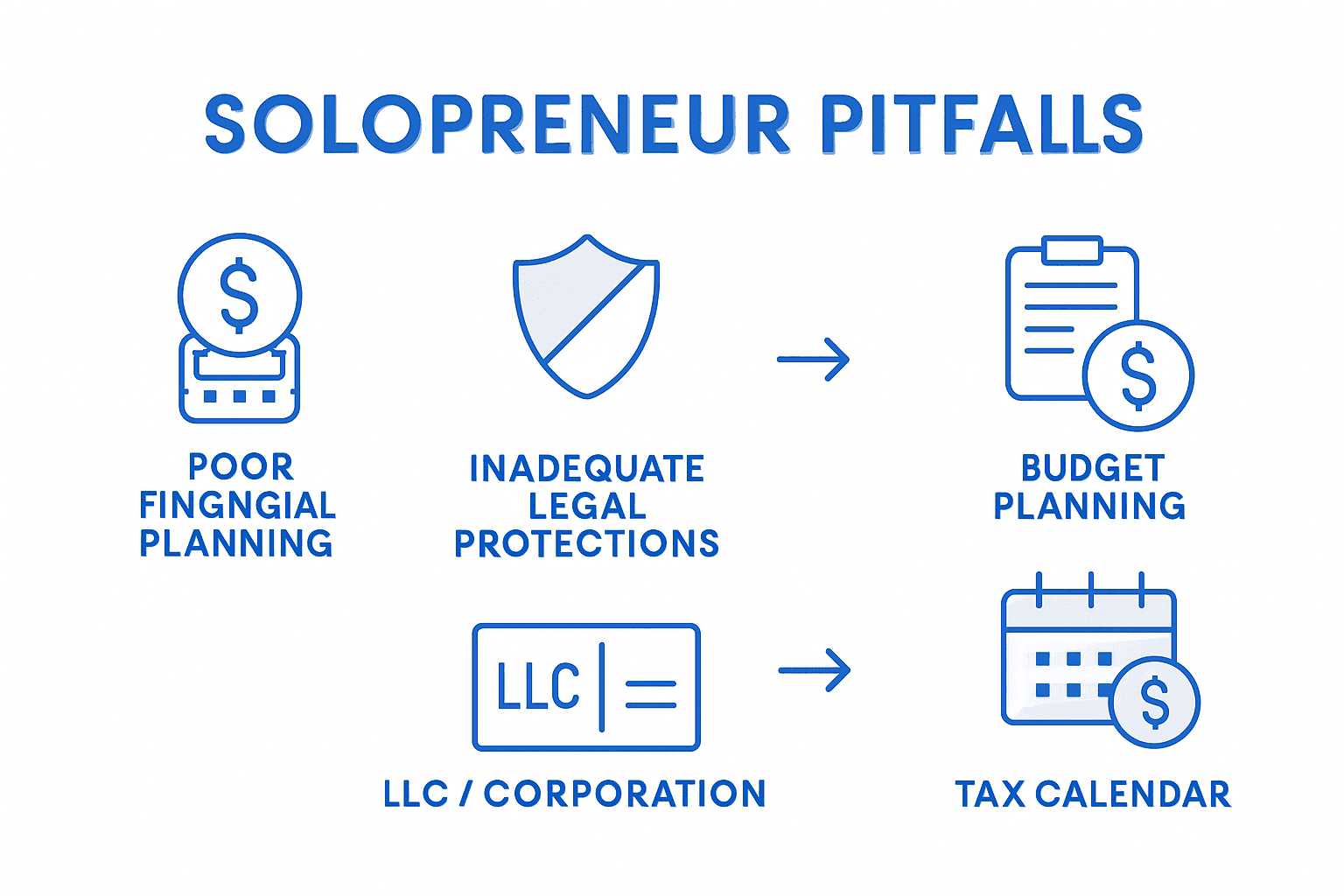
To mitigate risks, solopreneurs should consider transitioning from sole proprietorship to more protective business structures like Limited Liability Companies (LLCs) or professional corporations. These structures provide personal asset protection, potential tax advantages, and a more professional business presentation. Additionally, investing in comprehensive business insurance, maintaining separate business banking accounts, and consulting with legal and financial professionals can help prevent common operational and legal challenges.
Compare key legal structures often chosen by solopreneurs:
| Structure | Personal Liability Protection | Tax Complexity | Typical Use Case |
|---|---|---|---|
| Sole Proprietor | None, personal assets at risk | Simple, self-employed | Starting small, low overhead |
| LLC | Strong, personal assets protected | Moderate | Growing businesses, more risk |
| Professional Corp | Highest, strict requirements | Complex, separate tax | High-risk or professional work |
Pro Strategy Tip: Consult with a business attorney and tax professional within the first six months of launching your solopreneur venture to establish proper legal and financial foundations that protect your personal and professional interests.
Tools and Resources for Solopreneur Success
Technological advancements have dramatically transformed how solopreneurs manage and grow their businesses, providing unprecedented access to powerful digital tools that streamline operations and enhance productivity. Modern solopreneurs can leverage an extensive ecosystem of software solutions designed to address every aspect of independent business management, from financial tracking to marketing and client communication.
Key technological resources for solopreneurs span multiple operational categories. Project management platforms like Trello and Asana help track workflow, while customer relationship management (CRM) tools enable sophisticated client tracking. Financial management becomes seamless with accounting software such as QuickBooks and FreshBooks, which automate invoicing, expense tracking, and tax preparation. Marketing automation tools like Mailchimp and Hootsuite allow solopreneurs to create sophisticated digital marketing campaigns without extensive technical expertise.
Technological platforms now enable solopreneurs to compete globally, managing entire business operations directly from their laptops, breaking traditional geographical and resource constraints. Cloud-based services, AI-powered productivity tools, and integrated software ecosystems have transformed solo businesses from limited local operations to potentially worldwide enterprises. Advanced tools now provide capabilities once reserved for large corporate teams, democratizing business technology for independent professionals.
Pro Strategy Tip: Invest time in learning one new productivity tool each quarter, focusing on solutions that directly address your specific business challenges and can scale with your growing professional needs.
Unlock High-Intent Client Connections Without Exhaustion
The journey of a solopreneur means juggling every role from service delivery to client acquisition. This article highlights how solopreneurs face challenges like navigating cold outreach and building meaningful client relationships without a full sales team. If you feel overwhelmed trying to find the right clients or constantly chasing leads with little success, you are not alone. The key is working smarter by leveraging your existing network and spotting real opportunities where they naturally appear.

Fluum offers an AI-powered solution designed specifically for solopreneurs, freelancers, and independents who want to bypass cold calls and focus on revenue-driving work. Our AI co-founder detects buying intent and uncovers warm introductions within your social circle, turning connections into clients and collaborators effortlessly. Discover how you can automate introductions, manage follow-ups, and build a steady client pipeline by visiting Fluum Pricing. Take control of your client acquisition strategy today and grow your business without burnout.
Frequently Asked Questions
What is a solopreneur?
A solopreneur is an individual who independently creates, manages, and grows a business without the support of traditional employees or partners, typically operating as a one-person enterprise.
What are the core traits of successful solopreneurs?
Successful solopreneurs often display exceptional adaptability, self-motivation, discipline, and resilience, allowing them to effectively manage multiple roles and tasks within their businesses.
How do solopreneurs find clients and generate revenue?
Solopreneurs leverage various client acquisition strategies, including networking, content marketing, social media engagement, and utilizing digital marketplaces to connect with potential clients and create flexible revenue streams.
What are common pitfalls for solopreneurs?
Common pitfalls include inadequate financial planning, insufficient tax preparation, lack of insurance, and not clearly defining legal boundaries between personal and professional finances, which can lead to significant operational challenges.
Recommended
- What Is A Solopreneur? Understanding The Solo Business Model
- Understanding Solopreneur Vs Freelancer: Key Differences
- Business Niche Explained: Strategies For Solopreneurs
- Fluum | Effective Stress Management Techniques for Busy Professionals
- Fluum | How to Onboard Clients Effectively for Lasting Success
- Fluum | Master Managing Multiple Projects for Success
- Fluum | Build Your Brand with a Branding Builder in 2025
- Fluum | 7 Customer Retention Examples to Boost Your Business