

What is network automation? Most freelance coaches and consultants feel drained by endless cold outreach, yet studies show over 60 percent of American professionals now use automation to grow their networks and win more clients. For solopreneurs everywhere, warm introductions can mean the difference between a thriving practice and daily struggle. This overview clears up network automation myths, explains practical options, and offers real-world tactics to help you automate your connections for smoother, more effective client acquisition.
Table of Contents
- Defining Network Automation And Common Myths
- Types Of Network Automation Tools And Solutions
- How Network Automation Works In Practice
- Real-World Uses For Coaches And Consultants
- Risks, Costs, And Common Adoption Mistakes
Key Takeaways
| Point | Details |
|---|---|
| Network Automation Empowers Solopreneurs | Automating networking tasks allows solopreneurs to focus on strategic activities, enhancing efficiency and streamlining client acquisition. |
| Common Myths are Misleading | Misconceptions suggest automation is only for large businesses or eliminates jobs; in reality, it benefits all scales and enhances human roles. |
| Careful Tool Selection is Key | Choosing the right automation tools is critical; select based on technical complexity, integration, and specific workflow needs. |
| Start Small to Minimize Risks | Initiate automation with one repetitive task, monitor impacts, and gradually expand to prevent overwhelming complexity and errors. |
Defining Network Automation and Common Myths
Network automation transforms how solopreneurs manage digital connections, eliminating repetitive tasks and streamlining client acquisition processes. At its core, network automation uses intelligent software tools to automatically handle networking tasks that traditionally required manual intervention.
The fundamental concept involves using software and programming techniques to configure, manage, test, and deploy network resources. Understanding network automation foundations reveals it goes far beyond simple technological substitution. This approach allows professionals to create intelligent systems that can learn, adapt, and make decisions with minimal human input.
Several persistent myths surround network automation that prevent solopreneurs from leveraging its potential:
- Myth 1: Network automation eliminates human jobs
- Reality: Automation actually frees professionals to focus on strategic work
- Myth 2: Only large enterprises can benefit
- Reality: Solopreneurs can gain significant efficiency through targeted automation
- Myth 3: Automation is too complex to implement
- Reality: Modern tools make automation accessible even for non-technical users
Zero-Touch Network Management research demonstrates that automation technologies are becoming increasingly sophisticated, capable of handling complex networking tasks with minimal human intervention. For solopreneurs, this means reduced administrative overhead and more time dedicated to core business activities.
Pro Tip: Start Small: Begin your network automation journey by identifying one repetitive task in your business workflow and find a tool that can automate it completely, then gradually expand your automation strategies.
Types of Network Automation Tools and Solutions
Solopreneurs today have access to a diverse array of network automation tools designed to simplify complex digital interactions and streamline professional networking processes. Comprehensive network automation solutions provide targeted approaches for different business needs and technical skill levels.
The network automation landscape can be categorized into several key tool types:
Programming-Based Tools
- Python-based libraries like Netmiko and NAPALM
- Require moderate coding skills
- Offer high customization potential
Configuration Management Platforms
- Ansible
- Puppet
- Chef
- Automate repetitive network configuration tasks
Enterprise-Level Solutions
- Cisco DNA Center
- ServiceNow
- Comprehensive platforms for larger network environments
Network automation tool comparisons reveal that solopreneurs should select tools based on three critical factors: technical complexity, integration capabilities, and specific workflow requirements. Each tool offers unique strengths, from simple configuration management to advanced machine learning-powered network optimization.
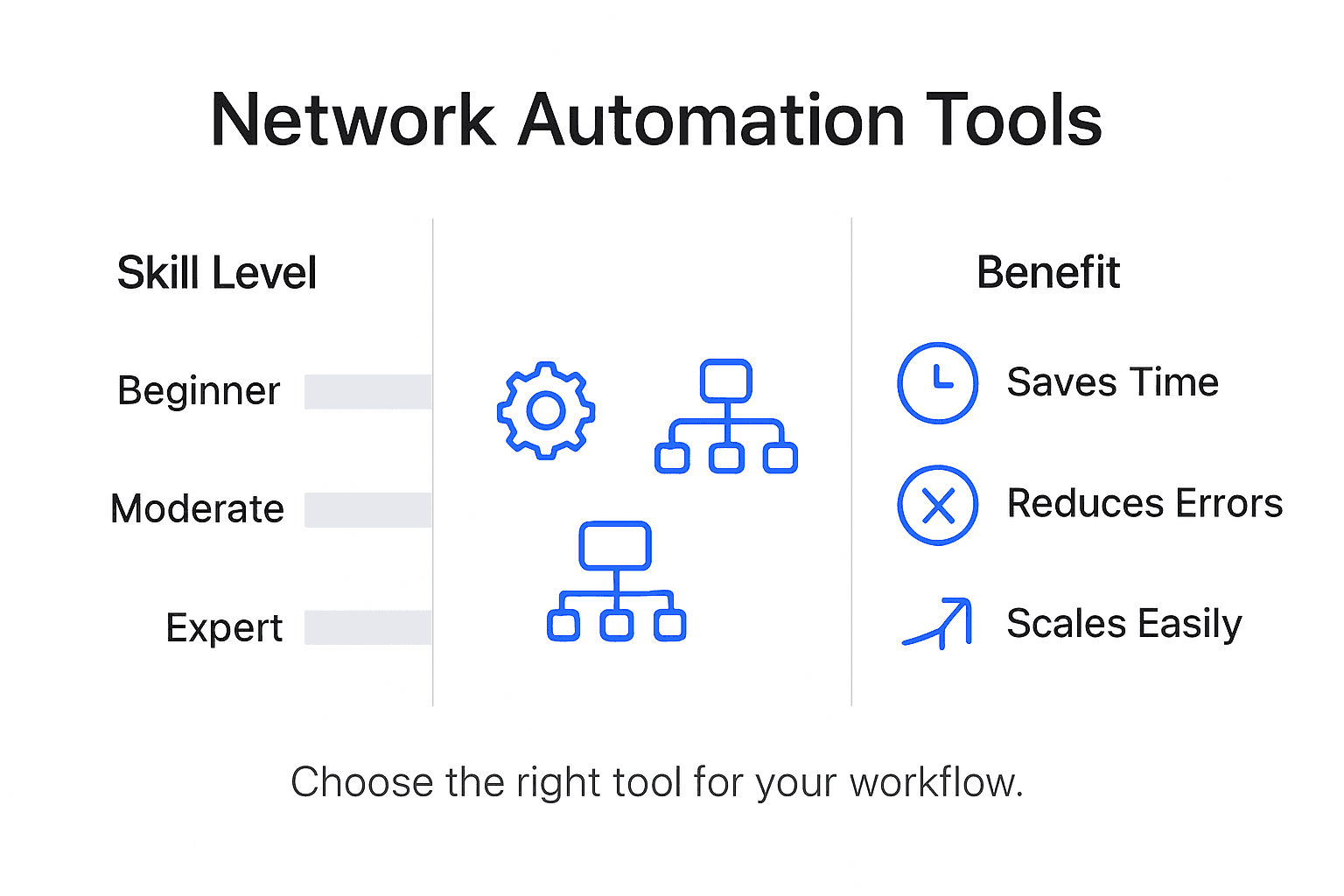
For independent professionals, the goal is finding tools that reduce manual work without requiring extensive technical expertise. Some platforms now offer user-friendly interfaces that make sophisticated network automation accessible to non technical users.
Here’s a concise comparison of major network automation tool types to help solopreneurs and consultants choose the right fit:
| Tool Category | Skill Level Needed | Customization Potential | Typical Use Case |
|---|---|---|---|
| Programming-Based Tools | Moderate coding | Highly customizable | Fine-tuned automation scripts |
| Config Management | Minimal scripting | Rule-based custom workflows | Repetitive task automation |
| Enterprise-Level | Advanced IT skills | Broad integrations | Large-scale, multi-network ops |
Pro Tip: Tool Selection Strategy: Always test network automation tools through free trials or limited versions before full commitment, focusing on how seamlessly they integrate with your existing workflow and specific business requirements.
How Network Automation Works in Practice
Network automation transforms complex digital interactions into streamlined, intelligent processes that minimize manual intervention and maximize efficiency for solopreneurs. At its core, network automation operates through sophisticated algorithms and intelligent systems that can learn, adapt, and execute networking tasks with minimal human input.
Advanced AI-driven network automation frameworks demonstrate how intelligent systems can generate sophisticated networking workflows. These frameworks leverage machine learning algorithms to analyze patterns, predict potential network challenges, and automatically implement optimized solutions. For solopreneurs, this means reduced administrative overhead and more time focusing on core business activities.
The practical implementation of network automation typically involves several key stages:
Data Collection
- Gather comprehensive network performance metrics
- Identify existing workflow patterns and bottlenecks
Rule Configuration
- Establish predefined automation rules
- Create decision-making parameters for the system
Automated Execution
- Implement network configurations automatically
- Monitor and adjust processes in real time
Data-driven network control plane automation further illustrates how modern systems can intelligently manage network resources. By utilizing database management techniques, these platforms can dynamically allocate resources, optimize connection paths, and proactively address potential networking challenges before they impact business operations.
For independent professionals, network automation represents more than just technological efficiency. It provides a strategic advantage by enabling faster decision making, reducing human error, and creating more responsive networking ecosystems that adapt to changing business needs.
Pro Tip: Gradual Implementation: Start your network automation journey by selecting one specific, repetitive networking task and implementing an automated solution, then progressively expand your automation strategies based on initial successes.
Real-World Uses for Coaches and Consultants
Network automation represents a transformative approach for coaches and consultants seeking to optimize their professional workflows and client engagement strategies. Professional network automation skills enable independent professionals to streamline complex communication processes, reduce administrative overhead, and focus more strategically on client outcomes.
Coaches and consultants can leverage network automation in multiple practical scenarios:
Client Relationship Management
- Automate initial contact follow-ups
- Create personalized communication sequences
- Track interaction histories without manual data entry
Lead Qualification
- Automatically score and segment potential client leads
- Filter high-potential networking connections
- Prioritize outreach based on predefined criteria
Scheduling and Coordination
- Integrate calendar systems with communication platforms
- Automatically manage meeting invitations
- Send intelligent reminders and follow-up communications
Network automation tools like Ansible demonstrate how intelligent systems can dramatically reduce repetitive administrative tasks. These platforms enable professionals to create sophisticated workflow rules that adapt to changing client interactions and business needs.
Independent professionals can transform their practice by implementing targeted automation strategies. Effective social proof strategies become more powerful when combined with intelligent network management, allowing coaches to scale their impact without sacrificing personalized client experiences.
Pro Tip: Incremental Automation: Start by identifying one repetitive task in your client communication process and implement a targeted automation solution, then gradually expand your network automation strategies based on initial successes.
Risks, Costs, and Common Adoption Mistakes
Network automation presents significant opportunities for solopreneurs, but understanding potential risks is crucial for successful implementation. Zero-Touch Network implementation challenges reveal that independent professionals must approach automation strategically to avoid costly mistakes.
Common risks in network automation adoption include:
Technical Complexity
- Steep learning curve for non-technical professionals
- Potential system integration challenges
- Risk of creating more complexity instead of simplifying processes
Financial Investment
- Initial setup costs for automation tools
- Potential subscription expenses
- Training and implementation time investment
Potential Operational Disruptions
- Temporary productivity loss during transition
- Risk of misconfigured automated processes
- Potential data management errors
Network automation framework deployment research highlights the critical importance of understanding system overhead and potential implementation pitfalls. Solopreneurs must carefully evaluate their specific workflow requirements before full-scale automation.
The following table contrasts the key benefits and risks of network automation for independent professionals:
| Benefit | Risk | Strategic Approach |
|---|---|---|
| Reduces manual workload | Initial learning curve | Start with simple automations |
| Enables faster decisions | Integration challenges | Test tools on a small scale first |
| Minimizes human error | Cost of setup and training | Incremental, measured rollout |
| Scales client management easily | Workflow disruptions if misused | Monitor and refine automations |
The most significant adoption mistakes typically involve:
- Automating without clear strategic objectives
- Selecting overly complex tools
- Attempting to automate everything simultaneously
- Neglecting ongoing system monitoring and refinement
AI-powered coaching strategies demonstrate that successful network automation requires a nuanced, gradual approach that prioritizes strategic value over technological complexity.
Pro Tip: Risk Mitigation Strategy: Always start with a small, well-defined automation project, measure its impact meticulously, and scale gradually while maintaining flexibility to adjust your approach.
Unlock Efficient Client Acquisition with AI-Powered Network Automation
The article highlights the challenge solopreneurs face in managing complex networking workflows while avoiding the trap of overwhelming technical complexity or inefficient cold outreach. Key pain points include the need to automate repetitive client engagement tasks, quickly identify high-intent prospects, and reduce manual follow-ups without sacrificing personalized communication. Concepts like rule-based automation, lead qualification, and strategic incremental implementation show that strategic automation can free up valuable time and reduce errors.
Fluum transforms these challenges into opportunities by combining AI-driven social intelligence with seamless warm introductions that align perfectly with network automation principles discussed in the article. Fluum’s AI co-founder surfaces real opportunities hidden in your existing network and initiates personalized introductions on your behalf — eliminating the need for cold outreach or complicated technical setups. This means you can focus on nurturing relationships and closing deals without getting bogged down in repetitive tasks or technical hurdles.
- Detect buying signals from your broader network
- Automate introductions and follow-ups with ease
- Turn social connections into paying clients faster
Discover how Fluum can simplify your client acquisition process today

Stop spending hours on manual outreach and start growing your business smarter with Fluum’s AI-powered network automation. Visit Fluum Pricing now to explore plans that fit your needs and take the first step toward more efficient, stress-free client acquisition. Don’t let complexity hold you back. Let Fluum handle the networking so you can focus on doing what you love.
Frequently Asked Questions
What is network automation and how does it benefit solopreneurs?
Network automation refers to the use of intelligent software tools to handle networking tasks that would typically require manual intervention. For solopreneurs, it streamlines client acquisition processes and reduces repetitive tasks, allowing them to focus on strategic work instead.
Are there any common myths about network automation?
Yes, some common myths include the belief that automation eliminates human jobs, that only large enterprises can benefit, and that automation is too complex to implement. In reality, network automation empowers professionals and is accessible even for solopreneurs.
What types of network automation tools are available for solopreneurs?
Solopreneurs can access a variety of network automation tools, including programming-based tools like Python libraries, configuration management platforms such as Ansible and Puppet, and enterprise-level solutions like Cisco DNA Center, each catering to different skill levels and business needs.
How can coaches and consultants use network automation to improve their workflows?
Coaches and consultants can utilize network automation to enhance client relationship management, automate lead qualification, and coordinate scheduling. This minimizes administrative overhead and allows them to focus more effectively on delivering value to their clients.
Recommended
- What Is Client Onboarding? Complete Guide For Solopreneurs
- How To Find New Clients For Solopreneurs And Freelancers
- 7 Networking Tips For Solopreneurs To Build Real Connections
- Business Development For Solopreneurs: Turning Connections Into Revenue
- Fluum | Effective Stress Management Techniques for Busy Professionals
- Fluum | How to Onboard Clients Effectively for Lasting Success
- Fluum | Master Managing Multiple Projects for Success
- Fluum | Build Your Brand with a Branding Builder in 2025
- Fluum | 7 Customer Retention Examples to Boost Your Business