

Most advice about ethical marketing leaves american solopreneurs feeling confused or skeptical. With more than 80 percent of consumers saying they trust brands that practice transparency, embracing honest marketing is not optional anymore. Misconceptions and outdated tactics can derail even the most genuine efforts. Understanding what truly sets ethical marketing apart helps independent professionals avoid common pitfalls and build lasting credibility in a competitive market.
Table of Contents
- Defining Ethical Marketing Practices And Misconceptions
- Core Principles Of Ethical Marketing Today
- Key Examples And Real-World Case Studies
- Legal Standards And Global Compliance Laws
- Common Ethical Risks And How To Avoid Them
- Strategies For Integrating Ethics Into Daily Marketing
Key Takeaways
| Point | Details |
|---|---|
| Ethical Marketing Principles | Ethical marketing revolves around fairness, transparency, honesty, and responsibility, guiding solopreneurs to build consumer trust. |
| Authenticity Matters | Emphasizing genuine value and clear communication can set solopreneurs apart in competitive markets. |
| Legal Compliance as Strategy | Adhering to legal standards is essential for maintaining credibility and avoiding legal liabilities. |
| Proactive Risk Management | Solopreneurs should actively manage ethical risks by aligning marketing practices with authentic value and transparency. |
Defining Ethical Marketing Practices and Misconceptions
Ethical marketing represents a strategic approach that prioritizes transparency, honesty, and genuine value for consumers. According to Ecohumanism, this practice is fundamentally grounded in philosophical principles like virtue ethics and utilitarianism, which guide organizations toward maintaining professional and ethical standards in their marketing communications.
At its core, ethical marketing goes far beyond simply avoiding false advertising. It involves a comprehensive commitment to authentic representation, respecting consumer intelligence, and creating marketing strategies that genuinely serve customer needs. Solopreneurs must recognize that unethical tactics might generate short-term gains, but they ultimately erode consumer trust and damage long-term brand reputation. As research indicates, sustainable business growth depends on building genuine relationships founded on integrity.
Common misconceptions about ethical marketing often stem from misunderstanding its practical implementation. Many entrepreneurs mistakenly believe that ethical marketing reduces competitiveness or limits creative communication. However, the opposite is true. Ethical marketing actually enhances brand credibility and attracts more discerning, loyal customers who appreciate transparent and honest business practices.
Key characteristics of ethical marketing for solopreneurs include:
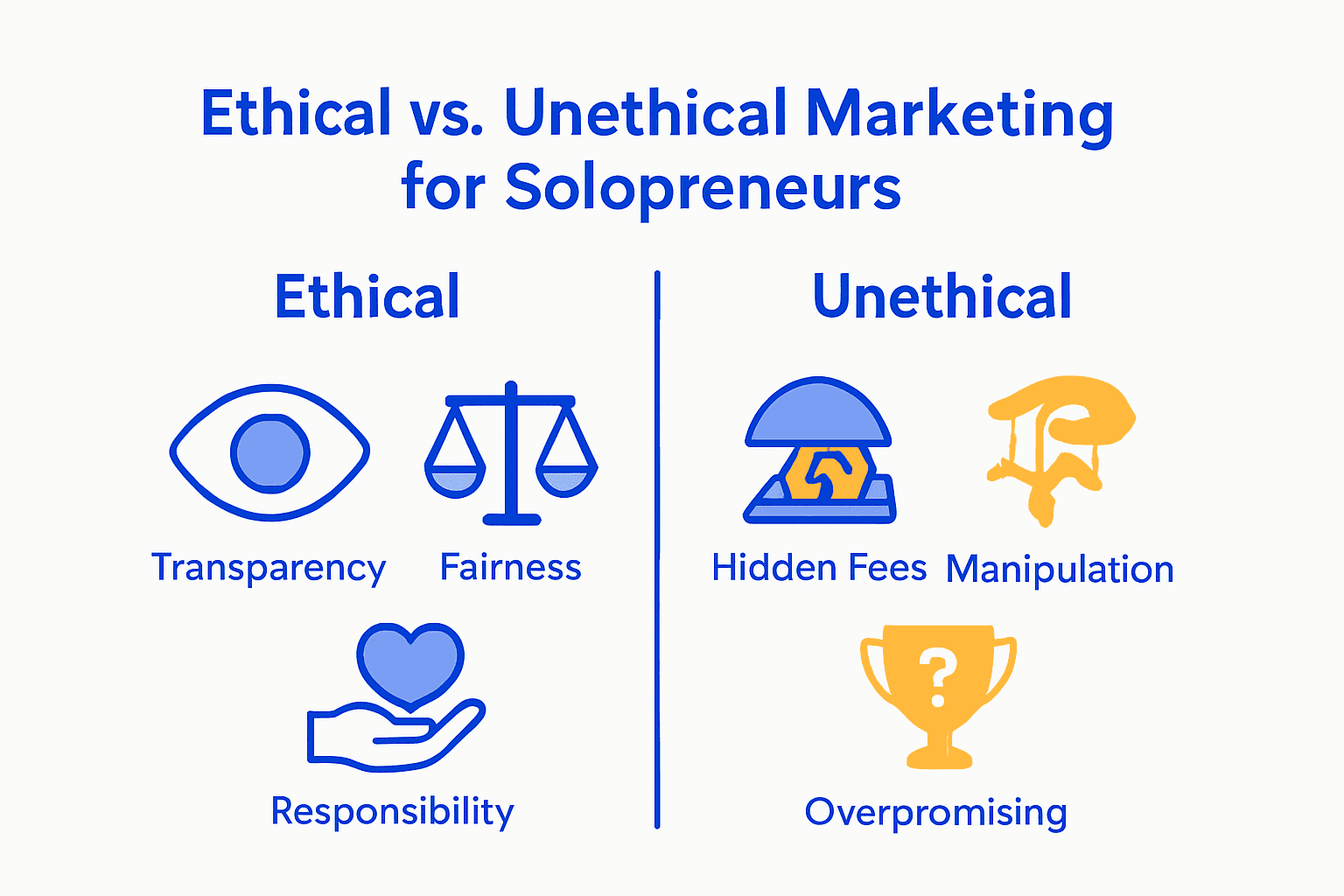
- Complete transparency about product capabilities and limitations
- Honest pricing with no hidden fees
- Accurate representation of services and potential outcomes
- Respecting customer privacy and data protection
- Avoiding manipulative psychological tactics
- Providing genuine value beyond mere sales pitches
By embracing these principles, independent professionals can differentiate themselves in crowded markets, build stronger client relationships, and create sustainable business growth based on trust and mutual respect.
Core Principles of Ethical Marketing Today
Ethical marketing has evolved into a sophisticated framework that demands more than basic compliance. According to King’s College London, modern ethical marketing is fundamentally founded on four critical principles: fairness, transparency, honesty, and responsibility. These principles serve as a comprehensive guide for solopreneurs to navigate complex marketing landscapes while maintaining integrity and building genuine consumer trust.
For independent professionals, implementing these principles requires a nuanced approach. Fairness means setting reasonable prices that reflect true value, avoiding predatory pricing strategies. Transparency involves clear communication about service capabilities, potential limitations, and realistic outcomes. Honesty demands accurate representation of products or services without exaggeration or manipulation. Responsibility extends beyond transactional interactions, encompassing a commitment to supporting broader social causes and maintaining accountability for business practices.
Research from IMC Professional emphasizes that these principles are not merely theoretical constructs but practical strategies for sustainable business growth. By prioritizing consumer privacy, providing truthful information, and demonstrating genuine care for customer needs, solopreneurs can differentiate themselves in competitive markets.
Key implementation strategies for ethical marketing include:
- Developing clear, accessible communication about services
- Creating pricing models that demonstrate tangible value
- Protecting client data and maintaining strict confidentiality
- Being upfront about potential limitations or risks
- Offering transparent refund and service adjustment policies
- Continuously educating yourself about evolving ethical standards
Successful solopreneurs understand that ethical marketing is not a constraint but a powerful competitive advantage. By building trust, demonstrating integrity, and prioritizing genuine value, independent professionals can create lasting relationships that transcend traditional transactional business models.
Key Examples and Real-World Case Studies
Solopreneurs can draw powerful insights from real-world examples of ethical marketing strategies that demonstrate the profound impact of socially responsible business practices. According to Wikipedia, the concept of Creating Shared Value (CSV) provides a compelling framework for understanding how businesses can simultaneously enhance their competitiveness while advancing social and economic conditions in their communities.
One remarkable example involves small independent consultants who integrate social responsibility directly into their service offerings. This might look like a career coach offering reduced-rate sessions for unemployed professionals, or a wellness practitioner providing free workshops for underserved communities. These approaches go beyond traditional marketing by demonstrating genuine commitment to societal well-being while naturally attracting clients who value authentic, purpose-driven businesses.
Wikipedia emphasizes that socially responsible marketing requires considering the broader interests of society both in the present and long term. This means addressing critical issues like excessive consumerism and potential environmental impacts. For solopreneurs, this translates into practical strategies such as:
- Transparent pricing models that reflect true value
- Offering services that genuinely solve client problems
- Minimizing unnecessary resource consumption
- Supporting local or global social initiatives
- Providing clear, honest communication about service limitations
- Prioritizing long-term client relationships over short-term gains
Successful ethical marketing is not about grand gestures but consistent, meaningful actions that demonstrate a genuine commitment to creating positive change. By aligning business practices with social responsibility, solopreneurs can build trust, differentiate themselves in competitive markets, and contribute to broader societal progress while growing their professional practices.
Legal Standards and Global Compliance Laws
Legal compliance represents a critical cornerstone of ethical marketing for solopreneurs operating in an increasingly complex global marketplace. According to research from ScienceDirect, adherence to legal standards is fundamental in business-to-business marketing, emphasizing the crucial role of ethical practices in maintaining professional trust and avoiding potentially devastating legal repercussions.
The digital landscape has dramatically transformed compliance requirements, particularly in areas like online marketing and social media communications. An eye-opening study from ArXiv revealed that merely 10% of affiliate marketing content contains proper legal disclosures, highlighting the widespread challenges in maintaining transparency. For solopreneurs, this means developing a rigorous understanding of disclosure requirements, data protection regulations, and advertising standards across different platforms and jurisdictions.
Key legal considerations for ethical marketing include:
- Transparent disclosure of sponsored content
- Accurate representation of services and products
- Protecting client personal and financial information
- Compliance with international data privacy laws
- Clear terms of service and contractual agreements
- Proper handling of intellectual property rights
- Avoiding deceptive marketing practices
Successful solopreneurs recognize that legal compliance is not a burden but a strategic advantage. By proactively understanding and implementing robust legal standards, independent professionals can build credibility, protect their businesses from potential litigation, and demonstrate a commitment to professional integrity that distinguishes them in competitive markets.
Common Ethical Risks and How to Avoid Them
Ethical marketing demands constant vigilance against potential risks that can undermine a solopreneur’s professional reputation. Wikipedia highlights one pervasive risk known as greenwashing, where businesses mislead consumers about their environmental practices by making unsubstantiated claims about sustainability and social responsibility.
Another significant ethical risk involves what experts term bluewashing, a deceptive marketing practice where companies overstate their commitment to responsible social practices. According to Wikipedia, this approach involves creating a facade of social responsibility without implementing genuine, meaningful changes. For solopreneurs, avoiding these risks requires a commitment to authentic, transparent communication that aligns marketing messages with actual business practices.
Common ethical risks solopreneurs must carefully navigate include:
- Overpromising service capabilities
- Misrepresenting professional credentials
- Using manipulative sales tactics
- Failing to disclose potential conflicts of interest
- Making unverifiable performance claims
- Exploiting client vulnerabilities
- Breaching client confidentiality
- Creating artificially scarcity or urgency
Mitigating these risks requires more than passive compliance.
 Successful solopreneurs proactively build trust by developing robust ethical frameworks, maintaining transparent communication, and consistently aligning their marketing practices with genuine value creation. This approach transforms potential risks into opportunities for demonstrating professional integrity and building long-term client relationships based on mutual respect and authentic value.
Strategies for Integrating Ethics Into Daily Marketing
Integrating ethical practices into daily marketing requires a proactive, systematic approach that goes beyond superficial compliance. Research from ArXiv underscores the critical importance of safeguarding marketing practices, particularly in an era where disinformation can rapidly undermine professional credibility. For solopreneurs, this means developing robust frameworks that prioritize transparency, integrity, and genuine value creation in every marketing interaction.
Advanced ethical integration involves more than just avoiding deceptive practices. It requires a comprehensive commitment to enhancing human oversight and implementing sophisticated detection mechanisms that prevent potential misrepresentations. This approach demands continuous learning, self-reflection, and a willingness to critically examine marketing strategies through an ethical lens. Solopreneurs must cultivate a deep understanding of how their communication impacts potential clients, always prioritizing honest and meaningful engagement.
Practical strategies for daily ethical marketing include:
- Conducting regular self-audits of marketing materials
- Establishing clear ethical guidelines for all communications
- Seeking feedback from trusted peers or mentors
- Documenting decision-making processes
- Creating transparent pricing and service expectation frameworks
- Developing mechanisms for client feedback and accountability
- Continuously educating yourself about evolving ethical standards
True ethical marketing is not a destination but an ongoing journey of professional growth. By understanding sustainable business practices, solopreneurs can transform ethical considerations from potential constraints into powerful competitive advantages that distinguish them in crowded marketplaces.
Elevate Your Ethical Marketing with Intelligent Automation
Solopreneurs face the daily challenge of maintaining honesty and transparency while managing all aspects of their business. This article highlights key ethical marketing principles like transparency, fairness, and responsibility that are vital to building trust and sustainable growth. Yet, balancing these values with the demands of client outreach, scheduling, and payment management can feel overwhelming.
Fluum is designed to solve this exact problem. Our AI-powered platform acts as your digital co-founder, automating routine tasks such as client communication and sales outreach on platforms like Instagram. This allows you to focus on delivering authentic value and upholding ethical standards without sacrificing efficiency. With Fluum, you also gain personalized insights and tools to keep your marketing honest and impactful.
Explore how you can streamline your ethical marketing efforts today by visiting Fluum Pricing.
Ready to build a trustworthy, transparent brand that resonates with your ideal clients While Fluum handles the busywork you can dedicate your energy to growing your business the right way Start the journey now by discovering plans that fit your goals at Fluum Pricing.
Frequently Asked Questions
What is ethical marketing?
Ethical marketing is a strategic approach that emphasizes transparency, honesty, and genuine value for consumers. It involves maintaining professional and ethical standards in marketing communications, aiming to build trust and long-term relationships with customers.
How can solopreneurs implement ethical marketing practices?
Solopreneurs can implement ethical marketing by focusing on fairness, transparency, honesty, and responsibility in their communications. This includes clear pricing, accurate representation of services, protecting customer data, and avoiding manipulative tactics.
What are the common misconceptions about ethical marketing?
Common misconceptions include the belief that ethical marketing limits creativity or reduces competitiveness. In reality, ethical marketing can enhance brand credibility and attract loyal customers who appreciate transparency and integrity.
How can ethical marketing contribute to sustainable business growth?
Ethical marketing fosters genuine relationships built on trust and respect. This approach can lead to sustainable business growth by attracting discerning customers and differentiating the brand in competitive markets.
Recommended
- Sustainable Business Practices: Everything You Need To Know
- Digital Marketing Fundamentals For Solopreneur Success
- Business Niche Explained: Strategies For Solopreneurs
- Understanding Solopreneur Vs Freelancer: Key Differences
- Sustainable Wellness Brands: Complete Expert Guide – naturessoulshop
- Oxnard Bankruptcy Attorney Ethics | Law Offices of Eric Ridley
- Fluum | Effective Stress Management Techniques for Busy Professionals
- Fluum | How to Onboard Clients Effectively for Lasting Success
- Fluum | Master Managing Multiple Projects for Success
- Fluum | Build Your Brand with a Branding Builder in 2025
- Fluum | 7 Customer Retention Examples to Boost Your Business