


Let’s learn what is solopreneurship. More than 41 million americans now run businesses on their own, reflecting a shift toward greater independence in the modern workforce. Solopreneurship attracts those who want direct control over their professional path, personal branding, and financial future. By understanding what sets solopreneurs apart from freelancers and traditional business owners, you can discover practical strategies, key skills, and proven tools that fuel individual success in today’s digital economy.
Table of Contents
- Defining Solopreneurship And Core Concepts
- Types Of Solopreneur Businesses Today
- Essential Skills And Success Traits
- Key Tools And Technologies For Solopreneurs
- Legal, Financial, And Tax Considerations
- Solopreneurship Vs Freelancing And Businesses
Key Takeaways
| Point | Details |
|---|---|
| Understanding Solopreneurship | Solopreneurship is a self-driven business model where individuals manage their ventures independently, focusing on personal expertise and client relationships. |
| Diversity of Business Types | Solopreneur businesses include digital creatives, content experts, consultants, and technical services, adapting to market demands for sustainable growth. |
| Essential Skills for Success | Successful solopreneurs cultivate skills in strategic thinking, personal branding, and financial management to enhance business sustainability. |
| Legal and Financial Awareness | Navigating the legal and financial landscapes is crucial for solopreneurs to ensure compliance and long-term viability of their businesses. |
Defining Solopreneurship and Core Concepts
So, what is solopreneurship? Solopreneurship represents a dynamic approach to business ownership where an individual independently creates, manages, and grows a professional venture without additional employees or traditional business partnerships. Unlike standard entrepreneurship models, solopreneurship centers on personal autonomy, individual skill sets, and direct client engagement.
At its core, solopreneurship involves managing a business single-handedly with a focus on leveraging personal expertise and professional capabilities. This business model allows professionals to design flexible work structures that align with their unique strengths, lifestyle preferences, and career objectives. Solopreneurs typically operate in knowledge-based industries such as consulting, digital marketing, writing, design, coaching, and technology services.
The key characteristics that distinguish solopreneurs include:
- Complete operational control and decision-making independence
- Personal brand as the primary business asset
- Direct client relationships without intermediary management
- Scalable service offerings based on individual skills
- Ability to work remotely or from flexible locations
- Minimal overhead and operational expenses
Solopreneurs differ fundamentally from traditional entrepreneurs by maintaining a lean, personal business model. Where entrepreneurs often build teams and complex organizational structures, solopreneurs remain the singular driving force behind their professional endeavors. They transform personal expertise into revenue streams while maintaining maximum flexibility and control over their professional trajectory.
Types of Solopreneur Businesses Today
Solopreneur businesses have dramatically diversified, reflecting the evolving digital landscape and emerging professional opportunities. Online workers now represent a complex ecosystem of specialized service providers spanning multiple industries and professional domains, each offering unique value propositions and innovative business models.
The most prominent types of solopreneur businesses include:
- Digital Creative Professionals
- Graphic designers
- Web developers
- Brand strategists
- Digital illustrators
- Content and Communication Experts
- Freelance writers
- Technical writers
- Social media managers
- Copywriters
- Translation specialists
- Consulting and Coaching Services
- Business strategy consultants
- Life coaches
- Career development advisors
- Marketing consultants
- Technical and Professional Services
- Software developers
- IT consultants
- Data analysts
- Digital marketing specialists
Innovative solopreneurs demonstrate significant potential for sales growth and professional development by leveraging their unique expertise and adapting to market demands. These professionals typically distinguish themselves through specialized skills, personal branding, and the ability to provide targeted, high-quality services directly to clients.

The digital age has fundamentally transformed solopreneur business models, enabling professionals to develop niche business strategies that capitalize on individual strengths. By focusing on specific markets and maintaining lean operational structures, solopreneurs can create sustainable, flexible businesses that offer maximum professional autonomy and growth potential.
Essential Skills and Success Traits
Solopreneur success hinges on a complex blend of personal capabilities and professional strategies. Innovative mindset and self-efficacy emerge as critical drivers of business growth, enabling independent professionals to navigate challenging business landscapes with confidence and adaptability.
Key skills for solopreneur success include:
- Strategic Thinking
- Long-term business planning
- Market trend analysis
- Adaptive strategy development
- Technical Competence
- Digital tool proficiency
- Technical skill in primary service area
- Continuous learning
- Financial Management
- Basic accounting skills
- Cash flow management
- Budget planning
- Personal Branding
- Authentic communication
- Professional online presence
- Storytelling and value proposition
Personal branding and operational adaptability represent fundamental traits for sustainable independent businesses. Successful solopreneurs distinguish themselves by developing a unique professional identity that communicates expertise, builds trust, and attracts ideal clients. This requires a combination of technical skills, emotional intelligence, and strategic self-presentation.
The most effective solopreneurs treat their individual practice as a comprehensive business ecosystem. By developing robust digital marketing fundamentals, they create sustainable pathways for growth, client acquisition, and professional development. Continuous learning, strategic networking, and a proactive approach to skill enhancement become the cornerstone of long-term success in the dynamic world of solopreneurship.
Key Tools and Technologies for Solopreneurs
Technology ecosystems have revolutionized solopreneur capabilities, providing powerful tools that transform individual professional potential. AI agents now function as advanced digital co-founders, capable of automating complex business processes and delivering intelligent strategic support for independent professionals.
Critical technological tools for solopreneurs include:
- Business Management
- Project management platforms
- Time tracking software
- Invoicing and accounting systems
- Communication Tools
- Video conferencing applications
- Client relationship management systems
- Professional messaging platforms
- Marketing Technologies
- Social media management tools
- Email marketing platforms
- Content creation software
- Productivity Enhancers
- Cloud storage solutions
- Collaboration and file-sharing platforms
- Automation and workflow tools
Digital platforms have become essential for expanding market reach and managing business operations efficiently, enabling solopreneurs to compete effectively in increasingly digital marketplaces. The most successful independent professionals leverage technology to streamline administrative tasks, enhance client interactions, and create scalable business models.
Increasing business efficiency requires strategic technology integration that aligns with individual professional goals. Solopreneurs must continuously evaluate and adopt technologies that reduce operational complexity, automate repetitive tasks, and provide actionable insights into business performance. The right technological toolkit transforms individual capabilities, turning potential into sustainable professional success.
Legal, Financial, and Tax Considerations
Solopreneurship requires careful navigation of complex legal and financial landscapes that differ significantly from traditional employment models. Legal frameworks governing independent professional work vary widely across service and product industries, demanding sophisticated understanding and proactive strategic planning.
Key legal and financial considerations include:
- Business Structure
- Sole proprietorship
- Limited liability company (LLC)
- Independent contractor registration
- Tax Obligations
- Self employment tax reporting
- Quarterly estimated tax payments
- Business expense deductions
- Financial Protection
- Professional liability insurance
- Health insurance options
- Retirement savings strategies
- Compliance Requirements
- State and federal business regulations
- Professional licensing
- Contract management protocols
Financial resilience represents a critical strategy for solopreneur sustainability, involving strategic savings, diversified income streams, and adaptive financial planning. Successful solopreneurs develop robust financial management skills that balance immediate operational needs with long-term professional growth objectives.
Understanding financial management becomes crucial for creative professionals navigating independent business models. Proactive financial planning, consistent record keeping, and strategic tax preparation transform potential financial challenges into opportunities for sustainable professional development. The most successful solopreneurs treat their financial infrastructure with the same strategic attention they apply to their core professional services.
Solopreneurship vs Freelancing and Businesses
Professional independence manifests through multiple business models, each with distinct characteristics and operational philosophies. The nuanced differences between freelancing and solopreneurship require careful examination, revealing unique approaches to professional autonomy and business development.
Key distinctions between these professional models include:
- Freelancing
- Project-based work
- Hourly or fixed-rate compensation
- Short-term client relationships
- Minimal business infrastructure
- Solopreneurship
- Strategic business development
- Multiple revenue streams
- Long-term brand building
- Comprehensive business ecosystem
- Traditional Businesses
- Employee management
- Complex organizational structures
- Significant capital investment
- Scalable team-based operations
Freelancers typically operate with transactional client relationships, focusing on delivering specific services within defined project parameters. Solopreneurs, by contrast, develop comprehensive business models that transcend individual transactions, creating scalable brands with strategic long-term potential.
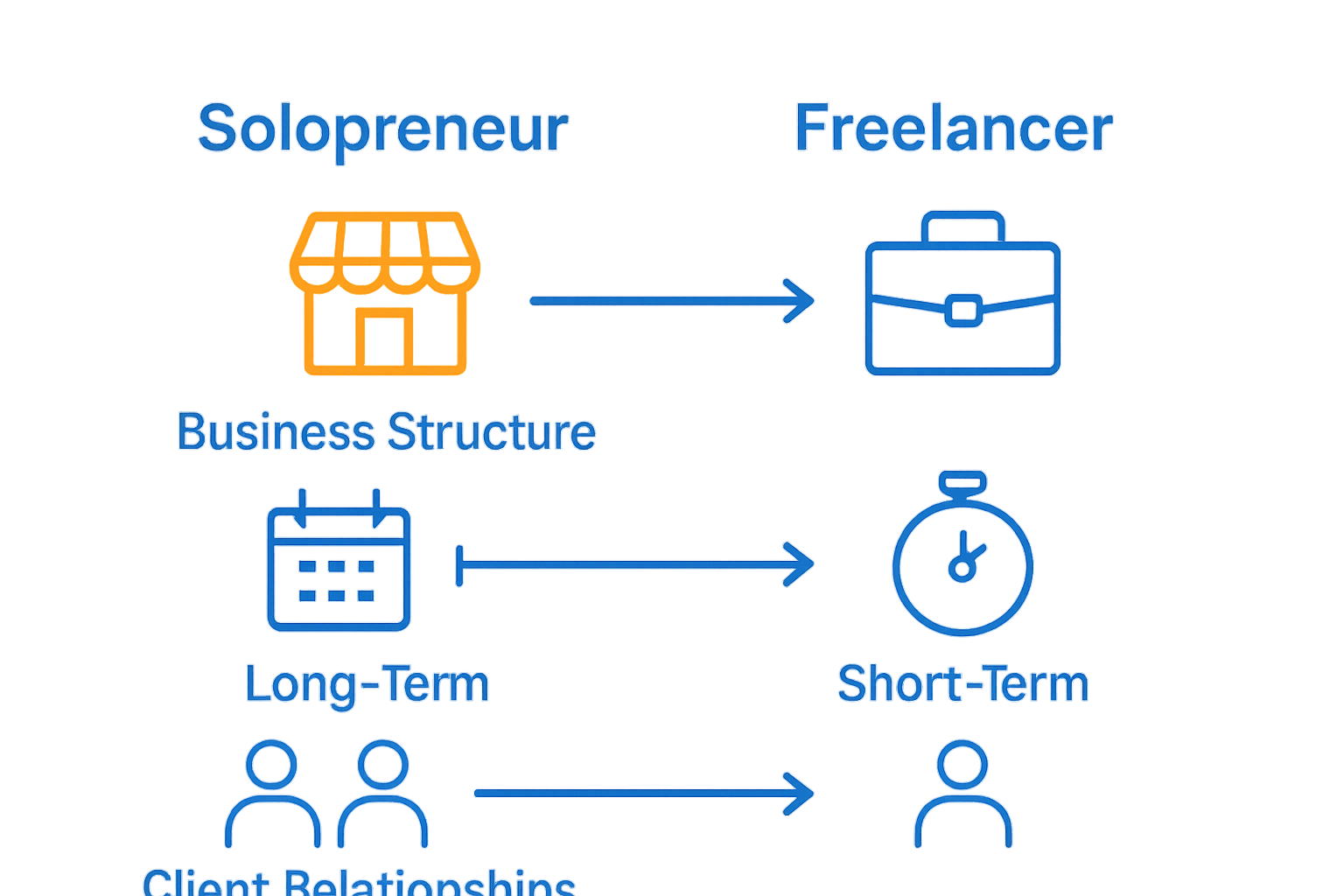
Developing sustainable business scaling strategies becomes crucial for professionals seeking to transition from freelance work to a more robust solopreneur approach. While freelancers often exchange time for money, solopreneurs design business models that generate value independent of direct hourly labor, emphasizing systematic growth, personal branding, and strategic market positioning.
Empower Your Solopreneur Journey with AI-Powered Support
Building a successful solopreneur business requires mastering multiple skills from branding and strategic thinking to managing finances and client communications. The challenge lies in balancing these demands while staying focused on your core expertise and growth goals. If you want to break free from manual tasks that slow down your progress and scale your business without adding overhead, Fluum offers an innovative solution designed just for solopreneurs like you.

Experience the advantage of an AI co-founder that continuously learns your unique business needs and automates daily operations including sales outreach, client management, and scheduling. With Fluum, you transform your solo venture into a scalable and efficient enterprise by leveraging smart automation and personalized insights. Start turning your passion into sustainable growth today by exploring our flexible pricing plans. Take control of your future and make solopreneurship effortless with Fluum.
Frequently Asked Questions
What is a solopreneur?
A solopreneur is an individual who independently creates, manages, and grows a business without additional employees or traditional partnerships, focusing on personal autonomy and leveraging individual skills.
How do solopreneurs differ from freelancers?
While freelancers typically engage in project-based work with short-term client relationships, solopreneurs develop comprehensive business models that build long-term brands and multiple revenue streams.
What are the essential skills needed for solopreneur success?
Key skills for solopreneur success include strategic thinking, technical competence, financial management, and personal branding, all of which help create sustainable and profitable independent businesses.
What legal and financial considerations should solopreneurs keep in mind?
Solopreneurs should be aware of their business structure, tax obligations, financial protection measures, and compliance requirements to navigate the unique legal and financial landscapes that come with independent work.
Recommended
- What Is A Solopreneur? Understanding The Solo Business Model
- Understanding Solopreneur Vs Freelancer: Key Differences
- Business Niche Explained: Strategies For Solopreneurs
- Business And Decisions: Complete Guide For Solopreneurs
- Fluum | Effective Stress Management Techniques for Busy Professionals
- Fluum | How to Onboard Clients Effectively for Lasting Success
- Fluum | Master Managing Multiple Projects for Success
- Fluum | Build Your Brand with a Branding Builder in 2025
- Fluum | 7 Customer Retention Examples to Boost Your Business