

Let’s learn some business automation basics! More than 60 percent of American solopreneurs report spending valuable hours on repetitive business tasks each week. For independent professionals, those lost hours could mean missed creative opportunities or slower growth. Learning how automation transforms daily routines allows American solopreneurs to reclaim time, lower stress, and focus energy where it matters most. Discover how intelligent technology can turn tedious work into efficient, seamless workflows that support lasting success.
Table of Contents
- Defining Business Automation For Solopreneurs
- Types Of Automation: Operations, Sales, And Communication
- Core Features And How Automations Work
- Real-World Tools And Typical Use Cases
- Risks, Limitations, And How To Avoid Pitfalls
- Maximizing Growth With Automation Platforms
Key Takeaways
| Point | Details |
|---|---|
| Business Automation Enhances Efficiency | Solopreneurs can streamline repetitive tasks using automation, allowing more focus on creative and strategic work. |
| Types of Automation Matter | Effective automation encompasses operations, sales, and communication, each serving to enhance efficiency in unique ways. |
| Strategic Implementation is Key | Caution is necessary in automation projects; start small, maintain human oversight, and prioritize data security. |
| Growth Depends on Intelligent Systems | Leveraging AI and automation platforms can create adaptable workflows, enabling solopreneurs to scale their businesses effectively. |
Defining Business Automation for Solopreneurs
Knowing business automation basics represents the strategic use of technology to transform repetitive manual tasks into streamlined, efficient processes that free solopreneurs from administrative burdens. At its core, automation allows independent professionals to redirect energy from mundane operational work toward high-value creative and strategic activities. Understanding business automation means recognizing how intelligent systems can manage complex workflows without constant human intervention.
For solopreneurs, business automation is not about replacing human skills but augmenting them. By leveraging AI and smart tools, independent professionals can dramatically reduce time spent on repetitive tasks like scheduling, invoicing, client communication, and marketing follow-ups. Research suggests that strategic automation can help solo entrepreneurs minimize operational overhead while maximizing productivity.
The key components of effective business automation for solopreneurs typically include:
- Client Management Systems: Automated lead tracking and communication workflows
- Financial Tools: Invoicing, expense tracking, and payment processing
- Marketing Automation: Social media scheduling, email campaigns, and lead nurturing
- Scheduling Platforms: Automatic appointment booking and calendar management
Successful solopreneurs understand that business process optimization is not about replacing human creativity but creating intelligent systems that amplify individual potential. By thoughtfully implementing automation, independent professionals can scale their businesses, reduce administrative stress, and focus on delivering exceptional value to their clients.
Types of Automation: Operations, Sales, and Communication
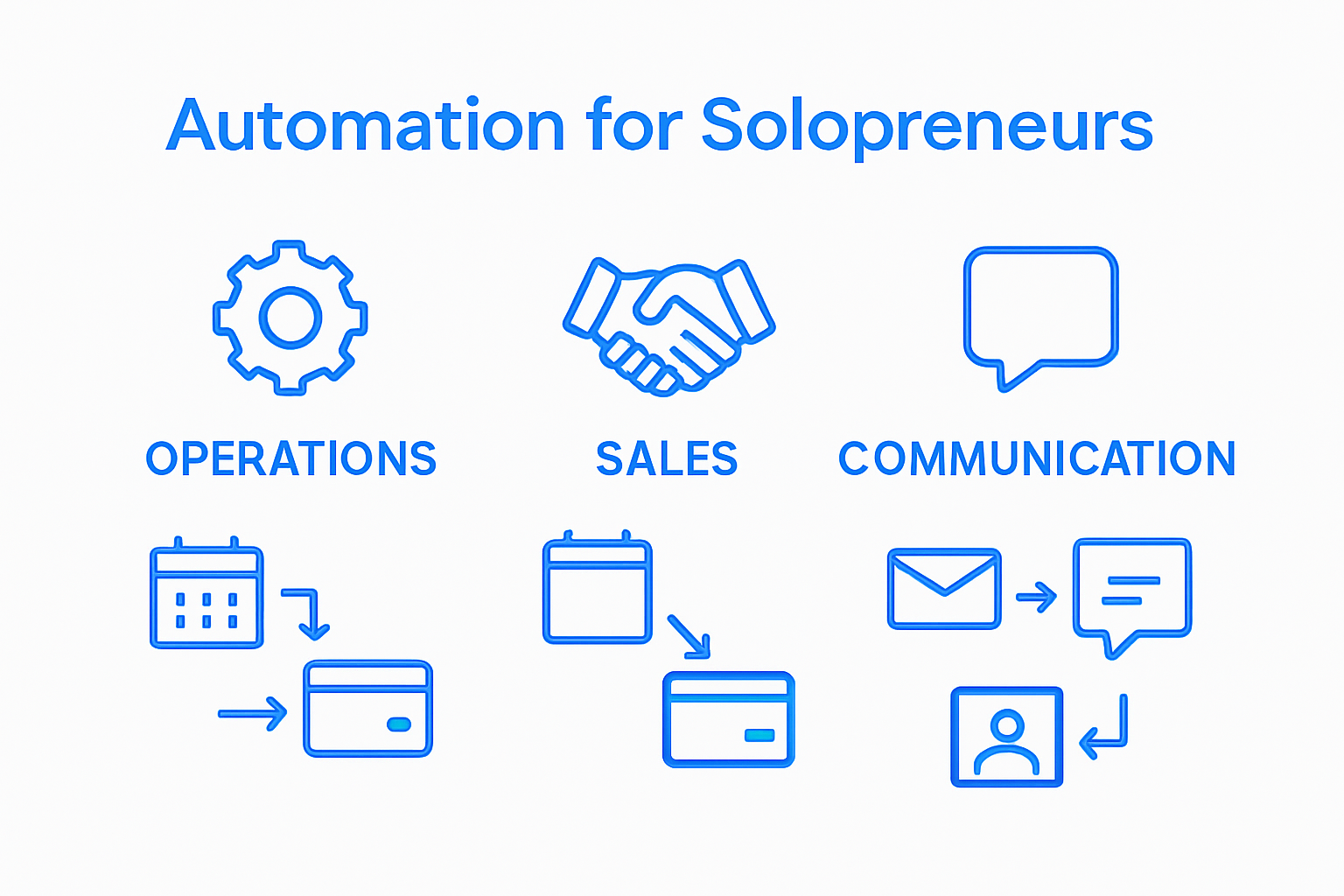
Business automation breaks down into three primary domains that collectively transform how solopreneurs manage their professional workflows. Each automation type serves a distinct purpose in streamlining independent professional operations, enabling greater efficiency and strategic focus. Understanding these automation categories helps solopreneurs design intelligent systems that amplify their productivity and growth potential.
In operational automation, solopreneurs leverage technology to handle administrative tasks that traditionally consume significant time and mental energy. This includes automatic expense tracking, document management, scheduling, and database organization. Operational automation tools eliminate manual data entry, reduce human error, and create systematic processes that run seamlessly in the background, allowing professionals to concentrate on core business activities.
Sales and communication automation represent the next critical frontier for independent professionals. Automated systems can now manage:
- Lead generation and initial client outreach
- Personalized email marketing campaigns
- Social media engagement and content scheduling
- Automated follow-up sequences and relationship nurturing
- Client onboarding and initial consultation workflows
By implementing strategic automation across operations, sales, and communication channels, solopreneurs transform their businesses from manually intensive models to intelligent, self-managing ecosystems. The goal is not complete technological replacement but creating adaptive systems that enhance human creativity and strategic decision-making.
Core Features and How Automations Work
Business automation operates through sophisticated software systems that replicate human interactions with digital platforms, transforming manual workflows into intelligent, self-executing processes. These systems utilize advanced algorithms and machine learning technologies to recognize patterns, make decisions, and perform tasks with remarkable precision and consistency.
At the core of automation technologies are intelligent agents capable of executing complex sequences of actions. Marketing automation platforms demonstrate this capability by integrating multi-channel interactions, tracking customer engagement, and dynamically adjusting communication strategies. For solopreneurs, these systems mean less time managing repetitive tasks and more time focusing on strategic business growth.
Key features of robust automation systems typically include:
- Trigger-based Actions: Automatic workflows initiated by specific events
- Data Integration: Seamless information transfer across multiple platforms
- Machine Learning Adaptation: Systems that improve performance through continuous learning
- Rule-based Execution: Predefined logic governing task completion
- Real-time Analytics: Tracking and reporting of automated process performance
By understanding workflow automation tools, solopreneurs can design personalized systems that mirror their unique business processes. The ultimate goal is creating a technological ecosystem that amplifies human potential, transforming manual labor into strategic opportunities for innovation and growth.
Real-World Tools and Typical Use Cases
Solopreneurs have access to a powerful ecosystem of automation tools designed to streamline complex business processes without requiring extensive technical expertise. No-code automation platforms like Zapier, Make, and HubSpot enable independent professionals to create sophisticated workflow integrations that connect different software applications seamlessly, transforming how small businesses operate.
Marketing and communication automation represent critical domains where solopreneurs can dramatically improve efficiency. Specialized marketing automation strategies help professionals automate lead generation, customer engagement, and communication workflows. These tools typically enable:
- Automated email marketing sequences
- Social media content scheduling
- Customer relationship management
- Lead scoring and segmentation
- Personalized communication tracking
Typical use cases for automation span multiple business functions:
- Client Onboarding: Automatic welcome emails, document collection, scheduling initial consultations
- Financial Management: Invoice generation, payment tracking, expense categorization
- Content Distribution: Social media posting, blog updates, newsletter dispatches
- Customer Support: Chatbot interactions, frequently asked question routing, initial response management
By strategically implementing these tools, solopreneurs can create intelligent systems that handle repetitive tasks, allowing more time for high-value creative and strategic work. The key is selecting tools that integrate smoothly and reflect the unique workflow of each independent professional.
Risks, Limitations, and How to Avoid Pitfalls
Business automation presents significant opportunities, but solopreneurs must approach implementation with strategic caution. Human-centered software development emphasizes the critical importance of maintaining a balanced approach that preserves human creativity and decision-making while leveraging technological capabilities.
Potential risks in automation implementation include:
- Over-reliance on technological solutions
- Loss of personal touch in client interactions
- Data privacy and security vulnerabilities
- Potential system errors or unexpected workflow disruptions
- Hidden complexity in integration processes
Intelligent automation systems require careful management to mitigate challenges related to system complexity and accuracy. Solopreneurs should adopt a strategic approach:
- Start with small, manageable automation projects
- Regularly audit and test automated workflows
- Maintain human oversight and intervention capabilities
- Invest in continuous learning and system refinement
- Prioritize data security and privacy protections
Ultimately, successful automation is about creating a symbiotic relationship between technological tools and human expertise. The goal is not complete replacement, but strategic augmentation that amplifies individual professional capabilities while maintaining the unique personal touch that defines independent professional services.
Maximizing Growth With Automation Platforms
Growth strategies for solopreneurs increasingly depend on intelligent technological ecosystems that multiply individual productivity. AI-powered automation systems enable independent professionals to build scalable, hands-free business models that transcend traditional operational limitations.
Successful platforms focus on creating adaptive workflows that intelligently respond to business dynamics. Marketing automation strategies demonstrate how targeted technological interventions can dramatically streamline operations, allowing solopreneurs to optimize time investment and expand service capabilities without proportional increases in workload.
Key growth amplification strategies include:
- Intelligent Lead Generation: Automated prospecting and initial engagement systems
- Predictive Performance Tracking: Real-time business metric analysis
- Customized Client Journey Mapping: Personalized interaction sequences
- Scalable Communication Channels: Multi-platform engagement automation
- Resource Allocation Optimization: Intelligent task prioritization
Developing sustainable growth strategies requires solopreneurs to view automation not as a replacement for human expertise, but as a powerful collaborative tool. By strategically integrating intelligent platforms, independent professionals can transform limited personal capacity into expansive, dynamic business ecosystems that continuously adapt and improve.
Unlock Your Solo Success with Smarter Automation
The journey of scaling your solo business can feel overwhelming with all the repetitive tasks like client outreach, scheduling, and payment management. The article highlights crucial challenges solopreneurs face such as balancing operational automation and maintaining a personal touch while aiming for growth. If you want to move beyond manual workflows and harness intelligent systems that adapt to your unique business needs, Fluum is designed exactly for you. Our AI co-founder acts as your strategic partner, learning from your behavior and business goals to automate complex tasks—from sales outreach on Instagram to seamless client communication.
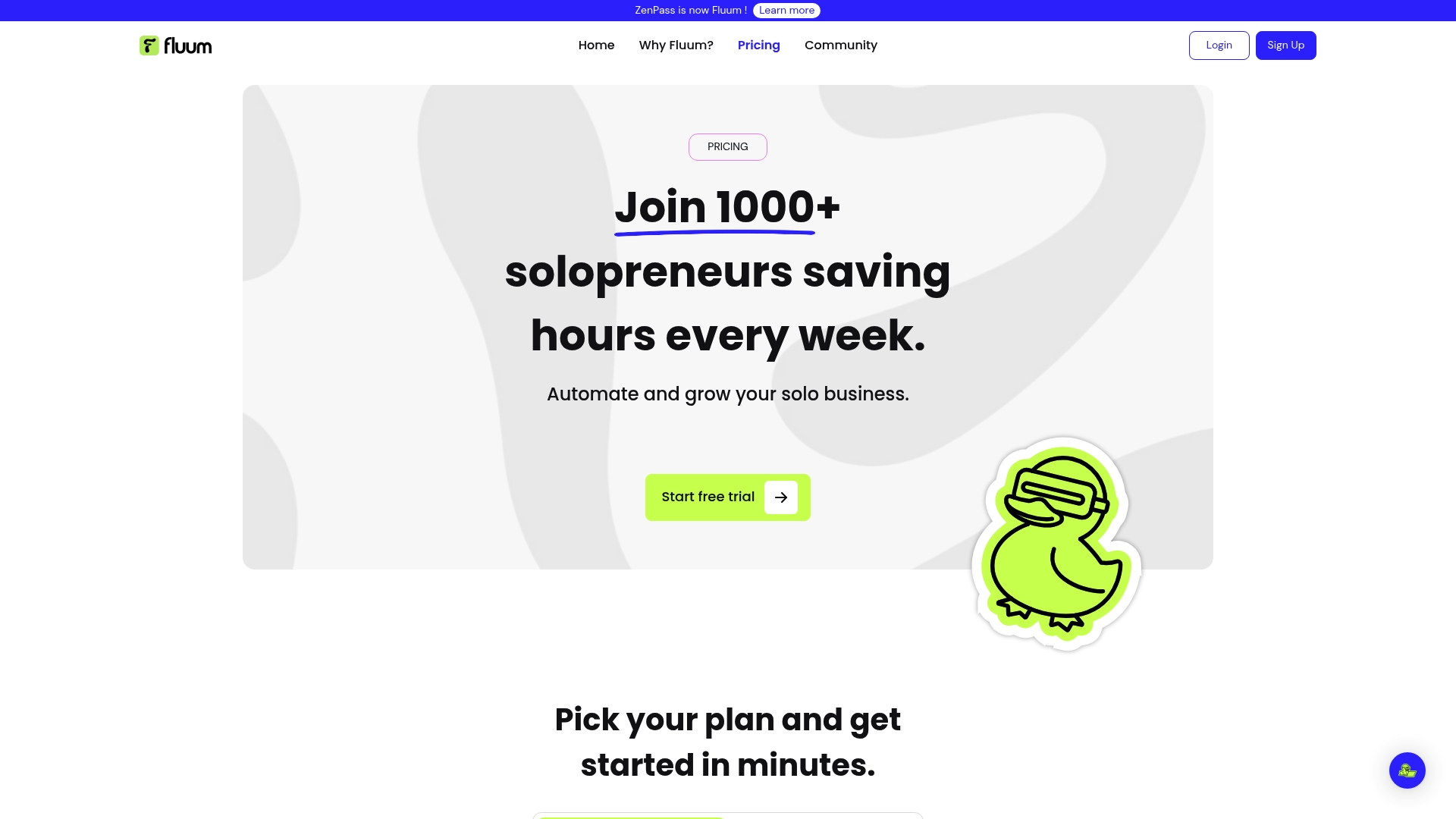
Take control today and experience how Fluum can help you reclaim time and reduce stress by automating your daily operations. Discover powerful features that support client management, scheduling, and financial workflows all in one place. Begin your journey toward scalable, effortless solopreneurship by visiting Fluum Pricing and unlock your business’s full potential now.
Frequently Asked Questions
What is business automation for solopreneurs?
Business automation refers to the use of technology to streamline repetitive tasks and create efficient processes, allowing solopreneurs to focus on higher-value creative and strategic activities.
How can solopreneurs benefit from implementing automation tools?
By automating tasks such as scheduling, invoicing, and client communication, solopreneurs can significantly reduce administrative overhead, increase productivity, and free up time for essential business growth activities.
What types of tasks can be automated for solo businesses?
Solopreneurs can automate a variety of tasks, including client management, financial processes, marketing campaigns, and appointment scheduling, enabling them to operate more efficiently and effectively.
What are the risks of using business automation for independent professionals?
Potential risks include over-reliance on technology, loss of personal client interactions, data security vulnerabilities, and system errors. It’s important for solopreneurs to maintain human oversight and regularly audit automated workflows.
Recommended
- What Is Business Scaling? Complete Guide For Solopreneurs
- Complete Guide To Scaling Up Your Business
- Master Scaling A Service Business For Growth And Profit
- How To Increase Business Efficiency For Solopreneurs
- ManyChat: Die Revolution der Chat-Marketing-Automatisierung – nova.02:media
- Fluum | Effective Stress Management Techniques for Busy Professionals
- Fluum | How to Onboard Clients Effectively for Lasting Success
- Fluum | Master Managing Multiple Projects for Success
- Fluum | Build Your Brand with a Branding Builder in 2025
- Fluum | 7 Customer Retention Examples to Boost Your Business